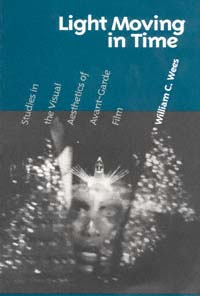
This book is subtitled, 'Studies in the Visual Aesthetics of Avant-Garde Film.'
'From the beginning, avant-garde filmmakers have insisted on the visual nature of the previous hit film next hit medium. "The image must be everything," said Fernand Léger. Man Ray described Emak Bakia (1926) as, "purely optical, made to appeal to the eyes only." The scenario for The Seashell and the Clergyman (1928), said Antonin Artaud, was "based on purely visual situations whose action springs from stimuli addressed to the eye only." For Hans Richter, previous hit film next hit was "visual rhythm, released photographically." Dziga Vertov said his goal was to produce "a finished étude of absolute vision." Germaine Dulac campaigned tirelessly for, in her words, "an art of vision . . . an art of the eye."
Comparable pronouncements appear throughout the history of avant-garde previous hit film next hit, but I have singled out one by Stan Brakhage for the epigraph to this introduction because it not only reiterates the avant-garde's commitment to "an art of vision" but locates the source of that art in "visual perception in its deepest sense." I propose to take this assertion literally and examine its implications for avant-garde previous hit film next hit in general and the work of Brakhage and a few of his contemporaries in particular (without implying that the filmmakers I have chosen to discuss are necessarily the "very few" to whom Brakhage alludes).
On the one hand, then, there is the avant-garde's traditional emphasis on vision, on previous hit film next hit as "an art of the eye." On the other hand, there is the study of visual perception, the science of the eye. My goal is to bring both approaches to seeing—the cinematic and the perceptual—into a single discourse on vision and the visual art of avant-garde previous hit film next hit.'