Career Readiness for Sociology and Criminology & Justice Studies Majors
Career Readiness for Sociology and Criminology & Justice Studies Majors
Purpose: to help other instructors teaching the same course
Common Course ID: SOC 491
CSU Instructor Open Textbook Adoption Portrait
Abstract: This open textbook is being utilized in a Sociology and Criminology & Justice Studies Career Readiness course for undergraduate students by Flor Saldana at Cal-State University San Marcos. The open and unlimited user textbooks provide readings to introduce students to career readiness and professional growth. Material covers career road maps, career success skills, assessing/exploring the self in connection to careers, resumes/cover letters/interviewing, building an online brand, building and managing networks, graduate school, mentorship, career readiness resources, and gaining experience by taking action in multiple career readiness tasks. The main motivation to adopt open textbooks was reduce course costs for students. Most students in the CSU system are working students and decreasing the burden of education costs was the main driver to have a zero-cost course. Most students access the open textbooks in their Library Reserves list available through the library.
SOC 491- Career Readiness for Sociology and Criminology & Justice Studies Majors
Brief Description of course highlights: The course explores the multi-faceted career paths for both Sociology and Criminology and Justice Majors, with resources, readings, and activities to prepare students for post-graduation employment and graduate school. Includes the exploration of culture, social structures, groups, and human interaction in career readiness. Develops skills and awareness relevant to employment in the public, private sector, grassroots organizations, and social justice campaigns. The course provides students with additional resources to help launch/frame post-undergraduate life (CSUSM Catalog).
Student population: This course is a required course for Sociology and Criminology & Justice Studies majors. Therefore, the most common students are Sociology and Criminology & Justice Studies majors, and sometimes students in Social Science majors interested in learning about career readiness before they graduate. Students in the course want to be prepared for life after college by enhancing their professional identity and exploring career options.
Learning or student outcomes: By the end of semester, students will be competent in the following areas:
- Students will gain a deeper understanding of their present/future professional self
- Students will gain valuable resources to develop/enhance their professional identity
- Students will practice valuable career readiness skills (resume, digital footprint, graduate school options, networking, job search, etc....)
- Students will understand the advantage of constructive criticism in career readiness & lifelong learning
- Students will be competent in practicing/creating an action-plan for future career growth and development
Key challenges faced and how resolved: The main challenge was choosing resources that aligned with my teaching philosophy. Luckily, a colleague that taught the course before compiled many resources, which facilitated the decision-making process. I ended up using two resources, an eBook and Career Guide, that were recommended by my previous colleague and aligned with my teaching philosophy for this course, learning by example and taking action.
Textbook or OER/Low cost Title:
Open Access Guide: CSUSM Career Center. [2021]. Career Success Guide. Guide Link: careerguide2021ada.pdf
Unlimited User eBook: O'Keefe, Shaun. [2021]. Launch Your Career: How ANY Student Can Create Relationships with Professionals and Land the Jobs and Internships They Want. Berrett-Koehler Publishers, Incorporated; Oakland. eBook Link: Launch Your Career
Brief Description: There are two sources that make up the required readings. The first is an open access career readiness guide and the second is an unlimited user eBook that is accessed through Library Reserves. The career readiness guide is a 33-page document, written in a student friendly tone and organized by career readiness skills. It provides short descriptions of specific career readiness skills and provides examples and links to more information. This guide has been very beneficial for students, as it allows them to use the examples and tailor to their specific needs.
On the other hand, the eBook is organized by chapters and presents a longer reading source. The eBook is written for students and provides real-world examples of students going through the process of career readiness and professional growth. The key themes of the book center on students taking a proactive approach to career readiness and invites students to engage in mini-action steps to enhance their professional identity. I blend both sources in the course modules.
Student access: Students access their course readings through Library Reserves via Canvas. Students use their personal laptop, mobile device, and/or school library computers to access material in Canvas.
Supplemental resources: Multiple websites are added as part of module activities in the course (some examples below)
- Handshake | Career Center | CSUSM
- LinkedIn https://www.linkedin.com/
- Cougar Connect https://csusm.protopia.co/
- Graduate Studies & Research | Graduate Studies & Research Home | CSUSM https://www.csusm.edu/gsr/index.html
- Career Center events | Career Center | CSUSM https://www.csusm.edu/careers/
- CA Forum for Diversity in Graduate Education I Home https://www.caldiversityforum.org/
Provide the cost savings from that of a traditional textbook.
Average cost $20-25
License*: Materials are available for free online (open access) or available through Library Reserves.
OER/Low Cost Adoption Process
Provide an explanation or what motivated you to use this textbook or OER/Low Cost option.
The greatest incentive was reducing course costs for students. Once I became aware of institutional data showing a large portion of CSU students being Pell Grant recipients, I knew my courses had to take a path to be zero-cost in order to relieve the economic burden on students.
How did you find and select the open textbook for this course?
When I was assigned to teach this course, a colleague that taught the course before compiled many resources, which facilitated the decision-making process of choosing material for the course. I ended up using two resources, an eBook and Career Guide, that were recommended by my previous colleague and aligned with my teaching philosophy for this course, learning by example and taking action. My colleague actually found the open access resources, therefore since my goal was to have zero-cost courses, the selection was simple. The sources were accessible through Library reserves, zero-cost, student friendly, and allowed students to engage in career readiness action items.
Sharing Best Practices:
My best advice is for faculty to start with the structure and units of study of their course in mind. Then evaluate open access resources that align with your course topics/level/student audience/ and teaching philosophy. If you cannot find what you are looking for, I highly recommend consulting with a school librarian and/or colleagues that have taught the same course. Librarians will find resources aligned with your topic and colleagues will provide more focus depending on your teaching style/philosophy.
Describe any key challenges you experienced, how they were resolved and lessons learned.
The main challenge was teaching the course for the first time and choosing options that were zero-cost. Luckily for me, a colleague was instrumental in setting the course framework and providing tons of material to choose from. My colleague’s expertise made it possible for me to adopt open access, student friendly, and aligned with my teaching philosophy material into my course. Lesson is- if your goal is to pursue zero-cost in your courses, talk to colleagues that have taught your courses before and librarians. Their expertise is valuable and will facilitate the decision-making process in choosing zero-cost materials/content.
Instructor Name - Flor Saldana
I am a Lecturer professor at Cal-State University San Marcos.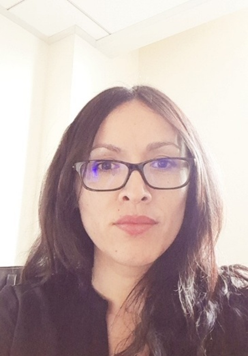 Please provide a link to your university page.
General department faculty directory.
Faculty and Staff Directory | Sociology | CSUSM
Please describe the courses/course numbers that you teach.
I teach undergraduate courses in the Department of Sociology and Criminology and Justice Studies. Some of my common courses include introducing students to the field of Criminology & Justice Studies (SOC 105: Introduction to Justice Studies) and statistics in the social sciences (SOC 201). I also teach upper division courses in specific areas of Sociology and Criminology majors/minors: for example, SOC 314: Health & Society, SOC 316: Mental Health & Society; SOC 406: Women & Crime ; SOC 417: Family Violence ; SOC 419: Inequalities & Health; SOC 424: Women & Health; and SOC 491; Career Readiness for Sociology and Criminology & Justice Studies. I am passionate about higher education and being able to work with colleagues and college students.
Describe your teaching philosophy and any research interests related to your discipline or teaching.
I love teaching any course within Sociology and Criminology disciplines. Research interests are medical sociology, Latino/a/x/e community issues, technology and society, equity practices in teaching, and higher education. I am passionate about my role as an educator, research collaborations, and teaching a diverse student body in the CSU system.