Applied Business and Economic Statistics II- ECON 3090
Applied Business and Economic Statistics II- ECON 3090
Purpose: to help other instructors teaching the same course
Common Course ID: ECON 3090
CSU Instructor Open Textbook Adoption Portrait
Abstract: This open textbook is being utilized in the Applied Business and Economic Statistics II course for undergraduate students by Dr. Seolah Kim at California State University, Los Angeles (CSULA). The open textbook provides comprehensive coverage of materials, including hypothesis testing, sampling distributions, and regression analysis. In addition, there are practice problems that can be used for the in-class activity, and students can find similar problems through the textbook as well. The main motivation to adopt an open textbook was to allow students to have access to the course materials at zero cost and to provide students with additional resources for learning outside the classroom. Furthermore, students can perform Excel-based analysis with publicly available real-world datasets in assignments and a final Excel-based project, allowing the application of statistical methods to practical business problems. Most students access the open textbook through the campus library, which is directly accessible on Canvas.
Course Title and Number - Applied Business and Economics Statistics II. ECON 3090
Brief Description of course highlights: The course demonstrates the application of various techniques of statistical methods to analyze both quantitative and qualitative data for business and economics. It emphasizes practical applications, rather than technical foundations and derivations. This course is designed to introduce students to basic techniques used in inferential statistics: sampling distributions, hypothesis testing, and simple/multiple linear regression. Students will conduct data analysis using spreadsheet software.
Student population: The course primarily enrolls students pursuing a major or minor in Economics. Enrollment requires the successful completion of ECON 2090 or MATH 1090 as a prerequisite.
Learning or student outcomes:
Upon completion of this course, the students will be able to:
- Apply different methods to collect, analyze, and visualize data;
- Analyze and communicate statistical information;
- Perform calculations for statistical inference and interpret the significance of statistical inference results;
- Utilize descriptive and inferential statistical techniques for decision-making;
- Evaluate practical business problems using quantitative tools in a statistical framework;
- Perform statistical analysis of data using MS Excel.
Syllabus and/or Sample assignment from the course or the adoption: The open-source textbooks are fully integrated into the core course materials, including lecture slides, in-class activities, and quizzes. During in-class activities, students work collaboratively in groups to solve applied problems, while I provide guidance and individualized support as needed. For the lab assignments, students download publicly available datasets, conduct data analysis, and present their findings in written reports that emphasize both methodological rigor and interpretation of results.
Key challenges faced and how resolved: The primary challenge was ensuring that all students were on the same page at the beginning of the semester. Although this course is the second part of a year-long sequence, many students do not take the two courses consecutively. To address this gap, I devoted the first few weeks to reviewing key concepts from the prerequisite course before progressing to new material. Fortunately, the open-source textbook also included content from the prerequisite course, which allowed me to provide students with additional reference materials to support their review.
Instructor Name - Seolah Kim
I am an Assistant Professor of Economics at California State University Los Angeles. https://www.calstatela.edu/business/facultyprofiles/seolah-kim 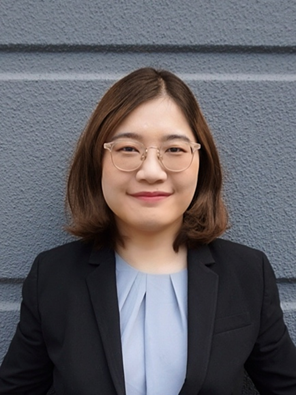 Please describe the courses/course numbers that you teach. . I teach Statistics for Business Analysis and Decision Making and Data Analysis, Reporting and Presentation for undergraduate students, and Seminar: Econometric Analysis course for graduate students.
Statistics for Business Analysis and Decision Making: The course demonstrates the application of various techniques of statistical methods to analyze both quantitative and qualitative data for business decision-making. It emphasizes practical applications, rather than technical foundations and derivations. It provides a fundamental framework for applying statistical modeling to conduct business analysis, improve business processes, and support sound decision-making.
Data Analysis, Reporting and Presentation: This course takes you through the steps of undertaking research in the social sciences. We will review statistics concepts, paying close attention to the relationship between the researcher’s initial hypothesis and the appropriate methodology used to test it. The course also covers the process of finding data and preparing a dataset for statistical analysis. This course is designed to integrate statistics with the social science theory students have learned.
Seminar: Econometric Analysis: The purpose of this course is to provide an advanced treatment of econometric analysis and applications for graduate students in MA program. The emphasis will be on the regression analysis using linear statistical models. Therefore, basic statistical foundations for econometric analysis, such as an elementary knowledge of probability theory, estimation, inference, and some familiarity with undergraduate econometrics, will be assumed.
Describe your teaching philosophy and any research interests related to your discipline or teaching. My teaching philosophy is grounded in sustained student engagement, the development of practical analytical skills, and the cultivation of perspectives that extend beyond the classroom. Given that the courses I teach rely heavily on statistical and econometric methods, I place strong emphasis on demonstrating their relevance through real-world applications. In my undergraduate Applied Business and Economic Statistics and graduate Econometrics courses, I conduct lab sessions that guide students through the entire empirical process, from data sourcing and management to the production of tables and figures. This instructional approach enables students to translate classroom learning into practical competence, thereby fostering motivation and applied understanding.
OER/Low-Cost Adoption Process
Provide an explanation or what motivated you to use this textbook or OER/Low Cost option. The first advantage of using this textbook was that it eliminated the financial burden of purchasing course materials. In addition, the open-source format made it highly accessible, as students could simply click the Reading List link on Canvas to access the entire text. Students frequently seek additional practice problems to prepare for exams but often rely solely on those provided in class. With this textbook’s accessibility, they were able to explore concepts beyond the lecture and engage in additional self-directed learning. I also appreciated that the textbook included links to real-world examples directly related to the course material. Such connections between theoretical concepts and practical applications are essential for deep learning. Moreover, the accompanying datasets allowed students to apply their knowledge through hands-on data analysis.
How did you find and select the open textbook for this course? I browsed OER sites as well as Merlot, then found the one that would fit the best for my courses.
Sharing Best Practices: There are many different options to explore, and with some time and consideration, you can find resources that best meet your teaching needs. Rather than overhauling the entire course, it is helpful to take time to browse materials that allow you to maintain your existing teaching practices while incorporating new ideas. I found it particularly valuable to experiment with experiential learning activities that reinvigorated my teaching and broadened my perspective on classroom engagement. Even if certain activities are not immediately suitable for a current course, they may prove useful in future iterations. Once you have selected a primary textbook, it is important not to limit yourself to that resource alone. Because these materials are open source, they can be freely integrated to enhance learning without adding financial burdens for students, while also expanding their perspectives on the subject.
Describe any key challenges you experienced, how they were resolved and lessons learned. In a statistics course, applying theoretical concepts to real data is just as important as understanding the underlying theory. In the past, I often used sample datasets provided with the textbook. While the open-source textbooks also included examples, some of these datasets were outdated and less relevant for current instruction. However, I identified several datasets from the selected open textbooks that remained useful. Moreover, reviewing the older examples motivated me to seek out more up-to-date datasets, which ultimately expanded the scope of my teaching and enriched students’ applied learning experiences.
Textbook or OER/Low-cost Title: OpenStax Business Statistics
Brief Description: Business Statistics (OpenStax/LibreTexts) is a free, CC BY textbook for a one-semester course aimed at business, economics, and related majors. It teaches core statistical ideas through business-focused examples and exercises and is an adaptation of OpenStax’s Introductory Business Statistics hosted on LibreTexts.
Topics include descriptive statistics, probability, discrete/continuous distributions, the normal and sampling distributions (CLT), confidence intervals, one- and two-sample hypothesis tests, chi-square tests, one-way ANOVA, and linear regression/correlation, with chapter-level practice problems.
Please provide a link to the resource
https://stats.libretexts.org/Bookshelves/Applied_Statistics/Business_Statistics_(OpenStax)
Authors: Alexander (Lex) Holmes, Barbara Illowsky, Susan Dean
Student access: OpenStax, and the Reading List from Canvas.
Supplemental resources: The textbook had practice questions with solutions for selected problems. Also, it had some applicable real-life examples where students could connect the lesson to practical examples.
Provide the cost savings from that of a traditional textbook. Each student can save $85-$174, depending on which format they choose to rent or buy from the publisher.
License: CC BY 4.0