SOC 201- Introductory Statistics for the Social Sciences
SOC 201- Introductory Statistics for the Social Sciences
Purpose: to help other instructors teaching the same course
Common Course ID: SOC 201
CSU Instructor Open Textbook Adoption Portrait
Abstract: This open textbook is being utilized in a Sociology-Introductory Statistics course for undergraduate students by Flor Saldana at Cal State University San Marcos. The open and unlimited user textbooks provide readings to introduce students to statistics in the social sciences. Material covers introductory statistics in sociology, organizing data, measures of central tendency/dispersion, the normal curve, hypothesis testing, analysis of variance/ chi-square/correlations/regression, and case studies/practice examples. The main motivation to adopt open textbooks was reduce course costs for students. The previous book’s price was in the hundreds, and the cost was a learning barrier for students. Reducing book costs was an equity practice. Most students access the open textbooks in their Library Reserves list available through the library.
Course Title and Number - SOC 201- Introductory Statistics for the Social Sciences
Brief Description of course highlights: This course is an introduction to statistics for the social sciences. The course focuses in the presentation and description of data, contingency table construction and interpretation, introduction to multivariate analysis, correlation, and hypothesis testing. Students learn, analyze, and interpret basic statistical research. Students finalize the course by learning about the application of statistics in professional settings. (CSUSM Online Course Catalog)
Student population: Common students are Sociology and Criminology and Justice Studies majors and students in Social Science majors who are interested in criminal justice, government, non-profit sector, education, social work, and law careers. Students must pass this course before taking more advanced statistics.
Learning or student outcomes: By the end of semester, students will be competent in the following areas:
- Calculate Measures of Central Tendency and Dispersion
- Understand Difference Between Descriptive and Inferential Data
- Conduct Basic Data Analysis Using SPSS (i.e., T-Tests, Chi-Square, Correlations, Regression)
- Evaluate Quantitative Social Research (Independent & Dependent Variables, Research Hypothesis, Quantitative Methodology)
- Evaluate the Applicability of Statistics in Society
Key challenges faced and how resolved: The main challenge was finding a student friendly statistics book. In summer 2025, I emailed one of the university librarians and she was amazing in sending me potential eBooks to review for use in my statistics course. I ended up using two of the eBooks on the list.
Textbook or OER/Low cost Title:
Open Access eBook: Behavioral Statistics (2022) by Michelle Oja.
Unlimited User eBook: Statistics and Data Analysis for Social Science (2020) by Eric J. Kreig (second edition)
Brief Description: There are two eBooks that make up the required readings. The first is an open access online book and the second is an unlimited user eBook that is accessed through Library Reserves. The first eBook is written in a student friendly tone and organized by online sections, however it is geared more towards Psychology students. I chose the first chapter of the first book and examples to use in the course. The second eBook is written specifically for Sociology students and provides real-world social problems and examples. I used most of the chapters from the second eBook to create the course units of study.
Link access:
Open Access eBook: Behavioral Statistics [2022] by Michelle Oja. https://stats.libretexts.org/Courses/Taft_College/PSYC_2200%3A_Elementary_Statistics_for_Behavioral_and_Social_Sciences_(Oja)
Unlimited User eBook: Krieg, E. J. (2020). Statistics and data analysis for social science / Eric J. Krieg. (Second edition.). SAGE Publications, Inc.
Student access: Students access their course readings through Library Reserves via Canvas. Students use their personal laptop, mobile device, and/or school library computers to access material in Canvas.
Supplemental resources: I upload the following PDF to give students a resource on citing in academic writing:
Source Title: Quick Tips for ASA Citation Style
Link: Quick_Tips_for_ASA_Style.pdf (asanet.org)
Provide the cost savings from that of a traditional textbook. Average cost $130
License*: Materials are available for free online (open access) or available through Library Reserves.
OER/Low Cost Adoption Process
Provide an explanation or what motivated you to use this textbook or OER/Low Cost option. The greatest incentive was reducing course costs for students. Once I became aware of institutional data showing most of my students being Pell Grant recipients, I knew I had to make the course zero-cost in order to relieve the economic burden on students.
How did you find and select the open textbook for this course?
I consulted the library, and a librarian emailed me a list of eBook titles to review for potential use. I evaluated open access and unlimited user eBooks that were written in a student friendly tone and that focused on introducing statistics in the social sciences. My selection fit the criteria for being student-friendly and focus was on introducing statistics to social science majors.
Sharing Best Practices: My best advice is for faculty to start with the structure and units of study of their course in mind. Then evaluate open access resources that align with your course topics/level/student audience. I highly recommend consulting with a school librarian if you cannot find what you are looking for, librarians are an amazing and talented resource.
Describe any key challenges you experienced, how they were resolved and lessons learned. The main challenge was finding a student friendly statistics book. I emailed one of the university librarians and she was amazing in sending me potential eBooks to review for use in my statistics course. I ended up using two of the eBooks on the list. Lesson is- thank goodness for librarians.
Instructor Name - Flor Saldana
I am a Lecturer professor at Cal State University San Marcos. I teach courses within Sociology and Criminology and Justice Studies.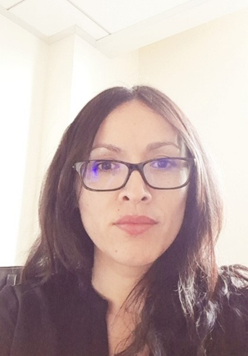
Please provide a link to your university page. General department faculty directory https://www.csusm.edu/sociology/facdirectory.html
Please describe the courses/course numbers that you teach. I teach undergraduate courses in the Department of Sociology and Criminology and Justice Studies. Some of my common courses include introducing students to the field of Criminology & Justice Studies (SOC 105: Introduction to Justice Studies) and statistics in the social sciences (SOC 201). I also teach upper division courses in specific areas of Sociology and Criminology majors/minors: for example, SOC 314: Health & Society, SOC 316: Mental Health & Society; SOC 406: Women & Crime ; SOC 417: Family Violence ; SOC 419: Inequalities & Health; SOC 424: Women & Health; and SOC 491; Career Readiness for Sociology and Criminology & Justice Studies. I am passionate about higher education and being able to work with colleagues and college students.
Describe your teaching philosophy and any research interests related to your discipline or teaching. I love teaching any course within Sociology and Criminology disciplines. Research interests are medical sociology, Latino/a/x/e community issues, technology and society, equity practices in teaching, and higher education. I am passionate about my role as an educator, research collaborations, and teaching a diverse student body in the CSU system.