ENGL 100A Writing Competency Through Genres
ENGL 100A Writing Competency Through Genres
Purpose: to help other instructors teaching the same course
Common Course ID: ENGL 100A
CSU Instructor Open Textbook Adoption Portrait
Abstract: Abstract: This digital textbook is being utilized in an English course for undergraduate Alesya Petty at San José State University. The novel traces the travels of Santiago, a shepherd on a journey for treasure that illustrates themes of personal aspiration, decision-making, and interpreting the world around him in the pursuit of a goal. The main motivation to adopt a digital textbook was to save students money and provide a flexible resource that supports learning to write across multiple genres. Most students access the digital through the library’s website.
ENGL 100A: Writing Competency Through Genres
Brief Description of course highlights:
ENGL 100A course “prepares students for 100W through drafting, feedback, and revision to demonstrate writing competency. Develops ability to analyze written genres used in the students’ chosen disciplines as well as write analytical and reflective essays.” https://catalog.sjsu.edu/content.php?filter%5B27%5D=ENGL&filter%5B29%5D=100A&filter%5Bcourse_type%5D=4460&filter%5Bkeyword%5D=&filter%5B32%5D=1&filter%5Bcpage%5D=1&cur_cat_oid=17&expand=&navoid=7688&search_database=Filter&filter%5Bexact_match%5D=1#acalog_template_course_filter
Student population: The course is for the students of all majors who would like to boost their writing skills for upper-division writing. It is popular with transfer students, international students, and multilingual learners. The prerequisites include the completion of 1B or equivalent second semester composition course (with a grade of C- or better); completion of core GE.
Learning or student outcomes: ENGL 100A is designed with the goal of preparing you to succeed in 100W, in other upper division classes, and in your profession. The course offers intensive practice in prewriting, drafting, revising, and editing academic writing. You are asked to research, analyze, and reflect on various kinds of writing and to produce a minimum of 5,000 words, including a rhetorical analysis, a report about writing in your chosen discipline, and three critical reflective journal entries on a book-length work of fiction and instructor-selected readings. Upon successful completion of this course, students will be able to:
- Use correct and situationally appropriate sentence structure and grammar
- Utilize feedback from instructor and peers to improve the accuracy and clarity of writing
- Recognize, select, and use basic activities of the writing process, including prewriting, organizing, drafting, revising, editing, and peer review
- Critically self-reflect about the writing process and about making context-appropriate rhetorical choices
- Critically read, interpret, and synthesize multiple texts
- Write well organized, well developed essays with a clear thesis
- Identify how types of written texts in a variety of fields (genres) are influenced by audience, situation, and purpose
- Employ research strategies to collect, analyze, and evaluate data from primary and secondary sources.
Syllabus and/or Sample assignment from the course or the adoption: This course used to have a custom reader that students had to purchase for $30 through a printer. Additionally, students had to purchase a book. Now the study materials are available in Canvas through a variety of handouts and links to youtube videos, and university resources as well as instructor-made materials. Major assignments include Rhetorical Analysis of a professional document or scholarly article in the student’s major, Journals based on the full-length fiction or creative non-fiction text, and Discipline Investigation report based on the informational interview of a professional in the occupation of interest.
Textbook or OER/Low cost Title: Coelho, Paulo. The Alchemist. Translated by Alan Clarke, Twenty fifth anniversary edition., HarperCollins Publishers, 2014.
Brief Description: The course uses The Alchemist by Paulo Coelho (HarperOne) as the main text. Additional free materials include articles from trusted news sources (The New York Times, The Guardian), educational videos from YouTube and TED Talks, and writing guides from university websites (.edu). I also create my own instructional materials. The course structure combines reading, discussion, and writing activities. The pedagogical approach focuses on reflection, critical thinking, and personal growth. Students apply key concepts from the text to their own experiences and develop writing skills through analysis and creative assignments.
Please provide a link to the resource
https://csu-sjsu.primo.exlibrisgroup.com/permalink/01CALS_SJO/tu4ck5/alma991014110991202919
Authors: Paulo Coelho
Student access: Digital copies of study materials are available on Canvas. Printed text is recommended for the fiction book that can be checked out from the library, used through the course reserve or purchased/rented at the Spartan book store.
Provide the cost savings from that of a traditional textbook. As for OER, it's a low-cost item rather than an OER. It's available for $5-$10 new. We also provide a one-user seat in the library.
License: No License specified. It is a library-provided and low-cost material. In addition, "This book is an English version of O Alquimista, the Portuguese original edition, published in Brazil by Editora Rocco Ltd. (Rio de Janeiro). Copyright 1988 by Paulo Coelho. Previous paperback editions were published in 1994 and 1998 by HarperOne, a division of HarperCollins Publishers. A HarperFlamingo edition was published in 1998. A previous HarperPerennial paperback edition was published in 1998 ... English version copyright 1993 by Paulo Coelho and Alan R. Clarke. Updated introduction copyright 2014 by HarperCollins Publishers ... First HarperCollins hardcover edition published in 1993"--Title page verso. "Illustrated by James Noel Smith"
Instructor Name - Alesya Petty
I am an English professor at San Jose State University.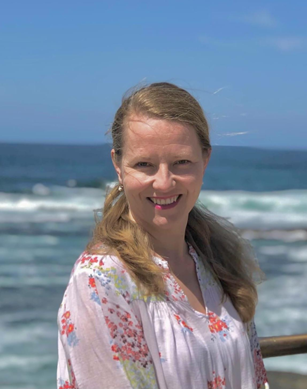 Provide a link to your university page.
https://www.sjsu.edu/people/alesya.petty/index.html
Please describe the courses/course numbers that you teach.
- ENGL 1A (Written Communication) earlier versions redesigned with open source materials and a new theme of College Life and Life-Long Success. In person and hybrid. Themes “Cultural Myths and Identity”, recently redesigned with theme “First-Year college Experience and Well-being”. In person and hybrid.
- ENGL 2 (Critical Thinking and Writing). Theme “The Science of Global and National Happiness”.
- ENGL 100A (Writing Competency Through Genres).
- LLD 001 & 002 (Academic Writing) remedial courses, which were replaced by transitioning to Stretch curriculum.
- 800 WC, 700 WC, 600 WC (courses taught at the International Gateways Academic and Test Preparation Program. Studies in American Language (600WC), Advanced (800WC) and Intermediate(700WC) Written Communication)
- HS/HPRF/NURS/ NURF 100W (Professional Writing Workshop)
- CS 100W (Technical Writing Workshop). In 3 different modes: asynchronous, hybrid, and in person.
Describe your teaching philosophy and any research interests related to your discipline or teaching. It takes patience, imagination, and flexibility as well as not giving up on trying to be a life learner and a college instructor. I also believe that passion for learning is contagious, and though not every student comes to class with such an attitude, I hope the collaborative learning environment can help cultivate good habits of mind that students can carry into their life-long journey. I love teaching, even when it gets hard, because it offers the most gratifying experience of working with people and making a difference in someone’s life. This is what motivates me to reflect on my teaching methods and to continue trying new strategies to achieve my personal and professional goals. This is what inspires me to keep going on the journey of learning together with my students and colleagues.
OER/Low Cost Adoption Process
Provide an explanation or what motivated you to use this textbook or OER/Low Cost option. The novel The Alchemist has been in print for a long time with many inexpensive copies available on the internet. But for accessibility, the library has copies as well.
How did you find and select the open textbook for this course? I asked the librarian to make it available through course reserve.
Sharing Best Practices: The cost of textbooks and study materials can add up for the students for multiple courses. Many study guides and handouts can be found online for free or created once for recurrent use.
Describe any key challenges you experienced, how they were resolved and lessons learned. Custom readers from a printer became unnecessary as it became easier to make the same materials available in the digital format.