Medical Laboratory Science Simulations: Clinical Microbiology Lessons with Operation Outbreak (OO)
Medical Laboratory Science Simulations: Clinical Microbiology Lessons with Operation Outbreak (OO)
Campus: Andrews University Author: Melissa Poua, MS, cMLS (ASCP) Date: 6/22/2025
Project Abstract: This open educational resource was created in response to a need for practical laboratory activities for the clinical microbiology classroom. The laboratory resources are adapted to work with an available hands-on teaching tool (Operation Outbreak) that models an outbreak in real-time, allowing the students to explore interventions and mitigation strategies. This free adaptive simulation and other resources have not only been employed in both high school and college courses but have also made a significant impact globally, increasing an understanding of the science and social impacts of pathogens in a realistic but safe way. A modified lesson plan can be used to engage Medical Laboratory Science, nursing or other healthcare majors during their clinical microbiology courses, allowing them to synthesize and apply key concepts of virology and epidemiology.
Learning objectives:
- Explore a free teaching tool that immerses participants in hands-on outbreak preparedness training, using a Bluetooth-based application based on known pathogens and their transmission rates.
- Identify activities that can be included in the microbiology classroom combining theory and practice specific to the epidemiology of the diseases being studied.
- Utilize charts, infographics and other visual resources to increase knowledge base and strengthen data visualization literacy.

Set-up of Operation Outbreak (OO) Activity
Scheduling & Preparing for your Outbreak Simulation (at least 2 weeks before the simulation)
- For your first use of Operation Outbreak, the OO team can help program a simple simulation for your class. You can send an email to Dr. Todd Brown at todd@operationoutbreak.org and request a simulation. Once in contact, you will need to provide details such as number of students, location (classroom, auditorium or outdoor space) and duration of run time (the simulation can be as short as one class period or run over a longer amount of time). The lessons included in this OER were utilized in a 60- 90 minute laboratory session.
- Simulations can be programmed with several "pathogens", and will mimic the rate of transmission of their real-life counterparts. The list of possible organisms include M. tuberculosis, S. aureus, Measles-"like" virus, Influenza-"like" virus and Marburg-"like" virus. The materials included here were made for the Measles-"like" virus outbreak.
- You can request mitigations such as vaccines, masks and lab tests. A QR code will be made that the students can scan when using the app. These items may be limited, if desired.
- There are a variety of materials and readings to help prepare the students for the activity and provide an understanding of outbreak investigations. Here are two suggested sources of reputable material:
- Operation Outbreak has a helpful set of video and textbook chapters that are manageable and easily digested, found here --Outbreak Science resources (textbook and YouTube videos)
- My clinical microbiology students prepared by studying Outbreak Investigations and Virology in Mahon's Textbook of Diagnostic Microbiology, chs. 3 and 29, respectively.
Set up of Classroom/ Learning Space (directly prior to simulation)
- Ask students to download the Operation Outbreak app on their phone (available for iphones and Androids)
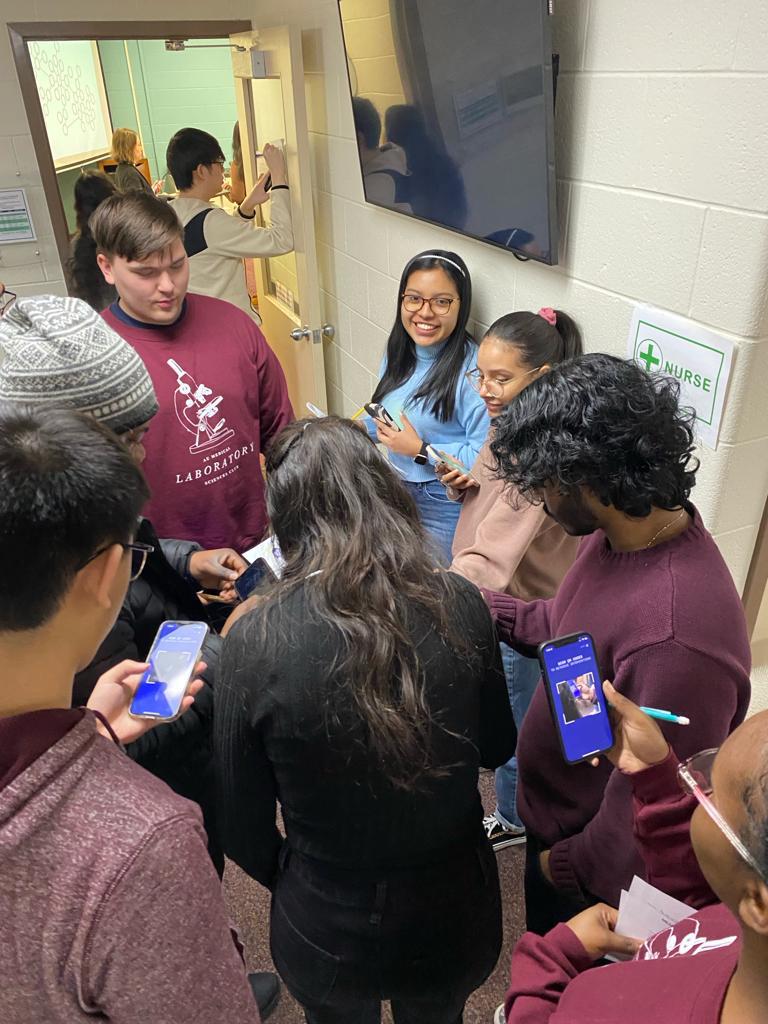
- Insert any QR codes being used into the provided posters. Print posters and place them around the learning area in such a way that the students need to walk and interact in order to view them all. You may decide to extend to space outside the classroom, such as adjacent hallways or shared areas to encourage student movement during the simulation.
- If space permits, set up a separate Lab area and Nursing area. The lab testing and case definition posters go into the lab area. The vaccine and mask posters, if being used, will go into the nursing space.
- All posters, infographics and printed signs can be downloaded HERE Outbreak Laboratory Posters and Printables.pdf.
Operation Outbreak Activities
- When students arrive, meet with them briefly and hand out worksheets. There is a portion of the worksheets where the students predict their role in the outbreak that should be completed before the simulation begins. If desired, the students can discuss who might be prioritized for the vaccines, masks and other mitigations. Roles may be assigned or "shifts" in the lab
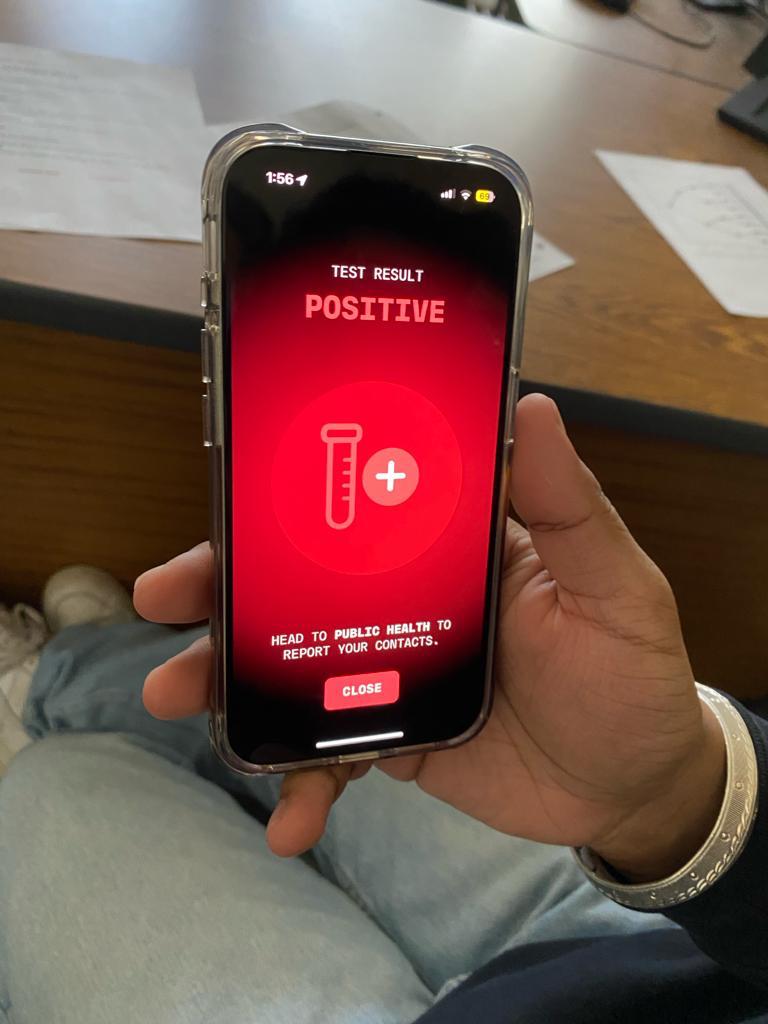 or nursing stations. A scientific communicator might also be designated, with an assignment to summarize and write an appropriate social media post to the public (see page in epidemiology worksheet).
 - Ensure that all students have enabled Bluetooth on their devices. Provide the join code and begin the simulation.
- The outbreak will include a post simulation outbreak visualizer. This can be used for class discussions and review. I uploaded a video of it to our digital classroom and the students were able to view it and answer assessment questions (included in both epidemiology and virology worksheets).
- Find the Epidemiology Lab worksheet HERE Operation Outbreak Epidemiology Lesson.pdf(best for introductory/nursing students)
- Find the Virology Lab worksheet HERE Operation Outbreak Virology Lesson.pdf(best for senior level clinical year students)
The following file contains all materials, posters, printables and lab worksheets in one file: Operation Outbreak Laboratory OER complete resource.pdf
Student Feedback
- After the students went through the outbreak, they completed some assessment questions specific to the simulation. Here is a sample of their replies in response to the question- "What went well?":
- "The part of interacting with others, and also being more practical helped me to remember more. I learned concepts about the forms of transmissions of diseases" - Addy
- "The [simulation], which can be seen in real time, and factors such as limited vaccines and mask wearing seem to have made the simple game more interesting. And through this activity, I realized the importance of social behavior, actions and thoughts about the pandemic, vaccines, wearing masks, and preventing infection." -Jenny
- "I enjoyed time and learning with my classmates and with new acquaintances in the MLS department." -Justin
Challenges My Students Encountered
- The students also gave suggestions for improvement including:
- "Maybe it would be good to have a map of where locations are in advance. It would also be nice if the people actually role-played the nurse and lab parts, so maybe it would be nice if there was a handout that told them their roles or a incentive that would get people to perform better" -Rod
- -Need for more or bigger posters, especially for definitions - several counts
- Teacher response: the colorized glossary was added and is included in the OO resource file.
- Requests for a bigger space and even more hands-on demonstrations
- Teacher response: I am considering some video elements for the students to view, demonstrating modes of transmission or even a few physical objects such as a stuffed animal for zoonotic, picture of tick for vector and so on.
Student Characteristics
- Students in the Clinical Microbiology course are generally Medical Laboratory Science majors or Nursing students, with class sizes between 15 and 30 generally. To date, our largest outbreak simulation combined classes and included approximately 50 students.
- Andrews University students are diverse, with a large international population. We are a small Christian school in Southwest Michigan, but as a flagship school in our faith (the Seventh Day Adventist church), we attract students from all around the world. Our motto is to create world changers and that extends to our teaching in the health professions.
Advice I Gave My Students to be Successful
- Make class time into study time. If you are actively listening, writing, and forming questions during class, you are strengthening your brain "muscles" to interact with the content and increase understanding. Micro is a memorization game, so engaging with the material before class (reading and previewing), during (active listening) and after (even a quick 10-20 min revision of notes) will help form those memory pathways that you will need later during examinations.
About the Instructor
Melissa Poua, MS, cMLS (ASCP)
- I am a certified MLS (medical laboratory scientist) with 25 years combined experience teaching and working in the lab. I received my BS in Clinical Laboratory Science from Andrews University in 2001 and a Masters of Science in Microbiology and Cell Science with a concentration in Medical Microbiology and Biochemistry from the University of Florida in 2019.
- I believe that anyone is able to learn anything, no matter how complex it is, if it interests them. A good example of this is of a young child, fascinated with dinosaurs, that can memorize fact after fact on paleontology, knowing each specific species and their intimate details. This is because the child wants to learn about this and gobbles up any resource available to them to find out more. I teach Clinical Microbiology, a subject that requires an incredible amount of memorization-- lists of biochemical details, dozens of genera and species, pathophysiology and more. My best approach to teaching this subject is to enliven microbiology so that the students want to learn about it. This, in turn, takes the tedious task of learning lists and matching attributes and makes it, instead, an exercise in acquiring knowledge about a part of laboratory science that is tangible and interesting and relevant.
Acknowledgements
I would like to express my sincere gratitude to Dr. Todd Brown, co-creator of Operation Outbreak, for his unwavering support, insightful scientific dialogue, and generous collaboration. This project would not have been possible without his deep commitment to education and continued encouragement.
I also extend my thanks to the Operation Outbreak team for their innovative work in developing and sharing the Operation Outbreak simulation, which served as a foundation for this endeavor.
Lastly, I am deeply grateful to my colleagues at Andrews University in the Medical Laboratory Sciences department and at the James White Library, whose support—through both a grant and educational resources specific to Open Educational Resources (OERs)—helped bring this work to fruition.

About our teaching tool: Operation Outbreak (OO) is a multi-institution collaborative initiative involving The Inspire Project (Dr. Brown), the Sabeti Lab at the Broad Institute (Dr. Sabeti) and the Colubri Lab of the University of Massachusetts Chan Medical School (Dr. Colubri). It features a free app which simulates a biological outbreak and uses Bluetooth technology to track its participants. Additional information and contact details can be found here at the Operation Outbreak website.
MERLOT-SkillsCommons Open Educational Practices Portal
Explore over 1,000 teaching and institutional ePortfolios and case studies capturing innovative educational practices and openly publishing them for you to reuse, revise, remix, retain, and redistribute.
MERLOT Pedagogy Portal
This Portal is designed to help you learn the variety of instructional strategies and issues helping you become a better teacher. The resources you'll find here should apply to teaching a variety of disciplines.
MERLOT
MERLOT is a collection of free and open online teaching, learning and faculty development services contributed and used by an international education community. The collection of open resources spans across a wide variety of disciplines and education levels. What sets MERLOT apart is a combination of peer reviews, member comments, learning exercises and other valuable information and metadata associated with the materials.