
University Physics Open-Source Textbook and Homework System
University Physics Open-Source Textbook and Homework System
Purpose: to help other instructors teaching the same course
Common Course ID: PHYS 205
CSU Instructor Open Textbook Adoption Portrait
Abstract: An open-source textbook and a free online homework system were adopted in a physics course for undergraduate students by Cynthia Trevisan at California State University Maritime Academy. The open-source textbook provides students with a progression of topics that are covered by most two- or three semester calculus-based physics courses by introducing concepts, as well as by providing examples and application problems. The online homework system offers instructors the flexibility of creating homework assignments and to add auto-graded and/or open-ended questions. The main motivation to adopt these resources was to provide students with a zero-cost course. Most student access the open-source textbook in its online format, but there is also a low-cost print copy available.
Engineering Physics I / PHY 200
Brief Description of course highlights: This course covers vectors and scalars, motion, Newton’s laws, statics and dynamics, translational and rotational kinematics, rotational dynamics, work and energy, momentum, conservation principles, equilibrium and elasticity, gravitation, periodic motion, and fluid mechanics.
Student population: This course is designed for engineering majors who have successfully completed a semester-long course of Calculus I, and has Engineering Physics I Laboratory as a co-requisite.
Learning or student outcomes: Upon successful completion of this course, students should be able to:
- Describe the motion of a particle in terms of position, velocity, speed, and acceleration.
- Explain the difference between displacement and distance, and between velocity and speed.
- Predict the motion of a particle in one dimension by using the kinematic equations.
- Describe the motion of an object under uniform circular motion.
- Describe a vector quantity both graphically and algebraically using the appropriate notation.
- Add (and subtract) vector quantities both graphically and algebraically.
- Multiply vectors in two and three dimensions and interpret the meaning of the vector product.
- Perform basic operations of calculus (differentiation, integration) on vectors.
- Describe the two- and three-dimensional motion of a point using vector notation.
- Predict and calculate the behavior of an object undergoing projectile motion.
- Draw a free-body diagram that depicts forces such as friction, tension, etc. on an object in a mechanical system.
- Predict the motion of an object subject to multiple forces by using Newton’s Laws.
- Calculate the work done on an object by multiple forces.
- Predict the speed of an object based on the relationship to work.
- Explain the nature of potential energy and list examples of potential energy in mechanical systems.
- Analyze and predict the behavior of a system based on the conservation of mechanical energy.
- Describe the role of momentum and kinetic energy in various types of collisions.
- Predict the motion of objects involved in a collision by using principles of momentum and energy.
- Describe the motion of an object undergoing rotational motion, including angular acceleration.
- Calculate the kinetic energy associated with angular motion.
- Predict the motion of a solid object by considering both rotational and translational effects in the conservation of mechanical energy.
- Determine the arrangement of forces that produce static equilibrium in a system.
Key challenges faced and how resolved: While working with the OER textbook, I found it necessary to supplement the material to improve clarity and provide students with structured problem-solving strategies. Although the core content was generally sound, developing additional instructional resources to support student learning was a significantly time-consuming task.
One particular concern was the textbook’s treatment of units in physical quantities. Units were often included only at the end of expressions, and constants or coefficients were frequently presented without units. This presentation hindered dimensional analysis and conflicted with my instructional emphasis on the consistent use of units throughout calculations. To address this issue, I regularly reviewed the proper treatment of units during class and created supplementary materials to reinforce these practices for students.
The free online homework system ADAPT provides instructors with flexible options, including importing entire public courses, creating custom questions, and selecting content from a repository of open-source textbooks (“the commons”). While I was initially impressed by the ability to import questions from the open-source textbook I adopted for this course, I encountered numerous issues. Many of the questions contained errors—ranging from typos and missing figures to mistakes in worked-out solutions. These problems led to significant student frustration, especially in the first few assignments, where correct answers were sometimes marked as incorrect.
To address these issues, I obtained developer access to the system and corrected the errors directly by modifying the platform’s code. In cases where I lacked the necessary permissions or resources—such as uploading figures—I collaborated with ADAPT’s developer to resolve the problems. While ADAPT has the potential to be a powerful educational tool, it currently lacks the quality control necessary to reliably support homework assignments using content from the open-source textbook that I adopted for this course. As a result, a substantial amount of time and effort was required on my part to ensure functionality and accuracy. The corrected homework questions are publicly available as a set to logged-in users on the ADAPT homework platform as Engineering Physics I.
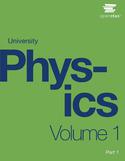 Textbook or OER/Low-cost Title: OpenStax University Physics Volume 1. ISBN-13: 978-1-947172-20-3.
Brief Description: University Physics with Modern Physics addresses the challenge of seeing connections between worked examples in the textbook and problems on homework and exams. Written to help you see the big picture of what each worked example is trying to illustrate, the text enables you to practice using sets of related problems that help identify repeating patterns and strategies. Like your professor, the authors want you to learn physics and to enjoy the experience. They also want you to succeed in your course. The textbook is available in both Spanish and English.
Free online homework system: LibreTexts ADAPT (https://adapt-promo.libretexts.org)
Senior Contributing Authors
William Moebs, Formerly of Loyola Marymount University
Samuel J. Ling, Truman State University
Jeff Sanny, Loyola Marymount University
Contributing Authors
Stephen D. Druger, Northwestern University
David Anderson, Albion College
Daniel Bowman, Ferrum College
Gerald Friedman, Santa Fe Community College
Edw. S. Ginsberg, University of Massachusetts
Kenneth Podolak, Plattsburgh State University
Takashi Sato, Kwantlen Polytechnic University
David Smith, University of the Virgin Islands
Joseph Trout, Richard Stockton College
Kevin Wheelock, Bellevue College
Dedra Demaree, Georgetown University
Richard Ludlow, Daniel Webster College
Patrick Motl, Indiana University Kokomo
Lev Gasparov, University of North Florida
Lee LaRue, Paris Junior College
Mark Lattery, University of Wisconsin
Tao Pang, University of Nevada, Las Vegas
Alice Kolakowska, University of Memphis
Student access: Students have different options to access the resources. The OpenStax textbook can be accessed and viewed online and can also be downloaded in pdf format and on iBooks. Low-cost printed copies of the textbook are available for students to purchase at the campus bookstore or ordered online. Additionally, printed copies of the textbook can be borrowed from the campus library.
Supplemental resources: The OpenStax textbook offers resources for instructors that include slide templates with figures, cartridges for some LMS, instructors solution guides, and other resources. The resources for instructors for this particular textbook can be found here: https://openstax.org/details/books/university-physics-volume-1?Instructor%20resources
The textbook also offers resources for students, such as getting started guides, student solution guides and detailed solutions to problems, etc. https://openstax.org/details/books/university-physics-volume-1?Student resources.
Brief Description of LibreTexts ADAPT https://adapt-promo.libretexts.org ADAPT is a free homework system that provides instructors with the ability to create assignments with questions that can be customized or adopted from openly licensed question banks. Students can access the system by creating individual accounts and inputting a course code provided by their instructor.
Provide the cost savings from that of a traditional textbook. My proposal involved adopting an open-source textbook for two sections of Engineering Physics I (PHY 200). I have taught the course in the past, using a Pearson edition of University Physics, by Young and Freedman. I also made use of the Mastering Physics online homework system that is associated with the textbook. The price of the current edition of University Physics, Volume 1 (Chapters 1-20) starts at $191.99 (loose-leaf option). The rental price for an eTextbook for the semester starts at $10.99 per month. In addition to the textbook, access to the online homework system starts at $84.99 for the semester, and appears to include access to the eTextbook https://www.pearson.com/en-us/subject-catalog/p/university-physics-with-modern-physics/P200000006855/9780136781998.
This latter subscription would be the least expensive option for students to purchase if I were not to convert my course to low-cost materials. Additionally, students were required to use a student response device (clicker) for classroom activities. Currently, the cost of a clicker remote starts at $27.99. Nowadays, there are app subscription options that start at $15.99 for one semester (https://www.iclicker.com/pricing). If I were to teach this course in its current format, the minimum cost for students would be of $84.99 (18-week access to Mastering) + $15.99 (iClicker app subscription) = $100.98
This past semester, I replaced the Pearson textbook with the OpenStax University Physics Volume 1 textbook (https://openstax.org/details/books/university-physics-volume-1), ISBN-13: 978-1-947172-20-3. that offers a free digital version. Print copies of this textbook are available for $40.00 (black and white print) or $50 (color print). As stated above, I also adopted the Libretexts ADAPT free online homework system. This proposed course conversion resulted in a zero-cost course. The total number of students who completed the course was 32.
License: Creative Commons Attribution License v4.0
Instructor Name - Cynthia Trevisan
I am a Physics professor at California State University, Maritime Academy.
Please describe the courses you teach I regularly teach both calculus-based, and algebra-based lower-division physics courses and physics laboratories.
Algebra-based physics courses:
- General Physics I (lecture): Topics studied include vectors and scalars, Newton’s laws, statics and dynamics, translational and rotational kinematics, rotational dynamics, work and energy, momentum, conservation principles, equilibrium and elasticity, gravitation, periodic motion and, fluids and buoyancy.
- General Physics I Laboratory: Explores fundamental principles of kinematics, dynamics, work and energy, momentum, gravitation, simple harmonic motion, and other concepts studied in General Physics I through experimentation.
- General Physics II (lecture): Topics studied include fundamental principles of electrostatics, direct and alternating currents, electromagnetism, optics, quantum physics and nuclear processes, with problem solving.
- General Physics II Laboratory: Explores fundamental principles of electrostatics, direct and alternating currents, electromagnetism, optics, electronmagnetic waves, and quantum physics through experiments. Experiments correspond to the theory learned in General Physics II.
Calculus-based physics courses:
- Engineering Physics I (lecture): Topics studied include a calculus-based approach to vectors and scalars, motion, Newton’s laws, statics and dynamics, translational and rotational kinematics, rotational dynamics, work and energy, momentum, conservation principles, equilibrium and elasticity, gravitation, periodic motion and fluid mechanics.
- Engineering Physics I Laboratory: Explores fundamental principles of kinematics, dynamics, work and energy, momentum, gravitation, simple harmonic motion, and other concepts studied in Engineering Physics I through experimentation.
- Engineering Physics II (lecture): Topics studied include a calculus-based approach electrostatics, electric charge and force, Gauss’s law, electric potential, voltage, capacitance, resistance, current, direct-current circuits and instruments, magnetic force and fields, Ampere’s law, Faraday’s law, RLC circuits, Maxwell’s equations, and electromagnetic waves.
- Engineering Physics II Laboratory: Explores fundamental principles of electrostatics, electric charge and force, electric potential, voltage, capacitance, resistance, direct and alternating current circuits and instruments, electromagnetism, and other concepts studied in Engineering Physics II through experimentation.
Describe your teaching philosophy and any research interests related to your discipline or teaching. Teaching is guiding learners on a journey of discovery and intellectual growth. Students arrive at the classroom with a wide range of experiences and at various stages of educational development. Prior experiences will have formed mental structures in learners, schemas, that are used to navigate new learning. Frequently, the understandings that students bring can hinder learning because, particularly in physics, concepts and fundamental principles are many times counterintuitive, and therefore contradict the interpretations that students have formed of the physical phenomena encountered in everyday life experiences. Past experiences, however, can be used to make the learning environment richer. Effective teaching, therefore, requires an intricate balance between challenging misconceptions and using the schema that students bring to scaffold new learning. Because learning is a dynamic process, it entails frequently fine-tuning instructional techniques, as well as the adoption of new pedagogies, when these are shown to better help students learn. I have found that active learning techniques are critical for consolidating new understanding. Positive reinforcement of important concepts by retrieving and practicing, interleaving of topics, and embracing challenges help students integrate new concepts.
Over the years, I have also discovered that effective learning involves aspects that go beyond pedagogical techniques and the intellectual work required to grasp new ideas. I learned about the crucial importance of setting a safe, nourishing environment for students to work in. It is not possible to learn in situations of high anxiety and stress, or in environments in which students do not feel safe. I am convinced that the thoughts that student have about themselves and about their ability to learn are impactful and can become powerful obstacles to learning. Alternatively, helping students build self-confidence can set an effective path toward the achievement of learning goals.
I therefore perceive my role as an educator as multifold. An important part of my instructional efforts involves guiding students through hands-on activities, having students experience the trial-and-error steps that will help question and debunk misconceptions. This requires carefully designing activities that will lead students to well-founded conclusions and, consequently, to the joy of intellectual discovery. It is important to work with students so that they internalize the fact that making mistakes is a natural way of learning and that they should embrace intellectual challenges. It is also important to encourage students when they become disappointed in their performance by giving them timely feedback and guidance on how to improve, and by helping them realize how much they have accomplished.
Another part of my responsibilities as an educator is to help students internalize their true potential, to help convince them that, with hard work, they can achieve their intellectual goals. There are many actions that can be taken to achieve this. An environment that encourages exploration and helps students view errors as a path towards learning is a first step. Giving students multiple opportunities to practice, retrieve and apply new concepts by creating low-stakes activities can also promote learning. Giving students repeated opportunities to demonstrate what they have learned helps reduce the stress that students are likely to feel if the fate of their success in a course is based solely on their performance on few, high-stakes exams.
Lastly, I perceive the creation of a culture of sincere respect and appreciation of all learners as my moral obligation. Some of the steps that I take to that end include creating course syllabi that are carefully crafted to use only inclusive language. Additionally, the first day of class, I ask students to fill out a questionnaire that asks for their name, preferred name or nickname, gender pronouns, how they feel about taking the course, if there is anything they anticipate may interfere with their success in the class, and how I could help. I also create activities that have students interact with one another following etiquette rules. These activities invite students to share things about themselves such as the place they call home, something that they are passionate about, and something their peers may not know about them. The purpose of these activities is to offer the students the opportunity to get to know one another and to know me, and to help create a supportive learning community where each member is appreciated. There are many other actions that can be helpful in creating and maintaining a safe, respectful learning environment. Above all, is setting the example of the behavior that one would like students to follow and patiently, but firmly, correcting any deviations from a respectful attitude to all.
College offers students the opportunity of intellectual and personal growth. These stimulating years of discovery can open unimaginable possibilities and have the potential to change the course of a student’s life. For some students, the years spent pursuing their undergraduate degree might be the only higher education experience they encounter. The interactions they engage in with their professors and peers may be their lifetime opportunity to be immersed in the world of ideas, where everything is possible, and where the future is limitless. I am therefore fully committed to do everything within my power to create a learning environment that offers students a space to discover their passions and to thrive, a learning space that allows learners to take advantage of every opportunity of intellectual and personal growth.
OER/Low Cost Adoption Process
Provide an explanation or what motivated you to use this textbook or OER/Low Cost option.My primary motivation for adopting this textbook was to reduce costs for students. It is not uncommon for students to accumulate substantial debt in pursuit of a college education, and I am deeply committed to doing what I can to help alleviate that burden. The cost of tertiary education is already prohibitively high for many, and I believe it is our responsibility, where possible, to make higher education more accessible and affordable. By choosing open educational resources, I aim to support students not only in their academic success but also in their long-term financial well-being.
How did you find and select the open textbook for this course? In selecting course materials, I consulted both librarians and faculty colleagues. Several members of my department were already using the OpenStax University Physics textbook, and continuing with this option was clearly in the best interest of our students, ensuring consistency across sections. I learned about the LibreTexts ADAPT online homework system through one of our campus librarians, and decided to adopt it based on its open-access nature and potential to support the textbook effectively.
Sharing Best Practices: In hindsight, I wish I had explored the full range of resources offered by this textbook earlier. While time is always limited, I believe both my students and I would have benefited more had I invested the time to engage more deeply with the available instructor and student materials. The textbook provides a variety of valuable tools—such as simulations and instructional videos—that could have significantly enhanced the learning experience. Encouraging students to take advantage of these resources is something I plan to prioritize in future iterations of the course.
Describe any key challenges you experienced, how they were resolved and lessons learned. I did not encounter any significant difficulties in adopting the OpenStax University Physics Volume 1 textbook. However, I invested a considerable amount of time developing supplemental materials to support student learning. For each chapter, I created an overview slide deck, a more detailed set of lecture slides or notes, and a separate set of conceptual question slides. These materials were made freely available to students through our campus learning management system (LMS), offering a more accessible and distilled presentation of the content—particularly helpful for students who tend to get overwhelmed by details. In addition, I prepared formula sheets, hosted review sessions, and developed practice problem sets for term exams.
I also adopted the LibreTexts ADAPT online homework system, which offers instructors flexibility in creating assignments and has the potential to be an excellent resource. However, many of the questions imported from the OpenStax University Physics Volume 1 textbook contained errors, including incorrect answers, typos, and formatting issues. As a result, I spent many hours reviewing and correcting questions before assigning them to students. While I may continue to use ADAPT for this course in the future—provided the assignments require minimal revision—I am unlikely to adopt it for a new course until the platform undergoes more rigorous quality control by its developers. Furthermore, although ADAPT is intended to integrate with campus LMS platforms, I was unable to establish synchronization with our system. This meant that all work had to be completed directly through the ADAPT platform, and assignment grades had to be transferred manually into the LMS.
Research Interests My research experience is in the field of Atomic, Molecular and Optical Physics, and involves developing theoretical formulations as well as applying modern computational techniques to problems of chemical physics that describe electron-driven chemistry processes and the dynamics of photon-interaction with molecules. I am a Laboratory Affiliate at the Lawrence Berkeley National Laboratory, where I conduct research in collaboration with scientists at the Atomic, Molecular and Optical Science Group, Chemical Sciences Division. Working with first-tier scientists at the Berkeley Lab, I routinely perform state-of-the-art quantum mechanical calculations in the theory of photon and electron collisions molecules. I am currently studying the molecular-frame photoelectron angular distributions for polyatomic molecules that are produced after a core-level or valence electron is removed due to the absorption of an X-ray photon.