Multilingual L.A.: Languages and Communities, UNV 101
Multilingual L.A.: Languages and Communities, UNV 101
Purpose: to help other instructors teaching the same course
Common Course ID: UNV 101
CSU Instructor Open Textbook Adoption Portrait
Abstract: This open textbook is being utilized in a linguistics course for undergraduate students by Dr. Iara Mantenuto at California State University, Dominguez Hills. The open textbook provides a general introduction to linguistics and its different subfields, has examples and applications about a variety of languages and communities; moreover, the explanations are also provided in video format by a linguist who walks the student through the content of each chapter. The main motivation to adopt an open textbook was to reduce the cost for students, to give them the most up to date material and pedagogical approach to the field of linguistics, and to allow them to have the textbook from the very first day of class. Most student access the open textbook online, through a link on Canvas.
Course Title and Number: Multilingual L.A.: Languages and Communities, UNV 101
Brief Description of course highlights: This course introduces the field of Linguistics and its subfields through a survey of local languages spoken in Los Angeles, the people who speak those languages, and the cultural ideologies which impact language change and production over time. In this course I foster global understanding and appreciation of cultural diversity, differences, and inequality through critical thinking, giving the opportunity for students to make informed judgements about the community/society around them. Since it is a first-year seminar course, I also focus on transferability of what we learn to navigate the college experience, possible language related career paths and social/community-oriented interventions.
Student population: All freshmen, majority first generation students from minoritized groups. Most of them are commuters and/or are local.
Learning or student outcomes: By the end of the semester, students will be able to:
- Analyze linguistic data, by using appropriate terminology and notation, in morphology, phonology, syntax, and other subfields.
- Describe the local communities at CSUDH and in LA, their cultures and their languages, through analytical linguistics tools offered by linguistics subfields.
- Expose the linguistics ideologies which impact language change and language production.
- Report their linguistic experience in detail, by using the analytical tools learned in this class.
- Transfer their knowledge of linguistics into activism and the job market, while taking advantage of the resources available on our campus.
Textbook or OER/Low cost Title: Essentials of Linguistics, 2nd edition
Brief Description: This book has multiple chapters, each one discussing a subfield of linguistics. Each chapter presents the same material in written format, but also with a video explaining it – something truly helpful for students who might prefer that format. Each chapter also includes small self-quizzes that students can use to see whether they understood the main concepts presented. The content is presented in a way that is extremely modern, prioritizing the topics that have been deemed important in linguistics in the last 5 years, and it does an excellent job at connecting the linguistic examples to the people who speak those languages – does not take data out of context.
Please provide a link to the resource https://ecampusontario.pressbooks.pub/essentialsoflinguistics2
Authors: Catherine Anderson, Bronwyn Bjorkman, Derek Denis, Julianne Doner, Margaret Grant, Nathan Sanders, Ai Taniguchi.
Student access: I include the link to the OER on our Canvas page and my fluid syllabus.
Provide the cost savings from that of a traditional textbook. $120.99
License: Creative Commons Attribution-Non Commercial – ShareAlike 4.0 International License.
OER/Low Cost Adoption Process
Provide an explanation or what motivated you to use this textbook or OER/Low Cost option. Saving money for students, but also the quality of the content is very high, it takes a more modern approach on how to teach linguistics, it has examples that are well presented and connected to the communities that speak those languages which are included and observed, and it has supporting video materials embedded in each chapter.
How did you find and select the open textbook for this course? I attended a session on pedagogy held by the Linguistics Society of America.
Sharing Best Practices: I am not sure I have an answer here, but I think that just normalizing conversations about all the positive outcomes of using OER/low-cost material, and how they can raise the quality of our classes, is fundamental.
Describe any key challenges you experienced, how they were resolved and lessons learned. So far, I have never had any issues. If anything, maybe at times I integrated the material with content from other texts, but that is something I was doing even with a regular textbook. So there are no negative points for me so far.
Instructor Name - Iara Mantenuto
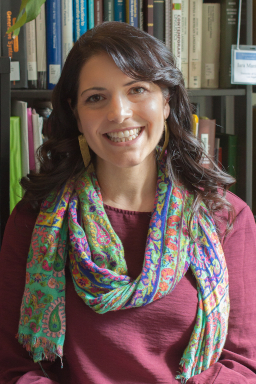
I am a linguistics associate professor in the English Department at California State Univ, Dominguez Hills.
 Please provide a link to your university page. https://www.csudh.edu/english/faculty/iara-mantenuto
Please describe the courses you teach Introductory courses to linguistics, syntax, morphology, phonology, semantics, teaching methodology for TESOL, seminars on a variety of topics for both undergraduate and graduate students.
Describe your teaching philosophy and any research interests related to your discipline or teaching. In my teaching I have four major goals: to spark interest in linguistics, to let my students know that their opinions and their questions matter, to introduce them to linguistic research and the ways that its skills can be applied to their lives and careers, and to ask my students to reflect on their positionality as speakers, members of their community, and members of society in general. I pride myself on being able to relate to students, and to make sure that I am there to help their learning process in any way I can. I am always open to conversation and to questions, as I treat students as equals, while making clear that I expect the same level of dedication and openness from them. A class based on reciprocal trust and respect is the basis for any creative and empowering intellectual exchange, and this approach is part of my classes both at the undergraduate and at the graduate level.
My research focuses on morphosyntactic theory, crosslinguistic variation, and pedagogical techniques used to improve our teaching of linguistics, second language teaching and teaching of indigenous languages. I work on a variety of topics including demonstratives, determiners, quantifiers, "other" (disanaphor morphemes), relative clauses, comparatives and classifiers. I carry out documentary linguistic work which is theoretically informed and that contributes to theoretical linguistics. My research focuses on Upper Southern Italian languages and Mixtec languages, working collaboratively with the communities who speak these languages.