
Critical Thinking in Organizations - BA 105
Critical Thinking in Organizations - BA 105
Purpose: to help other instructors teaching the same course
Common Course ID: BA 105
CSU Instructor Open Textbook Adoption Portrait
Abstract: This open textbook is being utilized in a general education course in business for undergraduate or graduate students by Prof. Tyler Stumpf at Cal Poly Humboldt. The open textbook provides students with supplementary information on the various business topics covered in the course ranging from business ethics to accounting. The main motivation to adopt an open textbook was to provide a zero cost textbook option for students. Most student access the open textbook in a PDF format version of the book provided on the course Canvas site.
Course Title and Number - BA 105 - Critical Thinking in Organizations
Brief Description of course highlights: Critical thinking and decision-making in organizations. Approach, solve, and communicate solutions to organizational issues systematically. Participate in stimulating debates, classroom simulations, and real-world research that bring topics to life. https://catalog.humboldt.edu/search_advanced.php?cur_cat_oid=12&search_database=Search&search_db=Search&cpage=1&ecpage=1&ppage=1&spage=1&tpage=1&location=33&filter%5Bkeyword%5D=BA+105
Student population: This course satisfies the requirement for GE area A, and is also used as a business minor course by many students. A wide range of majors and minors are represented in the course. In a typical semester, there will be students from zoology, biology, sociology, art, psychology, business, wildlife, political science, computer science, and many other majors in the course. Students will also range from freshmen all the way to seniors. For some, this will be the first business course they have ever taken, while others are upperclassmen business students with more experience with business education. The course attracts a diverse cross-section of the campus community and student body.
Learning or student outcomes: During the course readings, exercises, discussions and team assignments students will:
· Be required to identify and state issues to be considered in a clear and comprehensive fashion.
· Collect and analyze evidence to be used in building a substantive argument.
· Apply frameworks that will require the methodical analysis of assumptions, data and viewpoints.
· Be encouraged to develop a personal perspective on complex organizational issues while producing a clearly defined hypothesis, supporting facts and a powerful conclusion.
· Practice and develop strong communication skills that are needed in organizations.
· Obtain an introductory knowledge of business, economics, and social vocabulary and concepts.
Key challenges faced and how resolved: The course covers a broad area of business, and finding a textbook that could supplement the learning outcomes was a challenge. In particular, most of the textbooks reviewed as potential options were average quality, yet extremely expensive for students. When I discovered this open-source textbook with help from the Cal Poly Humboldt library, it was commensurate in quality with others I had reveiwed, but most importantly, free to students.
Textbook or OER/Low cost Title: : “Exploring Business”
Brief Description: The way I structure my course is that I create a lot of custom in-class course content myself from my own notes and sources. The textbook is used as a supplementary resource. For example, an exam might cover 70% of the material I covered in lecture from my custom content, and for the other 30% we use specific parts of the textbook to supplement their learning. I tell them specifically what I want them to look at in the book, and they do self-study on that material.
Please provide a link to the resource https://open.umn.edu/opentextbooks/textbooks/15
Authors: University of Minnesota Libraries Publishing (Author removed at request of original publisher)
Student access: I provide a PDF of the textbook in the week 1 module on our course Canvas site.
Provide the cost savings from that of a traditional textbook. $125-230 per student per semester
License: Exploring Business by University of Minnesota is licensed under a Creative Commons Attribution-Non Commercial-Share Alike 4.0 International License, except where otherwise noted.
OER/Low Cost Adoption Process
Provide an explanation or what motivated you to use this textbook or OER/Low Cost option. I was introduced to the idea of adopting a free, open-source textbook by library personnel at Cal Poly Humboldt. The idea of saving students money while not sacrificing quality was obviously very appealing. A good example of trying to use the Golden Rule
How did you find and select the open textbook for this course? I was directed to several online sites for open-source textbooks by library personnel at Cal Poly Humboldt. I then spent time looking through the various options until I found this one.
Sharing Best Practices: Commit to reducing total student material costs per course to $20 or less for undergraduate courses, and $80 or less for graduate courses. Once you make that commitment, you will find ways to create great course content that doesn’t sacrifice quality for very low or zero cost to students.
Describe any key challenges you experienced, how they were resolved and lessons learned. I don’t have any challenges to report. The integration of a free, open-source textbook in my class has been an easy, seamless process. If anything, it has made many challenges go away, such as students’ inability or unwillingness to purchase an expensive textbook, and all of the second-order effects of that which impact both the student and instructor.
Instructor Name - Tyler Stumpf
I am a Business professor at the Cal Poly Humboldt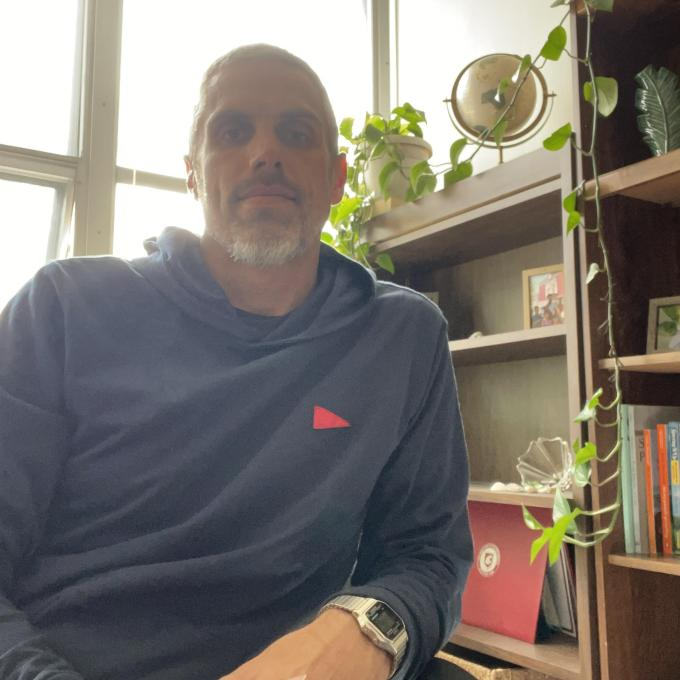
Please provide a link to your university page.
https://www.humboldt.eduu
Please describe the courses you teach Most of the courses I teach have a management and entrepreneurship focus, and are for upper classmen or graduate students. I also teach one class that is a general education course, BA 105, which has the most students of any course I teach, and is the course in which I use a free, open-source textbook.I regularly teach the following courses:
BA 105 Critical Thinking in Organizations
BA 431 Global eCommerce Entrepreneurship
BA 432 Leading Sustainable Businesses
BA 433 Service Venture Management
MBA 650 Designing Sustainable Organizations
Describe your teaching philosophy and any research interests related to your discipline or teaching. If it can’t be made interesting or relevant to students’ lives, they won’t learn very well. So I structure my courses, my lectures, my assignments, and my projects around that principle. I went to college for many years, and the courses I remember are the ones that the professor made interesting and engaging. That’s the philosophy I aspire to now.