
Human Nutrition: NTRS 2500
Human Nutrition: NTRS 2500
Purpose: to help other instructors teaching the same course
Common Course ID: NTRS 2500
CSU Instructor Open Textbook Adoption Portrait
Abstract: This open textbook is being utilized in a Human Nutrition course for undergraduate students by Carrie Adase at California State University, Los Angeles. The open textbook provides education in basic nutrition and metabolism, with a focus on macro- and micronutrients, nutrition across the lifespan, and information literacy, . The main motivation to adopt an open textbook was to provide students a zero cost course option. Most student access the open textbook through the textbook’s website.
Course Title/Number - Human Nutrition - NTRS 2500
Brief Description of course highlights: This course focuses on nutrition and its relation to health, behavior, growth, development, and aging.
https://ecatalog.calstatela.edu/search_advanced.php?cur_cat_oid=54&ecpage=1&cpage=1&ppage=1&pcpage=1&spage=1&tpage=1&search_database=Search&filter%5Bkeyword%5D=NTRS+2500&filter%5Bchosen_locations%5D=1&filter%5B3%5D=1&filter%5B31%5D=1
Student population: This course serves as a lower division GE course for all students. It also is a required course for nutritional science and nursing majors.
Learning or student outcomes: List student learning outcomes for the course.
- Examine the crucial relationship between food, nutrients, and human health.
- Differentiate the nutrients and their role in overall health.
- Evaluate personal food choices and formulate a personal action plan.
- Identify and evaluate scientific nutrition information.
- Examine the connection between our environment and our health.
Syllabus and/or Sample assignment from the course or the adoption [optional]: To illustrates how the open textbook is used in the course.
Textbook or OER/Low cost Title: Nutrition Science and Everyday Application
Brief Description: The textbook is separated into eleven chapters with a focus on designing a healthy diet, information literacy, digestion and metabolism, macronutrients, micronutrients, nutrition and physical activity, and nutrition across the lifespan. This book is designed as an Open Education Resource (OER) for introductory nutrition courses and has been adopted for use in high schools and colleges. Topics covered include basic nutrition and metabolism, information literacy, body weight and health, nutrition across life stages, dietary supplements, an in-depth look at each of the macronutrients, and major functions of vitamins and minerals. The second edition of Nutrition: Science and Everyday Application was released in August 2022. The second edition includes a fully revised Unit 7 (Body Weight and Health) and minor revisions to Unit 10 (Nutrition and Physical Activity). In June 2023, Unit 2 (Nutrition Science and Information Literacy) was significantly updated along with the ancillary materials for Unit 2. The remainder of the OER and the accompanying ancillary materials are the same as the first edition, originally published in December 2020.
Please provide a link to the resource Nutrition: Science and Everyday Application Nutrition: Science and Everyday Application – Simple Book Publishing
Authors: Alice Callahan, PhD; Heather Leonard, PhD, RDN; and Tamberly Powell, MS, RDN
Student access: Links are provided to the students in Canvas through the reading list.
Supplemental resources: The authors also have a full set of instructional materials that they are willing to share. The materials include test banks, PowerPoint slides, guided study notes, and suggestions for classroom activities and discussions.
Provide the cost savings from that of a traditional textbook. Typical books for this class cost $120
License: Creative Commons Attribution NonCommercial
OER/Low Cost Adoption Process
Provide an explanation or what motivated you to use this textbook or OER/Low Cost option. The primary reason why I adopted a zero cost textbook was to save students money and increase course engagement.
How did you find and select the open textbook for this course? A colleague introduced me to the textbook.
Sharing Best Practices: My students have become more engaged in my class due to having an OER textbook. In the past, many students did not purchase the book for my class due to the high cost. Having an OER has increased not only the quantity of work from my students, but also the quality.
Describe any key challenges you experienced, how they were resolved and lessons learned. I have not encountered any challenges.
Instructor Name: Carrie Adase, MS, RDN
I am a Nutritional Science professor at the California State University, Los Angeles. I am also the coordinator of our Post Baccalaureate Certificate in Nutritional Science. 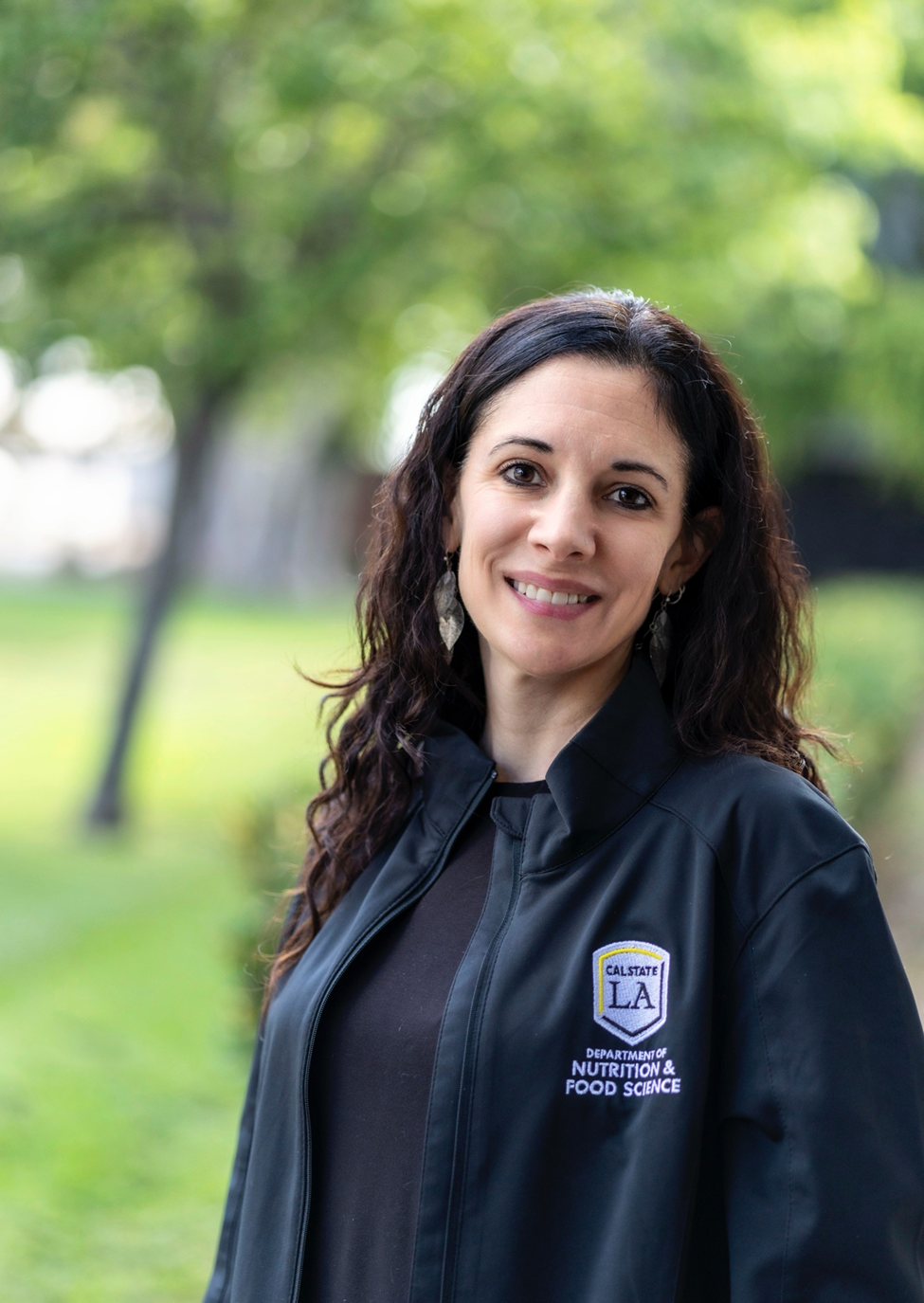 Please provide a link to your university page.
https://www.calstatela.edu
Please describe the courses you teach The courses I teach are part of an accredited Didactic Program in Dietetics (DPD) that prepares students for careers as Registered Dietitian Nutritionists (RDN) and Nutrition and Dietetics Technicians, Registered (NDTR). I currently teach:
NTRS 2500 – Human Nutrition
NTRS 3170 – Introduction to Nutrition and Metabolism
NTRS 4110 – Evaluation of Current Nutrition Topics
NTRS 3130 – Introduction to Nutrition and Dietetics
NTRS 4185 – Preparation for Dietetics Internship I
NTRS 4195 – Preparation for Dietetics Internship II
NTRS 5110 – Research Concepts and Methodology
Courses I have taught:
NTRS 3100 - Scientific Aspects of Food Preparation (Lab instructor)
NTRS 3130 - Introduction to Nutrition and Dietetics
NTRS 4100 - Experimental Foods (Lecturer and lab instructor)
NTRS 4120 - Nutrition Through the Lifespan
NTRS 4160 - Child Nutrition
NTRS 4175 - Advanced Nutrition II
NTRS 4176 - Nutrition Assessment Lab
NTRS 4650 - Medicinal Herbs in Nutrition
NTRS 4670 - Functional Food Design for Health
NTRS 4790 - Professional Interactions and Writing Skills
Describe your teaching philosophy and any research interests related to your discipline or teaching. In my classes, I believe in creating an inclusive and engaging environment that allows students the opportunity to apply critical thinking skills. All assignments and activities are linked to real-world applications through case studies, guest speakers, and discussions of current events related to nutrition and healthcare. My research interests are focused on food access and the connection between mental health and nutrition, especially among lower-income, underrepresented communities and US military veterans.