PSY 4030: Child Maltreatment and Domestic Violence (cross-listed as COUN 4030)
PSY 4030: Child Maltreatment and Domestic Violence (cross-listed as COUN 4030)
Purpose: to help other instructors teaching the same course
Common Course ID: PSY 4030
CSU Instructor Open Textbook Adoption Portrait
Abstract: These free resources are being utilized in a Psychology course for undergraduate or graduate students by Dr. Dana Saifan at California State University, Los Angeles. The open resources provide a wide range of accessible and practical information on child maltreatment and domestic violence, largely from a clinical psychology perspective. The main motivation to adopt an open textbook was to make the course affordable for students, most of whom are working class. Students access the materials online on our Canvas course website.
Course Title and Number: PSY 4030: Child Maltreatment and Domestic Violence (cross-listed as COUN 4030)
Brief Description of course highlights: Introduction to child maltreatment and family violence; developmental considerations, victimization, assessment, preventions, interventions, safety plans, legal and ethical issues, roles of helping professionals, research findings and community resources. . https://ecatalog.calstatela.edu/content.php?catoid=54&navoid=6307&filter%5Bitem_type%5D=3&filter%5Bonly_active%5D=1&filter%5B3%5D=1&filter%5Bcpage%5D=40&print=&contract
Student population: Mostly Psychology majors, with some students from the Counseling department; prerequisites include PSY 1500 (Introductory Psychology)
Learning or student outcomes: List student learning outcomes for the course.
SLO-1: Identify, define, and describe key concepts in child maltreatment (e.g., physical abuse, sexual abuse, emotional / psychological abuse, and neglect) and domestic violence (e.g., elder abuse, intimate partner violence).
SLO-2: Demonstrate familiarity with theoretical perspectives on etiology of child maltreatment and domestic violence, using a socio-ecological approach, as well as key empirical findings and historical trends.
SLO-3: Demonstrate familiarity with legal and ethical guidelines related to child maltreatment, domestic violence, and mandated reporting.
SLO-4: Assess and identify physical, behavioral, and emotional risk factors and warning signs related to victims and perpetrators of child maltreatment and domestic violence.
SLO-5: Demonstrate relevant culturally responsive and trauma-informed clinical skills to assess and treat child maltreatment, including conducting a risk assessment, safety planning, and identifying appropriate treatment options.
SLO-6: Identify and disseminate appropriate resources for survivors of abuse.
SLO-7: Demonstrate knowledge and critically apply psychological principles to personal, social, professional and organizational issues with regards to the assessment and treatment of child maltreatment and domestic violence.
SLO-8: Critically analyze social and systemic factors in relation to child maltreatment, including the child welfare system.
Syllabus and/or Sample assignment from the course or the adoption:
- Description of readings: We will be utilizing a variety of texts this semester, including excerpts from textbooks, chapters from books, popular articles, community reports, and more. To increase accessibility and affordability, Open Educational Resources will be used. All required readings and media will be free and posted on the Canvas Reading List.
- Example Assignment – Discussion Posts: Students will complete 5 posts on the Canvas discussion board. The posts will be related to the reading assigned for the week, and students will choose to answer two of the questions below:
- What stood out to you the most from the reading, and why?
- What was the most surprising or unexpected idea or finding from the reading, and why?
- What questions remain unanswered about the topic in the reading?
- What idea in the reading strongly affected or influenced your personal opinions, viewpoints, or values, and why?
- What do you think is one thing that should be done to help address the type of maltreatment / abuse you read about?
Students must integrate class readings and personal reflections in their posts and must substantively respond to at least 1 of their classmates’ posts. To maximize engagement and creativity, students can use multiple means of expression* for their posts and responses, including writing, audio recording, or video recording. Posts must be a minimum of 200 words, if written, or 2 minutes if recorded (do not exceed 3 minutes). Responses to classmates must be a minimum of 100 words, if written, or 1 minute if recorded (do not exceed 2 minutes). See this page for instructions on how to record audio or video directly into the Canvas discussion board.
The discussion board will be most fruitful and engaging when students fully engage with one-another and use the online platform as a space to explore ideas, consider differing points of view, and think about real-world applications of psychology concepts.
On weeks where discussion posts are assigned, students must post their original response to the prompt by 11:59pm on Sunday and must respond to classmates by 11:59pm on Monday. Students will earn up to 4 points for their posts and 2 points for their response to peers. No late responses will be accepted.
Textbook or OER/Low cost Title: A range of free resources were used. Some include:
- Free informational flyers / infosheets from Child Welfare Information Gateway
- Free informational flyers / infosheets from the National Child Traumatic Stress Network
- Chapters from Child Abuse Sourcebook 3rd Edition (edited by Juntunen, 2013)
- Chapters from Breaking Apart Intimate Partner Violence and Abuse (Nash, Shannon, Himes, & Geurin, 2023)
- Peer-reviewed articles available through the University Library
lease provide a brief description of the textbook, OER or Low-Cost option (including anything relevant to your choice) A wide range of resources were used. Resources focus on child abuse, domestic violence, and therapeutic approaches to addressing trauma. Materials were selected to be easily accessible and understandable, up-to-date, and practical. All materials about therapeutic approaches to addressing trauma are grounded in clinical psychology.
Resources and authors
Austin, Lesak, & Shanahan (2020)
Junnen (2013) ch. 9 to pg. 134 (Physical Abuse of Children)
NCTSN Child Physical Abuse Fact Sheet
Juntunen (2013) ch. 12 (Sexual Abuse of Children)
NCTSN Child Sexual Abuse Fact Sheet
Juntunen (2013) ch. 16 (Child Neglect)
Juntunen (2013) ch. 17 (Emotional Abuse of Children)
CWIG Long-Term Consequences of Child Abuse & Neglect
CWIG Child Maltreatment and Brain Development
Dettlaff et al. (2020)
“Breaking Apart” Violence and Abuse in Intimate Partner Relationships
“Breaking Apart” Why They Abuse, Why They Stay, and How They Leave
Do Right By Kids website
Vanderzee et al. (2018)
Aaron & Beaulaurier (2017)
Student access: Students access materials through an interactive Reading List on our course management system, Canvas
Provide the cost savings from that of a traditional textbook. Textbooks on this topic usually range from $80 - $130. For my 80 student class, savings were $6,400 - $10,400.
License: Material is a combination of copyrighted and openly licensed materials.
OER/Low Cost Adoption Process
Provide an explanation or what motivated you to use this textbook or OER/Low Cost option. I want to save students money, particularly because most of our students are working-class. I also like having more control over particular readings for particular topics, rather than relying on just one textbook.
How did you find and select the open textbook for this course? Browsed OER sites, browsed university library online, web search
Sharing Best Practices: I wish I had more time to get to know different OER websites (these were brand new to me) – they are a bit hard to navigate, and there are numerous sites, so getting guidance on which is best for psychology would be helpful. Having more time to browse and select before the start of the semester would be helpful.
Describe any key challenges you experienced, how they were resolved and lessons learned. A couple of students sometimes had trouble accessing the reading list from Canvas for some reason. I made sure to check with students early on about their ability to access the readings and helped connect them with IT if they needed support.
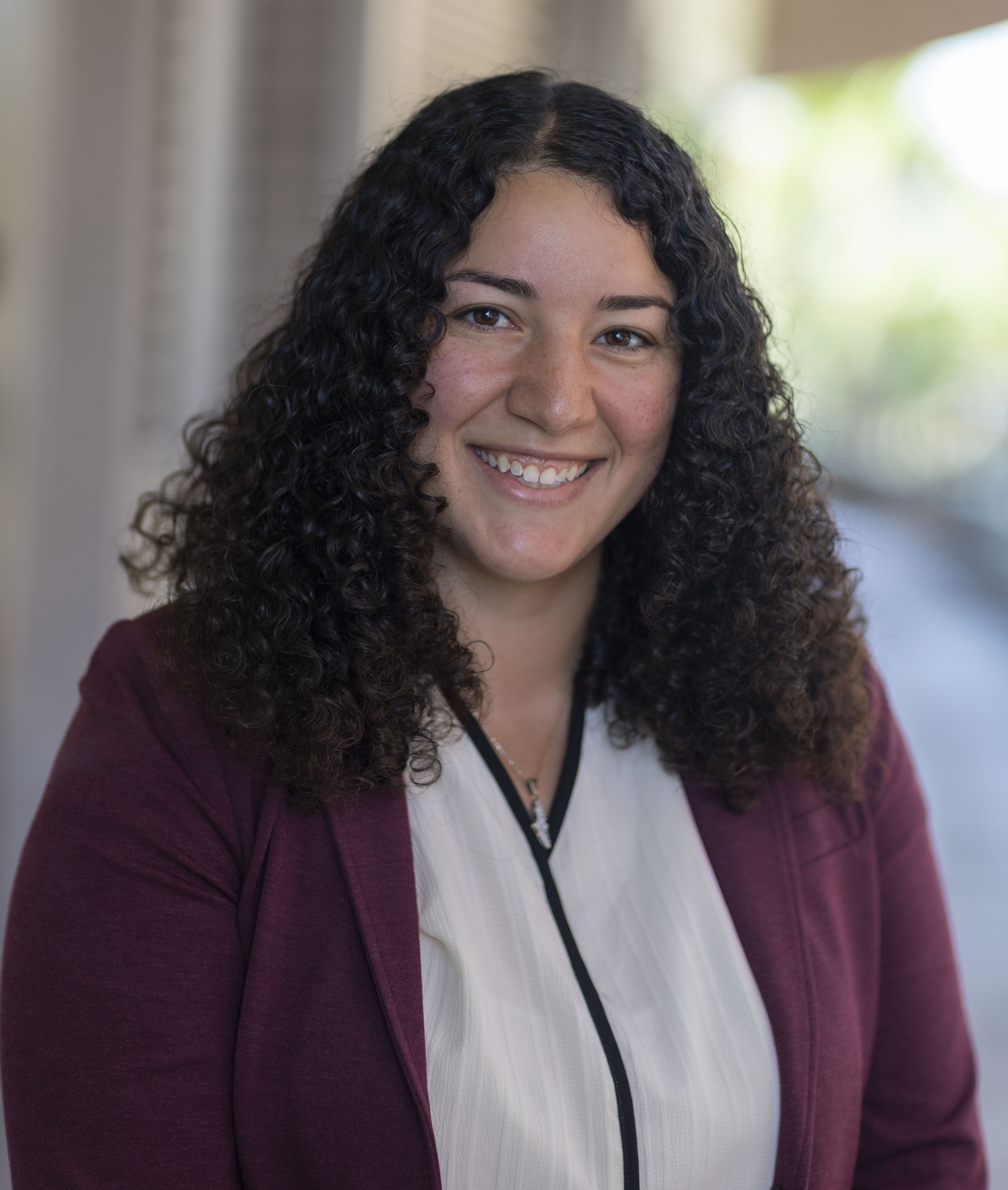
Instructor Name: Dana Saifan, Ph.D.
I am an Assistant Professor in Psychology at California State University, Los Angeles. I teach Research Methods in Psychology, Community Psychology, and Child Maltreatment and Domestic Violence.
Please provide a link to your university page.
https://www.calstatela.edu/faculty/dana-saifan-phd
Please describe the courses you teach:
- Child Maltreatment and Domestic Violence: The purpose of this course is to introduce you to the topics of child maltreatment and domestic violence, through the lens of developmental and clinical psychology. The course will give you an in-depth understanding of various types of child abuse and domestic violence, the factors that contribute to maltreatment / abuse, the foster care system, and mental health treatments for abuse and its associated symptoms. The course also provides introductory clinical training in assessment of risk related to abuse, mandated reporting requirements, and safety planning, including hands-on practice of these clinical skills. Students will leave this class equipped with knowledge of how to identify risk factors and signs of abuse, as well as insight into what it is like to work with survivors of maltreatment / abuse. Students considering a career in clinical psychology, mental health, or social work may especially benefit from the knowledge and skills gained in this class.
- Research Methods in Psychology: The purpose of this course is to introduce you to research design and methods that are used in the scientific field of psychology. This course will give you hands-on experience conducting your own research study, including initial idea conception, hypothesis formulation, data collection and analysis, and writing and presenting research findings. Whether or not you decide to pursue a career that involves psychological research, you will gain helpful skills and knowledge, including the ability to consume research with a critical lens and to understand the full research process.
- Community Psychology: The purpose of this course is to introduce you to the field of community psychology, with an emphasis on critical community psychology, and give you hands-on experience applying principles of community psychology in various contexts, including the university community and your own local communities. Community psychology looks at the roots of problems to address social issues impacting individuals and communities (e.g., oppression, poverty, homelessness), and it aims to shift power dynamics by collaborating with community members to address issues and achieve social justice. It examines mental health and well-being at a community and societal level, rather than just an individual level. Students will implement community psychology principles to engage in self-reflection and analysis of their own lives and communities. By learning community psychology theory, research methods, and prevention and intervention strategies, students will leave this class equipped with critical perspectives and skills to make lasting impacts in their communities. Students will choose to participate in either a Service Learning Option (i.e., volunteering in a community agency throughout the semester) or a Research Paper Option (i.e., completing a research paper at the end of the semester).
Describe your teaching philosophy and any research interests related to your discipline or teaching. I believe that every individual holds valuable experiences and knowledge that can be used to transform themselves, others, and the world. I aim to create a community of learners, with a culturally responsive and relevant pedagogy and a growth-oriented approach to student learning and achievement—making the classroom an accessible, engaging, and safe place where everyone, including the educator, learns and contributes to the learning of others. I view my role as that of a facilitator of learning, rather than a sole holder of expertise. I will provide the structure, guidance, and feedback to support your learning, but your learning will ultimately rely on your participation and engagement with the course material and your peers. Sharing your thoughts, ideas, questions, personal experiences, concerns, and more with the classroom community will allow all of us to learn and grow.
I prioritize building a classroom community that offers a safe environment for students of all backgrounds to participate and to learn from one another. I emphasize an inclusive and equitable environment where all students contribute to our learning community, and diverse perspectives are heard, respected, and valued. Further, I value the process of learning and individual growth, rather than overemphasizing students’ ability to merely memorize information. I am focused on student engagement with material rather than just having the “right answer.” Lastly, I aim to approach my teaching with flexibility in response to students’ needs.