HIST 3650: Science, Medicine, and Empire in the Atlantic World
HIST 3650: Science, Medicine, and Empire in the Atlantic World
Purpose: to help other instructors teaching the same course
Common Course ID: HIST 3650
CSU Instructor Open Textbook Adoption Portrait
Abstract: Kate Mulry designed a zero-cost history course for undergraduate and graduate students at CSUB. She created a reader by selecting articles, chapters, and podcasts relevant to the course. The main motivation to move away from assigning research monographs in the class was to save students money. Most students access the materials in our class Canvas page.
Course Title and Number
Brief Description of course highlights: This course will introduce students to the major themes of, and approaches to, the entangled histories of empire, science, and medicine in the early modern Atlantic world (1500-1800). Students will examine the role of science and medicine in creating, upholding, and governing empires. It asks how scientific and medical concepts were used as tools by various Atlantic empires, including the Dutch, Portuguese, Spanish, British, and French empires. Students will also investigate how imperial expansion and participants around the Atlantic, including Amerindians, free and enslaved Africans, and women, transformed and shaped emerging scientific and medical ideas. This course provokes students to consider the social and cultural milieus and historical actors that constructed and produced scientific knowledge in myriad colonial encounters. This course will also challenge older narratives associating western imperial ventures with the spread of modern medicine and scientific progress.
Student population: This class typically enrolls upper division majors, and students enrolled in the History MA program. Of course, students from all majors are welcome to – and do – take the class!
Learning or student outcomes: Here are some of the student learning outcomes for this class:
- Identify and define key events and trends in the history of science and medicine in the early modern Atlantic
- Recognize central themes as well as significant chronological and topical divisions in the history of science and empire
- Identify and explain the contributions of a wide range of historical actors to key events
- Analyze and interpret different kinds of evidence (primary and secondary sources) and organize it into written and oral arguments and interpretations about the past
- Demonstrate an awareness of historical causation and argument
- Draw thematic connections across geographic and temporal frames
- Evaluate scholarly arguments and evidence
- Develop significant, open-ended questions regarding the past and devise research strategies to answer them
- Develop a historical argument based on analysis of relevant historical source
Key challenges faced and how resolved: It takes a great deal of time to vet, select, scan, and upload the array of chapters and peer-reviewed research articles that will serve the intellectual goals of the class. Similarly, it takes time to listen to, and carefully select, appropriate podcast episodes. But it was worth the work, of course, to ensure students could take this zero-cost class with me.
Instructor Name: Kate Mulry
I am a history professor at CSUB. I teach classes on many topics, including the history of science and medicine.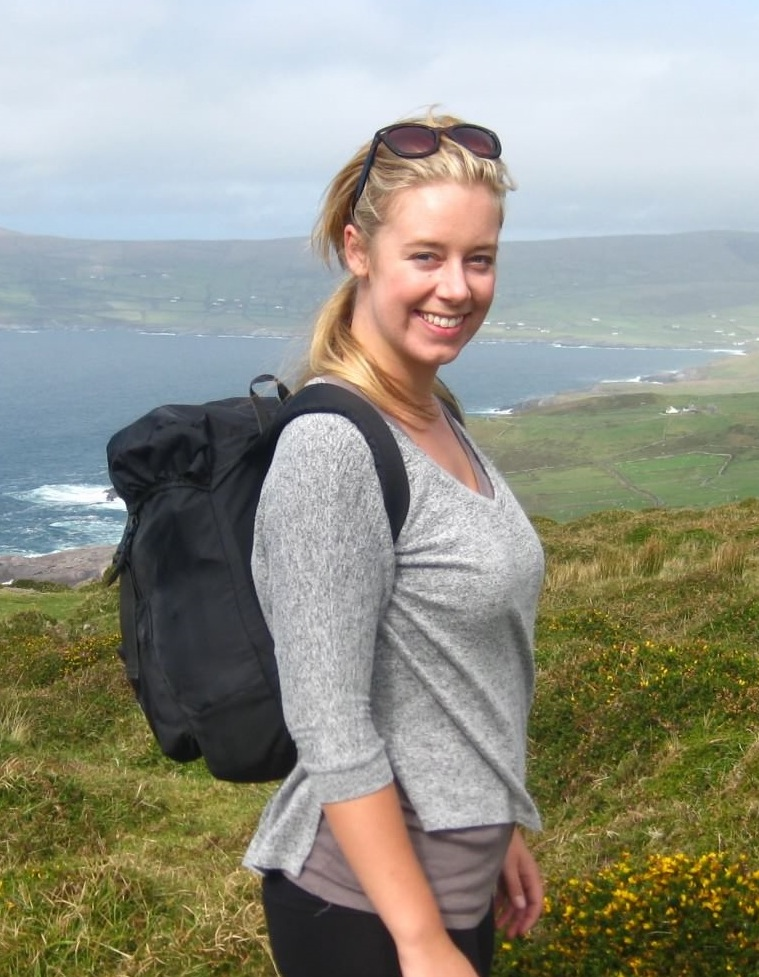 Please provide a link to your university page. https://www.katemulry.com/ or
https://www.csub.edu/history/faculty-and-staff-directory.shtml
Please describe the courses you teach I teach classes on the British empire, early America, the history of food, and the histories of science and medicine, among others.
Describe your teaching philosophy and any research interests related to your discipline or teaching. My research interests and teaching interests are deeply intertwined. Science, Medicine, and Empire in the Atlantic World is a class developed while I was researching and writing my first book: An Empire Transformed: Remolding Bodies and Landscapes in the Restoration Atlantic (New York: New York University Press, 2021)
OER/Low Cost Adoption Process
Provide an explanation or what motivated you to use this textbook or OER/Low Cost option. I was motivated to compile a digital reader for my students to save students money.
How did you find and select the open textbook for this course? Since this course is closely related to my own research interest, I had many potential authors and works under consideration before designing the syllabus. I then consulted colleagues in the same field at different institutions, read widely, and carefully selected relevant work.
Sharing Best Practices: This may be a challenging and time-consuming way to build a syllabus, but I think it benefits students financially as well as intellectually to craft a class from a diversity of sources and authors.
Describe any key challenges you experienced, how they were resolved and lessons learned. While there weren’t as many OER resources related to my class as I anticipated, I was able to pivot and develop my own “reader” for students to use at zero cost.
Textbook or OER/Low cost Title:
Brief Description: I collected over 50 readings for the students in this class across multiple peer-reviewed journals and university presses. There is not a single title, but many titles. As I noted above, I collected more than 50 individual readings and posted them to Canvas for the students in this class. I located these varied readings after reading through multiple peer-reviewed journals and scholarly monographs. There is not a single title, but many titles.
Student access: I uploaded all course material to Canvas for student access.
Please provide a link to the resource Here are some examples of freely available content online from the course:
Feb 6 – Collecting Nature: Cabinets of Curiosity, Herbariums, Museums & Menageries. Read: Henry Lowood, The New World and the European Catalog of Nature” in Karen Ordahl Kupperman, ed., America in European Consciousness, 1493-1750 (1995); Deanna MacDonald, “Collecting a New World: The Ethnographic Collections of Margaret of Austria” (2002) Listen: Footnoting History: Medieval Gift Elephants: https://www.footnotinghistory.com/home/medieval-gift-elephants. Dig: A History Podcast: The Rise of Natural History Museums: https://digpodcast.org/2018/04/29/natural-history-museums/
Feb 20 – Human Nature/ The Order of Nature. Read: Helen Burgos-Ellis, “Pollen: The Sexual Life of Plants in Mesoamerica” in Natural Things in Early Modern Worlds (2023); Londa Schiebinger, “Why Mammals Are Called Mammals: Gender Politics in Eighteenth-Century Natural History,” American Historical Review (1993). Listen: In Our Time: The Natural Order: https://www.bbc.co.uk/programmes/p00546ql
March 6 – Science and the Decorative Arts: Painting, Ceramics, and Textiles. Read: Susan Branson, “Flora and Femininity: Gender and Botany in Early America” Commonplace: the journal of early American life. https://commonplace.online/article/flora-femininity/.. Primary Source: Digitized Friendship Albums at the Library Company: http://librarycompany.org/portfolio-item/2012-friendship-album-project/
March 13 – Science, Slavery & the Anatomy of Blackness. Read: Andrew S. Curran, “The Problem of Difference: Philosophes and the Processing of African ‘Ethnography,’ 1750-1775” in The Anatomy of Blackness: Science & Slavery in an Age of Enlightenment (2011); Nicholas Crawford, “‘The reasonable sustentation of human life’: Food Rations and the Problem of Provision in British Caribbean Slavery” Early American Studies (2021) Listen: Dig: A History Podcast: Eugenics in the Making: Human Typologies, Population Hygiene, and Racial Science in the 18th Century https://digpodcast.org/2019/04/28/eugenics-in-the-making/
March 18 – Indigenous Science. Read: Neil Safier, “Global Knowledge on the Move: Itineraries, Amerindian Narratives, and Deep Histories of Science” Isis (2010); Allison Bigelow, “The Crossroads of the World: Centering Indigenous Knowledge in Colonial Iberian Histories of Mining and Metallurgy” in Relating Continents: Coloniality and Global Encounters in Romance Literary and Cultural History (2023). Listen: Lady Science: Episode 25: What is Native Science? https://www.ladyscience.com/podcast/ep25-native-science-and-indigenous-knowledge
Apr 1 – Women in Atlantic Science. Read: Andrea Wulf, “The Woman Who Made Science Beautiful” https://www.theatlantic.com/science/archive/2016/01/the-woman-who-made-science-beautiful/424620/ Listen: In Our Time: Women and Enlightenment Science: https://www.bbc.co.uk/programmes/b00vky4n
Provide the cost savings from that of a traditional textbook. In earlier iterations of this class, I assigned the following texts: (1) Appleby, Joyce. Shores of Knowledge: New World Discoveries and the Scientific Imagination. New York: W. W. Norton & Company, 2013. (2) Earle, Rebecca. The Body of the Conquistador: Food, Race and the Colonial Experience in Spanish America, 1492-1700. Cambridge: Cambridge University Press, 2012. (3) Scott Parish, Susan. American Curiosity: Cultures of Natural History in the Colonial British Atlantic World. Chapel Hill: University of North Carolina Press, 2006.
The current cost of these texts according to Amazon or the publishers' websites: (1) Appleby: $16.95 (2) Earle: $30 (3) Scott Parish: $37.50 [Total: $84.45]
License: Most of the selected work is copyrighted, but some is openly licensed.