Macroeconomics (ECO 100)
Macroeconomics (ECO 100)
Purpose: to help other instructors teaching the same course
Common Course ID: ECON 202
CSU Instructor Open Textbook Adoption Portrait
Abstract: This open textbook is being utilized in a Macroeconomics course for undergraduates by Nipoli Kamdar at CSU Maritime Academy. The open textbook provides an overview of an introductory Macroeconomics textbook. The main motivation to adopt an open textbook was reduce costs and increase accessibility. Most student access the open textbook through the Canvas LMS.
Course Title and Number: ECO 100 Macroeconomics
Brief Description of course highlights:
Basic economic methodology, analysis, and policy; economic institutions, organizations and industrial structure, the monetary system; measurement, determination and stability of national income; monetary, fiscal and balance of payment problems and policies.http://catalog.csum.edu/content.php?catoid=13&navoid=912
Student population: This course is typically taken by first-year students in three majors: International Business and Logistics, International Security and Strategy, and Marine Transportation.
Learning or student outcomes: List student learning outcomes for the course.
Course Learning Outcomes (CLO):
CLO 1: demonstrate a basic understanding of economic news as reported in newspapers and magazines and other news media
CLO 2: explain and describe the significance of major macroeconomic indicators in relation to the business cycle
CLO 3: use tools of macroeconomic analysis to predict the impact of changes in fiscal and monetary policies on the economy
CLO 4: examine the relationship of the United States to the global economy
Student Learning Objectives: More details The emphasis will be on helping you apply the concepts learned in class to do numerical calculations and analyze current macroeconomic events. Assignments will provide you with the opportunity develop your analytical abilities and enhance your written and oral communication skills.
Specifically, you will learn to:
A. Define or describe basic economic terms like scarcity, demand, supply, gross domestic product, inflation, unemployment etc. (CLO2)
B. Apply the concepts of demand, supply and equilibrium to demonstrate how the state of the economy changes in response to certain events. (CLO1)
C. Calculate GDP, inflation, and unemployment rates explain the significance of these measures, and identify their limitations. (CLO2, CLO 4)
D. Discuss the nature and functions of money and explain the working of a fractional reserve banking system. (CLO3)
E. Distinguish between the tools of fiscal and monetary policy and evaluate their relative effectiveness in a variety of economic conditions. (CLO 3, CLO 4)
F. Critically evaluate arguments for and against free trade (CLO1, CLO4)
Key challenges faced and how resolved: The key challenges faced were alignment of course content, ensuring access to supplemental resources like readings, videos, and, most importantly, problem sets.
1. Course Content Alignment
- Mapped existing course learning objectives to new OER materials
- Conducted content gap analysis to supplement any missing topics
2. Access to supplemental resources
- Verified Waymaker's problem sets provide robust practice opportunities
- Supplemented with additional practice problems from open resources
3. Provided news articles, podcasts, class exercises, role-playing opportunities and an election-inspired term project to ensure sufficient student engagement.
Textbook or OER/Low cost Title: Macroeconomics
https://courses.lumenlearning.com/wm-macroeconomics/
Brief Description: Lumen Learning’s OER content for Macroeconomics covered most of what is usually included in a Principles of Macroeconomics course including:
- Economic principles and systems
- Supply and demand
- Business Cycles
- GDP and national income
- Inflation and unemployment
- Monetary and fiscal policy
- International trade
- Economic growth
Please provide a link to the resource https://courses.lumenlearning.com/wm-macroeconomics/
Authors: Lumen Learning created the course by compiling and curating content from various sources.
Student access: Students were able to access 90% of the materials through the Canvas LMS
Supplemental resources:
- Online pre- and post- tests that could be taken two or more times.
- Problem Sets
- Discussion questions
- Instructors guide to problem sets and discussion questions
- PPT slides for each module
The Waymaker course, accessible through Cal Maritime’s Canvas LMS, included OER materials in multiple modalities such as text, video and interactive graphs. It was organized in modules with a study plan for each module that included a section on why the content mattered. Each module included a pre- and post-test with self-check questions, assignments, discussion questions and an end of module quiz. Students particularly appreciated the immediate feedback on assessments.
Provide the cost savings from that of a traditional textbook. Cengage Mindtap e-textbook and online HW I previously used for the class cost $150. Lumen Learning’s Waymaker course content was freely available to all students, but the online quizzes cost $35. Most students opted to purchase the quizzes. Hence the savings from switching to Lumen Learning OERs materials was $115 per student. With 29 students enrolled the total savings for Fall 2024 was $3335.
License: Creative Commons and traditional copyright; license information is provided on each page of the course.
OER/Low Cost Adoption Process
Provide an explanation or what motivated you to use this textbook or OER/Low Cost option. My primary motivation was to provide students with a low-cost alternative to the Cengage Mindtap platform that I had used for over a decade.
How did you find and select the open textbook for this course? Cal Maritime’s AL$ coordinator and librarian Kitty Luce was instrumental in helping me find this resource.
Sharing Best Practices: This course was well organized but perhaps because the material was drawn from multiple sources, students found the online content dense and confusing. They noted that what really helped them understand the material were all the supplemental problem sets that I provided them with. These HW and Class exercises helped them develop the their critical thinking and problem solving skills. The next time I teach this course, I will also post my slides online to help students determine what content they should focus on.
Describe any key challenges you experienced, how they were resolved and lessons learned. Since the material was drawn from multiple sources, students found the online content dense and confusing. The next time I teach this course, I will also post my slides online to help students determine what content they should focus on.
Instructor Name: Nipoli Kamdar
I am an Economics professor at the California State University Maritime Academy. I teach Macroeconomics, Microeconomics and First-year seminar.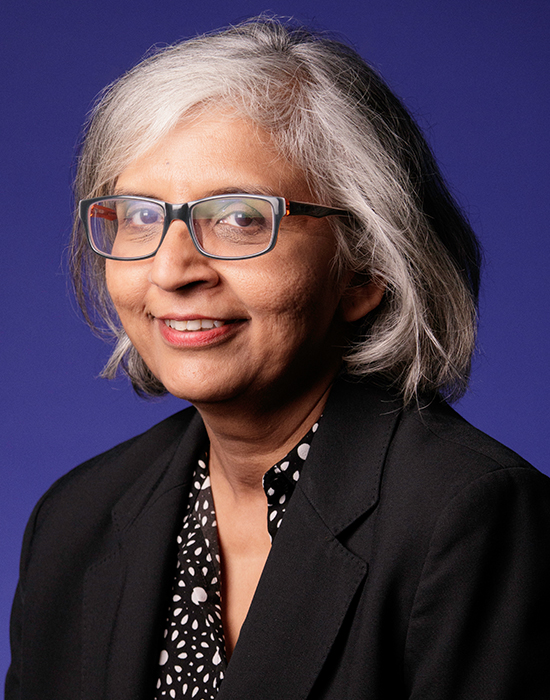 Please provide a link to your university page.
https://www.csum.edu/business/faculty/nkamdar.html
Please describe the courses you teach Over the last five years I have primarily taught Microeconomics, Macroeconomics and FYS. Macroeconomics seeks to provide students with a way of thinking about the economy that goes beyond the media’s superficial treatment of broad economic aggregates like GDP, CPI and the unemployment rate. Students define business cycles, understand how to measure economic growth, discuss the importance of the Federal Reserve, bemoan our indebtedness and debate the efficacy of tariffs. This course also provides students with a birds-eye view of the disagreements between competing schools of thought such as the Keynesians, the monetarists and the supply-siders. Students learn more than abstract principles and esoteric theories ---- they develop a practical understanding of many current macroeconomic problems and a healthy skepticism about the economic policy proposals of most political leaders.
Microeconomics studies how people and firms make choices, how markets are organized, why and how markets behave differently, and the effects government interventions have in market outcomes. Students are encouraged to seek answers to interesting questions about the behavior of individuals and economies such as:
- Why have ships gotten larger and larger over time?
- Should Netflix raise prices or lower them to increase profitability?
- Should the state of CA aim for zero pollution?
- Why does Coca-Cola taste better south of the border?
- Do rent controls increase access to affordable housing?
- Why did the passage of Title IX lead to an increase in the number of men coaching college women’s sports teams.
The purpose of the First Year Seminar is to introduce Cal Maritime cadets to the campus community, and prepare students for academic, personal, and professional success. This course is designed to help students successfully transition from high school to college life by providing students with the necessary resources and support. Through fostering a sense of community and belonging, helping students navigate campus norms and expectations, providing students with opportunities for self-reflection, guiding students through academic success strategies, and engaging students in meaningful dialogue, the First Year Seminar aims to foster confidence and character among of our cadets and equip them to take ownership over their college experience.
Describe your teaching philosophy and any research interests related to your discipline or teaching. Economics is a powerful lens for understanding the real world, and my teaching philosophy centers on three core principles: setting high standards, motivating students, and helping them master key concepts.
I maintain rigorous expectations while creating an inclusive, supportive learning environment. By clearly communicating course objectives and using diverse pedagogical tools—including multimedia presentations, group work, and interactive exercises—I engage students in active learning. My approach is fundamentally student-centered, adapting to their learning needs and interests.
Motivation begins with relevance. I consistently connect economic concepts to real-world scenarios students can understand, transforming abstract theories into meaningful insights. Whether discussing price elasticity through textbook pricing or analyzing the impact of the Trump Administration’s tariffs on stakeholder groups through role-play and debate, I help students see economics as a practical, dynamic tool for analysis.
Recognizing diverse learning styles, I use varied assessment methods – exams, quizzes, projects, presentations, debates, competitions and role-play -- that encourage critical thinking over memorization. My goal is not just to teach economic facts, but to cultivate analytical skills students will carry beyond the classroom. Ultimately, I want students to leave my courses not just with knowledge, but with the confidence to apply economic reasoning to complex real-world challenges.