Sensuous Wanderings: African and Afro-Diasporic Resonances, Intersections, and Flows.
Sensuous Wanderings: African and Afro-Diasporic Resonances, Intersections, and Flows.
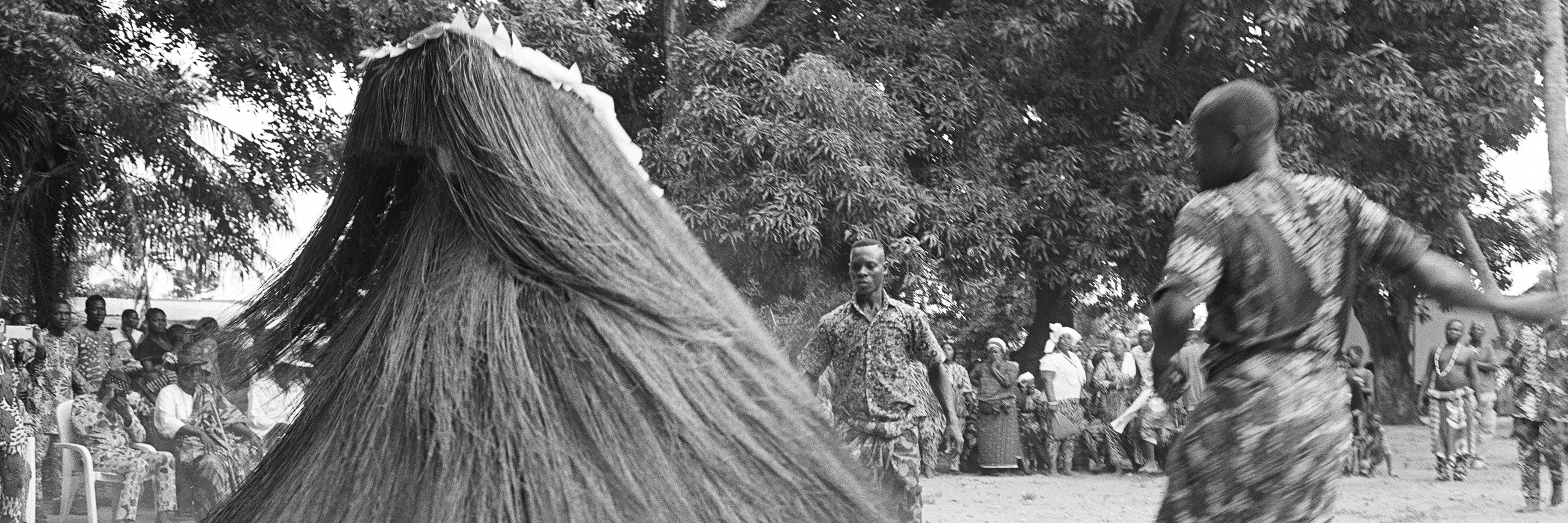
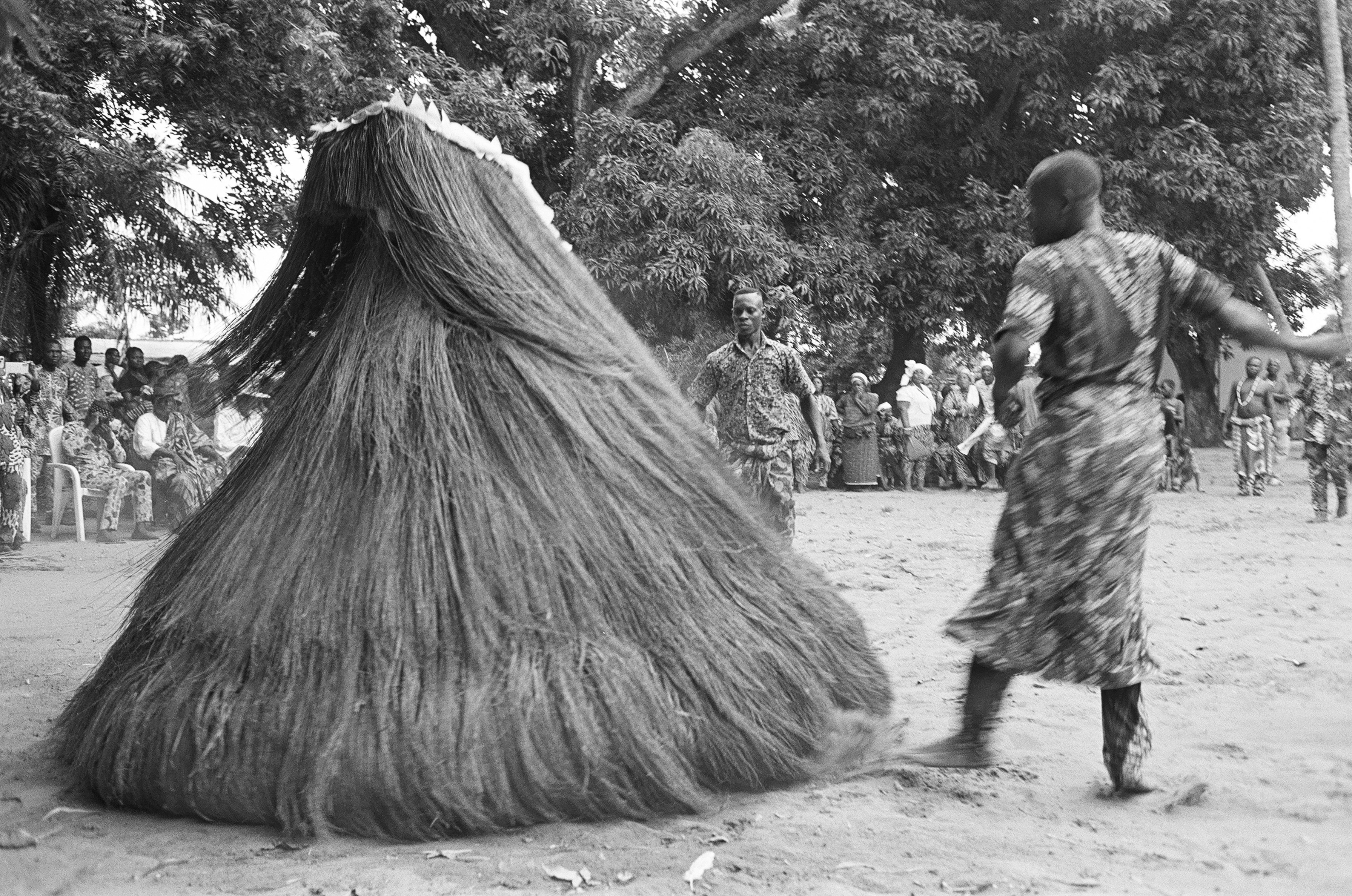 Zangbeto Ceremony, Ouidah (2023). Photo by Reginald Eldridge, Jr.
Sensuous Wanderings is an intro level (1000-1100) project-encounter with African and Afro-Diasporic onto-epistemological resonances, intersections, and flows. It was developed by Reginald Eldridge, Jr, in partial fulfillment of a Fulbright-Hays grant in Benin with the State University of New York at Purchase. The course is divided into five modules of study:
- Module 1: Ear
- Module 2: Eye
- Module 3: Tongue
- Module 4: Texture
- Module 5: Inflection
This course resolves with a final research project on a topic of choice. An excerpt of Module 1 is provided below.
This curricular module invites exploration of works that appeal to sonic/auditory concerns and inquiries that take sound as a starting point. Among the explorations in this module are musical compositions, lingual connections, and scholarship that focuses on how sound shapes the experiences and philosophies of Afro-Diasporic peoples. Of particular significance in this module will be the exploration of sound and sonic considerations as essential to African and Afro-Diasporic ritual.
Texts:
Eshun, Kodwo. More Brilliant Than the Sun: Adventures in Sonic Fiction. Quartet Books, 1999.
Floyd, Jr., Samuel A. The Power of Black Music: Interpreting Its History from Africa to the United States. Oxford UP, 1996.
Makhathini, Nduduzo. “Breaking into Sound: Dis/Locating Ntu Cosmology and Improvisation in South African Jazz.” PhD. dissertation, Stellenbosch University, March 2023.
Montgomery, Eric James, Timothy R. Landry, Christian N. Vannier(eds). Spirit Service: Vodún and Vodou in the African Atlantic World. Indiana University Press, 2022.
Somé, Malidoma Patrice. The Healing Wisdom of Africa: Finding Life Purpose through Nature, Ritual, and Community. Jeremy P. Tarcher/Putnam, 1999.
Turner, Victor. The Ritual Process: Structure and Anti-Structure. Cornell University Press, 1969.
Sound:
Exuma, “Dambala.” Exuma, the Obeah Man. 1970
John Coltrane, “The Drum Thing.” Crescent. 1954.
Nduduzo Makhathini, “Senze’ Nina.” Sense’ Nina (single). 2022.
Nina Simone, “Dambala.” It Is Finished: Expanded Edition. 1974.
Video:
Georgia Sea Island Singers (1963); "Buzzard Lope"
Clip from Bill Traylor: Chasing Ghosts (2021)
Sample Assignment
“All three [scholars Turner, Somé, Wilson] seem to agree upon a ritual process as that which moves from one paradigm of knowing to another. I read these transformative aspects of ritual as overlaps between the physical and the spirit worlds. In other words, rituals could be thought of as a (meta)physical expression of African cosmology towards a harmonious co-existence of all things.” (Makhathini, 2023; my emphases)
From a live performance of a song from the following list, write a journal response to the following inquiry:
In what ways does the song enact aspects of ritual as described in Turner, Somé and/or Makhathini? What intentions do you speculate are enacted through the specific sonic and lyrical registers of the song/performance? Between what two states might the song mediate?
Songs:
John Coltrane, "Alabama"or "Psalm"
Quincy Jones, "Maybe God Is Trying to Tell You Something"
Michael Jackson, "Earth Song"
Alice Coltrane, "Journey in Satchidananda (Live)"
Kendrick Lamar, "i (Live on SNL)"