ETHS 1308: Introduction to Asian American and Pacific Islander Studies
ETHS 1308: Introduction to Asian American and Pacific Islander Studies
Purpose: to help other instructors teaching the same course
Common Course ID: ETHS 1308 Introduction to Asian American and Pacific Islander Studies
CSU Instructor Open Textbook Adoption Portrait
Abstract: This open textbook is being utilized in an ethnic studies course for undergraduate or graduate students by Jeremiah Sataraka at California State University Bakersfield. The open textbooks (Volumes from the Teaching Oceania series) provide a publication series created with the collaboration of scholars from around the Pacific region to address the need for appropriate literature for undergraduate Pacific Islands Studies students throughout Oceania. The series is designed to take advantage of digital technology to enhance texts with embedded multimedia content, thought-provoking images, and interactive graphs. Each volume is accessible as an interactive iBook (to be opened in iBooks software on Mac computer, iPad, or iPhone) and also in PDF format with free PDF reader software. The main motivation to adopt an open textbook was to help students save money and use an interactive & updated set of textbooks. Most student access the open textbook in .pdf, .epub, or .ibooks.
Course Title and Number: ETHS 1308 Introduction to Asian American and Pacific Islander Studies
Brief Description of course highlights: Link: https://catalog.csub.edu/course-descriptions/eths/ Course description: This course will offer students an opportunity to understand the historical, cultural, political, and economic contributions of Asian Americans and Pacific Islanders (AAPI). It will provide a brief history and selected issues of Americans of Chinese, Japanese, Filipino, Korean, Southeast Asians (e.g., Vietnamese, Hmong, Mien), South Asian (e.g., Sikh, Pakistani), and Pacific Islander (e.g., Hawaiian, Samoan) ancestry. It will allow students a chance to better understand AAPI in the academy and US society at large by introducing them interdisciplinary field Asian American and Pacific Islander Studies. Satisfies general education Area F Ethnic Studies. General Education Attribute(s): GE (F) Ethnic Studies
Student population: Include majors, typical incoming knowledge (i.e. prerequisites). Share demographics for students who take the class..
Course Prerequisites: No prerequisites required. GE Area F Ethnic Studies course. Students from all majors must take this course (or another GE Area F designated “ETHS” course) to graduate from CSUB or any CSU institution.
Learning or student outcomes: List student learning outcomes for the course.
SLO-1. Students will analyze and articulate concepts such as race and racism, racialization, ethnicity, equity, ethno-centrism, eurocentrism, white supremacy, self-determination, liberation, decolonization, sovereignty, imperialism, settler colonialism, and anti-racism as analyzed in any one or more of the following: Native American Studies, African American Studies, Asian American Studies, and Latina and Latino American Studies.
SLO-2. Students will apply theory and knowledge produced by Native American, African American, Asian American, and/or Latina and Latino American communities to describe the critical events, histories, cultures, intellectual traditions, contributions, lived-experiences, and social struggles of those groups with a particular emphasis on agency and group-affirmation.
SLO-4. Students will critically review how struggle, resistance, racial and social justice, solidarity, and liberation, as experienced and enacted by Native Americans, African Americans, Asian Americans and/or Latina and Latino Americans are relevant to current and structural issues such as communal, national, international, and transnational politics as, for example, in immigration, reparations, settler colonialism, multiculturalism, language policies.
Instructor Name: Jeremiah Sataraka
I am an Ethnic Studies assistant professor at California State University, Bakersfield. 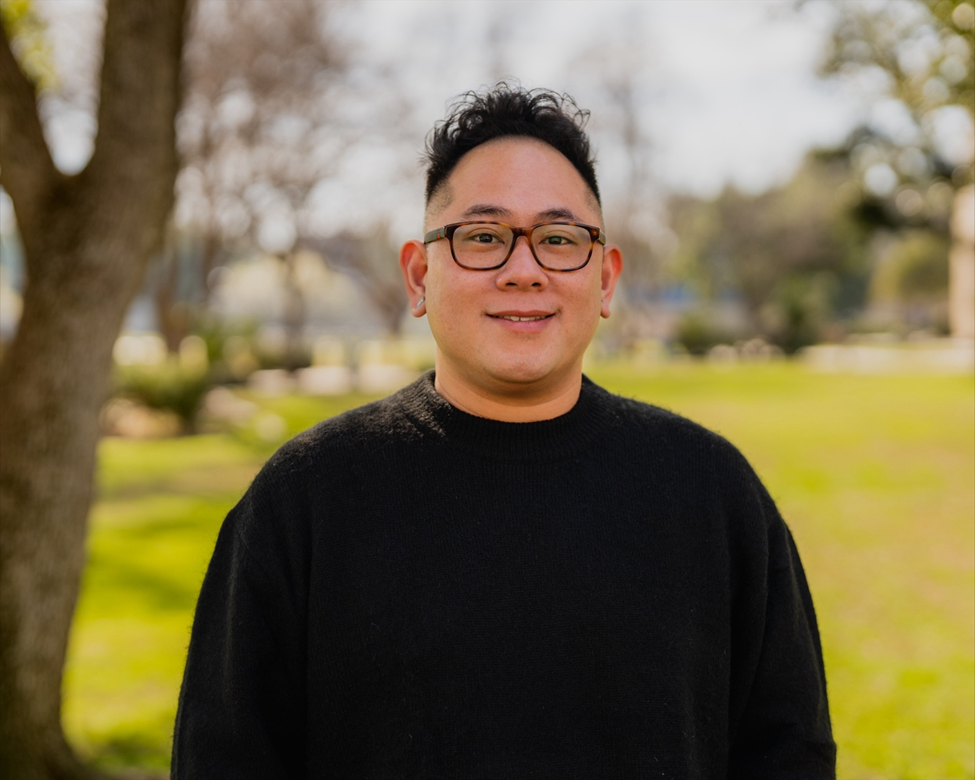
Please provide a link to your university page.
https://www.csub.edu/ethnicstudies/ethnic-studies-department-faculty-and-staff.shtml
Please describe the courses you teach: I teach Intro to Ethnic Studies and Intro to Critical Pacific Islands and Oceania Studies + Asian American Studies. (and this spring 2025 semester I will be teaching a Climate Justice & Environmental Racism upper division course and will be utilizing OER/Low cost materials). ETHS 1308 course description is above. ETHS 1208 course description is as follows: On November 6, 1968, a coalition of student groups at San Francisco State University demanded that the university institute an ethnic studies program leading to the birth of an inclusive multicultural democracy and Ethnic Studies is an interdisciplinary and comparative study of race and ethnicity with special focus on four historically defined racialized core groups: First Nations, African Americans, Asian Americans, and Latina and Latino Americans. This course will be invested in finding the historical, political, economic, and social forces that have rationalized structural inequalities and also examines racial dynamics as they intersect with gender, sexuality, class, and nation. Prerequisite or Corequisite: GE A1. Satisfies general education Area F Ethnic Studies and Theme R: Revolutionary Ideas and Innovations. Requisite(s): Prerequisite or Corequisite A1 General Education Attribute(s): GE (F) Ethnic Studies, Theme R: Rev Ideas & Innovatns. Typically Offered: Fall, Spring, Summer
Describe your teaching philosophy and any research interests related to your discipline or teaching. The late & great Dr. Teresia Teaiwa (pictured here), one of Pacific Studies’ giants once referenced a Hawaiian ‘ōlelo no‘eau (proverb) to describe her teaching: “‘A‘ohe pau ka ‘ike I ka halau ho ‘okāhi meaning all knowledge is not taught in the same school. One can learn from many sources.” For me, the proverb teaches us to expand our learning sources from a purely academic sense and extend it to our communities and the expertise our youth and elders bring into the classroom – especially Indigenous knowledge systems with an emphasis on orality. My goal as an instructor is for my teaching to be student-centered and student-focused by choosing readings, texts, and course materials that are both relevant and accessible. This doesn’t mean things will be easy! It does mean that we’ll work together to make sense of difficult topics and ideas. My teaching also seeks to challenge dominant ideas about historically marginalized communities, like Native Hawaiians, Pacific Islanders, and Asian Americans. I actively work to be mindful and appreciative of our rich differences in race, gender, sexuality, immigration status, age, disability, religion, and other identities to create an inclusive learning space. I ask that you do the same. Simultaneously, as author Robert Jones, Jr. (a Black gay man) said, “We can disagree and still love each other unless your disagreement is rooted in my oppression and denial of my humanity and right to exist.”
Textbook or OER/Low cost Title: Volume 6, 1 and 7 of Teaching Oceania Series: Permanent URI for this Collection. https://hdl.handle.net/10125/42426
Free: Volume 6 of Teaching Oceania Series, Introduction to Pacific Studies (pdf/iboosk/epub) Authors: Mawyer, Alexander, Ronia Auelua, Hokulani Aikau, Manuhuia Barcham, Zakea Boeger, Stuart Dawrs, Delihna Ehmes, Joy Enomoto, Kali Fermantez, Mililani Ganivet, Joe Genz, Mary Hattori, Vilsoni Hereniko, Tarcisius Kabutaulaka, Tēvita O. Kaʻili, Leora Kava, Kenneth Gofigan Kuper, Monica LaBriola, Kealalokahi Losch, Teoratuuaarii Morris, Angela Robinson, Henryk Szadziewski, Katerina Teaiwa, Patrick Tellei, Jemaima Tiatia-Seath, Finausina Tovo, Patricia Tupou, Joshua Uipi, Lisa Uperesa, Andrew Vai, James Perez Viernes, Julie Walsh, and Terence Wesley-Smith.
Free: Volume 1 of Teaching Oceania Series, Militarism and Nuclear Testing in the Pacific (pdf/ibooks/epub) Authors: Authors: Genz, Joseph H., Noelani Goodyear-Ka'ōpua, Monica C. LaBriola, Alexander Mawyer, Elicita N. Morei, and John P. Rosa.
Free: Volume 7 of Teaching Oceania Series, Pacific Studies: A Transformational Movement (pdf/ibooks/epub) Authors: Enomoto, Joy, Emalani Case, Stu Dawrs, Christine T. DeLise, Vicente Diaz, Vanessa Griffen, Leora Kava, Eleanor Kleiber, Kenneth Gofigan Kuper, D. Keali'i MacKenzie, Serena Michel, Talei Mangioni, Dejan Perez, Angela L. Robinson, Claire Slatter, Vehia Wheeler, and Rimuu Williams.
Brief Description: Teaching Oceania is a publication series created with the collaboration of scholars from around the Pacific region to address the need for appropriate literature for undergraduate Pacific Islands Studies students throughout Oceania. The series is designed to take advantage of digital technology to enhance texts with embedded multimedia content, thought-provoking images, and interactive graphs. Each volume is accessible as an interactive iBook (to be opened in iBooks software on Mac computer, iPad, or iPhone) and also in PDF format with free PDF reader software. In the PDF version, links to media are provided and may be accessed where Internet connectivity is available. In sites with limited Internet or computer access for individual students, we strongly recommend the materials be projected, shared, and explored in classroom settings. For more information about the particular volumes here or future volumes, please contact The Center for Pacific Islands Studies (cpis@hawaii.edu). Other course materials (articles, books, etc.) on the course schedule are available via CSUB Library website.
Student access: Volumes of Teaching Oceania are available as .pdf, .epub, or .ibooks. Articles and documentaries assigned in course schedule are available through the CSUB Library website.
Additional readings and other course-related materials are available on the online course schedule: https://docs.google.com/document/d/1TNTqKJfHg3G0xJFCd6kv3Op34xXFb1bVQXS13IjNaUQ/edit?tab=t.0
Provide the cost savings from that of a traditional textbook.
- From A Native Daughter by Haunani-Kay Trask $28.00 https://uhpress.hawaii.edu/title/from-a-native-daughter-colonialism-and-sovereignty-in-hawaii-revised-edition/
- We Are the Ocean by Epeli Hau’ofa $24.00 https://uhpress.hawaii.edu/title/we-are-the-ocean-selected-works/
- Sweat and Salt Water by Teresia Teaiwa, compiled by Katerina Teaiwa, April K Henderson, Terrence Wesley-Smith $28.00 https://uhpress.hawaii.edu/title/sweat-and-salt-water-selected-works/
- Pacific Diaspora: Island Peoples in the United States and Across the Pacific edited by Paul Spickard, Joanne L Rondilla, Debbie Hippolite Wright $29.00 https://uhpress.hawaii.edu/title/pacific-diaspora-island-peoples-in-the-united-states-and-across-the-pacific/
License: This material is available freely via the University of Hawaiia – Manoa’s Teaching Oceania series Scholar Space website (their institutional repository)
OER/Low Cost Adoption Process
Provide an explanation or what motivated you to use this textbook or OER/Low Cost option. To save students money and use updated materials for the field of Critical Pacific Islands & Oceania Studies.
How did you find and select the open textbook for this course?I searched for teaching materials for the topics I wanted to address in an introductory Ethnic Studies course for the field of Critical Pacific Islands & Oceania Studies
Sharing Best Practices: I wish I would have worked with the library to identify potential resources for the course because I, still to this day, have not contacted the library for guidance.
Describe any key challenges you experienced, how they were resolved and lessons learned. Some students who have issues accessing online materials would need a lot of guidance to access online materials. I also rely heavily on students having access to laptops and electronics. Not every student has access to quality electronics or wifi at home. I would like to figure out a plan to help address those who need help.