BIOL 318 – Biology of Childhood
BIOL 318 – Biology of Childhood
Purpose: to help other instructors teaching the same course
Common Course ID: BIOL 318 (3702)
CSU Instructor Open Textbook Adoption Portrait
Abstract: The open textbook approach is being utilized in a Biology course for undergraduate students (upper division general education course) by Rachel Schleiger at California State University, Chico. In the course indicated above (BIOL 318), multiple open textbooks are being utilized to cover a large diversity of content for the course (human biology, anatomy, physiology, and embryology). The main motivation to adopt open textbook(s) was to decrease student cost of courses outside of tuition. Most students will access the open textbook in the academic learning platform (Canvas) being utilized by California State University, Chico. Links for open textbooks will be available in multiple places on the platform. More specifically, the open textbooks utilized allow the instructor to link individual chapters. This way there is no logistical confusion for students trying to access content when multiple textbooks are used.
Course Title and Number: BIOL 318 – Biology of Childhood
Brief Description of course highlights: Basic biological principles, including the scientific method, reproduction, development, physiology, and anatomy. The biological basis of childhood diseases, immunity, nutrition, issues of health and well-being, and the relevance of biological information in social, political, and ethical decision-making regarding children. 3 hours discussion. Link to the course description in the catalog.
Student population: This is an upper division general education course that is within the scientific inquiry and quantitative reasoning (UDB) category. It is also in Health and Wellness Pathway. It has a few lower division scientific inquiry and quantitative reasoning prerequisites (One biological sciences course; GE Oral Communication (A1); GE Written Communication (A2); GE Critical Thinking (A3); GE Mathematics/Quantitative Reasoning (B4) requirements, or consent of the instructor). As such, it typically has upper classman like juniors and seniors.
Learning or student outcomes: List student learning outcomes for the course.
A. Assess and explain principles of scientific inquiry, differentiate a theory from a hypothesis, and differentiate fact from opinion in regard to biological sciences and human reproductive biology.
B. Define and correctly use scientific terminology in regard to human reproductive biology.
C. Identify and describe stages in embryology, fetal development, and childbirth.
D. Review and discuss the benefits of breastfeeding.
E. Summarize elemental concepts of genetics, inheritance, and common abnormalities in humans.
F. Explain essential pregnancy and pediatric nutritional requirements.
G. Name and differentiate crucial pathogens during pregnancy, childbirth, and STI’s.
Key challenges faced and how resolved: Realizing that one open textbook wasn’t going to cover all the topics discussed in the course. Once the instructor decided to use multiple, all that needed to happen was source all the open textbooks needed as resources for lectures. Luckily, in the last 5 years or so, a lot of work has gone into creating open textbooks for many disciplines and content levels.
Instructor Name - Rachel Schleiger
I am primarily a Biology instructor (lecturer) however i also teach in 5 departments (Biology at 2 institutions), Mathematics, Earth and Environmental Sciences, and Science Education across CSU Chico and Butte College. 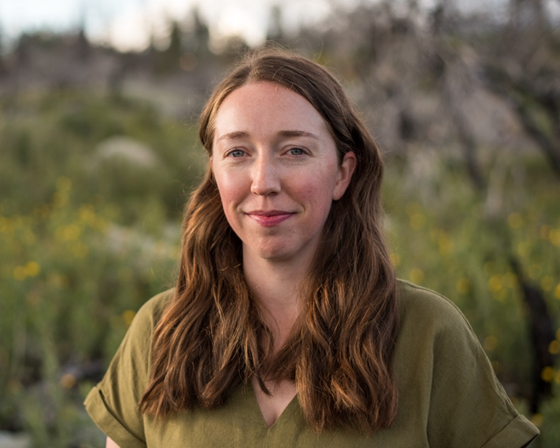
Please provide a link to your university page.
Rachel Schleiger – Biological Sciences – Chico State
Please describe the courses you teach As a lecturer that has a very interdisciplinary background, I teach a wide variety of courses! My educational background is life sciences (especially ecology), thus, a lot of the courses I teach connect to those topics. However, I also teach some courses a little outside of my educational background, but have a lot of interest in (and done a lot of self-investigation and research on) like human biology and development. I regularly teach:
BIOL 2 Introduction to Human Biology
BIOL 5 Ecology and Field Biology
BIOL 9 Current Issues in Biology
BIOL 318 Biology of Childhood
BIOL 322W Science and Human Values
BIOL 334 Conservation Ecology
ERTH 352 Recovery of Altered Ecosystems
MATH 105 Introduction to Statistics
Describe your teaching philosophy and any research interests related to your discipline or teaching. My personal teaching philosophy and pedagogy focuses on practices that promote student equity and success (like flexible deadlines, low/zero cost materials, etc), decrease environmental impact of the course (low/zero paper use, reduced/reused/recycled materials for activities, ect), and promotion of self-care and health of my students (flexible attendance policies, flexible use of technology in the classroom policies, promotion of autonomy during class time, etc).
OER/Low Cost Adoption Process
Provide an explanation or what motivated you to use this textbook or OER/Low Cost option. The goal for switching to open textbooks was twofold for me. One, saving students money; and two, improve the learning materials by being able to better customize materials from multiple texts. This allowed me to more easily create content and assessments to meet student learning goals for the course, which cover a wide variety of topics.
How did you find and select the open textbook for this course? By browsing a variety of open educational resource platforms. In addition, browsing scientifically up to date and paradigm affirming website platforms that are open access.
Sharing Best Practices: Join faculty learning communities (FLCs) that promote open educational resources (OERs), support platforms that create open educational resources, and ask colleagues what types of texts they are using in their courses. Next, even if OERs don’t have what you need right now keep checking in, new resources are added all the time, and you can create your own if you want (there is lots of funding opportunities that come up to support that). Finally, don’t be afraid to use multiple open textbooks!
Describe any key challenges you experienced, how they were resolved and lessons learned. It was a little difficult finding content for upper division level materials. However, after a little digging (and realizing multiple textbooks were needed) I was able to find what I needed. As open educational resources are digital, It’s so easy to link readings anywhere they are needed!
Textbook or OER/Low cost Title:
Brief Description: Provide a brief description of the textbook, OER or Low Cost option, including anything relevant to your choice.
Open Textbooks used in the course:
- Human Biology (Wakim & Grewal)is shared under a CC BY 4.0 license and was authored, remixed, and/or curated by Suzanne Wakim & Mandeep Grewal. Published in Libretext.
- Human biology is an interdisciplinary area of study that examines humans through the influences and interplay of many diverse fields such as genetics, evolution, physiology, anatomy, epidemiology, anthropology, ecology, nutrition, population genetics, and sociocultural influences.
- Evolutionary Developmental Biologyis shared under a CC BY NC SA 4.0 license and was authored, remixed, and/or curated by Ajna Rivera. Published in Libretext.
- The fields of Development and Evolution cannot be truly separated. When we study Developmental Biology, we are mostly looking at a fine-tuned mechanical and genetic process that has been selected on for eons. Not only can evolution select on the final product - a working, fertile adult - but also can act at each developmental stage. It is easy to see how evolution acts through natural selection on adults, but how can it act on development itself?
- Microbiomes - Health and the Environmentis shared under a CC BY 4.0 license and was authored, remixed, and/or curated by Dylan Parks. Published in Libretext.
- Microbiomes: Health and the Environment was created to provide accessible insight into the novel and complex world of polymicrobial community interactions. As we push forward into the future of medicine and environmental health, it is imperative that we learn from each other, from history, and keep up to date with the latest advances in research and technology. This book not only provides content from the latest microbiome studies, but contains interactive tools, videos, and thought-provoking questions to help the reader hone and truly understand the respective topic. Though there is much overlap between themes due to the ubiquitous nature of microbes, the book is broken down into sections pertaining to both human health (e.g., gut health and disease, as well as other organ-specific niches) and aspects of the environment (e. g., nutrient cycling and climate change, marine health, soil and plant health, etc.) influenced by microbes. However, the content is designed to bridge ideas and aspects between these themes to support the One Health concept: that the health of people, animals, and the environment are all interconnected. This project will continue to grow with new findings, and adapt with the ever-changing world of microorganisms.
- Lifespan Developmentis shared under a CC BY 4.0 license and was authored, remixed, and/or curated by Lumen Learning. Published in Libretext.
- Lifespan Development examines physical, cognitive, and socioemotional changes that occur throughout a lifetime. This course covers essentials in understanding human development, psychological research, and theories of growth and development. Students will come to understand the lifespan perspective and to analyze growth through each of the major stages of development: prenatal development, infancy, early childhood, middle childhood, adolescence, early adulthood (including emerging adulthood), middle adulthood, and late adulthood. The course covers key topics in each of these stages, including major developmental theories, genetics, attachment, education, learning, disabilities, parenting, family life, moral development, illnesses, aging, generativity, and attitudes towards death and dying.
*None of the above open textbook(s) above have ancillary materials (homework systems, lectures, etcetera).
- Lifespan Development examines physical, cognitive, and socioemotional changes that occur throughout a lifetime. This course covers essentials in understanding human development, psychological research, and theories of growth and development. Students will come to understand the lifespan perspective and to analyze growth through each of the major stages of development: prenatal development, infancy, early childhood, middle childhood, adolescence, early adulthood (including emerging adulthood), middle adulthood, and late adulthood. The course covers key topics in each of these stages, including major developmental theories, genetics, attachment, education, learning, disabilities, parenting, family life, moral development, illnesses, aging, generativity, and attitudes towards death and dying.
Student access: In this course I am also using content/articles published:
- National Institute Of Health National Library of Medicine website, it is open access (not OER) and most of their articles have a CC-BY-NC-ND license.
- American Red Cross First Aid phone application, it is a free application and thus open access (not OER) however, all material is copyrighted.
Provide the cost savings from that of a traditional textbook.
As the course covers a variety of topics, the instructor would minimally need students to buy these two books. However, in reality, it would need to be more textbooks to cover all the variety that can be covered with all the open source textbooks listed above.
- Basic Concepts in Embryology: A Student's Survival Guide by Lauren J. Sweeney, (ISBN-13: 978-0070633087) $58
- Introduction to Human Anatomy and Physiology 4th Edition, by Eldra Pearl Solomon PhD, (ISBN-13: 978-0323239250) $50
As such, the cost savings over a $100 for students when the instructor uses open source textbooks in this course.