Psychology of Human Sexuality (PSYC 134)
Psychology of Human Sexuality (PSYC 134)
Purpose: to help other instructors teaching the same course
Common Course ID: Psychology of Human Sexuality (PSYC 134)
CSU Instructor Open Textbook Adoption Portrait
Abstract: This open textbook is being utilized in a Psychology course for undergraduate by Zach Schudson at Sacramento State. The open textbook provides an overview of the psychological study of human sexuality, with an emphasis on gender and sexual diversity and social justice. The main motivation to adopt an open textbook was to save students money on textbook costs and to provide a higher quality textbook.
Psychology of Human Sexuality (PSYC 134)
Brief Description of course highlights: This course covers key theories and insights from the psychological study of human sexuality. It includes classic and contemporary research on human sexual behaviors, bodies, cognitions, and social identities. Course topics may include: social constructionism and essentialism, sexual and gender diversity, sexuality across the lifespan, relationships, attraction, sexual anatomy and physiology, and the history of sexology, among others.
Student population: Students include Psychology majors completing the course for their elective requirement and/or students completing their general education requirement Area D (The Individual and Society).
Learning or student outcomes: Students will be able to:
- Analyze key concepts, theories, and areas of empirical research in the psychology of human sexuality.
- Describe classic and contemporary approaches to the psychological study of human sexuality.
- Evaluate psychological research findings about human sexuality with a critical lens.
- Develop skills to recognize and describe the breadth of human gender and sexual diversity.
Key challenges faced and how resolved : The previous textbook was expensive and had several chapters that used outdated, harmful language (e.g., transphobic language). The new textbook is much more thoughtful about diversity, equity, and inclusion and it is free for students.
Textbook or OER/Low cost Title: Introduction to Human Sexuality
Brief Description: This textbook is divided into two parts because our teaching commitment has course content divided into two, separate 10–12-week terms (Psychology 231 and Psychology 232). You will note that the first section, Reflections and Explorations in Human Sexuality, includes ten chapters ranging from Sexology to Gender to Sexual Behaviors. In many ways, Part 1 is a great example of introductory human sexuality and many of the subjects have personal application to one’s experiences and learning. Our second section, Part 2, is Professional and Clinical Topics in Human Sexuality and covers topics such as Sexuality Over the Lifespan, Sexually Transmitted Infections, and Sexual Dysfunctions and Treatment. While our Part 2 is still considered introductory in nature, it does have a more clinical/professional approach to topics in terms of learning. We feel, strongly, that all these subjects hold value for students’ personal and professional development whether they’re going into psychology, social work, gender and sexuality studies, nursing, public health, anthropology, or something else entirely.
Human sexuality is a richly diverse, engaging, sometimes challenging, and ultimately critical area of psychological inquiry. Emerson and Ericka respectfully strive to introduce this textbook as an inclusive and intersectional resource for learning about human sexuality. With that in mind, we also know that there will be ongoing ways to improve content. As previously stated, we invite feedback from our readers- and seek to make your learning experience relevant, academically sound, and personally/professionally meaningful.
Please provide a link to the resource https://openoregon.pressbooks.pub/introtohumansexuality/
Authors: Ericka Goerling, PhD and Emerson Wolfe, MS
Student access: I link students to the textbook through the course’s Canvas site. They can download the textbook as a pdf or epub or access it online.
Supplemental resources: List resources including online homework systems, interactive study guides for students, and faculty-only resources such as solutions and slides that are available.
Provide the cost savings from that of a traditional textbook. The former textbook cost $56 as an ebook from the publisher (or $70 for a print version). For my 123 student class, that translates to a minimum of $6,888.00 in savings for students per semester.
License: open license
OER/Low Cost Adoption Process
Provide an explanation or what motivated you to use this textbook or OER/Low Cost option. I wanted to save students money. I also wanted to see if I could find an OER textbook that would improve upon the helpful-but-flawed textbook I was previously making do with.
How did you find and select the open textbook for this course? ? I searched on MERLOT and found it. I had searched in the past, prior to this textbook’s publication, and not found anything. This textbook was published late Fall 2022, so it was brand new at the time of my search during this FLC.
Sharing Best Practices: I learned that OER textbooks have historically been easier to find in math and the natural sciences, but there are increasingly good options in the social sciences. Instructors who might think teach something too specialized to find a good OER textbook - even those who have already searched - would benefit from regularly searching databases like MERLOT and Cool4Ed, because there are a lot of great, new OER textbooks in the social sciences.
Describe any key challenges you experienced, how they were resolved and lessons learned. I did not experience challenges once I adopted the OER textbook. The challenges were prior to that point: especially not being able to identify a textbook that didn’t require some routine damage control (e.g., regularly articulating to students critiques of how the material is presented in the textbook chapter I assigned them, encouraging them not to use some of the language the textbook author used to talk about marginalized groups, etc.)
Instructor Name - Zach Schudson
I am an Assistant Professor of Psychology at Sacramento State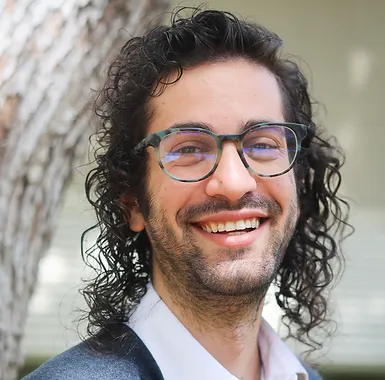
Please provide a link to your university page.
https://www.csus.edu/college/social-sciences-interdisciplinary-studies/psychology/meet-us/
https://www.zachschudson.com/
Please describe the courses you teach.
I regularly teach Psychology of Human Sexuality, Psychology of Women, and Psychology of Sexual Orientation and Gender Identity.
Describe your teaching philosophy and any research interests related to your discipline or teaching. My research focuses on people’s beliefs about the nature of gender/sex and sexuality and their links to self-concepts and perceptions of others (e.g., prejudice).