Perspectives on Gerontology
Perspectives on Gerontology
Purpose: to help other instructors teaching the same course
Common Course ID: GERN 400
CSU Instructor Open Textbook Adoption
Abstract: This open textbook is being utilized in an online course for undergraduate students by Miriam Watts at CSULB. The D1DA open e-textbook provides:
- Instant access to students once purchased at a discounted rate
- Anytime, anywhere learning with the Pearson+ app
- 14-day refund guarantee
- Search, highlight and take notes
- Listen as you read with audio
- Watch embedded videos with select titles
- Easily create flashcards
- Instructor supplements such as test banks, power point slides and student analytics of usage, time spent etc.
The main motivation to adopt an open textbook was low cost, convenience and quality of material. Most students access the open textbook as an e-book via Canvas.
GERN 400 Perspectives on Gerontology
Brief Description of course highlights:
GERN 400 - Perspectives on Gerontology(3 units)Prerequisites: GE Foundation, one or more Exploration courses, and upper-division standing.
Multidisciplinary study of middle age and aging. Includes physiological, psychological, political, economic and sociological aspects. Effects of culture and environment on aging; history and demographics; health issues.
Letter grade only (A-F). (Lecturer-discussion, 3 hours). General Education: Upper Division D – Social Sciences.
Student population: This is an interdisciplinary course with students from an array of majors enrolled. Many nursing students take this course as a requirement of their coursework. Additionally, Social Work, Speech and Language Pathology, Engineering, Business, Marketiing, Communication, Psychology, Healthcare Administration, Biology students often take this course to fulfill their Writing Intensive requirement or for general interest in the subject matter. This course is open to all students who meet the prerequisites of GE Foundation, one or more Exploration courses, and upper division standing. This course mainly enrolls Junior and Senior level students who passed the GWAR writing exam.
Learning or student outcomes:
Upon successful completion of this course, students will be able to:
- Generate research-based discussions on different aspects of aging (including opinions, perceptions, personal experiences). [All Modules]
- Describe the phenomenon of U.S. and worldwide population aging (i.e., current, and projected demographics) and ramifications for aging-related issues. [Module 2]
- Describe the key characteristics that distinguish different aging theories. [Module 3]
- Analyze aging-related changes versus changes that accompany illnesses associated with older age using the biopsychosocial model as an organizing framework. [Module 4]
- Analyze, interpret, and apply a wide array of research results from various high-quality academic sources about aging issues to the field of gerontology and related disciplines. [All Modules]
- Compare and contrast the process of aging over time, among races/ethnicities, between sexes and across ability levels, geographic locales around the world, and birth cohorts. [Module 2, 3, 4, 5, 7, 9, 10]
- Identify and evaluate selected resources to meet health, social, caregiving and housing needs for older adults and their families. [Module 6, 7, 8, 9, 10, 12, 13]
- Explain the development and role of health care, social and economic policies in the U.S. and globally in supporting the aging process. [Module 4, 5, 6, 7, 9, 12]
- Engage in discussion and debate about ethically challenging issues related to aging while practicing self-development of openness and empathy for diversity in the aging experience. [Module 2, 5, 7, 8, 9, 10, 12, 13]
- Discuss biological, psychological, and social influences within cultural frameworks on how one prepares for death and mourns a loss in the US and around the world. [Module 2 & 12]
- Incorporate lifestyle techniques that improve wellness over the course of the lifespan into the development of a personalized wellness plan for healthy aging. [Module 4, 11, 13, 14]
- Explore stereotypes and popular images of aging and reflect on the influence of these images and firsthand experiences with older adults on the development of attitudes about one’s own and others’ aging. [Module 13, 14]
- Complete a written in-depth life history of an older adult, applying reminiscence technique and gerontology theories on aging to explore the meaning assigned to the interviewee’s life span development. [Module 14]
Syllabus and/or Sample assignment from the course or the adoption [optional]: This e-book was used in this course in numerous ways. The Quizzes were based on e-book content and a Study Guide was provided by the instructor so students may fill it out as they read the e-book. Moreover, students are asked to complete weekly readings and reflect on these readings in the Discussion post assignments.
Textbook or OER/Low cost Title: Hooyman, N., Kawamoto, K., Kiyak, H. A. (2016). Aging matters. New Jersey: Pearson. ISBN: 9780133973884
Brief Description: This e-book was agreed upon by all instructors of our program as we felt that the information was presented in a concise, useful and creative manner. It discussed many topics not found in other textbooks and provides learning tools to aid in learning. These learning tools are:
- All-in-one digital learning platform
- Integrated videos and rich multimedia
- Immediate feedback on tests and quizzes
- Highlighting, notetaking and study tips
- App syncs progress across devices
- Easy-to-use search, navigation and notebook
- Simpler studying with flashcards
Please provide a link to the resource
VitalSource link
Authors: Nancy R. Hooyman (University of Washington), Kevin Y. Kawamoto & H Asuman Kiyak (University of Washington, Seattle).
Student access: Accessing the e-book/ resource is convenient and instant. Revel offers anywhere learning via mobile app. Registration is simple via course invite or LMS D1DA link on Canvas. Below is the note I provided on the course syllabus regarding the e-book.
"We will be using the E-Book version of this textbook. The e-book is an updated edition and gives you access for 180 days. The e-book is available for purchase directly through the Day 1 Digital Access (Canvas > Modules > E-Book D1DA). This class is enrolled in the Day 1 Digital Access program. Upon registering for this class, you are automatically opted in, and you must OPT OUT if you do not want to purchase the e-book and to avoid being charged. You have FREE access until February 5, 2023. Your CSULB account will be charged $34.59 unless you OPT OUT on or before February 5, 2023. Please use the “VitaSource Course Materials” link under E-Book Spring 24 in the Modules Tab (on Canvas) and follow the steps if you would like to OPT OUT of the EBOOK. Questions and Concerns? Please contact Day 1 Digital Access directly at D1DA@csulb.edu. Keep in mind, your instructor does not have access to your student account".
Supplemental resources:
Faculty-only resources, Instructor resource manuals, guides, and worksheets, Presentation slides, and Test Banks. Student analytics of usage, time spent, etc. are also available.
Student resources offered with this D1DA e-book:
- Instant access to students once purchased at a discounted rate
- Anytime, anywhere learning with the Pearson+ app
- 14-day refund guarantee
- Search, highlight, and take notes
- Listen as you read with audio
- Embedded videos with select titles
- Easily create flashcards
- All-in-one digital learning platform
- Integrated videos and rich multimedia
- Immediate feedback on tests and quizzes
- Highlighting, notetaking, and study tips
- App syncs progress across devices
- Easy-to-use search, navigation and notebook
- Simpler studying with flashcards
Provide the cost savings from that of a traditional textbook. Half the cost (I believe the textbook is around $80, and the D1DA e-book is usually at least half that cost (between $35 and $40). I instruct 5 sections of this course!
License: I believe this text is copyrighted.
OER/Low Cost Adoption Process
Provide an explanation or what motivated you to use this textbook or OER/Low Cost option. There are a few reasons why this eBook was the right option for our students, these reasons are: low cost, the convenience of the eBook enhanced student learning, it is accessible to student needs as well as special needs (read aloud feature). The content of the e-book included important topics that were not covered in other textbooks.
How did you find and select the open textbook for this course? This eBook was selected based on the reviews of our program faculty. Every 4 years, our program has a “text review” where we compile all possible textbooks for our courses and all faculty review them. This e-book was rated the highest on all levels.
Sharing Best Practices: Always keep your eyes open for new resources, speak to librarians and other faculty about the resources they are using and find valuable. Take ALS training to stay in the know. Put fear and ego aside and learn new platforms, modalities and have an open mind about alternative resources.
Describe any key challenges you experienced, how they were resolved and lessons learned. I was not clear on what the D1DA program was and where it came from, learning this was helpful. Also, utilizing the resource myself was very helpful to understanding the student experience.
Instructor Name
Miriam Watts, Lecturer, College of Health and Human Services, California State University, Long Beach.
I am a Gerontology professor at CSULB. I teach Gerontology 400-Perspectives on Gerontology.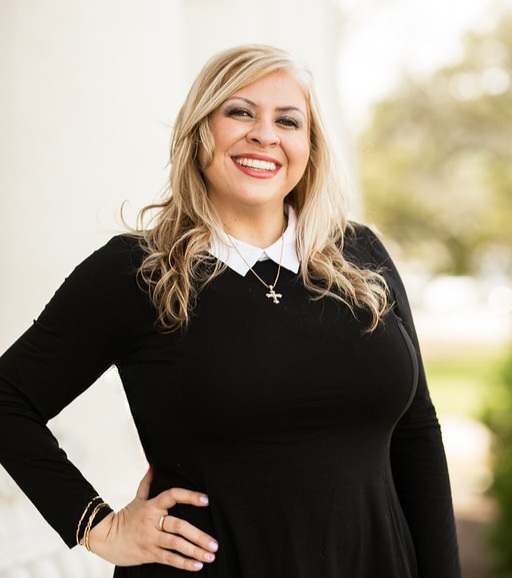
Please provide a link to your university page.
Health and Human Services Department webpage
Please describe the courses you teach.
This Intensive Writing course addresses the multidisciplinary study of middle age and aging. The purpose of this course is to investigate the continuous impact of gerontology by reviewing the worldwide phenomena of aging and by comprehending the profound implications our nation is facing by such dramatic demographic shifts. Aspects of aging including bio-physiological, psychological, and sociological will be examined in this course. More specifically, through online activities, we will explore, analyze, and evaluate the impact of aging on gains and losses in physical and mental health, interpersonal well-being, social roles, personality, and stress; larger social, cultural, and economic issues including retirement, housing, healthcare, government programs and public policy will be discussed. Prerequisites: GE Foundation, one or more Exploration courses, and upper- division standing.
Describe your teaching philosophy and any research interests related to your discipline or teaching.
At CSULB I have taught Gerontology 400. In different Community Colleges I have taught everything from Public Speaking to Healthcare Administration. I also teach nurses and first responders how to handle Dementia cases.
I am committed to helping my students thrive, no matter what their situation and or limitation. I do my best to serve my students and advocate on their behalf. I believe in higher education. I believe that everyone can learn and grow at any age and I hope to inspire all my students and colleagues to nurture limitless learning. We are all capable of greatness.
My research interests are health literacy in the older adult population, and older adults in health care settings