Student Engagement in an Images of Africa Hybrid Course
Student Engagement in an Images of Africa Hybrid Course
Purpose: to help other instructors teaching the same course
Common Course ID: HIST 3890 – Images of Africa
CSU Instructor Open Textbook Adoption Portrait
Abstract: This series of open texts is being utilized in an upper division hybrid General Education History course for undergraduate or graduate students by Dr. Tiffany F. Jones at California State University, San Bernardino. The open texts provide students access to various discursive perspectives about and from Africa. The main motivation to adopt open texts was to ensure quick accessibility, lower costs for students, and increase student engagement. Most student access the open texts via Perusall in Canvas where they highlight key ideas and engage in discussion with their peers for grades
HIST 3890 – Images of Africa
Brief Description of course highlights: HIST 3890 – Images of Africa examines various discursive forms of cultural constructions, such as photography, museum exhibits, film, books, advertising, news media, etc., and analyzes images of Africa by Africans and non-Africans from the seventeenth century to present-day. The course begins with a deconstruction of common myths and language about Africa and Africans, and examines the ways in which Westerners and others imagine Africa. It frames these debates within larger theoretical discussions about colonialism, nationalism, race, and identity. The course then moves to examine African cultural constructions of themselves and the various ways in which Africans have challenged and reconstituted the discourse surrounding the continent. Students get the opportunity to engage with writings, music, books, poetry, comics, films, television, art, and websites from Africa. https://catalog.csusb.edu/coursesaz/hist
Student population: This is an upper division General Education course that is offered once or twice a year. It is open to all majors, but is popular for history majors as it can count towards one of their content courses needed for their major.
Learning or student outcomes:
Knowledge Skills:
1. Students will demonstrate knowledge of relevant historical facts and context about the history of Africa from the seventeenth century to the present day
2. Students will demonstrate the ability to frame historical questions regarding how common Western views affect those in Africa
3. Students will demonstrate an awareness of historical interpretative differences (i.e. critically assess the historical debates concerning depictions of Africa)
Research Skills:
1. Students will demonstrate the ability to thoroughly use a broad range of historical sources for their research papers
2. Students will demonstrate the ability to evaluate and analyze primary historical sources
3. Students will demonstrate the ability to develop an historical interpretation based on evidence
Communication Skills:
1. Students will demonstrate the ability to write clearly in their various assignments
2. Students will demonstrate the ability to speak clearly, specifically in the in-class discussions.
Key challenges faced and how resolved: The biggest challenge in the past was ensuring students had the textbooks in order to be able to engage in the discussion. Students are expected to discuss the texts, thus it is vital that they have read the texts. The introduction of these free texts has increased student access and most have read the texts and engaged in discussion using Perusal when they come to class. I wanted to use Curtis Keim and Carolyn Somerville’s Mistaking Africa: Curiosities and Inventions of the American Mind, 4th edition, and Roy Grinker and Stephen Lubkemann, Perspectives on Africa: A Reader in Culture, History and Representation, 2nd edition, but there are copyright limits. Therefore used different chapters from previous editions and chose more diverse readings.
Syllabus and/or Sample assignment from the course or the adoption: To illustrates how the open textbook is used in the course. I now use chapters from different versions of books - all available on the library as ebooks along with articles All texts are now available on the Canvas site and students now read them and annotate them on Perusall.
Instructor Name - Dr. Tiffany F. Jones
I am a History professor of African History at California State University, San Bernardino. I teach African history, World history and Medical history courses. 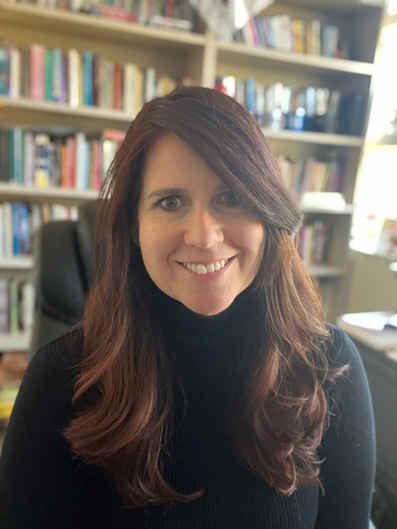
Please provide a link to your university page.
https://www.csusb.edu/profile/tjones
Please describe the courses you teach.
SSCI 1110 - Reacting to the Past - Collapse of Apartheid
HIST 3790 - A History of Madness
HIST 3850 - Africa to 1500;
HIST 3860 - Africa 1500 to 1870
HIST 3870 - Africa 1870 to Present
HIST 3880 - The Rise, Decline and Legacy of Apartheid
HIST 3890 - Images of Africa: Cultural Constructions of the African Continent
HIST 4490 - Gender and Development in Africa
HIST 4500 - History of Southern Africa
HIST 4510 - History of Health and Medicine in Africa
HIST 5250 - Editing and Publishing in History
SSCI 3160 - Race and Racism (for South Africa Study Abroad)
HIST6002 - Topics in Global/World History
Describe your teaching philosophy and any research interests related to your discipline or teaching. Dr. Tiffany Jones is dedicated to High Impact Practices (HIPs) and experiments often with different teaching techniques in her classes, while maintaining academic rigor. She encourages students to become active participants in their own learning. This means seeing students not as objects of knowledge, but encouraging them to become the source of that knowledge as well. She believes that students need to be engaged in their learning and feel that their studies are relevant to their own lives.
OER/Low Cost Adoption Process
Provide an explanation or what motivated you to use this textbook or OER/Low Cost option. The overall goal was to save students money so they do not have to purchase textbooks anymore, and also be able to discuss and debate the readings online before even coming to class.
How did you find and select the open textbook for this course? Most of the sources I obtained for the course were obtained through library searches and peer reviews. When I attended an ALS presentation, I heard another faculty member talk about using different versions of a textbook to deal with copyright issues.
Sharing Best Practices: The use of readings from various sources allows for more diverse views and innovation. Creating a reader for the course allowed me to incorporate new topics such as Nollywood, Black Panther, Music etc. I rely heavily on library resources in order to ensure they are free for all students.
Describe any key challenges you experienced, how they were resolved and lessons learned.
- Course engagement both in and outside of the classroom has increased - students now have access to texts immediately and annotate readings and engage in debate before class.
- Zero cost texts means quick access to texts. No longer waiting for texts to arrive.
- Texts on Perusall increase collaborative reading practices between students, and “provides a space for students to share questions, reflections, ideas, and connections with each other and with the instructor.” (Perusall)
- More students are actually doing readings! The free texts and Perusall together enable a much more inclusive and collaborative learning experience.
Textbook or OER/Low cost Title: Multiple resources
- Keim & Somerville, Part I: Ch 1 - Changing our Mind About Africa (5th edition) Perusall Assignment
- Keim & Somerville, Ch 2 - How we Learn (3rd Edition) Perusall Assignment
- Keim & Somerville, Ch 3 - Origins of “Darkest Africa” (4th edition) Perusall Assignment
- Keim & Somerville, Ch 8 - Africans Live in Tribes, Don’t They (3th edition), Perusall Assignment
- Keim & Somerville, Ch 10 - Africa in Images (5th edition), Perusall Assignment
- Robert W. Rydell, “Darkest Africa”: African Shows at America’s World’s Fairs, 1893-1940” in Ed. Bernth Lindfors, Africans on Stage: Studies in Ethnological Show Business (Bloomington: Indiana University Press, 1999), 135-155. (Perusall Assignment)
- Kwame Anthony Appiah, “Europe Upside Down: Fallacies of the New Afrocentrism” in Roy Richard Grinker and Christopher B. Steiner, eds, Perspectives on Africa: A Reader in Culture, History, and Representation (Blackwell Publishing, 2004) orig. published 1997. Perusall Assignment
- Martin Bernal, “The Afrocentric Interpretation of History: Bernal Replies to Lefkowitz” The Journal of Blacks in Higher Education 11 (Spring, 1996): 86-94. (Perusall Assignment)
- David Murphy, “Africans Filming Africa: Questioning Theories of an Authentic African Cinema” Journal of African Cultural Studies, 13, no. 2 (2000): 239-249. (Perusall Assignment)
- Rick Rohde, “How We See Each Other: Subjectivity, Photography and Ethnographic Re/vision” in Wolfram Hartmann, Jeremy Silvester and Patricia Hayes, The Colonising Camera: Photographs in the Making of Namibian History (Athens: Ohio University Press, 1999), 188-208. (Perusall Assignment)
- Alexandra Heller-Nicholas, “From District 6 to District 9: Apartheid Spectacle and the Real” Screen Education (2011): 137-142. (Perusall Assignment)
- Keim & Sommerville, Ch 6 - We Should Help Them (Perusall Assignment)
- Ruth Mayer, “Don’t Touch! Africa is a Virus” in Artificial Africas: Colonial Images in the Times of Globalization (Hanover and London: University Press of New England, 2002), 256-291. (Perusall Assignment)
- John C. McCall, “The Pan-Africanism We Have: Nollywood’s Invention of Africa” Film International 28 (2007): 92-97. (Perusall Assignment)
- Wilfred Okiche, “Nollywood’s Political Struggle” in Africa is a Country (2020). (Perusall Assignment)
- Michael C. Lambert, “Changes: Reflections on Senegalese Youth Political Engagement, 1988-2012” Africa Today 63, no. 2 (Winter, 2016): 32-51. (Perusall Assignment)
- Chrifi Alaoui, Fatima Zahrae and Shadee Abdi, “Wakanda for everyone: an invitation to African Muslim perspective of Black Panther, The Review of Communication 20, 3 (2020): 229-235. (Perusall Assignment)
- Mainye Omanga, “More than just a homecoming: the reception of Black Panther in Kenya” Safundi 20, no 1. (2019): 18-21. (Perusall Assignment)
- Tanja Bosch, “Social Media and Protest Movements in South Africa: #FeesMustFall and #ZumaMustFall” in Social Media and Politics in Africa: Democracy, Censorship and Security edited by Maggie Dwyer and Thomas Molony (Zed Books, 2019) (Perusall Assignment)
Brief Description: The first set of readings (1-6) assigned in the course focus on deconstructing common myths and language about Africa and Africans, and examine the ways in which Westerners and others imagine Africa. The course then moves to readings (7-19) that examine African cultural constructions of themselves and the various ways in which Africans have challenged and reconstituted the discourse surrounding the continent. Students get the opportunity to engage with writings loaded on Perusall obtained from various books, journals and on the internet.
Please provide a link to the resource - Readings are available via the campus library
Student access: Students access the readings on Canvas site via Perusall.
Supplemental resources: Perusall and Canvas
Provide the cost savings from that of a traditional textbook. $84.66 per student (=$6,857.46 total over 2 semesters).
License: Copyrighted