Faculty Showcase Adoption title
Faculty Showcase Adoption title
Purpose: to help other instructors teaching the same course
Common Course ID: COMM 4401 Strategic Communication Campaigns
Abstract: The open resources are being utilized in a communication course for undergraduate or graduate students by Debora Pérez Torres, PhD at California State University, San Bernardino. The open resources provide important and relevant readings on the topics of the class. The main motivation to adopt the open resources was to make the class more accessible. Most student access the open resources in Canvas.
Course Title and Number: COMM 4401 Strategic Communication Campaigns
Brief Description of course highlights: Advanced study of strategic communication campaigns to achieve commercial, political, and social goals. Emphasis on case analysis, campaign development, and implementation. Formerly COMM 442.
Student population: Advanced study of strategic communication campaigns to achieve commercial, political, and social goals. Emphasis on case analysis, campaign development, and implementation. Formerly COMM 442.
Learning or student outcomes: Demonstrate knowledge of strategic communication approaches, including theory, application, and evaluation. Discuss the goals, methods, and measurement of campaigns and their development. Apply communication theories to the planning and execution of strategic communication campaigns. Assess the value of measurement and theory for strategic communication planning and execution. Create a strategic communication campaign using your knowledge of theory and practice.
Key challenges faced and how resolved: access to the open resources, technical difficulties.
Textbook or OER/Low cost Title: No textbook, only readings and open resources.
Brief Description: For this class, students review theoretical peer-reviewed journal articles and campaign case studies. These articles cover a variety of academic subjects and concepts. For example, students learn about persuasion theories such as the social cognitive theory to understand how audiences learn from the media as well as its implications for persuasion and strategic communication. The materials used in this class also cover concepts such as: empirical research methods, stages of campaigns, evaluation, target audience, among others. The class also covers case studies in strategic communication, for example, the Malawi BRIDGE project, the SunSmart campaign.
Please provide a link to the resource
Berendes, S., & Rimal, R. N. (2011). Addressing the slow uptake of HIV testing in Malawi: the role of stigma, self-efficacy, and knowledge in the Malawi BRIDGE Project. Journal of the Association of Nurses in AIDS Care, 22(3), 215-228.
Borland, R., Hill, D., & Noy, S. (1990). Being sunsmart: Changes in community awareness and reported behaviour following a primary prevention program for skin cancer control. Behaviour Change, 7(3), 126-135.
Kemmerly, J. D., & Macfarlane, V. (2009). The elements of a consumer‐based initiative in contributing to positive environmental change: Monterey Bay Aquarium's Seafood Watch program. Zoo Biology: Published in affiliation with the American Zoo and Aquarium Association, 28(5), 398-411.
Authors:
Student access: Students access the materials through the course’s Canvas page. They can also find the articles through the library resources.
Supplemental resources: Canvas resources (e.g., quizzes, discussion boards, rubrics)
Provide the cost savings from that of a traditional textbook. I used to require the book Public Communication Campaigns (ISBN: 9781412987707), the book currently retails as a paperback for $160 through the publisher (SAGE) and through Amazon for between ($57.76 - 110.93) when I looked today (2024-02-26). This book was used for similar classes in the Communication Department at UC Santa Barbara. Now I do not require the book and use academic articles as the materials for the class (as well as other ad hoc materials for specific course modules and concepts).
License: Articles are available through the university, for example, library resources.
Adoption Explanation: I was motivated to lower the cost of the class to save students money, however, I was also able to improve the course by adding relevant and peer-reviewed materials which are often better quality than what is provided in expensive textbooks. By using these resources, I am able to evaluate the quality and their application to the learning objectives of the class.
OER/Low Cost Adoption Process
Provide an explanation or what motivated you to use this textbook or OER/Low Cost option. For example: save students money, improve the learning materials, or customize materials for special needs, etc.
How did you find and select the open textbook for this course? I have used readings and other resources before.
Sharing Best Practices: Use readings instead of textbooks.
Describe any key challenges you experienced, how they were resolved and lessons learned. Confusion among students.
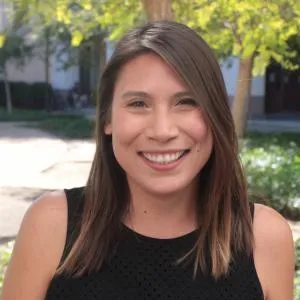
Instructor Name: Debora Pérez Torres, PhD
I am a communication professor at the California State University, San Bernardino.
 Please provide a link to your university page.
https://www.csusb.edu/profile/debora.pereztorres
Please describe the courses you teach.
COMM 3401: Introduction to Strategic Communication
COMM 2101: Introduction to Communication Studies
COMM 3101: Communication, Self, and Others
COMM 4401: Strategic Communication Campaigns
COMM 2491: Strategic Communication Practicum
COMM 4203: Organizational Communication
Describe your teaching philosophy and any research interests related to your discipline or teaching. My approach to diversity, equity, inclusion, and justice is informed by my identity and experiences. Being a nonnative English speaker, Mexican woman in higher education has made me acutely aware of the challenges it presents for minoritized and traditionally excluded students. Given my research on the negative effects of discrimination and rejection on health and well-being, I am especially committed to inclusion and justice in every aspect of my classroom.
Every student is welcome in my classroom. Students should feel comfortable expressing their opinions regarding course content without fear of being outright rejected or ignored. I strive to create an inclusive classroom and hope that everyone who comes to class feels like their opinions and perspectives are valued.
There are several ways in which I aim to foment diversity, equity, inclusion, and justice in class. When grading, I do my best to eliminate any implicit biases for example removing identifying information from course submissions. This includes having students provide their ID number rather than their information if they wish. I randomize the order in which I grade to reduce recency, fatigue biases, etc. I also use statistical approaches to examine grading results for any previously unrecognized biases.
This course covers perspectives, theories, and research that have primarily address the work and experiences of white men from western cultures. However, this does not mean we cover them uncritically; we will critique and evaluate theories from a variety of perspectives, each of which has their own assumptions, strengths, and weaknesses. I want to promote in-class discussion of these issues by encouraging students to bring up any issues that they find challenging for any reason, particularly if students find that content supports and upholds problematic ideologies. If you find that someone in class is acting or expressing themselves in a way that shows bias or makes you feel uncomfortable, I encourage you to speak up in class or let me know. I want everyone in class to have a positive learning experience. I am available during office hours, via email, and appointments.
In all, it is my unwavering belief that diversity of experiences, interests, and backgrounds benefits everyone in a collaborative learning environment. Increasing the range of perspectives and backgrounds helps spark ideas, discussions, and collaborations. Further, having a diverse learning community has a direct effect on the quality of learning since it encourages discussion not only of the ways in which scholarship is done but in the questions that are asked and the issues that are considered.