
PSFA 305W - Writing for Careers in Professional Studies & Fine Arts
PSFA 305W - Writing for Careers in Professional Studies & Fine Arts
Purpose: to help other instructors teaching the same course
Common Course ID: PSFA 305W
CSU Instructor Open Textbook Adoption Portrait
Abstract: This open textbook is being utilized in a writing course for undergraduate students by Rebecca Tedesco at San Diego State University. The open textbook provides a framework, information, and interactive activities that teach students how to use their unique voices in their professional writing instead of minimizing them. The main motivation to adopt an open textbook was to lower obstacles to course participation for students. Most students access the open textbook through its site URL.
PSFA 305W - Writing for Careers in Professional Studies & Fine Arts
Brief Description of course highlights: Writing in genres needed for careers in public and government service, communication, fine and performing arts and related fields. Satisfies Graduation Writing Assessment requirements for students who have completed 60 units and completed General Education requirements in Composition and Critical Thinking. 3 units.
Student population: Students are majoring in disciplines in the College of Professional Studies and Fine Arts (e.g., art; communication; criminal justice; theatre, television, and film).
Learning or student outcomes: Passing this course with a C or higher fulfills the university’s Graduation Writing Assessment Requirement (GWAR). All undergraduate students must demonstrate competency in writing skills at the upper division level as a requirement for the baccalaureate degree. Specifically, by the end of this course, you will be able to…
1. Produce the types of written communication commonly used in careers in professional studies and fine arts.
2. Conduct audience analysis and utilize effective, appropriate style and tone to convey messages.
3. Use inclusive language and reflective practices to identify biases we have as writers and communicators, especially against historically excluded groups.
4. Produce clear, engaging, and concisely written material.
5. Provide constructive and encouraging feedback on colleagues’ writing.
6. Edit your own and others’ work through close reading.
Textbook or OER/Low cost Title: Business Writing for Everyone by Arley Cruthers
Brief Description: I selected this book, because it teaches students how to showcase their unique voices in the writing they do in their work lives, instead of minimizing their voices to conform to a professional ideal. The book includes a series of vignettes by an indigenous Canadian woman about her experiences writing and communicating as a professional with which my students say they connect. It also features literacy narratives of first generation and multilingual college students and interactive activities that we use in our assignments.
Please provide a link to the resource
https://kpu.pressbooks.pub/businesswriting/
Authors: Arley Cruthers
Student access: Students access the book through the URL above, which is linked in our syllabus, grading contract, on Canvas, and in individual assignments.
Provide the cost savings from that of a traditional textbook. This book is 100% free. Similar titles used in upper-division writing courses can range from $30-120 dollars, depending on the text.
License: Creative Commons Non Commercial license
OER/Low Cost Adoption Process
Provide an explanation or what motivated you to use this textbook or OER/Low Cost option. To save students money and find a textbook that was current and relevant to my students’ lived experiences.
How did you find and select the open textbook for this course? ? I scoured MERLOT and other OER databases for the right text for my class.
Sharing Best Practices: What I would like to share is that the right text makes all the difference in a course. As faculty, when we provide a textbook that is free and with which students connect, the positive impact on the course is immeasurable. I would be happy to confer with any colleagues thinking of using an OER for the first time.
Describe any key challenges you experienced, how they were resolved and lessons learned. There are some typos in the textbook, because the author likely did not have an editor; as the professor of a writing course, I transformed this into an extra credit opportunity: students get extra credit for finding and correcting four typos from our book.
There is also a broken link and there are some formatting issues with the solutions to some of the interactive activities. To counter this, I provide the working link in Canvas and documents in which I have formatted the activity solutions correctly, so students are not confused.
There are also a few outdated references to social media sites, which I have updated in my assignments.
Instructor Name: Rebecca Tedesco
I am director of a learning center in the College of Professional Studies and Fine Arts Dean’s Office at San Diego State University. I teach upper-division writing courses.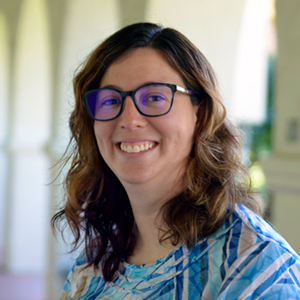 Please provide a link to your university page.
https://psfa.sdsu.edu/about/people/rebecca-tedesco
Please describe the courses you teach. I teach 2 sections of PSFA 305W - Writing for Careers in Professional Studies & Fine Arts each semester. (Then I have 9 units of release time to direct the PSFA Academic Resource Center.)
Describe your teaching philosophy and any research interests related to your discipline or teaching. My teaching is grounded in constructivist learning theory (Mcleod, 2024). People often think of learning as the passive transmission of knowledge from teacher to student. In contrast, constructivists see learning as an active process in which knowledge is formed by an individual or co-constructed with others, including the instructor, by bringing prior knowledge to bear on new experiences. I am currently writing my dissertation about students’ learning in an art history course with embedded tutoring.