Sociology of Education (SOC 3900)
Sociology of Education (SOC 3900)
Purpose: to help other instructors teaching the same course
Common Course ID: Sociology of Education (SOC 3900)
CSU Instructor Open Textbook Adoption Portrait
Abstract: OER course materials are being utilized in a Sociology course for undergraduate students by Ethel Mickey at California State University, San Bernardino. The Sociology of Education course is an upper-level elective in the Sociology program; while most enrolled students are Sociology majors, this course is open to all undergraduates. Introduction to Sociology (SOC 1000) is a prerequisite. The OER materials include peer-reviewed journal articles and academic book chapters, made available through CSUSB’s John M. Pfau Library subscriptions, as well as freely available news articles and podcast episodes. The main motivation to adopt OER course materials was to remove all textbook costs for students and improve the accessibility of the course. All students can access the course materials for free online, via the course Canvas page.
Sociology of Education (SOC 3900)
Brief Description of course highlights: Why does everyone go to school in the United States? How does the culture of a school shape the learning environment, and why do school cultures vary? Why do some students learn more than others? Do peers matter and how? How do schools perpetuate inequalities along lines of class, gender, and race? How does the “hidden curriculum” shape the educational experiences of students? How does the US school system compare to the education systems of other countries? What makes it so hard to bring about change in schools? Questions like these drive this course. This course is an introduction to the sociology of education, broadly exploring the role of education in American society. The course covers key sociological perspectives to education, including functionalism, conflict theory, and human, social and cultural capital. Topics include schools and communities, the role of teachers and students, persistent educational inequalities (including tracking, measures of achievement, and school segregation), school violence and reform.
Student population: The Sociology of Education course is an upper-level elective in the Sociology program; while most enrolled students are Sociology majors, this course is open to all undergraduates. Introduction to Sociology (SOC 1000) is a prerequisite, and most students have taken other core and elective Sociology courses, with a typical incoming understanding of the sociological perspective and foundational theoretical approaches in the discipline.
Learning or student outcomes: Course Learning Goals:
- To learn key concepts and theories in the sociology of education
- To describe the social determinants of educational outcomes in the US
- To analyze critically the US education system, understanding the social-organizational processes contributing to fundamental educational inequalities
- To develop a sociological understanding of your own educational careers, connecting individual experiences with larger social structures
- To refine skills in active reading, critical thinking, collaboration, and verbal and written communication to prepare for future careers and/or graduate studies
Key challenges faced and how resolved: I have taught this course for about six years and had consistently relied on a textbook that included excerpts from key sociology articles and books. When I made the decision to move away from the textbook to OER materials, I needed to locate readings that aligned with my syllabus and course plan that are course-level appropriate and available via the library. For several course topics, this meant I needed to locate different authors. In other instances, I struggled to find readings that were an appropriate length for an undergraduate course. I also ran into copyright issues where I was limited in how much of an academic book I could scan and provide to my students. Resolving these challenges took some trial and error, and consulting with the Sociology reference librarian at CSUSB. I also connected with Sociology faculty at other institutions who teach a similar course to ask for recommendations for course readings.
Syllabus and/or Sample assignment from the course or the adoption:
Course Syllabus Sample Homework
Textbook or OER/Low cost Title: Sociology OER
Brief Description: Instead of using a course textbook, I now utilize a variety of academic resources available to students for free via the campus library. Additionally, I incorporate news articles from national and local outlets and podcast episodes (all free to the public) in order for students to connect the course materials to community issues and to apply course concepts to real-world settings. I have included a sample of the materials below.
Please provide a link to the resource
Blume, Howard. 2022. “Economic segregation in schools has worsened, widening achievement gaps, study says.” The Los Angeles Times, Feb. 1.
Cottom, Tressie McMillan. 2017. “Lower Ed: The Troubling Rise of For-Profit Colleges in the New Economy.” The Century Foundation, March 1.
Ingersoll, Richard M. and Gregory J. Collins. 2018. “The Status of Teaching as a Profession.” Pp. 199-213 in Schools and Society, edited by J.H. Ballantine, J.Z. Spade, and J.M. Stuber. Thousand Oaks, CA: Sage.
Lareau, Annette. 2006. “Concerted Cultivation and the Accomplishment of Natural Growth.” Pp. 335-344 in Childhood Socialization, edited by G. Handel. New Brunswick: Aldine.
This American Life Podcast. 2015. “Three Miles.” March 13.
Student access: Students accessed all the required course materials through the course’s Canvas Learning Management System, wherein I post PDF copies or hyperlinks to external sites. I also use the Canvas site to post slide decks and course lecture materials, in-class handouts, assignment information, and to embed films/videos used in the course.
Provide the cost savings from that of a traditional textbook. The previous textbook I used retails for $151 for a new version; used versions are available from upwards of $100 (The Structure of Schooling: Readings in the Sociology of Education. 4th Edition. Richard Arum, Irenee R. Beattie, and Karly Ford, editors. Sage). As course enrollment is capped at 45 students, this represents a total cost savings of $6,795 per semester.
License: Specify Creative Commons license, copyright or specify open license
OER/Low Cost Adoption Process
Provide an explanation or what motivated you to use this textbook or OER/Low Cost option. My primary motivation in adopting OER course materials was to bring the costs for students down to $0. I was inspired to take on this effort after receiving informal feedback from students in the Fall 2023 semester, when many students revealed that the costs of the textbook I had adopted were prohibitive to them. This was especially troubling given the lack of used books available and/or rental options. Secondary motivations included being able to incorporate a range of materials (e.g. newspaper articles and podcasts) as well as customizing course materials to address local educational issues in Southern California.
How did you find and select the open textbook for this course? Given that I have previously taught this course, I started by identifying the key sociologists in the sub-discipline of sociology of education that I wanted students to read. I also identified a list of course topics that I viewed as essential to cover in this overview course. From there, I used the CSUSB Pfau Library OneSearch feature to search by author and/or topic to locate materials that met my criteria and were available to students. Additionally, I checked the American Sociological Association’s teaching repository (TRAILS) for sample syllabi. I browsed OER sites, Sociology blogs, including Everyday Sociology, and review articles (Sociology Compass provides great, short review pieces appropriate for undergraduates). I consulted with the Sociology reference librarian at CSUSB. I also connected with Sociology faculty at other institutions who teach a similar course to ask for recommendations for course readings. There is a Sociology Facebook community for instructors, where you can search by class or topic, and faculty from across the country share open access materials.
Sharing Best Practices: My suggestions would be to get started early! For every one item I assign on my syllabus, I probably read and reviewed about 5 other pieces. I also suggest relying on your academic community for ideas. Most courses have been taught before, and I have found that faculty are typically enthusiastic about sharing their syllabi and resources. Check to see if your professional associations have teaching repositories or online communities. Also, the library and reference librarians are excellent resources. Finally, I have received much positive feedback from students about my incorporating media articles and podcasts onto the syllabus as part of the required course materials. They enjoy seeing how what we are learning in the classroom plays out in society, in their own backyards! And, with many students commuting to campus, assigning a podcast for their drive allows them to multitask.
Describe any key challenges you experienced, how they were resolved and lessons learned. I did learn more about copyright concerns and limitations through this process, especially when it comes to scanning book chapters. I also struggled with a lack of quality scanning facilities on campus. I learned that any scans must be made accessible for low-vision or vision-impaired learners, which requires a high-quality, remediated PDF. I had to work with the IT department as well as Services for Students with Disabilities to ensure that my scanned book chapters met the criteria and were inclusive to all students.
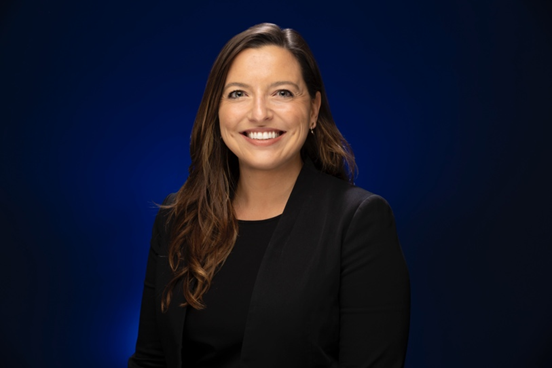
Instructor Name: Ethel Mickey
I am a Sociology professor at California State University, San Bernardino.
Please provide a link to your university page.
https://www.csusb.edu/profile/ethel.mickey
Please describe the courses you teach.
I teach Qualitative Analysis & Field Research (SOC 3010) and Sociology of Education (SOC 3900).
Describe your teaching philosophy and any research interests related to your discipline or teaching. The goal of my teaching is for students to connect their diverse, lived experiences to society. Through problem-posing exercises, debates, and group discussions, students develop a critical lens to challenge sociocultural assumptions and discover means for social change. I teach courses that encourage students to approach complex questions of inequality from an intersectional lens. The courses I teach complement my research interests, which use qualitative research methods to broadly explore intersectional gender inequalities across organizational contexts, including work organizations and higher education.