Digital Illustration - Removal of Lab Fees & Introduction of Open-Source Materials
Digital Illustration - Removal of Lab Fees & Introduction of Open-Source Materials
Purpose: to help other instructors teaching the same course
Common Course ID: 031102
CSU Instructor Open Textbook Adoption Portrait
Abstract: This open textbook is being utilized in a design course for undergraduate or graduate students by Taylor Moon Castagnari at California State University, San Bernardino. The open textbook provides students with access to Scott McCloud’s Understanding Comics. Moreover, I was able to remove the lab fees from my sections of the Junior Topics Course - Digital Illustration. The main motivation to adopt an open textbook was to make Digital Illustration a more cost-efficient course during the Winter Intercession. Most student access the open textbook in PDF format via the Canvas Learning Management System.
Course Title and Number: DES 3130 - Junior Design Topics - Digital Illustration
Brief Description of course highlights: In the Design Curriculum, Topics courses are intended to allow course exploration around emerging topics and technologies within the design field. Topics courses allow faculty to gauge student interest in a given area before re-introducing the course as a standalone course in the curriculum. Students can take a junior topics course up to 3 times (9 units) for credit, as each topic varies based upon the semester and the given instructor. While DES 3130 is listed with a lab fee at the catalog level, I was able to work with the Office of Academic Scheduling & Curriculum to remove the lab fee for my particular sections of the course during the Winter Intercession 2024. Because the CSUSB Class Schedule website pulls from PeopleSoft and is operated by Web Services, it appeared as though the course had a fee when the fees were removed from my sections during Winter 2024. In addition to ensuring the students were not charged lab fees, I was able to propose Digital Illustration as a self-standing course in CSUSB’s Course Inventory Management System. Once approved, DES 3300 Digital Illustration will be listed in the course catalog as not having any lab fees moving forward. In addition to these curricular changes, I was able to offer Scott McCloud’s Understanding Comics as an open-source PDF through Canvas. Textbooks that are geared towards a particular version of Adobe Illustrator tend to become outdated quickly due to constant software updates. Therefore, I created tutorials that summarized the tools of the 2024 Adobe Illustrator Interface while recording demonstrations pertinent to the course projects. I illustrated and enlarged the software tools and posted them as slides so that students could use these references as flash cards. Moreover, I included links to open-source color palette generators that aid students in color theory and color harmonies.
Course Catalog Description: Advanced exploration and application of contemporary topics in design. May be taken three times for up to nine units as topics change. Two hours of discussion and three hours of activity. Materials fee required. https://catalog.csusb.edu/coursesaz/des
Student population: Both studio art and design majors took this course. For design majors, this course counts towards their Design Upper Division Units needed to graduate. I needed to waive the prerequisites for the participating Art majors, as their academic background will vary from that of the design majors. For Design majors, the prerequisites included, DES 1100, DES 1110, DES 1125, DES 2600, DES 2005, and DES 2405. Because I taught this course as an introduction to Adobe Illustrator and deep-dive into illustration concepts, I waived many of the prerequisites for the design majors as well. When this course is offered again in the future as DES 3300 - Digital Illustration, it will become a part of Studio Art’s Minor in Digital Arts and Minor in Animation and Illustration. When the course is taught again in the future as DES 3300, the prerequisites will be limited to DES 1125 - Design Thinking - Problem-Solving & Critical Thinking in Visual Studies.
Learning or student outcomes:
Be able to convert hand-drawn images, raster illustrations, and photo references into editable, digital vector illustrations
Utilize basic principles and methods of visual art and design, including composition, perspective, color theory, line, form, repetition and rhythm, balance, etc to create engaging illustrations
Use illustration narratively by employing a range of shot types
Render characters with intentional proportion (albeit hyperbolized or accurately) in a variety of poses
Illustrate a variety of subject matter in styles that are appropriate to the content/message and audience
Understand the interface of an industry-standard illustration software
Key challenges faced and how resolved: One of the key challenges was navigating how to remove the lab fees from the section level of the Junior Topics course but not from the catalog level. Because some of my colleagues might need the lab fees for their specific sections of Design Junior Topics, the lab fees needed to remain at the catalog level. However, I needed to ensure that the students in my Winter Intercession were not charged. Through working with the Office of Academic Scheduling & Curriculum, I was able to waive the fees for the Winter 2024 term.
Textbook or OER/Low cost Title: Scott McCloud Understanding Comics: The Invisible Art
Brief Description: I provided Scott McCloud’s Understanding Comics text as an open-source PDF and embedded digital book for my students in Canvas. By downloading the PDF, students can access the material at any juncture, regardless of their Internet access.
My approach in recording tutorials for each project allows students to see how I would use problem-solving skills and design thinking to address various prompts. This also provides students with relevant examples for their projects.
Please provide a link to the resource
https://archive.org/details/understanding-comics/page/n3/mode/2up
Authors: Scott McCloud
Student access: The students could access these materials through the Canvas Learning Management System. I was able to procure the text from Internet Archive, a nonprofit organization that promotes free access to collections of digitized materials. From there, I was able to embed the text into Canvas LMS. Students are also able to download the PDF version from the Internet Archive preview.
Supplemental resources: I created the following videos to break down the Adobe Illustrator Interface. This resource was substituted for the standard textbook that defines the changes in each Adobe Illustrator software update. https://youtu.be/lsdcCgjm6GM
https://youtu.be/RRqckTT3sSU
https://youtu.be/VNaSkvhup98
I included links to helpful resources from Adobe that help streamline the process of learning their Creative Suite. https://helpx.adobe.com/illustrator/using/tools-in-illustrator.html
I encouraged students to utilize Adobe’s Color Calculator to enhance the color schemes in their illustrations. https://color.adobe.com/create/color-wheel
Provide the cost savings from that of a traditional textbook. Lab fees for the DES 3130 Junior Design Topics are listed at $58.50 per student. Thus, by omitting the lab fees, the cost savings for the eight enrolled students amount to $468.00.
Rather than require a textbook that breaks down the 2024 Adobe Illustrator Interface, I created a series of 3 videos that highlight the software’s tools and features. I published these videos to YouTube and embedded these videos within Canvas. The textbook that would have been needed had I not recorded these videos is, Adobe Illustrator Classroom in a Book 2024 Release, 1st Edition by Brian Wood. This text costs $58.99. Eight students were enrolled in the Winter Intercession, making the textbook cost savings $471.92.
Original Text that was Omitted https://www.amazon.com/Adobe-Illustrator-Classroom-Book-Release/dp/0138263825
Scott McCloud’s Understanding Comics costs $11.61 on Amazon. I was able to find the text on Internet Archive, a nonprofit public digital library, and embed it into Canvas. This increased the course’s cost savings by $92.88.
https://archive.org/details/understanding-comics/page/n3/mode/2up
Total Cost Savings: $1,032.80
License: The Scott McCloud text is openly licensed through Internet Archive. No other textbooks were required for the course, as I replaced the Brian Wood text with my own original video tutorials.
OER/Low Cost Adoption Process
Provide an explanation or what motivated you to use this textbook or OER/Low Cost option. It can be a financial burden for some students to take a Winter Intercession course, as the Winter term is not covered by financial aid. However, I understand that the Winter term can be a pivotal time for catching up with courses and ensuring an on-time graduation. Therefore, I opted to remove the lab fees from the Winter Intercession course. I did this to save students money. Moreover, because I found Scott McCloud’s Understanding Comics through Internet Archive, I was able to embed it into Canvas, wherein students could interactively turn the digital pages of the publication or download it. This improved the accessibility of the learning material. Moreover, I opted to record tutorials that go over the Adobe Illustrator interface rather than use a standard textbook because this method allows the students to see the tools in action within the video.
How did you find and select the open textbook for this course? I learned of Scott McCloud’s Understanding Comics text from my own undergraduate studies. I have consulted the Adobe site regarding shortcuts and tools throughout my journey working as a designer. I found that learning from YouTube tutorials is an effective strategy for mimicking a design process on one’s screen. Therefore, I recorded project tutorials for my students.
Sharing Best Practices: I would recommend other faculty use Google Scholar, Internet Archive, JSTOR, and other open-source platforms to find academic materials. Adobe Stock also has great images and graphics that can be used within class slides.
Describe any key challenges you experienced, how they were resolved and lessons learned. One of the major hurdles was removing the lab fees from the section level of DES 3130. Students were confused as to whether the course had any fees because the course had listed lab fees at the catalog level. I corresponded with the Office of the Registrar and the Office of Academic Scheduling and Curriculum to remedy this. The other challenge was proposing Digital Illustration as a standalone course for future semesters. Through collaborating with my colleagues, seeing where the course would fit within the Design curriculum, I was able to propose the course and send it down the Course Inventory Management Systems pipeline.
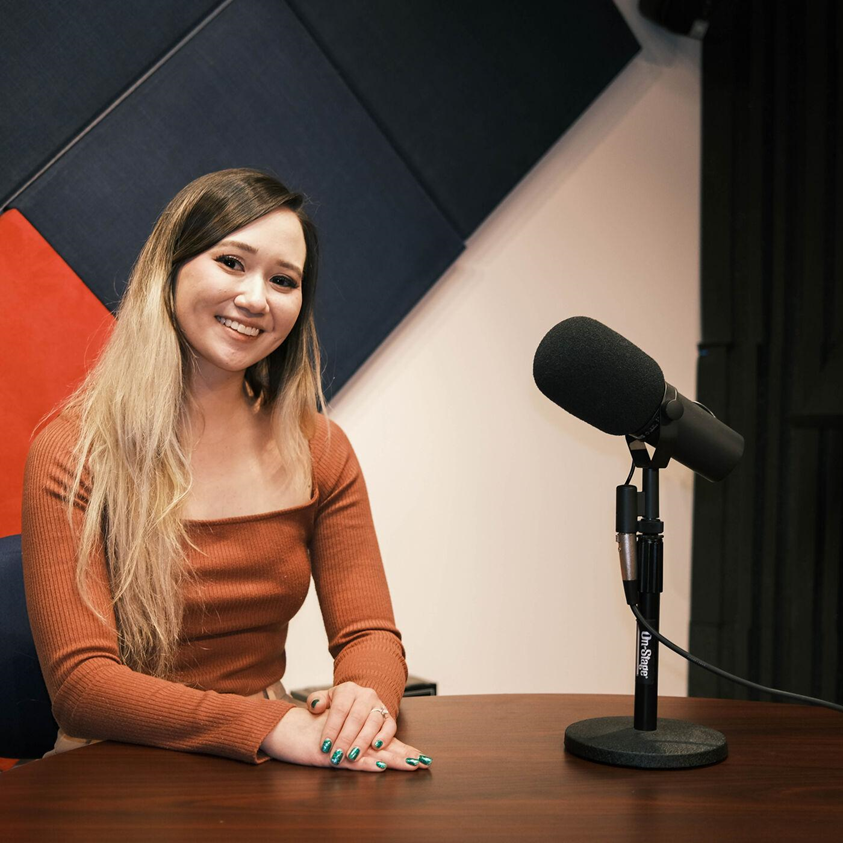
Instructor Name: Taylor Moon Castagnari
I am a Design professor at the California State University, San Bernardino. I teach DES 3600 Digital Motion Graphics, DES 2405 Application Programming, ART 4240 and DES 4130 Experimental Animation, DES 2600 Digital 3D and Time-Based Media, DES 3205 Web and Application Design, DES 3300 Digital Illustration, and DES 3100 Junior Portfolio Review.
Please provide a link to your university page.
https://www.csusb.edu/art/our-team
Please describe the courses you teach. The courses I teach primarily cover the topics of animation, illustration, and web and app design. The topic of illustration overlaps with both animation and programming. In 2D animation, illustration is treated more sequentially. In web and app design, illustration is utilized to create dynamic interface elements. Animation can also be employed to further engage the user in an application or website. In my Junior Portfolio course, I help students compile their previous projects into a professional and cohesive portfolio that embodies their design style.
Describe your teaching philosophy and any research interests related to your discipline or teaching. My teaching is grounded upon the pillars of skill-based demonstrations, problem-solving and critical thinking, and client-based design projects. As the field of design is advancing rapidly with the development of new technology, learning the newest software and code is an important part of my teaching, as I prepare students to enter the competitive design market. I see this aspect of self-teaching as more pertinent to my teaching philosophy than my research statement, as it is not directly a published outcome. Instead, it is a means by which I grapple with the challenges of mastering skills and then translate to students how I overcame those obstacles to use a platform with ease.
I work with students individually to create thumbnail sketches, conduct research, and submit proposals of their designs prior to committing them to vectors. I help them compile a professional progress document for each project that highlights their design process from concept to completion. The revisionary process of submitting drafts and receiving critiques throughout a project’s lifetime has become essential to my curriculum development. Understanding that my students are visual learners, I recreate illustrations of the tools in each of the design softwares and then enlarge and define their functions. I record software and code tutorials in which I go through creating a project while narrating and explaining why I have chosen particular methods. I post these tutorials in addition to the live demonstrations that I do in lecture. Supplementally, I create slides that break down each step of the project and embed them as interactive slides within Canvas. I pause during instruction to ensure that all students are staying on pace with the demonstrations and understand the process. I hold extra office hours to accommodate student schedules. Additionally, I cater to visual learners by providing visual feedback on their designs.
During my time at CSUSB, I have sought to introduce new courses that would enhance the design curriculum and would encourage collaboration between the design majors and art majors alike. To this end, I introduced a new topics course entitled, Experimental Animation, which is encoded as DES 3130/4130 (Junior and Senior Design Topics) and ART 4240 (Advanced Imaging and Illustration). Moreover, I added a new Digital Illustration course (DES 3300) to the BA in Design.
I sought to enhance my teaching through various on-campus training and certificate programs. In Fall 2023, I completed the Teaching with Technology Certificate Program, which underscored accessible course design and technological resources that can be adopted into Canvas. I completed the CSU-wide program entitled, Equity-Minded Teaching, in which representatives from each of the CSU campuses engaged in discussion and data-driven assignments that promoted equity. That semester, I also completed the Student Engagement in All Instructional Modes Certificate Program, in which faculty discussed the best methods for teaching in various modalities and possible demotivating factors for students. In Spring 2023, I completed the Faculty Development Certificate Program, which included several seminars on teaching topics ranging from high-impact practices to decolonizing the syllabi. I am currently completing the Best Practices in Cosynchronous Teaching Certificate Program and the Quality Online Teaching Certificate Program (Advanced QLT).
In order to implement the latest trends in Graphic Design and UX and UI practices in the classroom, I have paired my own professional experience with supplemental courses and professional certifications. While I had already taught Interaction Design, Intro to Web, and Advanced Web courses, I completed Cal Arts’ four-course UX and UI Specialization in order to compare the ways in which other universities have taught topics of strategy and information architecture, prototyping, wireframing, and interface and experience fundamentals.
By having a front-end knowledge of programming, I was able to understand the limitations and possibilities of what can be done when designing for web and mobile media. I gained a certification from Codecademy in HTML and self-taught CSS, Javascript, and p5.js to help enhance my web design courses. While UX and Web designers often hand off their prototypes to developers, I had experience working for smaller companies that could not hire both a designer and programmer. Instead, these small businesses expected the designer to have a working knowledge of both practices. Upon learning that I would be teaching DES 2600, I became certified through Codecademy in React-Native, which is a cross-platform coding language for Android and iOS app programming. I wanted to accommodate students with Mac and PC computers, as teaching in certain languages, such as Swift, can only be programmed and tested on Mac. I believe engaging in active teacher development is just as important as one’s teaching methodology.
I learned that CSUSB’s Design program has a concentration in 3D Design and primarily uses Cinema 4D in the curriculum for teaching 3D animation and rendering. I had some basic experience with Maya from taking a Lynda 3D modeling course to supplement teaching Motion Design courses previously. However, I was committed to switching from Maya and learning Cinema 4D in preparation for teaching DES 2600 – Digital 3D and Time-Based Media. I consulted with the head of animation at Pixar, Renato dos Anjos, and brought him in as a guest speaker to the course to describe to the students how different portions of the animation are distributed amongst the animation team. While my invitation of guest speakers is relayed in my Community Service sections of my FAR, I felt that this example best demonstrated how I seek to create a dynamic classroom through bringing in industry professionals.
While I go in-depth on community partnerships in my Community-Service Narrative, I wanted to iterate that there is overlap between my community service and teaching practices. I believe that obtaining design clients for classroom projects can equitably provide students with resume-building experiences. I reserved detailed explanations of my class projects with the Santa Barbara Museum of Natural History, Continental Tires, CICA Museum, Getty Museum, Allegiant Airlines, The Los Angeles Maritime Museum, the Santa Barbara Maritime Museum, Health Nut LA, and Hayden Los Angeles for my Community Service section. I feel that the Community Service section better suits these projects, as they represent how I engage with the wider art, design, and Southern California communities.