Realism
Realism
Broadly defined as "the faithful representation of reality", realism is a literary technique practiced by many schools of writing. Although strictly speaking, realism is a technique, it also denotes a particular kind of subject matter, especially the representation of middle-class life. A reaction against romanticism, an interest in scientific method, the systematizing of the study of documentary history, and the influence of rational philosophy all affected the rise of realism. According to William Harmon and Hugh Holman, "Where romanticists transcend the immediate to find the ideal, and naturalists plumb the actual or superficial to find the scientific laws that control its actions, realists center their attention to a remarkable degree on the immediate, the here and now, the specific action, and the verifiable consequence" (A Handbook to Literature 428).
Many critics have suggested that there is no clear distinction between realism and its related late nineteenth-century movement, naturalism. As Donald Pizer notes in his introduction to The Cambridge Companion to American Realism and Naturalism: Howells to London, the term "realism" is difficult to define, in part because it is used differently in European contexts than in American literature. Put rather too simplistically, one rough distinction made by critics is that realism espousing a deterministic philosophy and focusing on the lower classes is considered naturalism.
n American literature, the term "realism" encompasses the period of time from the Civil War to the turn of the century during which William Dean Howells, Rebecca Harding Davis, Henry James, Mark Twain, and others wrote fiction devoted to accurate representation and an exploration of American lives in various contexts. As the United States grew rapidly after the Civil War, the increasing rates of democracy and literacy, the rapid growth in industrialism and urbanization, an expanding population base due to immigration, and a relative rise in middle-class affluence provided a fertile literary environment for readers interested in understanding these rapid shifts in culture. In drawing attention to this connection, Amy Kaplan has called realism a "strategy for imagining and managing the threats of social change" (Social Construction of American Realism ix).
Realism was a movement that encompassed the entire country, or at least the Midwest and South, although many of the writers and critics associated with realism (notably W. D. Howells) were based in New England. Among the Midwestern writers considered realists would be Joseph Kirkland, E. W. Howe, and Hamlin Garland; the Southern writer John W. DeForest's Miss Ravenal's Conversion from Secession to Loyalty is often considered a realist novel, too.
- 1865 – Mark Twain’s “The Celebrated Jumping Frog of Calaveras County” published.
- 1873 – The Gilded Age: A Tale of Today by Charles Dudley Warner and Mark Twain published.
- 1876 – Mark Twain’s The Adventures of Tom Sawyer published.
- 1878 – Henry James’s Daisy Miller published.
- 1884 – The Adventures of Huckleberry Finn published.
- 1885 – The Rise of Silas Lapham by William Dean Howells published.
- 1890 – Ambrose Bierce’s “An Occurrence at Owl Creek Bridge” published.
- 1895 – Stephen Crane’s Civil War masterpiece, The Red Badge of Courage, published.
- Renders reality closely and in comprehensive detail.
- Character is more important than action and plot; complex ethical choices are often the subject.
- Characters appear in their real complexity of temperament and motive; they are in explicable relation to nature, to each other, to their social class, to their own past.
- Class is important; the novel has traditionally served the interests and aspirations of an insurgent middle class.
- Events will usually be plausible. Realistic novels avoid the sensational, dramatic elements of naturalistic novels and romances.
- Diction is natural vernacular, not heightened or poetic; tone may be comic, satiric, or matter-of-fact.
- Objectivity in presentation becomes increasingly important: overt authorial comments or intrusions diminish as the century progresses.
(from Richard Chase, The American Novel and Its Tradition)
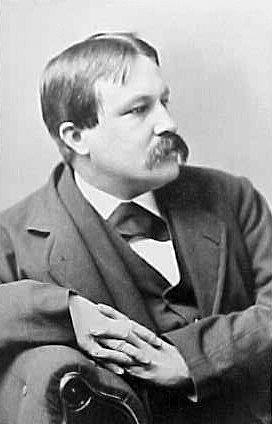 William Dean Howells
William Dean Howells (1837 - 1920), considered "The Dean of American Letters," was an American author and literary critic with a broad range of works appealing to young and old. His writing style favored naturalism, in which he related his characters' observations in a seemingly casual and endearing manner by embracing their imperfections. Howells inspired many writers, particularly Sherwood Anderson.
Howells was well known during his time. His short story "Christmas Every Day" was widely read in his day and his novel, The Rise of Silas Lapham, is still read in high school and college classrooms as an exemplar of the genre of Realism.
William Dean Howells is also renowned for his turn as the editor of The Atlantic Monthly, where he was a steady champion of the Realist movement in literature. Not only leading by example in his own work, but also arguing for its greater adoption by other writers and artists. He saw realism as "nothing more and nothing less than the truthful treatment of material." Perhaps as a nod for the role of humor in realism, Howells collaborated with Mark Twain in writing Mark Twain's Library of Humor (1888).
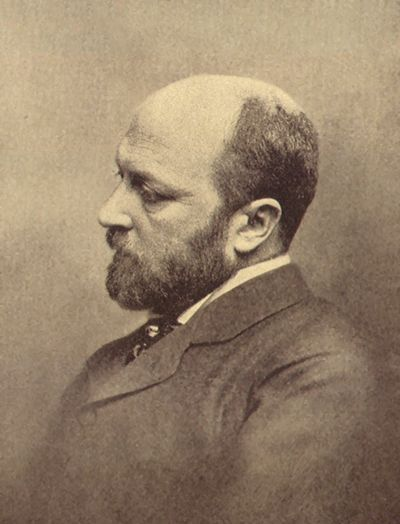 Henry James
Henry James (1843 - 1916) was a key figure of 19th century realism, born in New York City in 1843, but spent most of his life in Europe. He became a British subject in 1915, a year before his death. James wrote a series of novels about Americans encountering Europeans and their experiences in Europe. He favored the style of a-tale-within-a-tale, exploring issues of perception and consciousness, from the characters' points of view.
Daisy Miller (1879) is considered one of his masterpieces, as well as The Portrait of a Lady (1881), and The Bostonians (1886), published during the emergent feminist movement. James' The Turn of the Screw (1898), a ghost story about a governess obsessed with childhood corruption, is his best known novella.
James suffered a stroke in December 1915 and died in London in 1916, leaving behind an incredibly prolific and broad range of work, influencing countless authors who followed his lead.
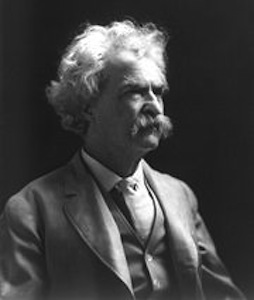 Mark Twain
Born November 30, 1835 in Florida, Mark Twain “came in with the comet” and as he predicted "went out with the comet” passing April 21, 1910, the day after Halley’s Comet. His real name was Samuel Longhorne Clemens, and he took his pen name from his days as a riverboat pilot on the Mississippi River where the cry “mark twain” signaled the depth of water -- about 12 feet was required for the safe passage of riverboats.
Mark Twain was a talented writer, speaker and humorist whose own personality shined through his work. As his writing grew in popularity, he became a public figure and iconic American whose work represents some of the best in the genre of Realism. As the young country grew in size but not in a cultural manner to the liking of the European gentry, it became fashionable to criticize "the ugly American.” Twain famously travelled abroad and disarmed his audience with his wit and humor with pronouncements like the following: “In Paris they simply stared when I spoke to them in French; I never did succeed in making those idiots understand their language.”
Mark Twain grew up in Hannibal, Missouri and would later use that location as the setting for two of his most famous works, Huckleberry Finn and Tom Sawyer. He started his career as a typesetter at a newspaper, worked as a printer, a riverboat pilot, and then turned to gold mining. When he failed to strike it rich, he turned to journalism and it was during that time that he wrote the short story that would launch his career, “The Celebrated Jumping Frog of Calaveras County.”
While Twain’s career as a writer enriched him, his turn as a gentleman investor did much to impoverish him. He lost a great deal of his writing profits and much of his wife’s inheritance on different investments, the costliest was his backing of a promising typesetting machine. The machine had great potential but it failed in the market due to frequent breakdowns. Twain recovered financially with the help of a benefactor from Standard Oil, Henry Huttleson Rogers. Rogers guided Twain successfully through bankruptcy and even had Twain transfer his copyrights to his wife to keep his royalties from his creditors. Further success from book sales and lectures restored his financial health and in the end all his creditors were paid.