
Literature and Health - LTWR 203
Literature and Health - LTWR 203
Purpose: to help other instructors teaching the same course
Common Course ID: LTWR 203 – Literature and Health
CSU Instructor Open Textbook Adoption Portrait
Abstract: These open materials are used in an undergraduate Literature and Writing Studies course taught by Martha Stoddard Holmes at Cal State San Marcos. The open materials provide a range of readings in the humanities, arts, and behavioral/social sciences that complement films and videos available to students through library reserve/video on demand. The main motivation to adopt a open materials was concern for both student costs and student intellectual flourishing. It would be impossible to access this range and currency of materials except in a custom textbook. Most students access the open materials through Canvas, many of them on their smartphones.
Course Title and Number: LTWR 203 – Literature and Health
Brief Description of course highlights: From the time before we are born to the moment of our death (and beyond), literature, film, and other creative works assign meanings to our bodyminds that we later can choose to live with or rewrite for our own personal thriving. This GE Area C2 humanities course explores how literature and film articulate the personal and social dimensions of illness, pain and suffering, and human bodily variations and changes (race, class, gender, sexualities, age, and disability). We learn and practice basic tools of literary and film analysis to explore written and visual texts from the ancient world through the current moment, including writing by nurses and doctors. Catalog Description
Student population: Majors across the University, with a particularly strong showing from students in the nursing and kinesiology programs or those who consider themselves pre-health in emphasis. The course is also offered on CSU Fully Online (“Coursematch”), meaning that students at other CSUs can take it as well.
Course Learning outcomes (gen-ed connections bolded):
Successful students in LTWR 203 will be able to:
- Articulate approaches to illness and disability as important dimensions of human diversity that often intersect with other kinds of diversity in experiences and representations of embodiment.
- Demonstrate critical and creative thinking and effective written and oral communication through writing assignments (reader’s journal, discussion, papers, and the final project)
- Use teamwork and problem solving in discussion and peer feedback
- Select and use basic literary (and some film) terminology and methods for inquiry and analysis of written and visual works
- Identify and apply selected theoretical concepts from medical humanities, narrative medicine, disability studies, and related fields in assignments (quizzes, journals, discussion, papers, project)
Key challenges faced and how resolved: One of the big challenges in this and all of my courses is that students have been trained to summarize rather than analyze texts for course assessments. The pervasiveness of AI tools has exacerbated the issue. The training I provide in this course is anchored to the practices of annotation and close reading/close looking. In other words, students have multiple low-stakes assignments that invite them to physically mark up self-selected passages of texts—or storyboard very short shot sequences in film and video—in order to record their thinking and engagement with the written and visual texts and then, develop short analytical essays based on the evidence derived from those annotations rather than from outside sources.
Syllabus and/or Sample assignment/ Anthology or Teaching Unit to demonstrate applied learning: While some students prefer to write an analytical paper for their culminating activity in this course, and others take advantage of the opportunity to substantially revise an early paper for the potential of a higher assessed grade, most students select the anthology or teaching unit options. The first invites them to imagine their own Literature and Health anthology of readings and films/videos, focused on a particular theme or issue. They create a table of contents and a critical introduction to the anthology, following models provided from published anthologies. Students interested in teaching careers or simply wanting to know what college looks like from the other side of the desk do a teaching unit, imagining a focused literature and health unit for a particular grade level from learning outcomes to the in-class activities that will support them and the assessments that will measure them, all folded into a lesson plan with a rationale for why they are using these materials to generate these learning outcomes.
Professor Emerita Martha Stoddard Holmes, Ph.D. 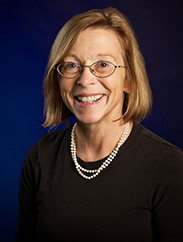 I am a Literature and Writing Studies professor at California State University, San Marcos. I teach courses in health humanities/disability studies like this one at the upper division (LTWR 351, “Imagining Health and Illness in Film, Literature, and Comics”) and sometimes graduate level, in addition to 18th-20th century British literature, film (“Jane Austen Novel into Film,” “Children’s Literature into Film”), and creative nonfiction writing and mindful writing (“The Writing Process”).
Please provide a link to your university page.
https://www.calstate.edu/csu-system/faculty-staff/outstanding-faculty/Pages/Holmes,Martha.aspx
Describe your teaching philosophy and any research interests related to your discipline or teaching. For nearly thirty years, I have researched and written about cultural representations of the body, illness, and disability from the 19th century to the present, writing across the gendrese of academic scholarship and creative nonfiction. What engaged me in this career trajectory was its relevance to my daily life, and I am privileged and delighted to share this discovery with my students—that academic work at its best is passionately fueled by real-life connections, applications, and activism, and that scholarly and creative writing are not mutually exclusive. I want students to recognize their existing strengths and feel supported as they explore new and enjoyable ways to cultivate and share their critical and creative voices.
- Away From Her. Dir. Sarah Polley. Perf. Julie Christie. Capri Releasing, 2006.
- Book Club. Dir. Bill Holderman. Perf. Candice Bergen, Jane Fonda, Diane Keaton, and Mary Steenburgen. Paramount, 2018.
- Crip Camp. Dir. Nicole Newnham and James LeBrecht. Netflix, 2022.
- The Doctor. Dir. Randa Haines. Perf. William Hurt and Christine Lahti. Buena Vista, 1991.
- Five Feet Apart. Dir. Justin Baldoni. Perf. Haley Lu Richardson and Cole Sprouse. CBS Films, 2011.
- “In My Language.” Baggs, Mel. Youtube, 2007.
- The Intouchables. Dir. Olivier Nakache/Eric Toledano. Perf. Francois Cluzet and Omar Sy. Weinstein, 2011.
- “The Queen’s Next Chapter.” Imvexxy. Youtube.
- Real Women Have Curves. Dir. Patricia Cardoso. Perf. America Ferrera and Lupe Ontiveros. HBO Independent Productions, 2002. Film.
- The Waterdance. Dir. Neil Jimenez/Michael Steinberg. Perf. Helen Hunt, Eric Stolz, and Wesley Snipes. Columbia Tristar, 2001. Film.
- Wit. Dir. Mike Nichols. Perf. Emma Thomson. HBO. 2001. Film.
OER/Low Cost Adoption Process
Provide an explanation or what motivated you to use this textbook or OER/Low Cost option. The main motivation to adopt an open textbook was concern for both student costs and student intellectual flourishing. It would be impossible to access this range and currency of materials except in a custom textbook.
How did you find and select the open textbook for this course? Because I have been teaching some version of this course for over twenty years, and it draws on my scholarly research, the choices came from my own research and pedagogical interests and expertise. The support of University Library staff was essential in making those selections accessible, legal, and appropriately cited— I could not have done it without their patient help, expertise, and creativity!
Sharing Best Practices: While my library has always been my mainstay in terms of providing meaningful content to students in practically accessible ways that place student needs first, I think in the future I would have partnered with them more proactively from the start, during course design rather than on as-needed (or “help! I can’t do x…") basis. Their support under all circumstances has been incredible, never more impressive than during the intense pressure of the pandemic, but they could have really demonstrated their ample professional skill set more effectively given a much more reasonable timeline. The library is our partner: we need to remember that earlier in the course delivery process.
Describe any challenges you experienced, and lessons learned: One of the big challenges was meeting accessibility standards for a diverse range of students. When ordering materials from other libraries, the pdfs delivered electronically often could not be made fully accessible. While using interlibrary loan reduced costs, in some cases it did not deliver the accessibility that purchasing our own resources would have provided.
Textbook or OER/Low cost Title:
Brief Description: The OER collection, like my own research in health humanities and disability studies, is cross-disciplinary, drawing on a range of verbal and visual texts from narrative fiction and film to poetry to creative nonfiction to comics to historical and sociological analyses of representations of the diverse bodyminds we inhabit in a lifetime. Representative theoretical texts and lectures introduce students to the fields of health humanities, disability studies in the humanities and social sciences, age studies, fat studies, and beauty studies, while drawing on many students’ existing knowledge of the cultural construction of race, class, and gender. These encounters with fields that look critically at embodiment are reportedly life-changing and particularly invite students to think more expansively about the concept of intersectionality and just how many identities can intersect in our life experiences.
Access to Resources: Readings for LTWR 203.
Note: whenever possible, I also provide links to free audio versions on Youtube, Project Gutenberg, and/or Librivox. Universal Design in Learning (UDL) principles are baked into this course as access for diverse bodyminds is one of our recurrent concerns and focal points.
- Black, Sheila. “What You Mourn.”
- Carver, Raymond. “My Death.”
- Chekhov, Anton. “Misery.” The Schoolmistress and Other Stories. Project Gutenberg. 10 September, 2016.
- Clifton, Lucile. “Here Rests.”
- Collings, Susan. “Hospital Course.” Between the Heartbeats ed. Cortney Davis and Judy Schaefer. U of Iowa P 1995: 41-47.
- Cottom, Tressie Mcmillan. “In the Name of Beauty.” Thick and Other Essays. New Press, 2019: 33-72.
- Dixon, Melvin. “Heartbeats.”
- Donne, John. “Death, Be Not Proud.”
- Garland-Thomson, Rosemarie. “Ways of Staring.” J Visual Culture 5.2 (2006): 173-192.
- Grandin, Temple. from Thinking in Pictures. Author website: https://www.grandin.com/inc/visual.thinking.html
- Hawthorne, Nathaniel. “The Birthmark.” 1843.
- Hemingway, Ernest. “Indian Camp.” In Our Time: Stories. United States, Boni & Liveright, 1925: 15-21.
- Kafka, Franz. “The Metamorphosis.” 1916.
- Kalanithi, Paul. “How Long Have I Got Left?”
- Kenyon, Jane. “Let Evening Come.”
- Mates, Susan. “Laundry.” The Good Doctor. U of Iowa P 1994: 9-14.
- Packer, ZZ. “Brownies.” Best of Times, Worst of Times : Contemporary American Short Stories from the New Gilded Age, eds. Wendy Martin and Cecelia Tichi, New York University Press, 2011. ProQuest Ebook Central, https://ebookcentral.proquest.com/lib/csusm/detail.action?docID=6118575
- Selzer, Richard. “Brute.”
- Thomas, Dylan. “Do Not Go Gentle Into That Good Night.”
- Williams, William Carlos. The Doctor Stories. United Kingdom, New Directions, 1984: 56-60.
- Selected excerpts from graphic memoirs taken from author websites and the National Institutes of Health site https://www.nlm.nih.gov/exhibition/graphicmedicine/collection-detail.html?imgid=14&imgName=spacer
Student access: Students access all materials through the Canvas LMS and CSUSM Library Reserves, which includes streaming video on demand as well as the option of screening films and videos in the library.
Supplemental resources: In addition to narrated PowerPoints and “if you want more” supplemental readings, a weekly preview of upcoming learning activities is customized to each cohort of students (usually 40 per class section, more if there are CourseMatch students).
Cost Savings: A published medical humanities or disability studies reader would be $60-100 but not provide the range of materials these students have access to; to actually duplicate what they are getting would likely cost closer to $150 per student, a conservative estimate.
License: Materials are either available in public domain or through the library or online websites.