Temperature
Temperature
Accurate temperature measurements provide information about a patient’s health status and guide clinical decisions. Methods of measuring body temperature vary based on the patient’s developmental age, cognitive functioning, level of consciousness, and health status, as well as agency policy. Common methods of temperature measurement include oral, tympanic, axillary, temporal, no touch, and rectal routes. It is important to document the route used to obtain a patient’s temperature because of normal variations in temperature in different locations of the body. Body temperature is typically measured and documented in health care agencies in degrees Celsius (ºC).
Normal oral temperature is 35.8 – 37.3ºC (96.4 – 99.1ºF). The device has blue coloring, indicating it is an oral or axillary thermometer, as opposed to a rectal thermometer that has red coloring. Oral temperature is reliable when it is obtained close to the sublingual artery.
Oral Thermometer
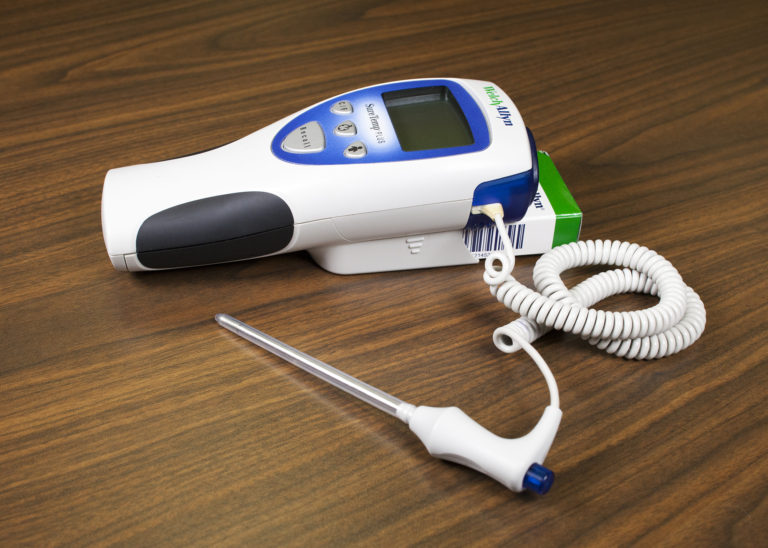
- Remove the probe from the device and slide a probe cover (from the attached box) onto the oral thermometer without touching the probe cover with your hands.
- Place the thermometer in the posterior sublingual pocket under the tongue, slightly off-center. Instruct the patient to keep their mouth closed but not bite on the thermometer.
- Leave the thermometer in place for as long as is indicated by the device manufacturer.
- The thermometer typically beeps within a few seconds when the temperature has been taken.
- Read the digital display of the results.
- Discard the probe cover in the garbage (without touching the cover) and place the probe back into the device.
Picture of an oral temperature being taken. 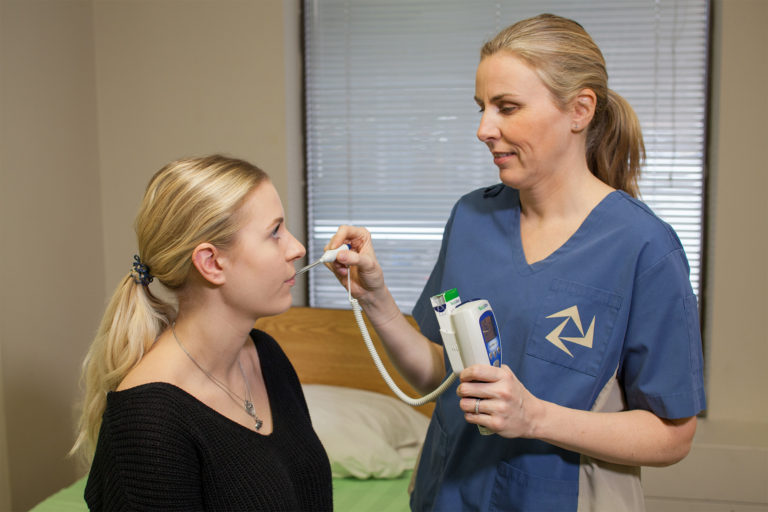
Some factors can cause an inaccurate measurement using the oral route. For example, if the patient recently consumed a hot or cold food or beverage, chewed gum, or smoked prior to measurement, a falsely elevated or decreased reading may be obtained. Oral temperature should be taken 15 to 25 minutes following consumption of a hot or cold beverage or food or 5 minutes after chewing gum or smoking.
The tympanic temperature is typically 0.3 – 0.6°C or 0.5 – 1°F higher than an oral temperature. It is an accurate measurement because the tympanic membrane shares the same vascular artery that perfuses the hypothalamus (the part of the brain that regulates the body’s temperature). See the picture below of a tympanic thermometer. The tympanic method should not be used if the patient has a suspected ear infection. Accumulation of cerumen, earwax, may also reduce the accuracy of tympanic readings.
Tympanic Thermometer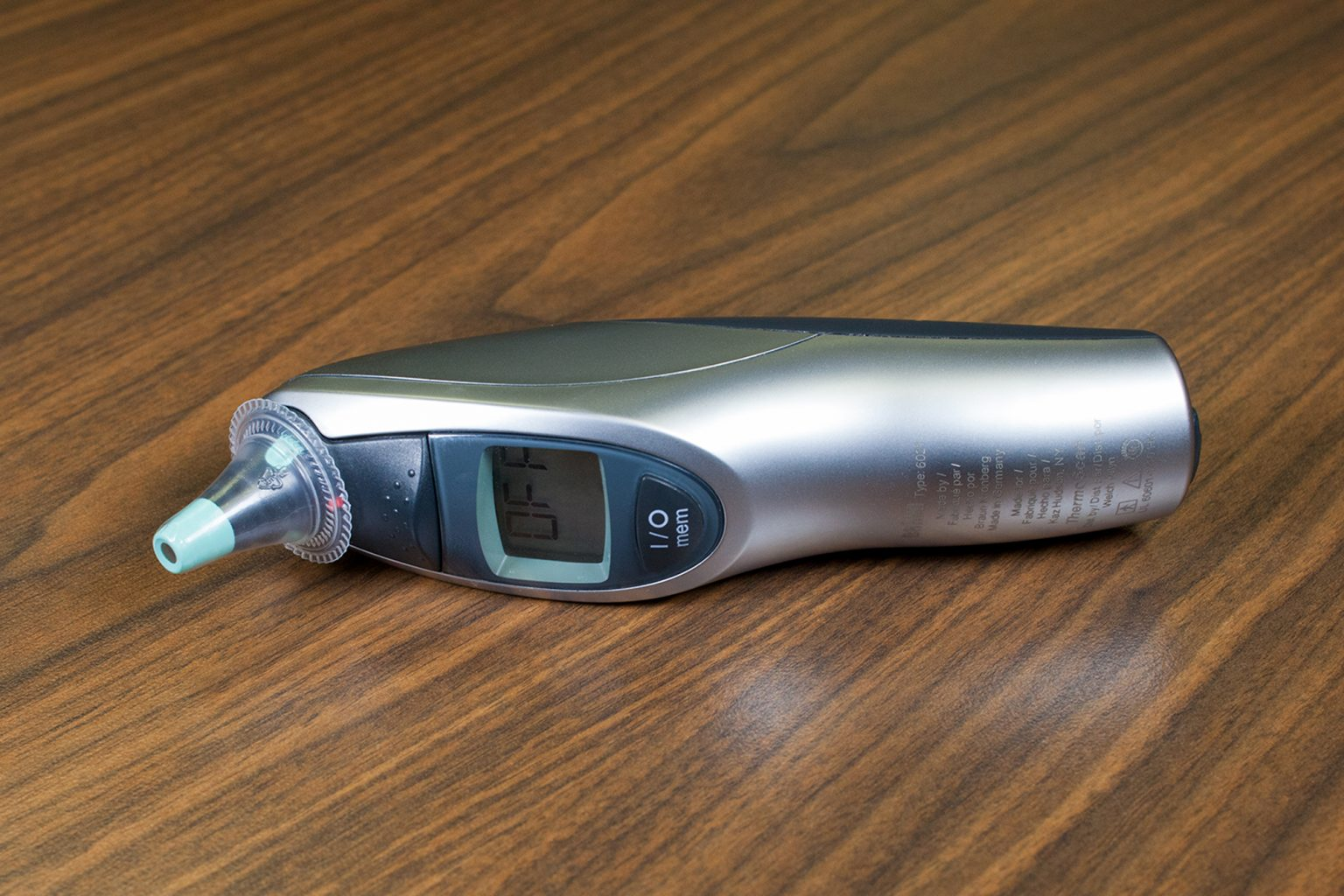
- Remove the tympanic thermometer from its holder and place a probe cover on the thermometer tip without touching the probe cover with your hands.
- Turn the device on.
- Ask the patient to keep their head still.
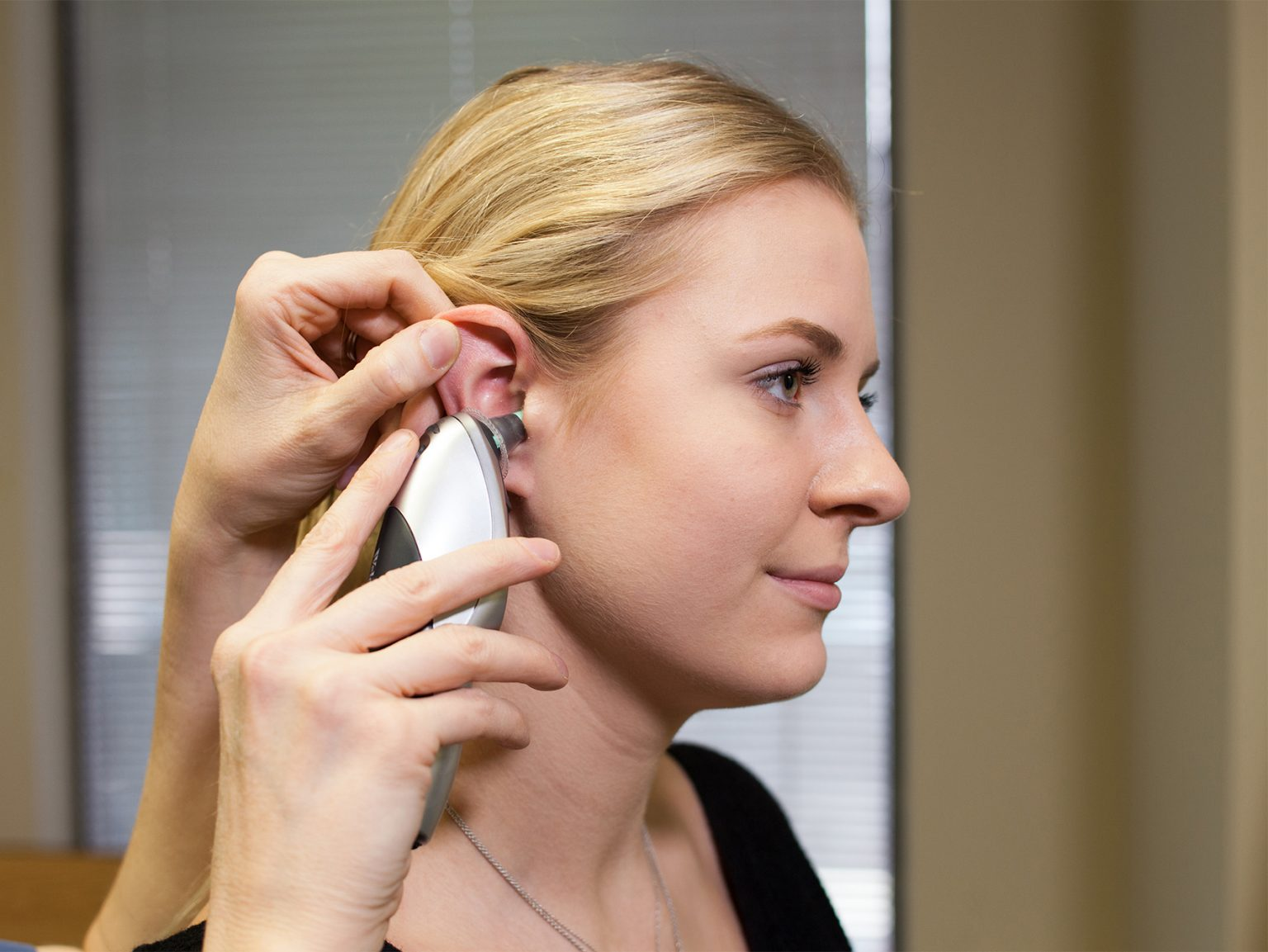
- For an adult or older child, gently pull the helix (outer ear) up and back to visualize the ear canal.
- For an infant or child under age 3, gently pull the helix down.
- Insert the probe just inside the ear canal but never force the thermometer into the ear.
- The device will beep within a few seconds after the temperature is measured.
- Read the results displayed, discard the probe cover in the garbage (without touching the cover), and then place the device back into the holder.
Picture showing a tympanic temperature being taken.
The axillary method is a minimally invasive way to measure temperature and is commonly used in children. It uses the same electronic device as an oral thermometer (with blue coloring). However, the axillary temperature can be as much as 1ºC lower than the oral temperature. An armpit (axillary) temperature is usually 0.3⁰ C (0.5⁰ F) to 0.6⁰ C (1⁰ F) lower than an oral temperature.
- Remove the probe from the device and place a probe cover (from the attached box) on the thermometer without touching the cover with your hands.
- Ask the patient to raise their arm and place the thermometer probe in their armpit on bare skin as high up into the axilla as possible.
- The probe should be facing behind the patient.
- Ask the patient to lower their arm and leave the device in place until it beeps, usually about 10–20 seconds.
- Read the displayed results, discard the probe cover in the garbage (without touching the cover), and then place the probe back into the device.
Axillary temperature being taken. 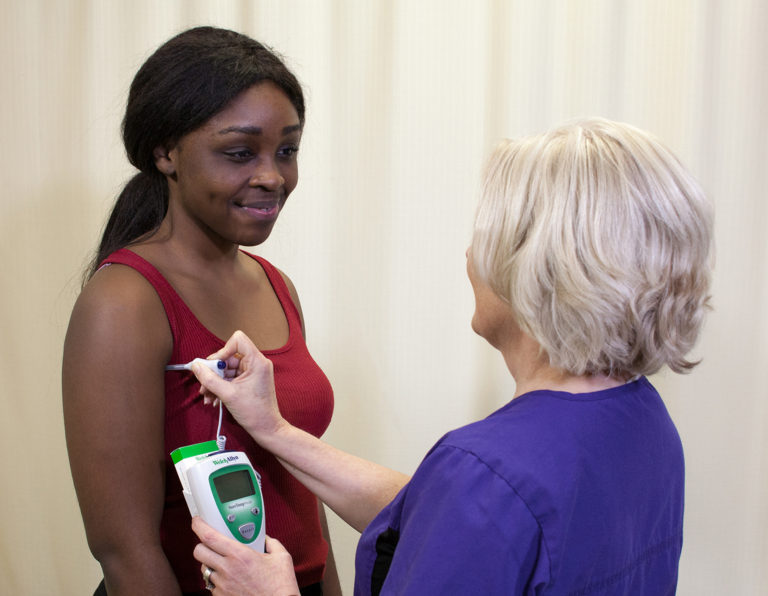
Measuring rectal temperature is an invasive method. Some sources suggest its use only when other methods are not appropriate. However, when measuring infant temperature, it is considered a gold standard because of its accuracy. A rectal temperature is 0.5°F (0.3°C) to 1°F (0.6°C) higher than an oral temperature. The rectal thermometer will be red.
Before taking a rectal temperature, ensure the patient’s privacy. Wash your hands and put on gloves. For infants, place them in a supine position and raise their legs upwards toward their chest. Parents may be encouraged to hold the infant to decrease movement and provide a sense of safety. When taking a rectal temperature in older children and adults, assist them into a side lying position and explain the procedure. Remove the probe from the device and place a probe cover (from the attached box) on the thermometer. Lubricate the cover with a water-based lubricant, and then gently insert the probe 2 –3 cm (approximately 0.5 in for babies less thant 6 months old to 1 inch) into the anus or less, depending on the patient’s size.[18] Remove the probe when the device beeps. Read the result and then discard the probe cover in the trash can without touching it. Cleanse the device as indicated by agency policy. Remove gloves and perform hand hygiene.
Temporal temperature is taken by using a device placed on the forehead. Temporal thermometers contain an infrared scanner that measures the heat on the surface of the skin resulting from blood moving through the temporal artery in the forehead. Temporal temperature is typically 0.5°F (0.3°C) to 1°F (0.6°C) lower than an oral temperature. It is a quick, noninvasive method, but accurate measurement is dependent on good contact with the skin and good placement on the forehead.
Normal Temperature Ranges
Method | Normal Range |
Oral | 35.8 – 37.3ºC (96.4 -99.1ºF) |
Axillary | 34.8 – 36.3ºC (96.4 -97.3ºF) |
Tympanic | 36.1 – 37.9ºC (97.0 -100.2ºF) |
Rectal | 36.8 – 38.2ºC (98.2 -100.8ºF |
Temporal | 35.2 – 37.0ºC (95.4 – 98.6ºF) |