Spirit Island
Topics: Colonialism; Politics of Development
Political science courses: International Relations; Peace and Conflict Studies; Comparative Politics; African Politics
Other disciplines: Any history class which covers colonial history
Similar games: Pandemic
Number of players: 1-4
Type of game: A one to four player cooperative game
Learning goals:
- Students will be able to explain how colonization affects indigenous peoples.
- Students will be able to explain how colonization affects the natural environment.
- Students will be able to identify how cooperative strategies effect conflict.
Description from the publisher
In the most distant reaches of the world, magic still exists, embodied by spirits of the land, of the sky, and of every natural thing. As the great powers of Europe stretch their colonial empires further and further, they will inevitably lay claim to a place where spirits still hold power - and when they do, the land itself will fight back alongside the islanders who live there.
Teaching Spirit Island in Political Science
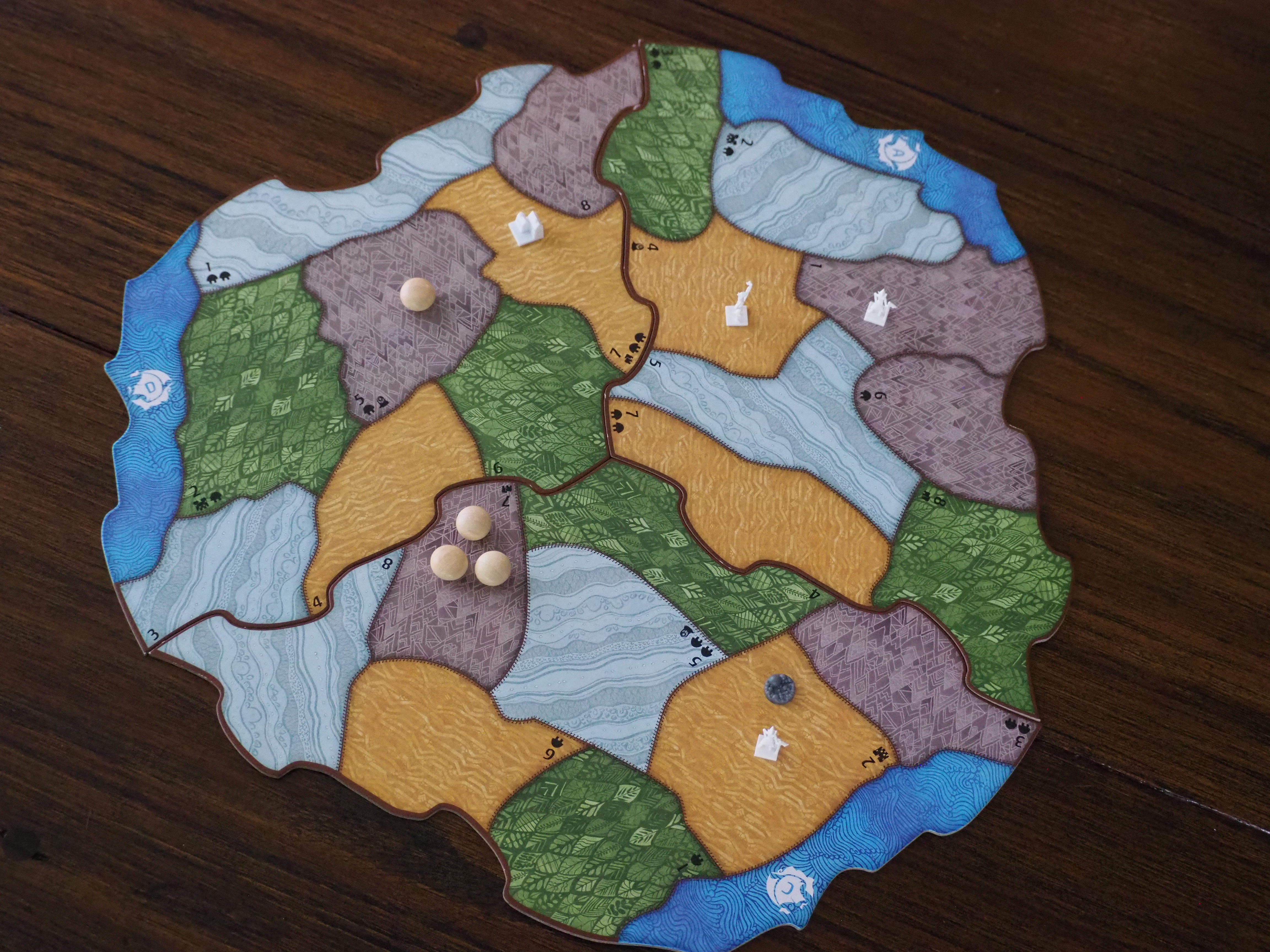
Spirit Island is a one to four player cooperative game published by Greater Than Games which simulates conflict between the spirits of an Island (the players) and the invading colonists. Players must work together to coordinate actions aimed at removing the ever increasing numbers of settlers attracted to their island. Players earn energy to play cards which allow actions such as moving settlers to another space on the island, planting fear in the settlers to earn bonus actions, or destroying settlers with natural event conjured up by the spirits on the island. To win the game, players need to completely clear the island of invaders, however as the ‘terror level’ increases across the island, alternate win conditions also arise. Incidentally, when writing this I had to check the win conditions as after half a dozen or so plays of Spirit Island, both solo and cooperatively, I have still not gotten close to winning the game (more on that later). Players lose the game in one of three ways, you can run out of cards to draw, the final blight card is played, or if a spirit is destroyed by having no presence left on the island.
Spirit Island also includes optional rules for scenario play, with the introduction of specific European powers as colonizers. These include The Kingdom Of Brandenburg-Prussia: Frederick II, The Kingdom Of England, and Kingdom Of Sweden: King Erik XV, all adding further flavor to the game brining closer to a more historical experience for the players.
Although essentially a fantasy setting, the game's theme of island spirits and indigenous populations coordinating actions to eject colonists form their island, is a compelling and pleasant retelling of colonialism. Indeed, after discussions with students after a play through of Spirit Island, students quickly recognized factors they already knew about colonialism including how a lack of coordination between indigenous peoples helped colonizers takeover territory piecemeal. The mechanics of gameplay require plyers to work together cooperatively to defeat the invaders. One spirit may be able to play a card that say moves the invaders from one space on the island to another, while another player may have a card that allows them to bring a destructive force onto that particular space.
Another theme students immediately recognized, was the way that colonizers blight the land after constructing settlements, leading to disease and famine for indigenous populations. This theme is of course something college students should be aware of, with many students keenly aware of how disease and environmental degradation ravaged indigenous communities in the New World. Overall, students will likely clearly see the negative effects that colonizers had on these lands and the native inhabitants when they play Spirit Island.
Sample Assessment
I incorporated Spirit Island into my introductory International Relations class, however, as this class is also a general educational option, I made it a fairly low-stakes assignment making it only 10 percent of their final grade. The learning goals for this course are: Students will be able to explain how colonization affects indigenous peoples; Students will be able to explain how colonization affects the natural environment; Students will be able to identify how cooperative strategies effect conflict.
Prompt: For this assessment, you will be required to play a game of Spirit Island with your peers. After playing the game, you also need to write a record a five-minute reflection of your play-through answering the prompt below. Finally, you will be expected to share your experiences of the game with your fellow students during our debrief class. The library has the game available for a 24 hour loan.
Prompt for the paper: Reflect upon your experience of playing Spirit Island. What have you learned about successful strategies for defeating the colonizers? If indigenous populations had followed this advice, do you think it would have made any difference or was colonization always likely to end up as it has? Did you engage in any actions which you found ethically troubling, and how did you feel attacking humans? How do you now view colonizers and indigenous populations? Have your feelings changed towards Europeans who moved to the Americas? Why or why not? How might indigenous populations efforts to repel colonizers still affect their countries today?
How to Play/tips/complexity
Spirit Island is rated as a moderately complex game, scoring a somewhat uncharitable 4.1/5 for complexity on the gaming website BoardGameGeek. In reality, I think this is somewhat high as there are not all that many rules in the game. There are, however, a lot of fiddly rules which require frequent referrals to the manual across any given game. This is expounded by the unique powers of the Spirits and the cards drawn and added to the game as the game moves forward. Spirit Island is also hard, there is no getting around it that students new to this game will soon get disheartened as the colonists roll across their island blighting and destroying native populations. Unlike other cooperative games like the better known Pandemic, where players can have spectacular rounds of progress wiping much of the pandemic from the board, progress in stopping the colonists is arduous and rarely as inspiring as it can be during particularly memorable turns in Pandemic.
To make the game a little easier, I would recommend dropping the qualifiers on the cards. Cards are used each turn as actions, actions which either cause fear in the colonists (fear earns bonuses), movement of colonists, or destroying colonists and their settlements. However, most cards have qualifiers, fiddly rules limiting where you can use cards on the island. To make this less onerous and speed-up play, just have students ignore these requirements. Even with doing this, the game will still prove enough of a challenge for the first couple of plays.