
Advanced Environmental Health (HSCI 4501)
Advanced Environmental Health (HSCI 4501)
Purpose: to help other instructors teaching the same course
Common Course ID: Advanced Environmental Health (HSCI 4501)
CSU Instructor Open Textbook Adoption Portrait
Abstract: The resources I collected from OERs were utilized in HSCI 4501 (Advanced Environmental Health) course for undergraduate students of Environmental Health Science by Dr. Mahmood Nikbakhtzadeh at California State University San Bernardino. My course which has been prepared based on the OERs provides a more advanced review of the following topics compared to the lower grade course, HSCI 3052 (Principles of Environmental Health): Environmental health agencies in the United States, Environmental toxicology, Toxicology risk assessment, Food safety, Food security, Milk sanitation, Hazardous waste generation, transportation & disposal, Hazardous material management, Solid waste management, Air quality, Air pollution control, Radiological health, Recreational health, Water quality management, Safe drinking water, Vector-borne diseases, Techniques of vector control, Noise control, Housing & land use, Occupational health and Environmental policy & regulation.
The main motivation of mine to adopt OERs was providing the best content from easily accessible sources and bringing the cost of my class to zero. I provided the whole content in PDF (handouts), PowerPoint (class lectures) and supportive materials such as additional articles and video clips.
Course Title and Number: Advanced Environmental Health (HSCI 4501)
Brief Description of course highlights:
- Advanced Environmental Health (4 units), HSCI 4501
- Major course
- Prerequisites: HSCI 3052 (Principles of Environmental Health) and Chemistry series
An integrated view of the factors that contribute to illness, injury, or death and that affect the health status of individuals and populations. Topics include epidemiology, demographics and statistics on health status, determinants of health and illness, behavioral aspects of health and preventive care. Environmental health laws and regulations as well as compliance with current regulations emphasized. The laboratory emphasizes methods of measuring and evaluating environmental health risks as well as field experience. Topics include environments within buildings, food sanitation, water sanitation and control, solid and hazardous waste and control, air pollution and control, community noise and control. Topics discussed in this course include:
- Environmental health agencies
- Environmental Toxicology
- Toxicology risk assessment
- Food Safety
- Food Security
- Milk sanitation
- Hazardous waste generation, transportation & disposal
- Hazardous material management
- Solid waste management
- Air quality/Air pollution
- Air pollution control
- Radiological health
- Recreational health: Playgrounds & swimming pools
- Water quality management
- Safe drinking water
- Vector-borne diseases
- Techniques of vector control
- Noise control
- Housing & land use
- Occupational health
- Environmental policy & regulation
Student population: Senior students of Environmental Health Science only. This is an upper level course and is usually taken by senior students. All my students are seniors majoring in Environmental Health Science. Since they have already passed a wide range of courses in Environmental Health Sciences, they have a good background of what we are going to discuss.
Learning or student outcomes:
- To understand current environmental health standards and regulations as they pertain to protection from harmful biological, chemical and physical agents.
- To acquire advanced knowledge of the various elements of environmental health.
- To gain experience in the application of analytical tools and survey techniques for the measurement or estimation of biological, chemical and physical agents, posing environmental hazards.
- To gain field experience in the evaluation of selected environmental hazards.
Key challenges faced and how resolved:
Textbook or OER/Low cost Title:
Brief Description: The original textbook, which was used before by other instructors was: Moeller DW. 2011. Environmental Health (4th Edition). Harvard University Press. Cambridge, MA. 544 pp.
Most of the OERs I used for my class were taken from government resources, national and international organizations, including Federal Agencies (EPA, CDC, FDA, USDA, NASA, DOT, NRC) state departments (CDPH, CDPR, CDTSC). I also used the contents provided by the non-profitable national and international organizations, such as WHO, ILO, AMCA and National Pesticide Information Center).
Please provide a link to the resource
https://www.epa.gov/
https://www.cdc.gov/
https://www.fda.gov/
https://www.usda.gov/
https://www.nasa.gov/
https://www.transportation.gov/
https://www.nrc.gov/about-nrc.html
https://www.cdph.ca.gov/
https://www.cdph.ca.gov/Programs/CID/DCDC/Pages/VBDS.aspx
https://www.cdpr.ca.gov/
https://dtsc.ca.gov/
https://www.who.int/
https://www.ilo.org/global/lang--en/index.htm
https://www.mosquito.org/
http://npic.orst.edu/
Student access: All materials were placed on Canvas and were easily accessible to students. Further materials to study, in the form of PDF or video clips were also provided to students on Canvas. In some cases, links to some reading materials were posted on Canvas as well.
Provide the cost savings from that of a traditional textbook.
If I had used the previous textbook (Environmental Health), my students had to overall pay the following for either a hardcopy or E-book:
Hardcover copy saving: $ 900.00 E-book copy saving: $ 675.00
I replaced that textbook with OER resources, prepared all the required materials, including educational video clips, and therefore, made it zero cost to my students. New cost: $0.00
License: None of the resources I am using needs any license or permission. All the above resources are open to the public and are in fact designed to transfer the information to the public and specialists. The best use of them is spreading their content.
OER/Low Cost Adoption Process
Provide an explanation or what motivated you to use this textbook or OER/Low Cost option. First, the cost of the original textbook was really considerable ($102.00 for Hardcover copy and $75.00 for the E-book) and I knew most of my students were not in the position to spend money for a textbook. Most of my students work at the minimum wage at the same time as studying and paying this much is not easy for them.
On the other hand, some chapters of the textbook were not that much fit to my syllabus and also the needs of my students. I also wanted to emphasize on a couple of issues, like control of air pollution, safe drinking water and safe disposal of solid and hazardous waste material which were not covered enough in the original textbook.
How did you find and select the open textbook for this course? I browsed OER resources until I found those which were fit to my HSCI 4501 class. Once I found an OER resource, I evaluated the content to see how this might contribute to my class. Another resource which considerably helped me with the preparation of my course materials was websites of government agencies, such as EPA, CDC, FDA, etc. which contain very detailed and precise information about the topics under discussion.
Sharing Best Practices: First refer to your own library collections. That includes the easiest and the most valuable resources. In my discipline, technical publications, including technical brochures, technical flyers and pamphlets are open to everyone and in fact have been designed and produced to reach the maximum number of readers. Many of them have a knowledge level fit to an undergraduate class and are composed of first hand, updated materials, prepared by known experts. There are even open-source books and booklets which are very valuable resources. These are free publications, prepared by professional organizations or state and federal agencies. In preparation of my teaching materials, I used the ones mostly prepared by EPA, FDA, CDC and California Department of Public health, California Department of Toxic Substances Control, CA Department of Pesticide Regulation and California Environmental Protection Agency.
Describe any challenges you experienced, and lessons learned. Even though I found good OER resources, not all topics of syllabus could be fully covered by one open source. Therefore, I had to spend plenty of time to find suitable resources for each class topic. I used multiple resources for each topic of my syllabus. Another issue was lack of useful resources of the “Recreational Health”.
Additionally, I needed some good video clips, not longer than 5 minutes, to be a complement to my teaching. Finding good and match videos was a time-consuming process. Another issue was the lack of a test bank or sample questions. Those could save my time. In their absence, I had to design sample questions for in-class exercises and problem solving and also for quizzes and exams myself.
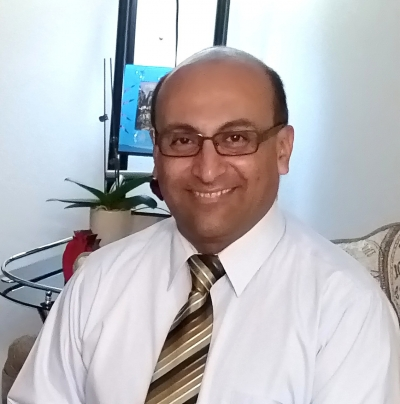
Instructor Name: Mahmood Nikbakhtzadeh
Assistant Professor of Environmental Healthy Science at California State University, San Bernardino
Please provide a link to your university page.
https://www.csusb.edu/profile/mahmood.nikbakhtzadeh
Please describe the courses you teach.
- Advanced Environmental Health (Undergraduate course, 4 credit hours)
- Bioterrorism and Emergency Response (Undergraduate, 3 credit hours)
- Epidemiology of vector-borne diseases (Graduate course, 2 credit hrs)
- Insect Ecology (Graduate course, 3 credit hours)
- Insect Morphology & Physiology (Graduate course, 3 credit hrs + lab)
- Intro Entomology (Undergraduate course, 3 credit hours including lab)
- Medical Entomology (Graduate course, 4 credit hours including lab)
- Principles of Ecology (Undergraduate course, 3 credit hours)
- Principles of Environmental Health (Undergraduate, 3 credit hours)
- Principles of Toxicology (Undergraduate, 3 credit hours)
- Toxicology of Pesticides (Graduate course, 2 credit hours)
- Vector-borne Disease Control (Undergraduate course, 4 credit hours)
Describe your teaching philosophy and any research interests related to your discipline or teaching. My teaching philosophy is built based on the purposeful active learning, which means 1) everyone in the class should learn, 2) students should be involved in the learning process and 3) the topics under discussion should be closely related to the real world, the job market, and the gain the capabilities needed for the available carriers.