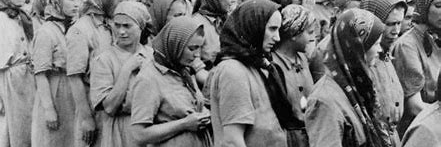
Sexual Assault During the Shoah
Sexual Assault During the Shoah
During The Shoah, Women and Men were already enduring so many Horrors and Inhumane treatment. Besides the struggles they faced on a day-to-day basis, some of the prisoners were sexually assaulted by the Germans, officials and even other prisoners. Especially for women, these assaults led to pregnancies, sexually transmitted diseases and some had to get abortions that ended up hurting them. These survivors have lived with these horrors for years and the trauma has affected them in way almost unexplainable.
My research will focus on the question- What was the sexual assault in and out of the concentration camps during the Shoah? My hypothesis is that some heartbreaking stories will be revealed about how the prisoners were assaulted not only by the guards, but perhaps by other prisoners. Another possible finding from this research could be how these assaults affected the prisoners in the camp, (suicide, impregnation, etc.)
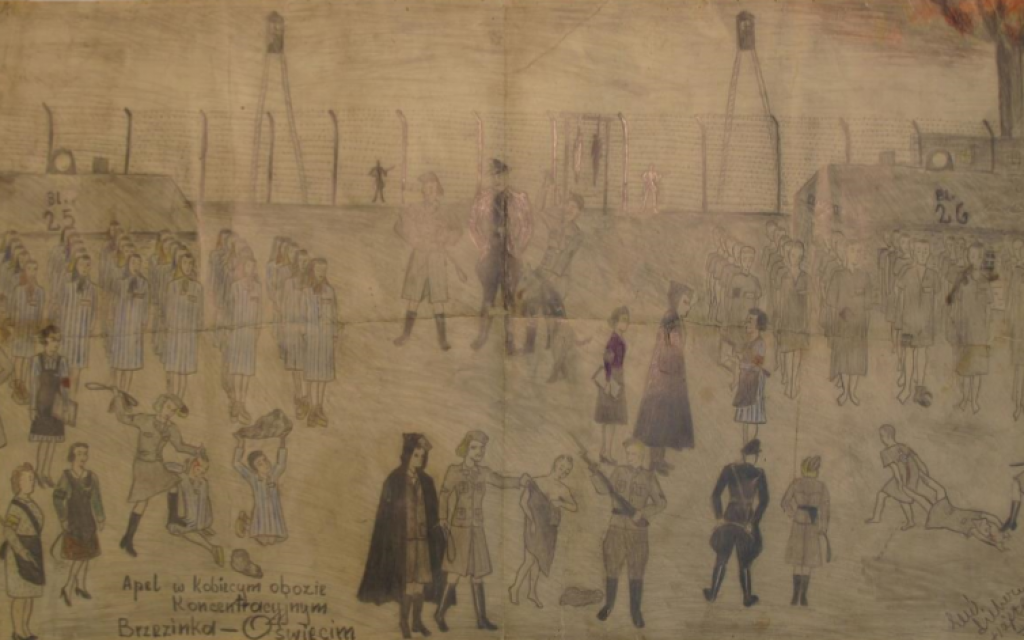 ‘Roll Call,’ by Ella Lieberman-Shiber, drawn one month after her liberation. (Courtesy Ronald Feldman Gallery)
Both men and women faced the same number of horrors during the Shoah, however, they experienced different horrors. Women were more likely to be subjected to sexual assault and rape than their male counterparts, many of the victims being teenagers and young women. Sexual Assault and rape are personal attack, they make the victim feel powerless, humiliated, dirty, etc. Before the Shoah, many of these girls were modest and naive, some have never even had their first kisses. When they were raped, they felt utterly alone while also going through the daily nightmare that was the Shoah.
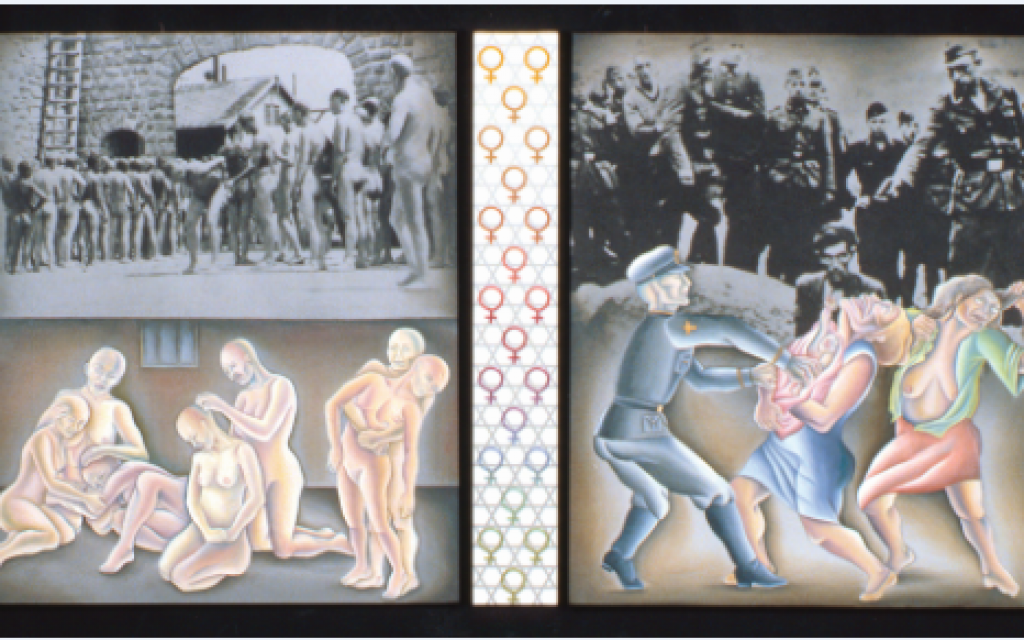 Half-Scale Study for Double Jeopardy from Holocaust Project—Studies/Ancillaries, by Judy Chicago and Donald Woodman. (Courtesy Ronald Feldman Gallery)
Esia Shor was a Jewish survivor that spent time in the Nowogródek ghetto in Poland. During her time there, she recalls where she was almost raped by a person in camp when she was only sixteen years old. She recalls how she as young and naïve and how she pushed a lot of the memories away, but the trauma remains. She also recalls how some of the men wanted her to go to bed with them and how she resisted (not an easy thing to do during this time). She mentions her devotion religion and how she would stand tall, whether she had to fight back or not. Although she was never explicitly assaulted, there were attempts and that was enough to scar and scare her during the genocide.
Political Prisoner- Soula Molho
During this interview, Soula Molho, a survivor of the Auschwitz Death Camp recalls how she was sexually assaulted. She describes in her testimony how she felt and her feelings towards her assaulter. She discusses how she felt after the assault and she would see him in the camp. She describes how she wanted to hurt him, but instead of hurting him with a knife, she wanted to shoot him with a gun so she did not feel as connected to him.
This is a perfect example of primary source for the topic. Soula Molho was sexually assaulted while she was in a camp and you can see the hurt in her eyes and face. They way she describes her feelings, there is so much emotion in her voice and in her person, it adds to the depth of this problem. When watching a testimony like this, it is much more powerful than reading a narrative because although this interview was conducted many years after the Shoah, the raw emotions and trauma still remain.
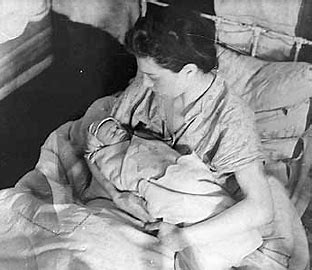 A mother cradles her new born baby in the Kovno ghetto hospital. (United States Holocaust Memorial Museum, courtesy of George Kadish/Zvi Kadushin)
Although many women that were raped by Nazi officials were killed as soon as the act was over, there were still some women who became pregnant by them, by fellow prisoners or were just unfortunate to arrive to the camps or the ghettos while pregnant. By 1942, any Jewish women that was pregnant was to be killed. This led to many women in the ghettos and camps either getting abortions or having to deliver their babies in secret. Often, the mother would not survive the abortion and the baby would not survive the birth. Although the circumstances were inhumane, there were some doctors that helped these women and helped save many lives during the Shoah.
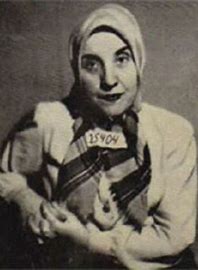 Dr. Gisella Perl's image taken for her book "I was a Doctor is Auschwitz"
Dr. Gisella Perl was a Hungarian Jew who was a gynecologist who operated in a small hospital with her surgeon husband in Sighet. Dr. Perl was seized by the Gestapo in 1944 and transported to Auschwitz Birkenau. It was there that Dr. Josef Mengale (The angel of death) selected her to run a "hospital" in the camp. Many of the women that came to Perl where either sick with sexually transmitted disease or pregnant. Dr. Perl recalls in her memoir I was a Doctor in Auschwitz, how she first judged the girls for going into what she considered prostitution, but she soon learned that all these women had to give were their bodies and she understood. When Dr. Perl realized that the women that were pregnant were getting killed, she then began to perform abortions to save the women from immediate gassing. Thanks to her, many women were able to survive from the crematoriums and the gassing chambers.
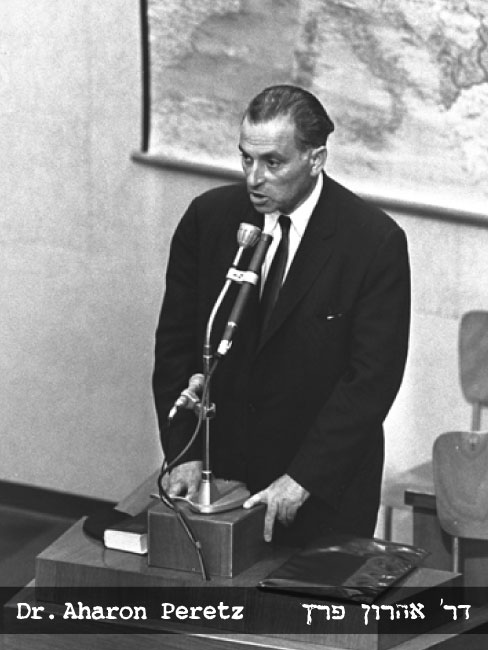 Dr. Aharon Peretz testifying during the Eichmann trial (source- United States Holocaust Museum)
Above is a picture of Dr. Aharon Peretz testifying at the Eichmann Trials that took place on May 4 1961. Dr. Aharon Peretz was a practiced gynecology in Kovno, Lithuania when the war broke out. He was trasfered to the Konvo Ghetto in 1941 and stayed there until 1944 before he was transferred to a concentration camp. In 1942, while Dr. Aharon Peretz was in the ghetto, an order was placed that pregnancies and births would be banned. This resulted in Dr. Peretz performing secret abortions and assisting in secret deliveries for the women in the ghetto. These women would come forward to him with their stories of sexual assault and they stayed with Dr. Peretz which led to him helping them.
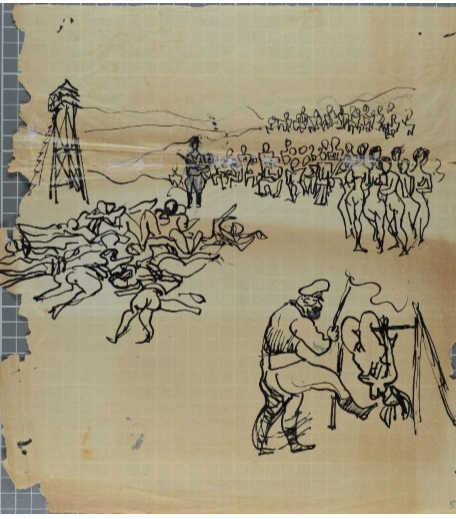 Torture’ by Zeev Porath, drawn secretly while imprisoned circa 1942-1943.(Courtesy Ronald Feldman Gallery)
When a person is a victim of sexual assault, it tends to be because the predator wants control and power. During the Shoah, there was very little power to those in the camps besides the appointed prisoners and the guards/ officials. In their eyes, rape and sexual assault was just another way to assert their male dominance. Even fellow prisoners would rape the women in the camps and the ghettos to give them the illusion that they had power and control. Sexual Assault was just another horror that the prisoners had to endure in order to " keep them down". The women and other prisoners that were assaulted already felt powerless and defenseless and they let the fear of what could happen to them control them into submission.
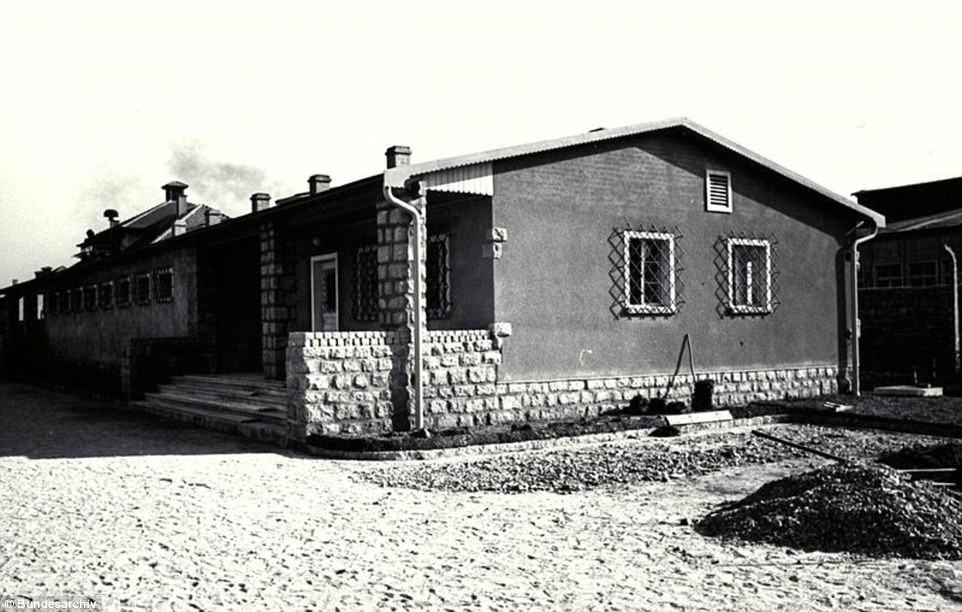 Camp Brothel ( Vox Feminae )
Above is an image of the brothel from Mauthausen camp. This was the first brothel created by the Nazi Regime. The first women were brought to this camp in June 1942 until 1945. The women prisoners were brought to the camp and brothel as a reward from the Ravensbrück camp. The women would be forced into prostitution and sexually assaulted by the Nazis. From the time the women were brought to the camp until the end, it is estimated that 35,000 women passed through the camp. Many of them returned to Ravensbrück pregnant, sick with sexually transmitted diseases or they did not return at all. The women that did survive, were often traumatized and humiliated.
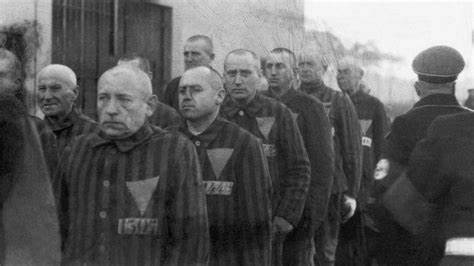 Nazi concentration camp prisoners were forced to wear different colors of triangle to signify why they were being persecuted (via Getty Images)
Although women were targeted more for sexual assault during the Shoah, some men were also victims. Men, both those who were arrested for homosexuality and those just "normal prisoners" were raped and assaulted in the camps. Their stories have been more hidden than sexual assault against women because it goes against stereotypes during this time (that and men were less likely to talk about these experiences amongst each other than the women did). Another issue that kept this trauma hidden was the fact that any homosexual male would be killed in the camps by the Nazis. It is more difficult to recognize male rape and sexual assault than it is female, but it is still relevant and left lasting trauma on these men.
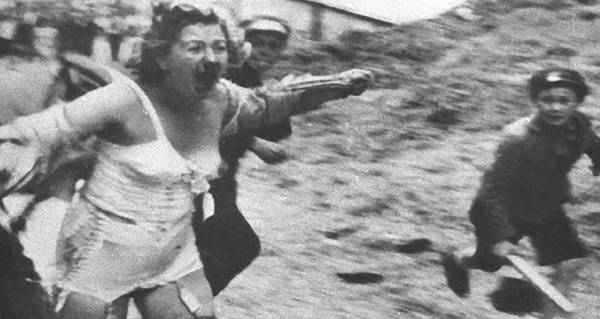 Jewish victim being chased by Ukrainian fascists. Note kid with stick. (Greanville Post)
Bartered Sex (Or sex for survival) was common within the ghettos and camps during the Shoah. This would be when women would perform sexual activities in order for extra food rations and other resources necessary for survival. Some viewed it as "prostitution", but when a woman has nothing left, she must use her body in order to get what is needed for survival. This was not consensual sex and was in fact still traumatizing to the women that did it. (Goldenberg)
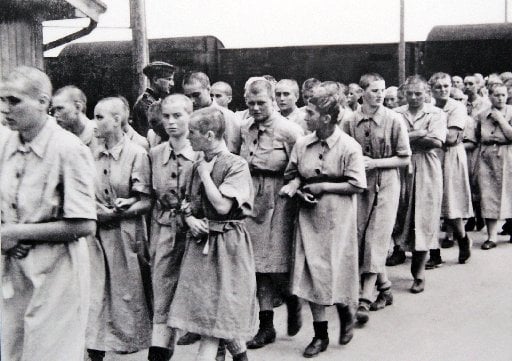 Women prisoners at the Auschwitz train station around 1944. / ullstein bild via Getty Images
When members of the SS would rape and sexually assault Jewish women, they would not get punished for rape or assault, but rather rassenschande or "race mixing". If that Jewish woman got pregnant, she would be having a baby with "Jewish blood". Unfortunately, in many cases, the women that were raped were raped and beaten until death and other were immediately killed after the deed was done to ensure there would be no "race mixing". Some SS officers would select a few girl Jewish girls and keep them as "escorts", making them participate in orgies and other sexual activities, but these women were also then later killed and replaced with new ones.
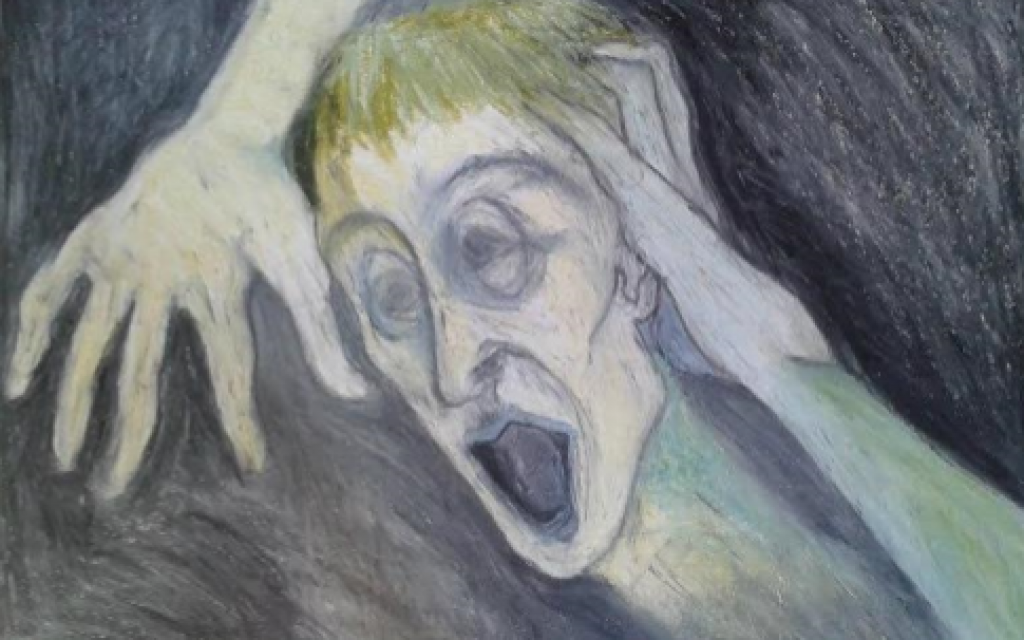 ‘Without Words,’ by Israeli artist Ofri Akavia. (Courtesy Ronald Feldman Gallery)
Split memory refers to the reconciling of memories and how ones personal memories may differ from public memories of the Shoah. According to Charlotte Delbo, author of the Shoah, one of the split memories is "deep memory" which refers to memory that leaves physical imprints and preserves sensations. Deep memory cannot be described into words. The sexual assault that the prisoners went through during the Shoah would be considered a deep memory. It is so personal and traumatic and affects the victim individually. Although there is a pattern to sexual assault and they all root from the same problem (need for power), they are all different and unique based on the person and the situation.
There are many reasons why women and men that were raped or sexually assaulted stayed silent. Some of them felt ashamed and traumatized and therefore did not speak up. In the time of the Shoah, everyone was dealing with tragedy and abuse on a daily basis. Some of these people thought that their personal abuse was not relevant because everyone was being abused. People were also worried because if they spoke out, would they have gotten punished? there was a chance they could have gotten killed. The Nazi Regime continued to instill fear on the prisoners so they would stay quiet. It was that fear that also kept so many survivors quiet for so long.
women holocaust 311
(photo credit: German Federal Archive)
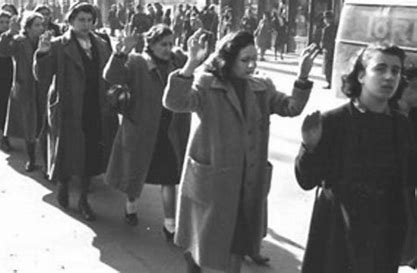
As time goes on, more and more women are coming forward with their stories. Thanks to the #Metoo movement in 2017, sexual assault and rape are more openly discussed. Women during the Shoah kept these attacks a secret because they were traumatized, and it was very difficult for them to come forward. Every person handles their trauma differently and although many women have spoken out about their experiences, they are still so many stories that have not been discovered and may never be discovered. The women that have come forward are incredibly brave and have earned much respect.