
California Cultures AMST395
California Cultures AMST395
Purpose: to help other instructors teaching the same course
Common Course ID: California Cultures AMST395
CSU Instructor Open Textbook Adoption Portrait
Abstract: These zero-cost course materials are being utilized in an American Studies course for undergraduate students by Sara Fingal at CSU Fullerton. The main motivation to adopt an open textbook was to reduce course costs and make resources more applicable to student experience.
Course Title and Number:
California Cultures AMST395
Brief Description of course highlights: This course examines diverse California cultures from the 1700s to the present. We will explore three major themes throughout the semester: identities, landscapes, and myths. These themes will overlap and intersect in the secondary readings and primary source material. In class, we will analyze cultural artifacts, including advertisements, architecture, diaries, film, murals, music, paintings, photographs, and more. You will be asked to reflect on how history and myths have shaped contemporary California we seek to define this state’s regional cultures.
Student population: This is a GE course for students from all over the campus. I usually have a lot of juniors and seniors and very few American Studies majors or minors.
Learning or student outcomes: Students shall:
- Examine problems, issues, and themes in the social sciences in greater depth; in a variety of cultural, historical, and geographical contexts; and from different disciplinary and interdisciplinary perspectives.
- Analyze and critically evaluate the application of social science concepts and theories to particular historical, contemporary, and future problems or themes, such as economic and environmental sustainability, globalization, poverty and social justice.
- Analyze and critically evaluate constructs of cultural differentiation, including ethnicity, gender, race, class, and sexual orientation, and their effects on the individual and society.
- Apply theories and concepts from the social sciences to address historical, contemporary and future problems confronting communities at different geographical scales, from local to global.
COURSES IN CATEGORY Z: Cultural Diversity
AMST 300, 301, 320, 395. Students shall:
- Demonstrate understanding that culture is socially constructed and fundamental to social interaction.
- Demonstrate appreciation of the complex relationships that various factors such as gender, ethnicity, race, sexual orientation, religion, and class bring to a discussion of society and culture.
- Demonstrate understanding that because we live in an interconnected world, we need to understand the diversity and relationships within and among cultures.
- Recognize and evaluate how one’s cultural history affects one’s sense of self and relationship to others.
Key challenges faced and how resolved: One of the challenges in this course is that students come from all different majors and backgrounds. Sometimes, I get students who are resentful about having to take this class. I work to diversify the content so that students can feel connect to the course and find ways to connect their own interests, backgrounds, other courses, and skills to the class.
Syllabus and/or Sample assignment from the course or the adoption: S Fingal Syllabus AMST395.docx
Textbook or OER/Low cost Title: “Our Ramona: Multicultural Dreams and Legacies of the Great California Outdoor Play”
Brief Description: This is a scholarly article that examines the significance of the book and play, Ramona for California culture.
Please provide a link to the resource https://boomcalifornia.org/2019/04/29/our-ramona/
Authors: Julia Sizek
Student access: Links to all materials shared on course Canvas page
Supplemental resources: Library eBooks with unlimited user licenses
Provide the cost savings from that of a traditional textbook.
The previous textbook was out of print, Major Problems in California History, so the cost was for used copies which range from $10-$60.
OER/Low Cost Adoption Process
Provide an explanation or what motivated you to use this textbook or OER/Low Cost option. During the COVID-19 pandemic, students had little to no access to the library and many students were losing their jobs or having to take on more work to supplement lost family income. I decided that I would work to figure out ways to get them low cost course materials to ensure that everyone had equal access to success in my course.
How did you find and select the open textbook for this course? I consulted with librarians, talked to other California historians and American Studies scholars at other universities, and evaluated resources on my own.
Sharing Best Practices: When I taught this course in person in Fall 2021, I announced that all the course materials were free for the class. There was an audible sigh of relief and sentiments of gratitude from students. It can be hard work, but it is worth it, particularly for GE courses. I will continue to strive to make my classes free or low cost in the future. It is a goal worth having, particularly for classes for non-majors.
Describe any challenges you experienced, and lessons learned. A lack of printing facilities for students who want hardcopies of materials, and it has been almost impossible to ensure that the class is listed as no cost materials in the catalog. I’ve also struggled with finding sources for more on Northern California, particularly San Francisco. There are more sources available on Los Angeles, but this may also be an issue in the scholarship that is available. I will continue to work on that.
Instructor Name: Sara Fingal
Assistant Professor, American Studies at California State University, Fullerton I am an American studies assistant professor at CSU Fullerton. I regularly teach Theories and Methods, California Cultures, Proseminar in American Studies, Americans and Nature, The West in Symbol and Myth, and Graduate Seminiars.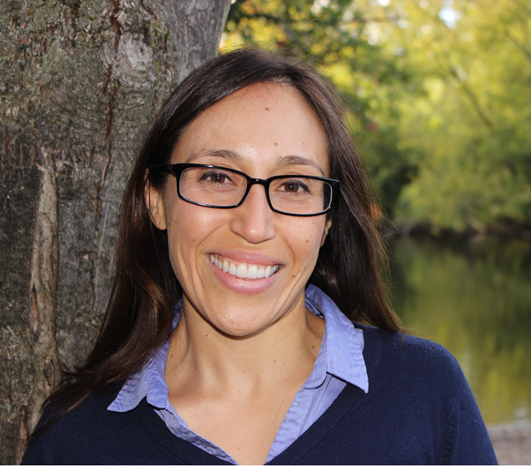
Please provide a link to your university page. https://amst.fullerton.edu/faculty/s_fingal.aspx
Please describe the courses you teach.
AMST350: Theories and Methods
AMST395: California Cultures
AMST401T: Proseminar in American Studies
AMST404: Americans and Nature
AMST449: The West in Symbol and Myth
AMST502T: Graduate Seminar in American Studies
Describe your teaching philosophy and any research interests related to your discipline or teaching. Sara Fingal's research interests include race and gender in environmental history, U.S. border zones, and water studies. She has experience teaching interdisciplinary classes on American Borderlands, the History, Philosophy, and Sociology of Science, the Natural Environment, U.S. History, and Water in American Society. North American Borderlands; Environmental History; California Culture; Science and American Culture