
Chem 1A General Chemistry -Science Majors I, with Lab
Chem 1A General Chemistry -Science Majors I, with Lab
Purpose: to help other instructors teaching the same course
Common Course ID: Chem 1A General Chemistry for Science Majors I, with Lab
CSU Instructor Open Textbook Adoption Portrait
Abstract: The OpenSTAX textbook “Chemistry: Atoms First 2e” is being utilized in a chemistry course for undergraduate students by Kristi Closser and Morgan Hawker at California State University, Fresno. The open textbook provides a peer reviewed text that is available in digital formats (online and as a pdf), or can be ordered as a print copy for a nominal fee, as well as some basic instructor resources. The main motivation to adopt an open textbook was to reduce costs to students, and provide flexibility in how the course is taught. Most students access the open textbook online through links provided on the campus Learning Management System.
Course Title and Number: General Chemistry 1A
Brief Description of course highlights: Fundamental principles of chemistry such as chemical bonding and structure, stoichiometry, thermochemistry, oxidation-reductions, and states of matter. https://www.fresnostate.edu/catalog/courses-by-department/chemistry-and-biochemistry/#chem1a
Student population: This course is primarily taken by first-year STEM majors across the College of Science and Mathematics (e.g., chemistry, biochemistry, biology, mathematics, physics, computer science, engineering disciplines) along with students from other majors intending to use CHEM 1A to meet GE requirements. Prerequisites for this course include high school chemistry and basic algebra. At Fresno State this course enrolls 300-400 students each semester spread over 3-4 lecture sections.
Learning or student outcomes: Upon successful completion of the course, students will be able to
- Analyze and solve chemical problems
- Link macroscopic chemical behavior to molecular-level models
Primary Learning Objectives
1. Solve problems requiring unit conversions and relating number of particles to mass
2. Distinguish between physical and chemical transformations
3. Describe chemical reactions using balanced chemical equations
4. Predict atomic structure and properties using the periodic table
5. Predict the physical behavior of ideal and real gases
6. Explain energy changes in chemical reactions conceptually and numerically
7. Predict bonding and molecular shapes for chemical compounds and relate structure to properties
8. Distinguish between intermolecular interactions and relate these to the state of matter
Key challenges faced and how resolved: Developing a course template with assignments that is readily shareable with all future CHEM 1A instructors is an ongoing challenge. This challenge mainly pertains to practice problem sets developed in-house administered via the course management system (as an alternative to publisher-provided online homework).
Syllabus and/or Sample assignment from the course or the adoption Closser: F22 Chem 1A OpenSTAX.pdf
Instructor Name - Kristi Closser
I am an Assistant professor of Chemistry at California State University, Fresno 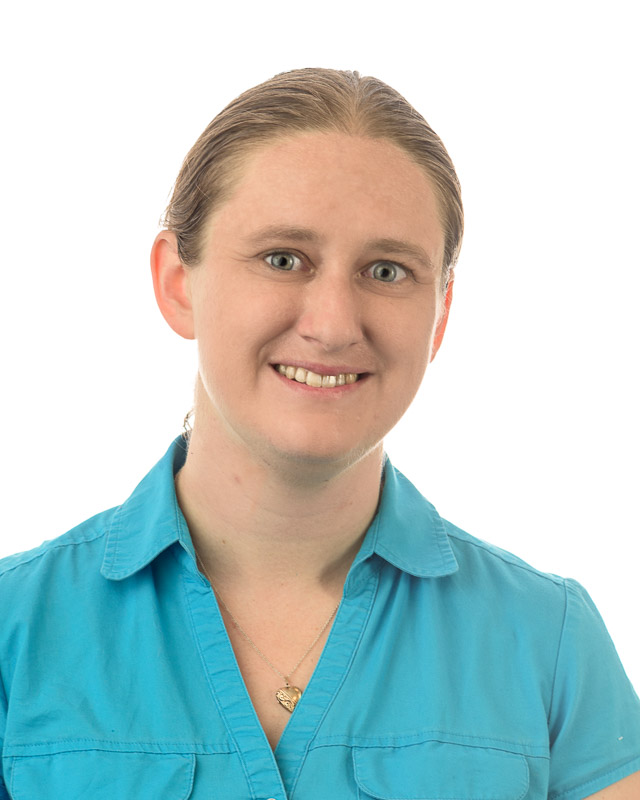 Please provide a link to your university page. https://csm.fresnostate.edu/about/directory/chemistry/closser-kristina.html
Please describe the courses you teach. I teach general chemistry lecture, organic chemistry first and second semesters, and physical chemistry lecture and lab.
Describe your teaching philosophy and any research interests related to your discipline or teaching. My primary objective as an instructor is to support students in achieving their goals. Learning is a process and giving students the opportunity to make mistakes and learn from these mistakes is critical to developing lasting impacts. While most of my general chemistry students do not go on to be professional chemists, the problem solving skills they learn in chemistry classes are transferable to many other fields.
Instructor Name: Morgan Hawker
I am a chemistry assistant professor at California State University, Fresno. I teach general chemistry lab and lecture, as well as physical chemistry courses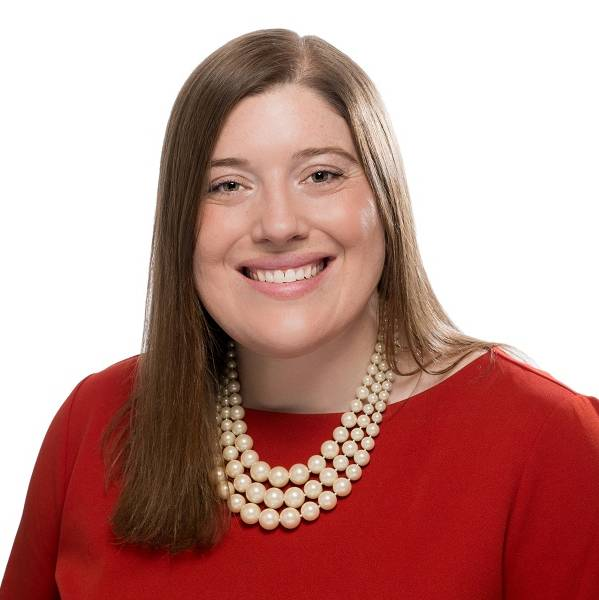
Please provide a link to your university page. https://csm.fresnostate.edu/about/directory/chemistry/hawker-morgan.html
Please describe the courses you teach. I teach general chemistry lab and lecture, as well as physical chemistry courses.
Describe your teaching philosophy and any research interests related to your discipline or teaching. As an instructor, my role is to facilitate student learning, both about chemistry and about themselves as learners. I aim to empower students to view themselves as part of the broad chemistry community through participating in authentic chemistry learning experiences. When students get to know themselves as learners, they become well-equipped and willing to take on intellectual challenges associated with learning chemistry. Normalizing difficulties when learning chemistry material helps students to feel more connected with the discipline, further supporting their sense of belonging and strengthening their STEM identity.
OER/Low Cost Adoption Process
Provide an explanation or what motivated you to use this textbook or OER/Low Cost option. This shift was motivated by the desire to become publisher-agnostic by creating instructional materials customized to our student learning objectives. We wanted flexibility in designing and curating materials amenable to the modular structure of the course.
How did you find and select the open textbook for this course? Browsed OER sites
Sharing Best Practices: Do not shy away from creating your own materials rather than fitting your course around existing materials.
Describe any challenges you experienced, and lessons learned. Developing a course template with assignments that is readily shareable with all future CHEM 1A instructors is an ongoing challenge. This challenge mainly pertains to practice problem sets developed in-house administered via the course management system (as an alternative to publisher-provided online homework).
Textbook or OER/Low cost Title: The OpenSTAX textbook “Chemistry: Atoms First 2e”
Brief Description: Chemistry: Atoms First 2e is a peer-reviewed, openly licensed introductory textbook produced through a collaborative publishing partnership between OpenStax and the University of Connecticut and UConn Undergraduate Student Government Association. This text is an atoms-first adaptation of OpenStax Chemistry 2e. The intention of “atoms-first” involves a few basic principles: first, it introduces atomic and molecular structure much earlier than the traditional approach, and it threads these themes through subsequent chapters. This approach may be chosen as a way to delay the introduction of material such as stoichiometry that students traditionally find abstract and difficult, thereby allowing students time to acclimate their study skills to chemistry. Additionally, it gives students a basis for understanding the application of quantitative principles to the chemistry that underlies the entire course. It also aims to center the study of chemistry on the atomic foundation that many will expand upon in a later course covering organic chemistry, easing that transition when the time arrives.
Source: https://openstax.org/details/books/chemistry-atoms-first-2e
Please provide a link to the resource https://openstax.org/books/chemistry-atoms-first-2e/pages/1-introduction
Senior Contributing Authors
Paul Flowers, University of North Carolina at Pembroke
Edward J. Neth, University of Connecticut
William R. Robinson, PhD, Purdue University
Klaus Theopold, University of Delaware
Richard Langley, Stephen F. Austin State University
Contributing Authors
Jennifer Look, Mercer University, Allison Soult, University of Kentucky, Simon Bott, University of Houston, Donald Carpenetti, Craven Community College, Andrew Eklund, Alfred University, Emad El-Giar, University of Louisiana at Monroe, Don Frantz, Wilfrid Laurier University, Paul Hooker, Westminster College, Carol Martinez, Central New Mexico Community College, Troy Milliken, Jackson State University, Vicki Moravec, Trine University, George Kaminski, Worcester Polytechnic Institute, Mark Blaser, Shasta College, Jason Powell, Ferrum College, Thomas Sorensen, University of Wisconsin–Milwaukee
Student access: Links to specific sections of the OpenStax text are provided for students in the course management system.
Supplemental resources: Basic instructor resources associated with the OpenStax text such as learning management integrations, solutions manual, slide decks, and test banks, are provided for free: https://openstax.org/details/books/chemistry-atoms-first-2e?Instructor%20resources.
To supplement content presented in the text, we have also recorded a series of video lessons based on specific learning objectives. These videos are freely available: https://www.youtube.com/@fresnostatechem1a56/playlists.
As an alternative to publisher-provided online homework, we have also developed practice problem sets for students in-house. These problem sets are administered through our learning management system.
Provide the cost savings from that of a traditional textbook. The textbook used before in this course cost approximately $65. The OpenStax text is free, representing a savings of $65/student. In the case of CHEM 1AL at Fresno State, this represents a potential savings between $390,000 and $520,000 each academic year.
License: Licensed under Creative Commons Attribution License v4.0