PH 104- Online course- Global and Cultural Issues in Health
PH 104- Online course- Global and Cultural Issues in Health
Purpose: to help other instructors teaching the same course
Common Course ID: 31707-2233
CSU Instructor Open Textbook Adoption Portrait
Abstract: One of the required textbooks for the undergraduate GE course PH 104 (Global and Cultural Issues in Health) offered at California State University, Fresno was substituted for open educational resources (OER Commons) and a resource with a Creative Commons Attribution-Noncommercial-Share Alike 3.0 United States License. This course has an average enrollment of 45 students per semester from various academic majors.
Course Title and Number: PH 104- Online course- Global and Cultural Issues in Health
Brief Description of course highlights:
Catalog Description: Global and Cultural Issues in Health Care, PH 104, 3 units. Web-based. This course is a G.E. course. In compliance with G.E. goals and objectives for this area, this course has been designed to: (1) Appreciate the value of diversity by using comparative means and identifying commonalities and differences across cultures in responses to health and disease, and (2) Promote students’ understanding about the influence of their culture on their lifestyles related to health and disease.
Student population: Course with students from various majors. Online course. It was previously classified as a GE course in the MI option.
Learning or student outcomes:
Course Goals: Course has been designed to:
1. Promote students’ cultural understanding about the influence of culture on health and disease
2. Promote understanding of the current world health status and the
organizations that influence global health.
Student Learning Outcomes: Students in this class will be able to:
1. Recognize various cultural patterns of response to health and disease by using a comparative method.
2. Analyze their own health behaviors from a cultural perspective
3. Identify the major causes of morbidity and mortality among the most
commonly found cultural and ethnic groups in the world.
4. Identify the choices made by students in the selection of holistic health and alternative healing methods.
5. Identify the cultural factors involved in the selection of healthy or unhealthy lifestyles.
6. Describe the current state of global health
7. List the major agencies involved in world health issue
Key challenges faced and how resolved: Cost was an issue but it has been addressed by replacing one of the required textbooks for Open Educational Resources.
Textbook or OER/Low cost Title: Community Toolbox
Brief Description: One of the OERs used in this course is: Community Tool Box– Used every week for course contents
Please provide a link to the resource https://ctb.ku.edu/en/table-of-contents
https://communityhealth.ku.edu/ https://ctb.ku.edu/en
Student access: Access via link provided in Canvas site for this course
Supplemental resources: https://www.rwjf.org/ and
https://www.who.int/teams/social-determinants-of-health/economic-and-commercial-determinants-of-health
Provide the cost savings from that of a traditional textbook. Cost savings: $ 75 for the previously required textbook (cost checked in the Internet-Amazon)
License: The Community Tool Box is a service of the Center for Community Health and Development at the University of Kansas. Licensed under a Creative Commons Attribution-Noncommercial-Share Alike 3.0 United States License. © 1994-2023 The University of Kansas. All Rights Reserved.
OER/Low Cost Adoption Process
Provide an explanation or what motivated you to use this textbook or OER/Low Cost option. To help students save money and to increase equity
How did you find and select the open textbook for this course? With help from university librarian and from course offered by our Center for Faculty Excellence
Sharing Best Practices: Select textbooks early and inform the library early in the previous semester.
Describe any challenges you experienced, and lessons learned. To match contents from accreditation requirements with Open Educational Resources
Instructor Name: Helda Pinzon-Perez
Please provide your title and your institution
Professor in the Department of Public Health
California State University, Fresno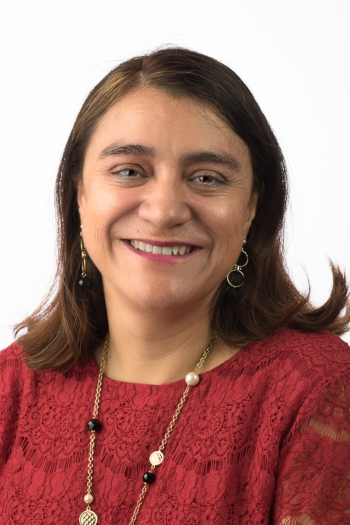 Please provide a link to your university page.
https://chhs.fresnostate.edu/about/directory/public-health/pinzon-perez-helda.html
Please describe the courses you teach. Community Health and Public Health
Describe your teaching philosophy and any research interests related to your discipline or teaching. My approach to undergraduate and graduate teaching is centered on global collaborations and cross-national learning. In all my classes, I incorporate learning activities to motivate my students to understand the reality of the United States within a global perspective. My approach to teaching is also based on interdepartmental, national, and global collaborations to reduce health disparities and to increase equity. I convey the message that “equity” is very different from “equality” and that advocating for equity in health should be paramount to the work of health practitioners. Equity should be addressed from the perspective of disparities by gender, sexual orientation, ethnicity/culture, spiritual affiliation, and lifestyle choices, among others. I firmly believe in the educational principle of "learning by doing." I am a strong believer of “Service Learning.” This approach empowers students to learn and practice their role as community health educators. I believe that through teaching, we can motivate students to work with underserved and disadvantaged communities hence, enhancing their cultural competence, cultural sensitivity, and cultural humility, competencies that are essential in their future role as public health practitioners. My approach to education and my commitment to undergraduate and graduate teaching is that knowledge-based education is as important as cultural humility competence-education.