
Ancient Egyptian History: Origins to 1700 BCE, History 4520
Ancient Egyptian History: Origins to 1700 BCE, History 4520
Purpose: to help other instructors teaching the same course
Common Course ID: History 4520
CSU Instructor Open Textbook Adoption Portrait
Abstract: This open textbook is being utilized in a History course for undergraduate or graduate students by Kate Liszka at CSU San Bernardino. The open textbook provides in depth analysis on individual subjects and examination of primary sources. The main motivation to adopt an open textbook was free for students. Most student access the open textbook in PDFs on Canvas.
Ancient Egyptian History Origins to 1700 BCECourse
History 4520
Brief Description of course highlights: Students learn the history of ancient Egypt from how it started out of a Neolithic society, through the pyramid building age, and the classical age until the collapse of the Middle Kingdom. Upper division History course with no pre-reqs.
Student population: 29 History Majors. They have knowledge of parts of history, but typically know nothing about Ancient Egypt.
Learning or student outcomes: Students were happy because they did not need to purchase books. I was happy because students got a more detailed understanding of how people write history. We were able to go into depth about specific questions so that they could unpack the complexity of history.
Knowledge
1.1 Students will acquire knowledge of relevant historical facts and contextualize the history and culture of Ancient Egypt.
1.2 Students will gain the ability to frame historical questions regarding ancient history.
1.3 Students will demonstrate an awareness of historical interpretative differences especially in regards to how secondary sources interpret, skew, or misinterpret primary data.
Research
2.1 Students will demonstrate the ability to use a broad range of historical sources. Textual, artistic, and archaeological sources will all be part of our analysis.
2.2 Students will demonstrate the ability to evaluate and analyze primary historical sources.
2.3 Students will demonstrate the ability to develop an historical interpretation based on evidence.
Communication
3.1 Students will demonstrate the ability to write clearly through short papers and daily assignments.
3.2 Students will demonstrate the ability to speak clearly through discussion and debate.
Key challenges faced and how resolved: Key challenges were that I needed to provide the sources for the students and I needed to change my overview lectures so that we could do detailed examinations through debate. It took my time. Students had no challenges.
Syllabus and/or Sample assignment from the course or the adoption: https://www.dropbox.com/s/mlpf3es5ay48qnc/syllabus%20F2022%20AE%20History%201%204520.pdf?dl=0
Textbook or OER/Low cost Title:
Brief Description: I used individually scanned articles by specialists and primary sources, not an open textbook. Also lecture and occasional overview chapters to connect topics
Please provide a link to the resource: Lots of different articles by different authors that gave detailed looks at specific issues of history. Instead of students purchasing three textbooks, students read articles on specific topics written by the specialist, and they read a few select chapters from the standard textbooks. This allowed students to engage more with the primary data of the class and understand how history is written. All PDFs were provided on Canvas taking into account all proper copyright issues.
Student access: Students were provided access to all the course materials as PDFs on Canvas for free. All of the PDFs were OCRed and accessible for visually impaired students
Provide the cost savings from that of a traditional textbook. I eliminated 3 books that allowed students to save $119.77 each, For 29 students that added up to $3473.33 in Fall 2022
License: I only used specific articles or specific chapters in books, it was all legally allowed within copyright law.
OER/Low Cost Adoption Process
Provide an explanation or what motivated you to use this textbook or OER/Low Cost option. It’s a Win – Win. Better education and free books, it just took me time to do it.
How did you find and select the open textbook for this course? I used Egyptological databases and my own knowledge of the field to find the appropriate readings.
Sharing Best Practices: Definitely increase primary sources and debate. Students were happy because they did not need to purchase books. I was happy because students got a more detailed understanding of how people write history. We were able to go into depth about specific questions so that they could unpack the complexity of history.
In addition, students were happier because the materials were free. Students learned more because they did detailed examinations on specific topics that allowed them to understand the complexities of how history is written.
Describe any challenges you experienced, and lessons learned. It took my time, but yielded a better result.
Kate Liszka
Associate Professor of History
The Benson and Pamela Harer Fellow in Egyptology
California State University, San Bernardino
https://www.csusb.edu/profile/kate.liszka
https://csusb.academia.edu/KateLiszka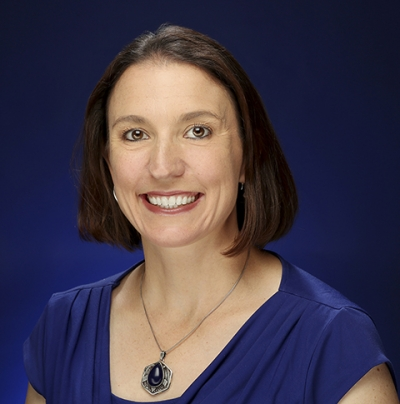
Teaching Philosophy:I want students to question their textbooks. They should understand how history is written and work towards learning how to construct history themselves by understanding the purpose and audience of every source.