Chapter 10: Marketing gender
In this study, the marketing of children’s toys and its relationship to gender stereotypes were investigated. Specifically, data on 1460 children’s toys were gathered to determine how gender-targeted products related to impressions of creative expression, physical activity, conversation, competition, and masculinity/femininity. Results indicated that, as hypothesized, toys marketed towards boys perpetuated highly masculine gender stereotypes, whereas toys marketed towards girls perpetuated highly feminine gender stereotypes. Implications of these findings for the possible development of a gender-neutral society are discussed.
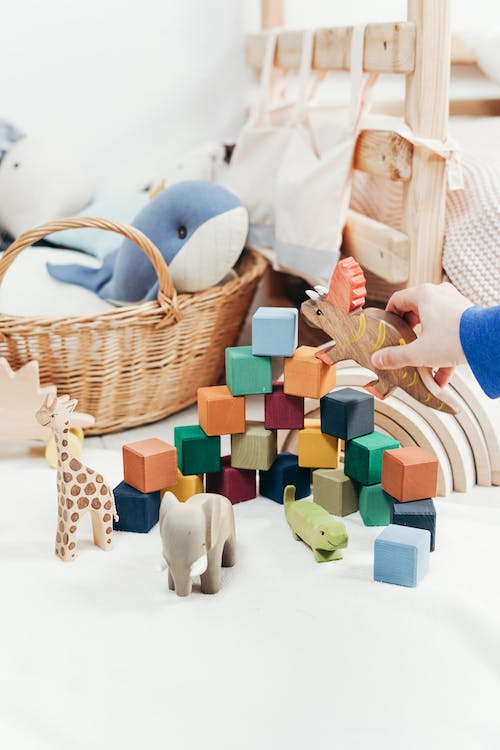
"Assorted Children Toys" by cottonbro studio is in the Public Domain, CC0
The influence of society on the development of gender stereotypes among children has long been a mainstay concern (e.g., Gunter, Oates, & Blades, 2005). Not only do children get socialized directly from their parents and others in their social environments, but they also get socialized indirectly through numerous ways, including through the marketing of children’s toys.
Children’s toys are big business, and the marketing of those toys represents potentially billions of dollars in income to toy manufacturers (“Trillion-dollar kids”, 2006). Consequently, toy companies have legitimate reasons for marketing their products in ways which they feel best reflects the characteristics of toys desired by those who purchase their products (Schor, 2008). But whereas one may traditionally think of toys solely in terms of their entertainment value, prior research has demonstrated that, in addition to reflecting such values, toys may also have the ancillary effect of encouraging particular behaviors or beliefs in children. In particular, traditional gender roles and stereotypes can be perpetuated and reinforced by the marketing and distribution of children’s toys, both in packaging and advertising (Owen-Blakemore & Centers, 2005; Ruble, Balaban, & Cooper, 1981).
Research has demonstrated that children start to show gender-stereotypical preferences for toys from a very early age (Caldera, Huston, & O’Brien, 1989; Fein et al., 1975; Zosuls et al., 2009). Freeman (2007), for example, demonstrated how even preschoolers adopt gender-stereotypical patterns of play associated with the toys they play with. Several explanations have been offered for why children may prefer toys which are most consistent with their stereotyped gender role. Some of these explanations include differences in prenatal sex hormones (Berenbaum & Hines, 1992; Hines et al., 2002; Van de Beek, van Goozen, Buitelaar, & Cohen-Kettenis, 2009), parental and peer influences (Langolis & Downs, 1980), particular visual perceptual features (Alexander, Wilcox, & Woods, 2009), and even the sociability of the children themselves (Obanawa & Joh, 1995).
The division of toy marketing along gender-stereotypical lines is quite common. For example, toys developed and marketed primarily as “boy toys” are traditionally competitive in nature, promote higher levels of physical activity, and are better suited for use in large groups. Commonly, such toys have wheels, gears, involve building or construction, and encourage outdoor play and aggressive behaviors. Furthermore, they are promoted with darker colors and have more rugged-sounding names than toys not targeted primarily towards boys (Schwartz & Markham, 1985). These characteristics are consistent with the behavioral patterns of play demonstrated by young boys and girls (e.g., Lloyd & Smith, 1985).
Conversely, traditional “girl toys” are more likely to encourage cooperation, non-physical (indoor) activities, and are intended for use in small groups. Toys targeted towards young girls are also more likely to encourage creativity, emphasize physical attractiveness, and require higher levels of communication and cooperation compared to toys not targeted towards young girls (Schwartz & Markham, 1985; Williams & Pleil, 2008).
The causal nature of this relationship is naturally difficult to establish. Whereas these attributes may simply reflect the characteristics desired in toys intended primarily for either boys or girls, the marketing and advertising of said toys may also encourage a distinction in such characteristics along traditional gender stereotypes. Regardless of its origin, however, the perpetuation of gender stereotypes vis-à-vis children’s toys is quite evident. For example, domestic chores, mothering skills, and personal appearance are significantly more likely to be emphasized in girls’ toys rather than boys’ toys (Chandler & Griffiths, 2000). Advertisements for boys’ toys, on the other hand, are more likely to focus on acts of aggression, include darker colors, and emphasize competitive behavior with noisy and rapid activities more than girls’ toys (Chandler & Griffiths, 2000).

"Photo of Letter Cubes against a Red Background" by Oleksandr Pidvalnyi is in the Public Domain, CC0
Although children are the intended target of most toy products, children are not always the ones actually purchasing the toys themselves. Instead, the selection and choice to purchase children’s toys are often the purview of adults (e.g., Fisher-Thompson, 1993; Schor, 2008). To assist adults in which toys are considered most appropriate for either a boy or a girl, in most retail locations toys are often segregated into groups of boy toys, girl toys, and gender-neutral toys (Schwartz & Markham, 1985). Indeed, many sales floors are explicitly divided in terms of gender, with ‘boy aisles’ which often include dark colors, heavy-duty products, and more aggressive toys, and ‘girl aisles’ which often include bright colors and more flowers and cutesy names of toys (Schwartz & Markham, 1985). In addition to dividing toy aisles into gender-specific groupings, the packaging of individual toys often depicts “appropriate” sex-type behavior for the children using the toys. For example, boys pictured in a kitchen are shown being served by a girl; girls are shown as the magician’s assistant on a magic kit (Schwartz & Markham, 1985).
Perhaps, then, it is not surprising that the typical assumption of society is that girls prefer girl toys and boys prefer boy toys. Indeed, much research has been devoted to documenting how parents tend to encourage gender-traditional play in their children, and discourage cross-gender play (Campenni, 1999; Freeman, 2007; Sciaraffa & Caldera, 1998). However, other research offers a contrarian viewpoint to this assumption. Whereas males do tend to prefer male toys over female toys or neutral toys (Blakemore & Centers, 2005; Wood, Desmarais, & Gugula, 2002), females tend to spend equal time with male and female toys as well as neutral toys, and even tend to play with them in more dimensional ways (Williams & Pleil, 2008). Such research calls into question the extent to which toys simply reflect the pre-existing traditional gender stereotypes exhibited by children in the toys they play with, or whether the marketing of such toys themselves may have some responsibility in encouraging the development of gender-distinctive behaviors in impressionable children.
The purpose of the current study was thus to document the extent to which the marketing of children’s toys may reflect traditional gender roles and stereotypes. Consistent with past research, several hypotheses were proffered. Specifically, it was hypothesized that, overall, there would be a clear distinction in toys marketed towards boys versus girls. Furthermore, it was hypothesized that boy toys would be strongly associated with attributes related to masculinity, such as encouraging more physical activity and more competition, whereas girl toys would be strongly associated with attributes related to femininity, such as encouraging more conversation and creativity.
This study was a one-way factorial design investigating differences in toy characteristics among the targeted gender of the toy (male, female, or neutral), and intended use of the toy (individual, group, or either), with additional post-hoc analyses investigating the intended age group of the toy.
Overall, data on 1460 toys were gathered. Sixty-two independent raters (46 females, 16 males) enrolled in an upper-level Psychology of Gender course at a medium-sized university in the Midwest visited local retail stores (all national chains) which sold children’s toys in or near a metropolitan city. Each rater collected data on approximately 30 toys. In an effort to ensure high inter-rater reliability, participants received 45 minutes of training specific to this data collection effort, focusing on consistency of definitions and rating schemes (as described below). This training was subsequent to course material on the development of gender stereotypes and the promotion/expression of feminine and masculine characteristics. Instead of being assigned specific toys to rate, participants were free to randomly sample toys from each store. As such, some toys (approximately 10%) were rated independently by multiple raters.
For each toy, the following descriptive data were collected: target gender of toy (male, female, or neutral), how target gender was indicated (e.g., picture on box or name of toy), approximate intended age of child targeted, as well as the primary use of the toy (i.e., whether the toy was intended to be used by an individual, group, or either). In addition, toys were rated on separate Likert-type scales (from 1 = none to 7 = extreme) as to what extent they promoted creative play, heightened physical activity, encouraged conversation, and encouraged competition with others. Toys were rated on a masculine/feminine spectrum using a 1 (extremely masculine) to 7 (extremely feminine) Likert-type scale. Finally, toys were rated on their stereotypicality for the intended gender on a 1 (not at all stereotypical) to 7 (extremely stereotypical) Likert-type scale.
Before analyses were conducted, several categorizations of the toys were created. Gender-marketing intent was determined either by packaging characteristics or the name of the toy itself. For approximately 53% of all toys, the packaging specifically showed a picture of either a boy or girl playing with the product; another approximately 8% indicated gender in the name of the product (e.g., “A cowgirl’s outfit”). The remaining 39% did not specifically indicate an intended gender or contain gender-specific language in the name of the product. Using this categorization scheme resulted in a rather equitable distribution of gender-targeted toy products for inclusion in this study: 501 male toys (34.32%), 525 female toys (35.96%), and 434 gender-neutral toys (29.73%). Furthermore, 859 toys were rated as being primarily intended for use by an individual (e.g., Etch-A-Sketch, Leapster), 406 as being primarily intended for use by a group (e.g., board games, badminton sets), and 162 for either an individual or a group (e.g., building blocks, cards, video games).
Although not the primary focus of the current study, a limited content analysis of the specific toys rated was also conducted for better descriptive purposes. Specifically, using a modified list of categorizations of toys (Bureau of the Census, 1977), all 1460 toys were categorized as a function on the targeted gender of the toy. As shown in Table 1, these categorizations were quite consistent with the gender-stereotypical distribution demonstrated in past research for both boys and girls: dolls and doll accessories, cleaning/kitchen sets, and grooming products for girls, and action figures, construction sets, and vehicles for boys.
To demonstrate the extent to which particular toy attributes themselves might be related to one another, a series of bivariate correlations was calculated. As shown in Table 2, a correlation matrix of toy attributes yielded several significant correlations among these attributes. Most notably, the rated physicality of the toys was positively correlated with the amount of creativity (r = .06, p < .05) and competition (r = .44, p < .001) the toy engendered, as well as the amount of conversation the toy encouraged (r = .20, p < .001). Furthermore, the competitiveness of the toy was positively correlated with the amount of conversation the toy encouraged (r = .38, p < .001). Finally, the stereotypicality of the toy was positively correlated with its associated rating on the masculine/feminine spectrum (r = .22, p < .001).
Next, a series of one-way analyses of variance using target gender (male, female, or neutral) as the independent variable was conducted to test for significant differences among toy characteristics. As shown in Table 3, as predicted, results yielded a significant main effect for the promotion of physical activity, (F (2, 1457) = 65.09, p < .001, η2 = .08), level of conversation (F (2, 1453) = 6.84, p = .001, η2 = .01), level of competition (F (2, 1456) = 112.53, p < .001, η2 = .13), stereotypicality (F (2, 1456) = 516.74, p < .001, η2 = .42), and ratings of masculinity/femininity (F (2, 1455) = 2092.50, p < .001, η2 = .74). Contrary to hypotheses, however, no significant main effects were found for the variable of creativity (F (2, 1453) = 1.13, ns).
To further explicate these overall findings, a series of post-hoc analyses, adjusted for multiple comparisons, was conducted. In terms of physical activity, toys targeted towards boys (M = 4.22) were rated significantly higher than toys that were gender-neutral (M = 3.71), LSD = 0.51, p < .001, or that were targeted towards girls (M = 2.90), LSD = 1.32, p < .001. Furthermore, toys that were targeted towards girls were rated significantly lower than the gender-neutral toys, LSD = 0.81, p < .001.
In terms of promoting conversation, toys that were gender-neutral (M = 4.04) were rated as encouraging significantly more conversation as were either toys targeted towards boys (M = 3.65), LSD = 0.39, p = .001, or girls (M = 3.66), LSD = 0.38, p = .001. In terms of promoting competitive play, toys targeted towards boys (M = 4.22) were rated significantly higher than toys that were gender-neutral (M = 3.59), LSD = 0.63, p < .001, or that were targeted towards girls (M = 2.41), LSD = 1.81, p < .001. Furthermore, toys that were targeted towards girls were rated significantly lower than the gender-neutral toys, LSD = 1.18, p < .001.
In terms of stereotypicality, toys that were targeted towards girls (M = 6.40) were rated as more stereotypical than were toys targeted towards boys (M = 5.77), LSD = 0.64, p < .001, or that were gender-neutral, (M = 3.75), LSD = 2.65, p < .001. Furthermore, gender-neutral toys were rated as less stereotypical than toys targeted towards boys, LSD = 2.01, p < .001.
Furthermore, a series of one-way analyses of variance using intended use of the toy (individual, group, or either) as the independent variable was conducted to test for significant differences among toy characteristics. As shown in Table 4, as predicted, results yielded a significant main effect for the promotion of creativity, (F (2, 1420) = 6.51, p < .01, η2 = .01), physical activity, (F (2, 1424) = 28.48, p < .001, η2 = .04), level of conversation (F (2, 1420) = 288.39, p = .001, η2 = .29), level of competition (F (2, 1423) = 163.92, p < .001, η2 = .19), stereotypicality (F (2, 1423) = 5.61, p < .01, η2 = .01), and ratings of masculinity/femininity (F (2, 1422) = 4.26, p < .05, η2 = .01).
To further analyze these findings, another series of post-hoc analyses, adjusted for multiple comparisons, was also conducted. In terms of creativity, toys that could be used for either individuals or groups (M = 5.35) were rated as encouraging higher levels of creativity than either toys targeted specifically towards individuals (M = 4.87), LSD = 0.48, p = .001, or toys targeted specifically towards groups (M = 5.05), LSD = 0.31, p < .05.
In terms of promoting physical activity, toys targeted towards groups (M = 4.17) were rated as encouraging more physical activity than were toys targeted towards individuals (M = 3.31), LSD = 0.86, p < .001, or toys targeted towards either (M = 3.67), LSD = 0.50, p < .01. Furthermore, toys targeted towards either groups or individuals were rated as encouraging more physical activity than toys targeted specifically towards individuals, LSD = 0.36, p < .05.
In terms of promoting conversation, toys targeted towards groups (M = 5.19) were rated as encouraging more conversation than were toys targeted towards individuals (M = 3.01), LSD = 2.18, p < .001, or towards either groups or individuals (M = 4.21), LSD = 0.98, p < .001. Furthermore, toys targeted either groups or individuals were rated as encouraging more conversation than toys targeted specifically towards individuals, LSD = 1.20, p < .001.
In terms of promoting competition, toys targeted towards groups (M = 4.79) were rated as encouraging more competition than were toys targeted towards individuals (M = 2.71), LSD = 2.08, p < .001, or towards either groups or individuals (M = 3.30), LSD = 1.49, p < .001. Furthermore, toys targeted either groups or individuals were rated as encouraging more competition than toys targeted specifically towards individuals, LSD = 0.58, p < .001.
In terms of stereotypicality, toys targeted towards individuals (M = 5.53) were rated as more stereotypical than were toys targeted towards groups (M = 5.20), LSD = 0.32, p < .05. Likewise, toys targeted towards individuals (M = 4.39) were rated as more masculine than were toys targeted towards groups (M = 4.06), LSD = 0.38, p < .05.
Finally, a series of exploratory analyses concerning intended age of child was also conducted. Results of a linear regression analysis indicated that as the intended age of the child increased, the rated stereotypicality of the toy also increased, β = .105, p < .001. Conversely, as age increased, the rated creativity of the toy decreased, β = -.100, p < .001.
The primary purpose of the current study was to investigate the extent to which the marketing of children’s toys may be associated with the socialization of masculinity/femininity among children, even extending to how these toys may promote interactions among children along gender-stereotypical lines. As hypothesized, results of this study indicated that, compared to girl toys, boy toys demonstrated an increased focus on physical activity and competition. Overall, toys targeted towards boys were rated as extremely masculine, whereas toys targeted towards girls were rated as extremely feminine. Only gender-neutral toys were rated as encouraging more conversation than either boy or girl toys. No differences were found among target genders in terms of promoting creativity among children.
Further exploratory analyses were conducted to investigate the relationship between the age of the child and the stereotypicality of the toy. Results indicated that as the intended age of the toy increased, the stereotypicality of the toy also increased. This is consistent with other research which shows that older children hold stronger stereotype preferences than younger children (Cherney, Harper, & Winter, 2006).
This study did yield some unexpected findings. For example, analyses indicated a positive correlation between toys’ competitiveness and the amount of conversation they encouraged. Traditionally, competitiveness is a masculine characteristic and conversation is a feminine characteristic, and therefore should have been negatively correlated. Furthermore, gender-neutral toys were actually associated with the highest levels of conversation. It is possible that these findings were related to the coding scheme developed for use in this study. Unfortunately, no further data were collected as part of this study which might help elucidate why these relationships were present.
Whereas prior research has relied on non-trained raters focusing on a limited sample of toys, this research involved the use of trained raters rating a plethora of available toys. As such, we feel that this study offers a unique methodological contribution to the existing literature regarding marketing and potential gender socialization. Specifically, this approach greatly increases the generalizability of these findings beyond the current sample. Furthermore, these ratings were performed at multiple locations throughout a metropolitan community, thereby decreasing the likelihood that a single store’s marketing scheme would bias the results. Although a separate reliability analysis was not permitted given the high number of different toys rated throughout this research, utilizing trained researchers helped increase the likelihood that such ratings were considered using the same content criteria across all raters.
Consistent with the limitations associated with similar past research, based on the results of the current study it cannot be determined whether marketing influences gender stereotypes or whether gender stereotypes influence the marketing decisions of toy manufacturers. However, these findings do support the growing body of literature which demonstrates that such an observable distinction is quite apparent in the marketing of children’s toys.
Whereas this research focused primarily on the packaging of the toys themselves, future research could be conducted, using the same measurement criteria, investigating ratings of toys out of the packaging. These additional ratings would help clarify the extent to which the marketing of the toys, beyond just the characteristics of the toys itself, contribute to patterns of play associated with gender stereotypes.
Overall, gender stereotyping our children through their toys can be a two-edged sword. While we may be teaching our children some of the lessons they will need to function as adults, we may also be limiting their ability to cross into the neutral territory of gender by limiting girls to traditional female roles and indirectly discouraging communication and nurturance in boys. While some girls may think playing with a toy vacuum is fun, perhaps a majority of women, if queried, would reveal that housework is not recreation but often drudgery. Boys, by not being encouraged to communicate or nurture, may likewise be handicapped in their future careers and families. As such, retail stores might consider de-emphasizing the gender distinction among toys (i.e., boy aisles and girl aisles), and instead focus on categorizing toys according to the interests of the child (e.g., all outdoor games together, all science toys together) in an effort to better promote the individuality of the child as opposed to the encouragement of gender-stereotypical patterns of behavior.
Alexander, G. M., Wilcox, T., & Woods, R. (2009). Sex differences in infants’ visual interest in toys. Archives of Sexual Behavior, 38, 427-433.
Berenbaum, S. A., & Hines, M. (1992). Early androgens are related to childhood sex-typed toy preferences. Psychological Science, 3, 203–206.
Blakemore, J. E. O., & Centers, R. E. (2005). Characteristics of boys’ and girls’ toys. Sex Roles, 53, 619-633.
Bureau of the Census (1977). Census of manufactures. Washington, DC: U.S. Department of Commerce.
Caldera, Y. M., Huston, A. C., & O’Brien, M. (1989). Social interactions and play patterns of parents and toddlers with feminine, masculine, and neutral toys. Child Development, 60, 70-76.
Campenni, C. E. (1999). Gender stereotyping of children’s toys: A comparison of parents and nonparents. Sex Roles, 40, 121–138.
Chandler, D., & Griffiths, M. (2000). Gender-differentiated production features in toy commercials. Journal of Broadcasting & Electronic Media, 44, 503-520.
Cherney, I. D., Harper, H. J., & Winter, J. A. (2006). New toys for tots: What preschoolers identify as “boy and girl toys.” Enfance, 58, 266-282.
Fein, G., Johnson, D., Kosson, N., Stork, L., & Wasserman, L. (1975). Sex stereotypes and preferences in the toy choices of 20-month-old boys and girls. Developmental Psychology, 11, 527-528.
Fisher-Thompson, D. (1993). Adult toy purchases for children: Factors affecting sex-typed toy selection. Journal of Applied Developmental Psychology, 14, 385-406.
Freeman, N. K. (2007). Preschoolers' perceptions of gender appropriate toys and their parents' beliefs about genderized behaviors: Miscommunication, mixed messages, or hidden truths? Early Childhood Education Journal, 34, 357-366.
Gunter, B., Oates, C., & Blades, M. (2005). Advertisting to children on TV: Content, impact and regulation. Mahwah, NJ: Erlbaum.
Hines, M., Golombok, S., Rust, J., Johnston, K. J., & Golding, J. (2002). Testosterone during pregnancy and gender role behavior of preschool children: A longitudinal, population study. Child Development, 73, 1678–1687.
Langolis, J. H., & Downs, A. C. (1980). Mothers, fathers, and peers as socialization agents of sex-typed behavior in young children. Child Development, 51, 1217-1247.
Lloyd, B., & Smith, C. (1985). The social representation of gender and young children’s play. British Journal of Developmental Psychology, 3, 65-73.
Obanawa, N., & Joh, H. (1995). The influence of toys on preschool children’s social behavior. Psychologia, 38, 70-76.
Owen-Blakemore, J. E., & Centers, R. E. (2005). Characteristics of boys' and girls' toys. Sex Roles, 53, 619-633.
Ruble, D. N., Balaban, T., & Cooper, J. (1981). Gender constancy and the effects of sex-typed televised toy commercials. Child Development, 53, 667-673.
Schor, J. B. (2008). Understanding the child consumer. Journal of the American Academy of Child & Adolescent Psychiatry, 47, 486-490.
Schwartz, L. A., & Markham, W. T. (1985). Sex stereotyping in children's toy advertisements. Sex Roles, 12, 157-170.
Sciaraffa, M. A., & Caldera, Y. M. (1998). Parent-toddler play with feminine toys: Are all dolls the same? Sex Roles, 39, 1998.
Trillion-dollar kids. (2006, December 2). The Economist [electronic version]. Retrieved from http://www.economist.com/business/displaystory.cfm?story_id=8355035.
Van de Beek, C., van Goozen, S. H. M., Buitelaar, J. K., & Cohen-Kettenis, P. T. (2009). Prenatal sex hormones (maternal and amniotic fluid) and gender-related play behavior in 13-month-old infants. Archives of Sexual Behavior, 38, 6-15.
Williams, C. L., & Pleil, K. E. (2008). Toy story: Why do monkey and human males prefer trucks? Hormones and Behavior, 54, 355-358.
Wood, E., Desmarais, S., & Gugula, S. (2002). The impact of parenting experience on gender stereotyped toy play of children. Sex Roles, 47, 39-46.
Zosuls, K. M., Ruble, D. N., Tamis-LeMonda, C. S., Shrout, P. E., Bornstein, M. H., & Greulich, F. K. (2009). The acquisition of gender labels in infancy: Implications for gender-typed play. Developmental Psychology, 45, 688-701.