Chapter 9: Influence of media
Media can be seen as a reflection of societal gender constructs, but it can also play a role in shaping and reinforcing those constructs. In this chapter we will discuss how both media and gender constructs can influence each other in areas such as film, literature, and advertising, as well as explore how gender constructs are predominant in language and communication.
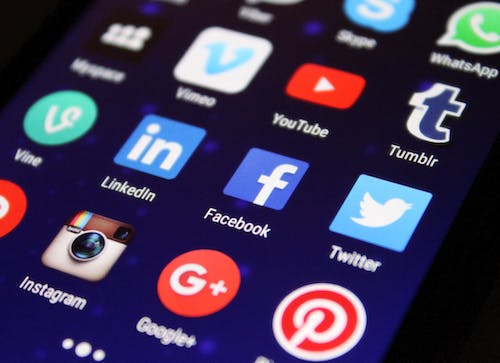
"Close-up Photography of Smartphone Icons" by Pixabay is in the Public Domain, CC0
On one hand, media can be seen as a reflection of societal gender constructs (Wenhold & Harrison, 2021). The media often reflects the gender norms and stereotypes that exist in society, and it can reinforce those norms by depicting them in a positive or negative light. For example, in many movies and TV shows, men are often portrayed as strong and assertive, while women are often portrayed as emotional and nurturing (Khalil & Dhanesh, 2020). This can reinforce traditional gender stereotypes and can make it difficult for individuals to see alternatives to these stereotypes.
On the other hand, media can also play a role in shaping and reinforcing gender constructs. The media can shape societal views of gender by depicting certain behaviors and traits as appropriate or desirable for men or women. For example, movies and TV shows that depict women in leadership roles can help to challenge traditional gender norms and stereotypes and can make it more acceptable for women to pursue careers in traditionally male-dominated fields.
Social media in particular can both help and harm our understanding of gender constructs. On one hand, social media platforms provide a space for individuals to express their gender identity and connect with others who share similar experiences. This can be especially beneficial for those who may feel marginalized or isolated in their offline communities. On the other hand, social media can also reinforce harmful stereotypes and amplify negative messages about gender. It can also be a breeding ground for cyberbullying and harassment (Smith & Steffgen, 2013), which can disproportionately affect marginalized groups such as trans and non-binary individuals.
Media is not a monolithic entity and its representation of gender is not uniform across different countries, cultures or media forms. Some forms of media can promote gender equality and challenge traditional gender roles, while others can reinforce them. In other words, the media can be used to promote progressive ideas about gender, but it can also be used to reinforce harmful stereotypes and discrimination (Khalil & Dhanesh, 2020).
Not only can media influence gender constructs, but it is also influenced by them as well. Media representation of gender is a complex issue and is shaped by a variety of factors including societal norms, cultural beliefs, and the intentions of the creators and producers. Media can both reflect and shape societal views of gender, and it can also reinforce or challenge traditional gender norms and stereotypes.
For example, research has shown that media representation of women can be a powerful tool for challenging traditional gender norms and stereotypes. Studies have found that media representation of women in positions of power and leadership can help to break down barriers for women in the real world and can make it more acceptable for women to pursue careers in traditionally male-dominated fields (Painter-Morland & Werhane, 2011). Representation of women in media can also play a role in shaping societal views of femininity and masculinity by showing that there are multiple ways of being a woman or a man (Bligh, Schlehofer, Casad, & Gaffney, 2012).
However, media representation of gender can also reinforce harmful stereotypes and discrimination. Research has shown that media representation of women is often limited and stereotypical, and that women are underrepresented in key roles and are often portrayed as sexual objects. Additionally, media representation of men can also perpetuate harmful stereotypes, such as the idea that men should be strong, dominant, and unemotional.
Media representation of gender varies greatly across different cultures and countries (Trier-Bieniek, 2019). The representation of gender in media can be shaped by cultural beliefs, values and norms, and it can also vary depending on the medium. For example, representation of gender in news media may be different from representation in entertainment media. These representation differences can be related to a variety of factors including societal norms, cultural beliefs, and the intentions of the creators and producers. As such, it is important to be mindful of media representation of gender and to consider how it shapes and reinforces societal views of gender for better or for worse.
Media can also play a role, however, in changing outdated and limiting gender constructs by challenging traditional gender norms and stereotypes, and by depicting alternative forms of femininity and masculinity (Coltrane & Adams, 1997). For example, media can change societal views of gender by depicting a wider range of gender identities and expressions. Media representation of transgender and non-binary individuals can also help to challenge traditional binary views of gender and can make it more acceptable for people to express their gender in different ways.
Media can further change societal views of gender by depicting women and men in roles that challenge traditional gender norms and stereotypes (Cernat, 2014). For example, media representation of women in leadership roles or men in nurturing roles can help to break down barriers for women and men in the real world and can make it more acceptable for them to pursue careers in traditionally non-stereotypical fields.
Media can change societal views of gender by breaking down harmful stereotypes (Reinhard & Olson, 2017). Media representation of women that challenges the idea that women should be passive and submissive can help to break down barriers for women in the real world and can make it more acceptable for them to be assertive and take on leadership roles (Tabassum & Nayak, 2021). Similarly, representation of men that challenges the idea that men should be unemotional can help to break down barriers for men in expressing their emotions (Martin, 2017).
Additionally, media can change societal views of gender by promoting critical thinking and encouraging audiences to question traditional gender norms and stereotypes (Contois, 2020). For example, media that explores the complexities of gender and questions traditional gender roles can help audiences to think more critically about gender and to consider alternative ways of being a woman, man, or transgender.
Finally, media can change societal views of gender by encouraging dialogue and fostering conversations about gender in the real world. For example, media representation of gender issues can spark conversations about gender and can lead to a deeper understanding of the complexities of gender. Undoubtedly, changing gender constructs is a complex and ongoing process and is not something that can happen overnight. Media can play a role in promoting change, but it is not the only factor and may not even be the most important one.
The relationship between media and gender constructs is complex and multifaceted, and it is not always clear which is the cause and which is the effect. It can be seen as a bidirectional process, where media and gender constructs both influence each other. On one hand, media can be seen as a reflection of societal gender constructs, and it can reinforce those norms by depicting them in a positive or negative light. For example, traditional gender norms and stereotypes that exist in society, such as men being assertive and dominant and women being emotional and nurturing, can be portrayed in media, and it can reinforce those stereotypes.
On the other hand, media can also play a role in shaping and reinforcing gender constructs. The media can shape societal views of gender by depicting certain behaviors and traits as appropriate or desirable for men or women (Elliott, Stead, Mavin, & Williams, 2016; Wille, Gaspard, Trautwein, Oschatz, Scheiter, & Nagengast, 2018). For example, media representation of women in leadership roles can challenge traditional gender norms and can make it more acceptable for women to pursue careers in traditionally male-dominated fields.
Media representation of gender can also be influenced by societal views of gender and cultural beliefs, values, and norms. For example, media representation of gender in a culture that promotes gender equality and challenges traditional gender roles would be different from representation of gender in a culture where traditional gender roles are reinforced. Both media and societal views of gender influence each other in a bidirectional process that is both proactive and reactive in nature.
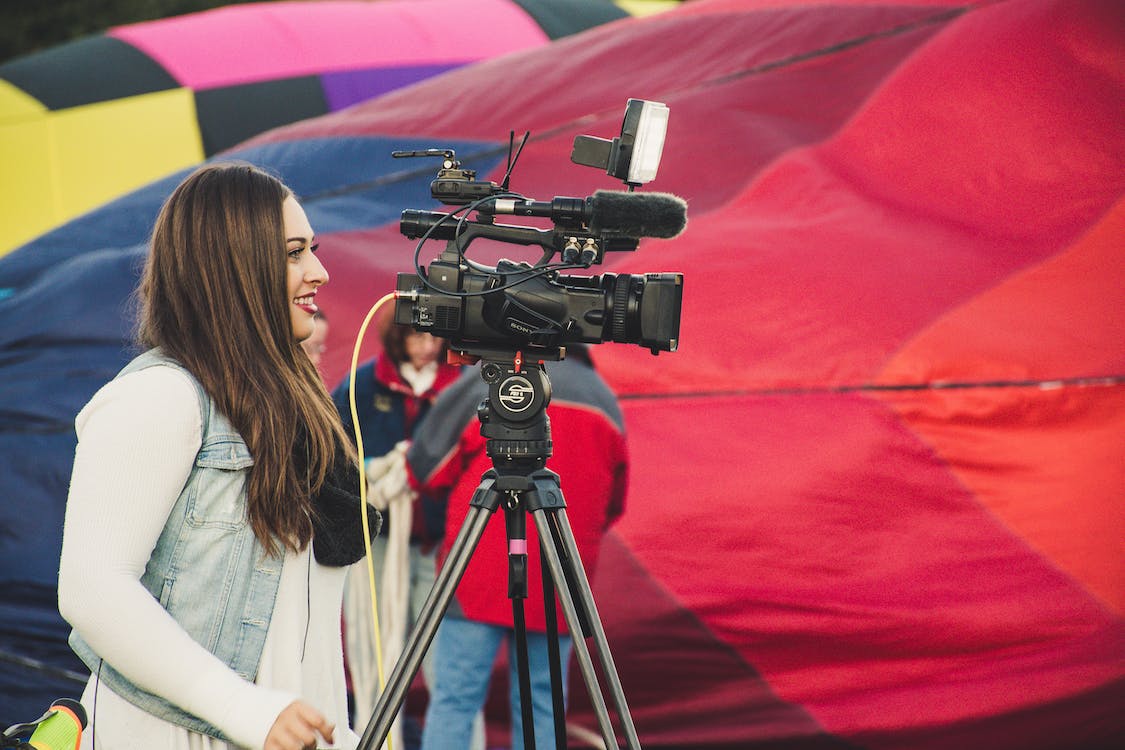
"Woman Talking Video" by Brett Sayles is in the Public Domain, CC0
In the past, media representation of women was often limited and stereotypical, and women were underrepresented in key roles and were often portrayed as sexual objects (Delgado, 2018). However, in recent years, media representation of women in leadership roles has increased and it has helped to challenge traditional gender norms and stereotypes that women are not as capable as men in leadership roles. This has had a positive impact on real-world, as it has made it more acceptable for women to pursue careers in traditionally male-dominated fields.
Conversely, media representation of men was historically often limited to the stereotype of the strong and dominant "masculine" man. However, in recent years, media representation of men has become more diverse and nuanced, with the portrayal of men in nurturing roles, and being emotional and sensitive. This has helped to challenge traditional gender norms and stereotypes that men should be unemotional and dominant.
Furthermore, media representation of LGBTQ+ individuals was often stereotypical, negative, or non-existent (Campbell & Carilli, 2013). However, in recent years, media representation of LGBTQ+ individuals has become more diverse and has helped to challenge traditional gender norms and stereotypes that there are only two genders and that they must conform to certain societal roles. This has had a positive impact on the real world as it has made it more acceptable for individuals to express their gender identity and sexual orientation in different ways.
Not only has media influenced gender constructs, but gender constructs have also influenced the media. Gender constructs have traditionally reinforced traditional gender roles and stereotypes, such as men being the breadwinners and women being the caretakers. This has been reflected in media representation of gender, where men are often depicted as strong and assertive, while women are often depicted as emotional and nurturing. This has reinforced these traditional gender roles and stereotypes in the real world, making it difficult for individuals to see alternatives to these stereotypes.
Gender constructs have traditionally limited the representation of women, people of color and LGBTQ+ individuals in media (e.g., Kelso, 2015). For example, in the past, media representation of women was often limited and stereotypical, and women were underrepresented in key roles and were often portrayed as sexual objects. Similarly, representation of people of color and LGBTQ+ individuals was often limited, stereotypical, or non-existent. These limitations in representation have reinforced societal views that certain groups are not as valuable or deserving of representation as others.
Despite this, there is evidence to suggest that media representation of gender has been moving in a more positive direction in recent years in terms of challenging traditional gender stereotypes and promoting diversity and equality. For example, there has been an increase in media representation of women in leadership roles, and of men in nurturing roles, challenging traditional gender norms and stereotypes. Additionally, media representation of LGBTQ+ individuals has become more diverse and inclusive and has helped to challenge traditional binary views of gender.
Still, the representation of gender in media is not perfect and there is still a long way to go. Media representation of women is still often limited and stereotypical, and women are perpetually underrepresented in key roles and are often portrayed as sexual objects. Additionally, representation of people of color and LGBTQ+ individuals is still not always inclusive or accurate, and harmful stereotypes and discrimination still exists (Kelso, 2015). Overall, it can be said that media representation of gender has been moving in a more positive direction in recent years, but there is still a long way to go in terms of promoting diversity, representation and challenging harmful stereotypes.
One area where media representation of gender is still lacking is in the representation of women. Research has shown that women are still underrepresented in key roles in media, such as lead characters and directors, and that they are often portrayed in stereotypical and limited ways. For example, women are often portrayed as sexual objects, and are less likely to be shown in positions of power and leadership. This can reinforce societal views that women are not as capable or deserving of these roles as men.
Another area where media representation of gender is still lacking is in the representation of people of color and LGBTQ+ individuals. Representation of these groups in media is still not always inclusive or accurate, and harmful stereotypes and discrimination still exists (Kelso, 2015). For example, representation of people of color in media is often limited and stereotypical, and they are often portrayed as criminals or as exotic "others." Similarly, representation of LGBTQ+ individuals in media is often limited, stereotypical, or non-existent, and harmful stereotypes and discrimination still exists.
Media can, however, play a role in correcting gender misinformation by providing accurate and diverse representation of gender and by challenging traditional gender norms and stereotypes. For example, media representation of transgender and non-binary individuals can help to challenge traditional binary views of gender and can make it more acceptable for people to express their gender in different ways. Media representation of women that challenges the idea that women should be passive and submissive can help to break down barriers for women in the real world and can make it more acceptable for them to be assertive and take on leadership roles (Elliott, Stead, Mavin, & Williams, 2016). Similarly, representation of men that challenges the idea that men should be unemotional can help to break down barriers for men in expressing their emotions.
In addition to these elements, media should strive to provide accurate information about gender-related issues, encourage dialogue and foster conversations about gender in the real world, and help correct gender misinformation by representing underrepresented groups in society. The accuracy of media representation of gender issues varies widely and whereas some forms of media may provide accurate representation of gender issues, others may perpetuate harmful stereotypes and misinformation.
For example, some forms of media, such as news media, may provide accurate and informative coverage of gender-related issues such as gender-based violence, discrimination, and the impact of societal norms on individuals and groups. Additionally, some entertainment media, such as movies and TV shows, may depict a wide range of gender identities and expressions and challenge traditional gender norms and stereotypes.
However, other forms of media, such as advertising, may perpetuate harmful stereotypes and misinformation about gender. For example, women are often depicted as passive and submissive, and men as unemotional in advertising. Additionally, representation of people of color and LGBTQ+ individuals is still not always inclusive or accurate, and harmful stereotypes and discrimination still exists. Overall, it can be said that media representation of gender issues varies widely and is not always accurate. While some forms of media, such as news media, may provide accurate and informative coverage of gender-related issues, others, such as advertising, may perpetuate harmful stereotypes and misinformation about gender.
Additionally, media representation of gender issues can be influenced by the creators and producers of the media. For example, representation of gender issues in media created by women, people of color and LGBTQ+ individuals may be different from representation of gender issues in media created by men or cisgender and heterosexual people.
In order to ensure accurate representation of gender issues in media, it is important to have a diverse group of creators, producers and writers who can bring different perspectives and experiences to the table. This can help to ensure that representation of gender issues in media is accurate and reflects the diverse experiences and identities of individuals and groups. Additionally, representation of gender issues in media should be informed by research and should avoid perpetuating stereotypes and misinformation.
It is important to be critical of media representation of gender issues and to call out inaccuracies and stereotypes when they occur. This can be done through engaging in dialogue and fostering conversations about gender issues in the real world and by pushing for more diverse and accurate representation of gender issues in media. Increasing the collaboration between media creators and experts in related fields such as gender studies, sociology, psychology and other related fields would also help to achieve accurate representation of gender issues in the media.
Additionally, media representation of gender issues can be improved by creating a more inclusive and diverse industry where underrepresented groups are given more opportunities and are better represented in decision-making roles. Similar to before, this can help to ensure that representation of gender issues in media is more diverse and inclusive and reflects the experiences and identities of a wide range of individuals and groups.
Lastly, media representation of gender issues can be improved by increasing the representation of people of color, LGBTQ+ individuals and other marginalized groups, and by providing accurate and diverse representation of gender identities and expressions. This can help to challenge traditional gender norms and stereotypes and promote diversity and inclusivity in media representation of gender issues.

"Bobbin on heap of film" by Dmitry Demidov is in the Public Domain, CC0
The portrayal of gender in film is a complex and nuanced topic that has been the subject of much debate and criticism. Historically, many films have been criticized for their portrayal of women as objectified and subservient to men, and for their portrayal of men as overly aggressive and dominant. Additionally, representation of LGBTQ+ characters and people of color in film has traditionally been limited and stereotypical. However, in recent years, there has been a push for more diverse and accurate representation of gender and other marginalized groups in film, and many films and filmmakers are making an effort to challenge these stereotypes and create more nuanced and realistic portrayals of gender. However, there is still a long way to go and much more to be done to ensure that all individuals are represented in a fair and accurate way in film.
Here are a few examples of both positive and negative portrayals of gender in film:
Positive portrayal:
- "The Favourite" (2018) directed by Yorgos Lanthimos, which features strong and complex female characters who challenge traditional gender roles and power dynamics.
- "Moonlight" (2016) directed by Barry Jenkins, which portrays the coming of age story of a young gay man in Miami, and the performances of the actors were critically acclaimed for their authenticity and vulnerability.
Negative portrayal:
- "The Wolf of Wall Street" (2013) directed by Martin Scorsese, which has been criticized for its portrayal of women as objects to be used and abused by the male characters.
- "Transformers" franchise, which has been criticized for its portrayal of women as damsels in distress and for its lack of representation of people of color among its main characters.
These examples are not exhaustive, and even movies that have been criticized for their portrayal of gender can still have positive elements or strong performances. Also, not all people see the same film through the same lens, so it can be a subjective topic. However, gender stereotypes are often portrayed in film in a way that reinforces traditional gender roles and expectations. For example, in many films, men are portrayed as strong, aggressive, and in control, while women are portrayed as passive, emotional, and in need of protection. These stereotypes can be seen in a wide variety of films from action movies to romantic comedies.
Additionally, characters in films are often portrayed in a way that reinforces stereotypes about race and ethnicity, sexual orientation, and other marginalized groups. For example, people of color are often portrayed in stereotypical roles and are underrepresented in leading roles, LGBTQ+ characters are often portrayed in stereotypical ways or are not represented at all.
In recent years, there has been a push for more diverse and accurate representation of gender and other marginalized groups in film, and many films and filmmakers are making an effort to challenge these stereotypes and create more nuanced and realistic portrayals of gender. This includes increasing the number of films that feature female protagonists, people of color, LGBTQ+ characters and people with disabilities. When a wider range of perspectives are represented, there is less likelihood that any one group would be reduced to a stereotype.
Another approach would be to hire more diverse writers and directors. People from marginalized groups are more likely to create stories and characters that challenge stereotypes. When a wider range of storytellers is represented in the film industry, there is a greater likelihood that films will be created that challenge such stereotypes. Furthermore, characters in films should be more than just a stereotype. They should have depth, complexity, and contradictions that make them feel like real people.
Audiences can also help reduce stereotypes by being more critical of the media they consume. By recognizing and challenging stereotypes in films, they can help to create demand for more diverse and nuanced representation. By educating people about the negative effects of stereotypes and the importance of representation, it can help to create a more informed and engaged audience that is less likely to accept stereotypes in films.

"Book Opened on White Surface Selective Focus Photography" by Caio is in the Public Domain, CC0
The representation of gender in literature is a complex and nuanced topic that, similar to film, has been the subject of much debate and criticism. Historically, many literary works have reinforced traditional gender roles and stereotypes, with men portrayed as strong and dominant, and women portrayed as passive and submissive. Additionally, representation of LGBTQ+ characters and people of color in literature has traditionally been limited and stereotypical.
However, in recent years, there has been a push for more diverse and accurate representation of gender and other marginalized groups in literature, and many authors and publishers are making an effort to challenge these stereotypes and create more nuanced and realistic portrayals of gender (Garcia, 2013). There are many examples of contemporary literature that provide a diverse range of perspectives and break free from traditional gender stereotypes (Poynter, 2019).
That being said, there is still a lot of work to be done in terms of representation in literature, and many books, old and new, continue to reinforce stereotypes (Kneeskern & Reeder, 2022). It's important to note that representation in literature is a crucial aspect, as literature can shape how we think and feel about ourselves and the world around us.
Here are a few examples of both positive and negative portrayals of gender in literature:
Positive portrayal:
- "The Handmaid's Tale" by Margaret Atwood, which portrays a dystopian society where women are treated as property and explores the resilience of female characters in the face of oppression.
- "The Color Purple" by Alice Walker, which tells the story of an African American woman living in the South during the 1930s and 1940s, and explores themes of gender, race, and class in a powerful and nuanced way.
Negative portrayal:
- "Pride and Prejudice" by Jane Austen, which is set in the 19th century and reinforces traditional gender roles and expectations for men and women.
- "The Catcher in the Rye" by J.D. Salinger, which has been criticized for its portrayal of women as shallow and inferior to men.
Gender stereotypes are often portrayed in literature in a way that reinforces traditional gender roles and expectations. For example, in many books, men are portrayed as strong, aggressive, and in control, while women are portrayed as passive, emotional, and in need of protection. These stereotypes can be seen in a wide variety of literary works, from classic novels to contemporary fiction.
Additionally, characters in literature are often portrayed in a way that reinforces stereotypes about race and ethnicity, sexual orientation, and other marginalized groups. For example, people of color are often portrayed in stereotypical roles and are underrepresented in leading roles, LGBTQ+ characters are often portrayed in stereotypical ways or are not represented at all.
In recent years, there has been a push for more diverse and accurate representation of gender and other marginalized groups in literature, and many authors and publishers are making an effort to challenge these stereotypes and create more nuanced and realistic portrayals of gender. However, there is still a long way to go and much more to be done to ensure that all individuals are represented in a fair and accurate way in literature, and that gender stereotypes are not reinforced.
Literature, like film, has the power to shape the way we think and feel about ourselves and the world around us, so it is crucial to have a diverse range of perspectives and stories that break free from traditional gender stereotypes.
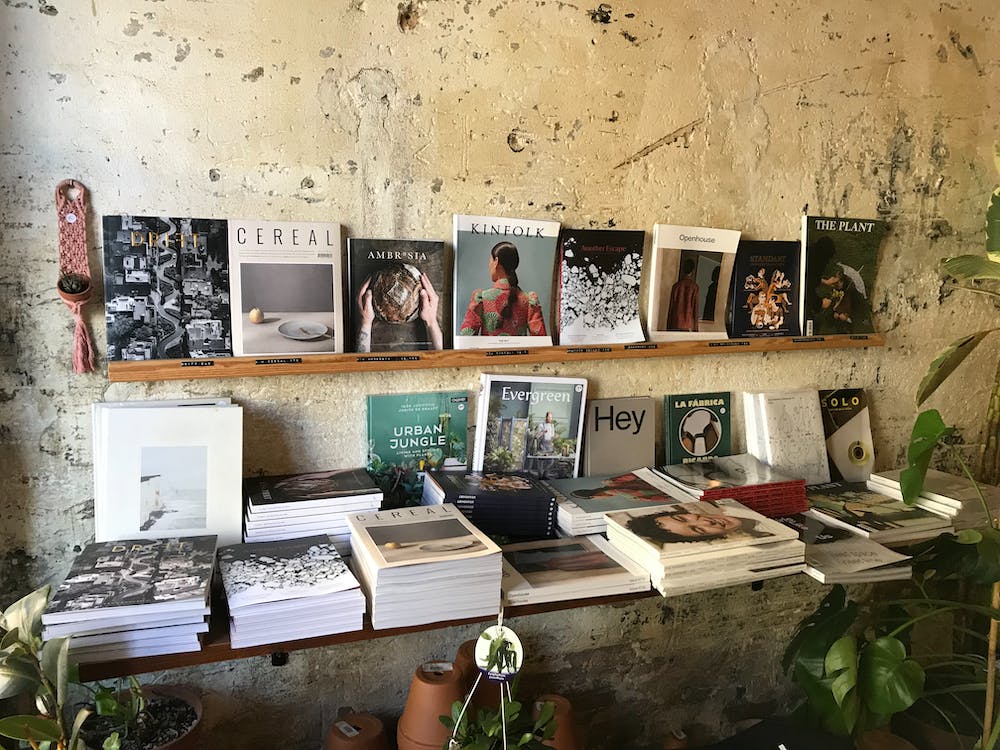
"Books and Photos on Floating Shelves" by Oleksandr Sapaiev is in the Public Domain, CC0
Magazines are a powerful tool for shaping our thoughts and beliefs about gender, as they often present carefully crafted and curated images, articles, and advertisements that are designed to appeal to their target audiences. One of the ways in which magazines can influence our thoughts on gender is through beauty standards. Magazines often feature images of models and celebrities with idealized beauty standards, particularly for women, and promote the idea that women should strive to look a certain way in order to be attractive and desirable.
Gender and beauty standards in magazines have a significant impact on shaping our beliefs about what is considered attractive and desirable, particularly for women. Magazines often present idealized images of women with certain physical characteristics, such as a thin waist, long legs, and clear skin, as the standard of beauty, and promote the idea that women should strive to attain these standards in order to be considered attractive and desirable.
However, this can lead to negative body image and low self-esteem, as women are constantly exposed to images of "perfect" bodies and beauty standards that are often unattainable and unrealistic. Moreover, this can also contribute to the sexualization of women, as the focus is placed on their physical appearance rather than their personalities, abilities, and experiences.
For example, ads for diet and weight-loss products often feature images of thin and toned women, reinforcing the idea that thinness is the ideal body type. These ads can contribute to negative body image and low self-esteem, as well as disordered eating habits and other related health issues. Ads for fragrances and perfumes often feature images of women in sexually suggestive or provocative poses, contributing to the sexualization of women and reinforcing harmful gender-based stereotypes. Also, ads for lingerie and undergarments often feature images of women in sexually suggestive or provocative poses, contributing to the sexualization of women and reinforcing harmful gender-based stereotypes.
In addition, beauty standards in magazines are often racially and ethnically specific and reinforce the idea that lighter skin and Eurocentric features are more desirable. This can contribute to the marginalization of women who do not conform to these beauty standards and reinforces harmful beauty standards that are based on discrimination and prejudice.
Magazines can also reinforce traditional gender roles and expectations by depicting men and women in stereotypical ways and presenting certain behaviors, lifestyles, and careers as being more appropriate or desirable for one gender over another. For example, magazines may depict men as strong, assertive, and career-focused, and women as nurturing, emotional, and primarily concerned with their appearance and relationships. This reinforces traditional gender roles that limit men and women's experiences, behaviors, and opportunities, and can contribute to the reinforcement of gender-based discrimination and prejudice.
Magazines also often feature articles and advertisements that promote certain products and lifestyles as being more appropriate or desirable for one gender over another, such as women's beauty and fashion products, or men's tools and gadgets. This reinforces the idea that certain interests, activities, and products are gendered, and can limit men and women's experiences and opportunities. Moreover, the representation of men and women in magazines can also influence our perceptions of what is considered normal or acceptable behavior for each gender and can contribute to the reinforcement of harmful gender-based stereotypes.
Magazines can also contribute to the sexualization of women by featuring sexually suggestive images and articles that objectify and reduce women to their physical appearance. Sexualization in magazines refers to the representation of individuals, particularly women, as sexual objects, rather than as whole and complex individuals with unique personalities, experiences, and abilities. This often involves the reduction of women to their bodies, the emphasis on their physical appearance, and the sexualization of their bodies through the use of provocative clothing, suggestive poses, and other sexualizing images.
Sexualization in magazines contributes to the objectification of women, as they are reduced to sexual objects for the pleasure of others and reinforces harmful gender-based stereotypes that women's worth is based on their physical appearance. This can also contribute to the marginalization and discrimination of women, as they are seen as less valuable and less deserving of respect based on their gender.
Moreover, the sexualization of women in magazines can also impact the self-esteem and body image of women and girls, as they are constantly exposed to images of idealized and sexualized bodies, which are often unattainable and unrealistic. This can contribute to negative body image and low self-esteem, as well as a range of other mental health issues.
By critically evaluating the messages about gender that are presented in magazines as they relate to beauty standards, traditional gender roles and expectations, the promotion of gendered products, and the sexualization of women, we can gain a deeper understanding of the ways in which the media shapes our thoughts and beliefs about gender and work towards a more inclusive and equitable understanding of gender.

"Street Lights" by Jose Francisco Fernandez Saura is in the Public Domain, CC0
Advertising often reinforces gender stereotypes, particularly in the way that products are marketed to men and women (Gogoleva, 2019). For example, women are often portrayed as being primarily concerned with beauty and appearance, while men are portrayed as being primarily concerned with power and status.
This marketing extends to suggesting that there are gendered products. Advertising often reinforces gender stereotypes by targeting certain products and services to men or women. For example, women are often targeted with ads for beauty products and diet plans, while men are targeted with ads for cars, tools, and other stereotypically "masculine" products. Such advertising often reinforces traditional gender roles by depicting men and women in stereotypical ways. For example, men may be portrayed as strong and successful, while women are often portrayed as passive, emotional, and in need of protection. There is also an element of sexual objectification present in advertising that reinforces stereotypes by objectifying and sexualizing women and using them to sell products (Bogt, Engels, Bogers, & Kloosterman, 2010). For example, women's bodies are often used to sell products such as cars, clothing, and beauty products.
Advertising often uses colors that are associated with a certain gender to target products (Wong & Hines, 2015). For example, blue is often associated with boys and pink with girls, which can reinforce stereotypes about gender and color preferences. The traditional association of pink with girls and blue with boys is a cultural construct that has evolved over time. In the past, pink was considered a masculine color and blue a feminine color. For example, in the late 19th and early 20th centuries, baby clothing was often made in pink for boys and blue for girls. This was due to cultural beliefs and fashion trends at the time, which considered pink to be a stronger and more assertive color, while blue was seen as delicate and dainty. However, in the 1940s, manufacturers began marketing toys, clothing, and other products specifically for girls in pink and for boys in blue. This marketing strategy became widely accepted and reinforced the association of pink with femininity and blue with masculinity.
The association of pink with femininity and blue with masculinity, however, is not biologically or scientifically based. These colors are simply cultural symbols that have been used to differentiate and stereotype gender roles. The rigid societal expectations of gender and how it should be represented through colors and other symbols can be harmful and limiting (Yeung & Wong, 2018). Nowadays, many people are starting to question and challenge the traditional gender-color association, and some are advocating for a more inclusive and diverse representation of gender.
Even the way we talk about and think about gender can also reinforce stereotypes. As Dutta (2020) points out, “global languages fall into three categories with respect to gender: gendered languages like Spanish (where nouns and pronouns have a gender), genderless languages such as Mandarin (where nouns and pronouns don’t have a marked gender), and natural gender languages like English (with gendered pronouns and genderless nouns). The gender structure of the language we’re speaking will have the effect of making us more or less aware of gender.”
According to Prior (2017), “English doesn’t really have a grammatical gender as many other languages do. It doesn’t have a masculine or a feminine for nouns, unless they refer to biological sex (e.g., woman, boy, Ms., etc.). So gendered language is commonly understood as language that has a bias towards a particular sex or social gender.
We do, however, use gendered language in English in a different manner. Instead of proscribing gender to common nouns, we use language that reinforces traditional gender roles and stereotypes which can perpetuate the idea that certain characteristics, roles, or occupations are appropriate for only for one gender. Using gendered language can make non-binary and transgender individuals feel invisible or marginalized as it reinforces the idea that there are only two genders, male and female.
Gendered language in this sense includes using gender-specific terms referring to professions or people, such as 'businessman' or 'waitress', or using the masculine pronouns (he, him, his) to refer to people in general, such as 'a doctor should know how to communicate with his patients'.”
Gendered language is often used in advertising to target specific audiences and reinforce gender stereotypes. For example, advertisements for products targeted at women often use language that is associated with femininity, such as words like "delicate," "gentle," "caring," and "nurturing." Advertisements for products targeted at men often use language that is associated with masculinity, such as words like "powerful," "strong," "determined," and "confident." This gendered language can also be seen in the way products are marketed and labeled, with products for women often being labeled "feminine" or "for her," and products for men often being labeled "masculine" or "for him." These forms of advertising can suggest that certain products or behaviors are only appropriate for one gender or the other and can reinforce the notion that men and women have distinct, rigid roles (Arima, 2003).
Using the pronoun "he" or "him" as the default pronoun implies that men are the norm (Kann, 1998), and that women and non-binary individuals are the exception. Using binary language such as "men and women" or "boys and girls" implies that there are only two sexes and two genders, which is not accurate and can exclude non-binary and gender non-conforming individuals (see Bigler et al., 2015).
Using gendered language to describe certain jobs or activities can reinforce stereotypes about what is appropriate or expected behavior for men and women. For example, the use of the term "fireman" instead of "firefighter" or "policeman" instead of "police officer" to refer to people who work in those professions implies that only men are qualified to hold those occupations. This can also include using gendered modifiers such as “lady doctor” instead of “doctor” to describe a female physician or “male nurse” instead of just “nurse” to describe a male nurse.
The use of such gendered modifiers causes a number of unnecessary implications. It can create a hierarchy between genders, implying that one gender is more important or valuable than the other. It can create a sense of otherness for individuals who don't conform to traditional gender roles. Using gendered language in children's books can reinforce the idea that certain colors, toys, activities, and interests are appropriate only for one gender, which can limit children's understanding of gender identity and expression (Davis & Reynolds, 2018). The use of gendered language in educational materials can reinforce the idea that certain subjects, fields, or career paths are appropriate only for one gender, which can limit students' understanding of the opportunities available to them.
The same is true for adults as well. Using gendered language to describe certain jobs or activities, or using gendered terms to describe personality traits, can reinforce stereotypes about what is appropriate or expected behavior for men and women. By using inclusive language, we can create a more inclusive and equitable environment for all people, regardless of their gender identity.
"Laptop and Books on Brown Wooden Table" by Ivan Samkov is in the Public Domain, CC0
According to Owen Ozier, an economist with the World Bank:
"Grammatical gender is only one among many of the linguistic structures that we use, and only one of the many psychological nudges that we experience on a constant basis. Even without changing language, shifts in policies and social norms can change levels of labor force participation, change levels of schooling, and the opportunities available to women."
In relation to this, Ozier and his colleague Pamela Jakiela of the University of Maryland published policy research working paper which identified the grammatical gender structure of over 4,000 languages, which accounts for 99% of the world’s population. They discovered that “38% of the world’s population speaks a gendered language” and furthermore that “gendered languages are associated with worse labor market participation rates for women and more regressive gender norms” (Jakiela & Ozier, 2018).
Arima, A. N. (2003). Gender stereotypes in Japanese television advertisements. Sex Roles, 49(1-2), 81–90.
Bigler, R. S., Leaper, C., McNamara, D.S., Fiske, S. T., Newcombe, N.S., Wolfe, J.M., Dhami, M. K., & Malmerb, K.J. (2015). Gendered language: psychological principles, evolving practices, and inclusive policies. Policy Insights from the Behavioral and Brain Sciences, 2(1), 187–194.
Bligh, M. C., Schlehofer, M. M., Casad, B. J., & Gaffney, A. M. (2012). Competent enough, but would you vote for her? Gender stereotypes and media influences on perceptions of women politicians. Journal of Applied Social Psychology, 42(3), 560–597.
Bogt, T. F. M., Engels, R. C. M., Bogers, S., & Kloosterman, M. (2010). “Shake it baby, shake it”: Media preferences, sexual attitudes and gender stereotypes among adolescents. Sex Roles, 63(11-12), 844–859.
Campbell, J., & Carilli, T. (2013). Queer media images: LGBT perspectives. Lexington Books.
Cernat, M. (2014). Deregulating markets, deregulating media: The globalization of gender stereotypes in the age of corporate media. Journal of Research in Gender Studies, 4(1), 895–904.
Coltrane, S., & Adams, M. (1997). Work–family imagery and gender stereotypes: Television and the reproduction of difference. Journal of Vocational Behavior, 50(2), 323–347.
Contois, E. J. H. (2020). Diners, dudes, and diets: How gender and power collide in food media and culture. The University of North Carolina Press.
Davis, L., & Reynolds, M. (2018). Gendered language and the educational gender gap. Economics Letters, 168(July), 46–48.
Delgado, A.D. V. (2018). The suffering of object woman: Consequences of sexual objectification of women in the media. Feminismo/s (Universidad de Alicante), 31, 167–186.
Elliott, C., Stead, V., Mavin, S., & Williams, J. (2016). Gender, media, and organization: Challenging mis(s)representations of women leaders and managers (Elliott, V. Stead, S. Mavin, & J. Williams, Eds.). Information Age Publishing.
Garcia, A. (2013). Critical foundations in young adult literature: Challenging genres (1st ed.). Sense Publishers.
Gogoleva, E. N. (2019). Gender stereotypes in television commercials as a gender inequality reflection. Ženŝina v Rossijskom Obŝestve, 1, 77–86.
Jakiela, P., & Ozier, O. (2018). Gendered language. Retrieved December 28, 2022 from http://www.worldbank.org/research.
Kann, M.E. (1998). A republic of men : The American founders, gendered language, and patriarchal politics. New York University Press.
Kelso, T. (2015). Still trapped in the U.S. media’s closet: Representations of gender-variant, pre-adolescent children. Journal of Homosexuality, 62(8), 1058–1097.
Khalil, A., & Dhanesh, G. S. (2020). Gender stereotypes in television advertising in the Middle East: Time for marketers and advertisers to step up. Business Horizons, 63(5), 671–679.
Kneeskern, E. E., & Reeder, P. A. (2022). Examining the impact of fiction literature on children’s gender stereotypes. Current Psychology (New Brunswick, N.J.), 41(3), 1472–1485.
Martin. R. (2017). Gender and emotion stereotypes in children’s television. Journal of Broadcasting & Electronic Media, 61(3), 499–517.
Painter-Morland, M. & Werhane, P. (2011). Leadership, Gender, and Organization (Werhane, Ed.; 1st ed. 2011.). Springer Netherlands.
Poynter, E. (2019). Cross-dressing in children’s adventure fiction: Does it always challenge gender stereotypes? International Journal of Applied Linguistics & English Literature, 8(4), 137–145.
Prior, J. (2017). Teachers, what is gendered language? Retrieved January 3, 2023 from britishcouncil.org/voices-magazine/what-is-gendered-language.
Reinhard, C. L. D., & Olson, C. J. (2017). Heroes, heroines, and everything in between : Challenging gender and sexuality stereotypes in children’s entertainment media (Reinhard & C. J. Olson, Eds.). Lexington Books.
Smith, P. K., & Steffgen, G. (2013). Cyberbullying through the new media: Findings from an international network (P.K. Smith & G. Steffgen, Eds.). Psychology Press.
Tabassum, N., & Nayak, B. S. (2021). Gender stereotypes and their impact on women’s career progressions from a managerial perspective. IIM Kozhikode Society & Management Review, 10(2), 192–208.
Trier-Bieniek, A. M. (2019). Gender and pop culture: A text-reader (Trier-Bieniek, Ed.; Second edition.). Brill.
Wenhold, H., & Harrison, K. (2021). Interviews exploring emerging adults’ everyday life gender norm experiences, media gender norm perceptions, and future gender norm expectations. Journal of Adult Development, 28(3), 207–220.
Wille, E., Gaspard, H., Trautwein, U., Oschatz, K., Scheiter, K., & Nagengast, B. (2018). Gender stereotypes in a children’s television program: Effects on girls’ and boys’ stereotype endorsement, math performance, motivational dispositions, and attitudes. Frontiers in Psychology, 9, 2435–2435.
Wong, W. I., & Hines, M. (2015). Effects of gender color-coding on toddlers’ gender-typical toy play. Archives of Sexual Behavior, 44(5), 1233–1242.
Yeung, S. P., & Wong, W. I. (2018). Gender labels on gender-neutral colors: Do they affect children’s color preferences and play performance? Sex Roles, 79(5-6), 260–272.