Chapter 5: Identity and sexuality
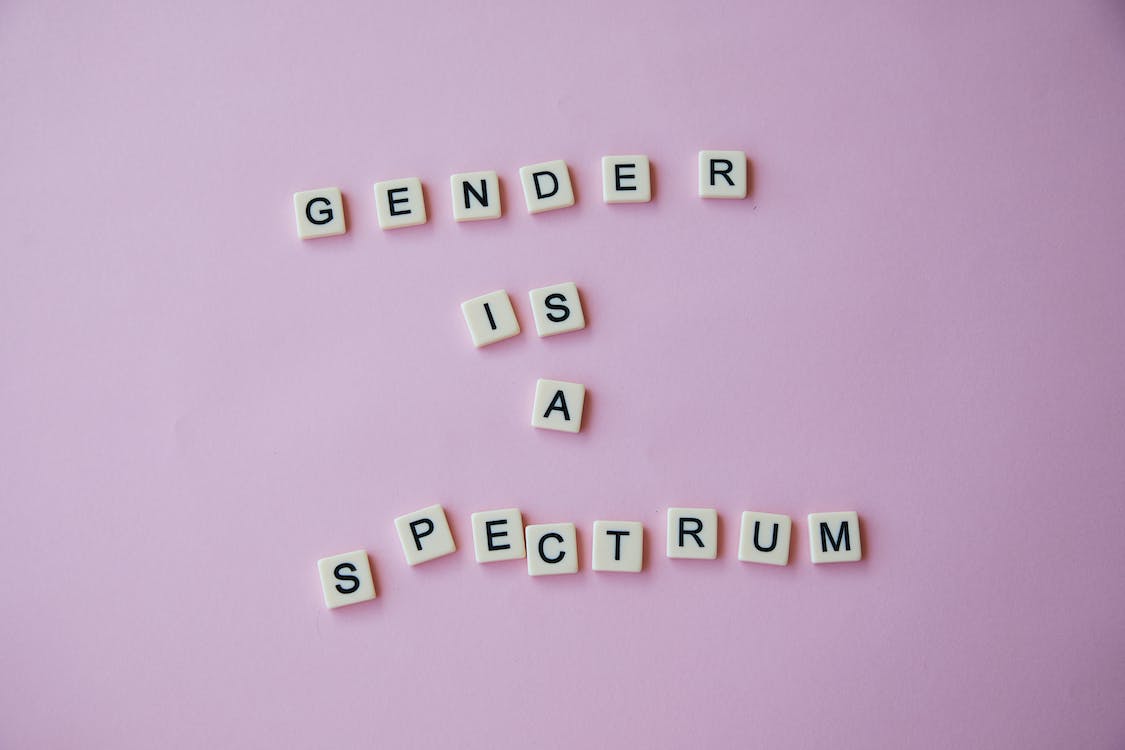
"Inscription Gender is a spectrum made of scrabble letters against pink background" by Laker is in the Public Domain, CC0
Although often used interchangeably, there are important distinctions among sex, gender identity, and sexuality. In this chapter we will be exploring these distinctions to highlight the complexity of one’s biological make-up and expression of his or her gender identity and related attributes.
An individual’s biological sex may or may not match up with their gender identity. At birth, babies are typically labeled as either male or female based on external genitalia or other factors, such as chromosomes and hormones. A child with XX chromosomes and a vulva is labeled as a girl; a child with XY chromosomes and a penis is labeled as a boy. The terms “assigned female at birth” or “assigned male at birth” reinforce that someone other than the child, typically a doctor, makes this determination for them. This label is then officially marked as their biological sex on their birth certificate.
In those situations where the sex of the child is unclear, such as with intersex conditions, doctors and parents must discuss what, if any, corrective measures could be taken to better align the child with either male or female characteristics. Surgery can be performed to either masculinize or feminize the external genitalia of the child, but this decision comes with great uncertainty and complex moral and ethical issues. If surgery is performed to masculinize ambiguous genitalia and the child later identifies as being male, then there are few issues. However, if ambiguous genitalia are transformed into a sex that the child later does not identify with, that person’s sense of identity can be complicated. Before any decisions are made, doctors will often want first to determine the composition of the child’s internal genitalia.
Being cisgender (often shortened to "cis") means that an individual's gender identity aligns with the sex they were assigned at birth. The prefix "cis-" comes from the Latin for "on this side of," which is used to indicate that someone's gender identity is on the same side as their assigned sex. For example, someone who was assigned male at birth and identifies as a man would be considered cisgender. Similarly, someone who was assigned female at birth and identifies as a woman would be considered cisgender. The term "cisgender" is often used as a contrast to "transgender," which refers to individuals whose gender identity does not align with the sex they were assigned at birth.
Cisgender development refers to the process by which an individual develops a gender identity that aligns with the sex they were assigned at birth. This process begins at birth, where individuals are assigned a sex based on physical characteristics such as chromosomes, hormones, and external genitalia.
As children grow and develop, they may begin to understand and internalize societal expectations and norms associated with their assigned sex. This can include things such as clothing, toys, activities, and behaviors that are considered appropriate for their gender. For cisgender individuals, this process of gender development is often uneventful and they grow up feeling comfortable and confident in their gender identity.
It is worth noting that cisgender is not a synonym of non-transgender, but a specific term that refers to the alignment between the gender identity and sex assigned at birth. Non-transgender could also include individuals who identify as non-binary or genderqueer, who do not align with the binary gender system of male or female.
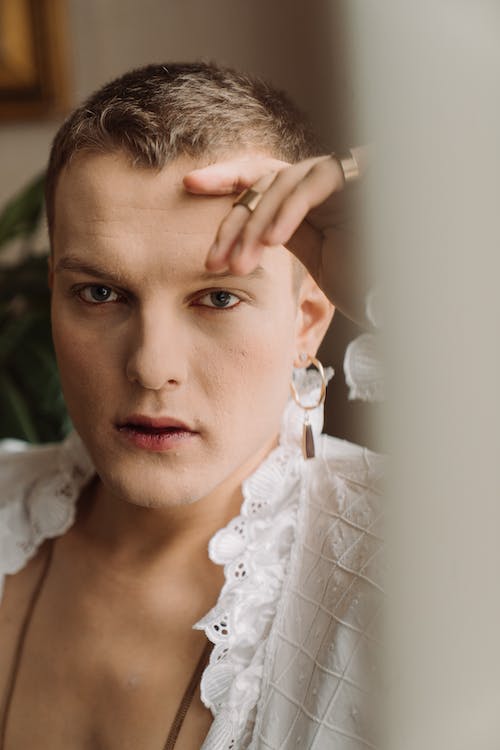
"Woman in White Floral Lace Top" by cottonbro studio is in the Public Domain, CC0
Gender identity refers to a person's internal sense of their own gender, which may be different from the sex they were assigned at birth. It is a personal understanding of oneself as male, female, a blend of both, or neither. Gender identity can also include the sense of one's own gender expression, or how they present themselves to the world through clothing, hairstyles, voice, and other factors.
Gender identity can develop at any age, but the process of understanding and expressing it may vary depending on the individual's age (Bussey, 2011). Children may begin to show an understanding of their gender identity as early as age 2 or 3. They may express a preference for toys, clothing, or activities that are traditionally associated with a specific gender. However, it's important to note that children's understanding of gender is still developing, and they may change their preferences over time.
Adolescents may begin to explore and experiment with their gender identity more explicitly. They may become more aware of the concept of gender fluidity and may come out as transgender or non-binary. During this stage, it is important for adolescents to have access to accurate information about gender identity, as well as supportive adults who can help them navigate this process.
For some people, their gender identity may be clearer and more solidified by adulthood, but for others, it may continue to evolve and change throughout their life. Adults may make changes to their name, pronouns, or appearance to align with their gender identity, or they may identify as gender fluid and not make any changes.
People may express their gender identity through a variety of means, including clothing (wearing clothing that is traditionally associated with their gender identity, hair (styling their hair in a way that is consistent with their gender identity), voice (changing their voice to match their gender identity), body modification (altering their bodies through hormone therapy, surgery or other means to match their gender identity), and even social cues (adopting mannerisms, names, pronouns and other social cues that align with their gender identity).
Some examples of gender identity include:
- Male: A person who identifies as a man, or whose gender identity aligns with the sex they were assigned at birth as male.
- Female: A person who identifies as a woman, or whose gender identity aligns with the sex they were assigned at birth as female.
- Transgender: A person whose gender identity is different from the sex they were assigned at birth. For example, a person assigned male at birth who identifies as a woman.
- Genderqueer: A person who identifies as neither a man nor a woman, or as a combination of both.
- Non-binary: A person whose gender identity is not exclusively male or female.
- Gender fluid: A person whose gender identity changes over time or depending on the situation.
- Agender: A person who identifies as having no gender.
In some cultures, gender is considered a binary concept, with only two distinct and opposite options (male or female), while in others, there may be a greater recognition and acceptance of a wider range of gender identities and expressions. Additionally, some cultures may have specific traditional roles, customs, or practices associated with different genders.
There are many cultures around the world that have historically recognized and accepted more than two genders. For example, in many Indigenous cultures in North America there has been a variety of gender roles and identities beyond the binary of male and female. These can include the Two-Spirit identity, which is a term used by some Indigenous people to describe those who embody both male and female spirits.
In some traditional cultures in India and Nepal, the hijra community recognizes a third gender, which includes individuals who are assigned male at birth but identify as neither male nor female. Hijras have a long and rich cultural history and play important roles in many traditional events such as weddings and births.
In Samoa, the fa'afafine community recognizes a third gender, which includes individuals who are assigned male at birth but identify as feminine and have roles traditionally associated with women.
In many cultures in Africa, there is a recognition of a third gender or multiple genders. In the Buganda kingdom of Uganda, for example, the akavaana people are recognized as a third gender. In the Zulu culture, individuals who are biologically male but have feminine gender expressions are recognized as a third gender.
Social norms around gender can also greatly influence how individuals understand and express their own gender identities. In many societies, there are strict social norms that dictate how individuals of different genders should behave, dress, and interact with others. These norms can be extremely limiting and can make it difficult for individuals who do not conform to them to express their true selves. For example, there are strict norms around what is considered "masculine" or "feminine" behavior and appearance, and individuals who do not conform to these norms may face discrimination or harassment. Understanding and respecting these cultural and social variations is important for fostering cultural sensitivity and inclusivity.
Respecting someone's gender identity is important because it is an essential aspect of a person's self-identity and sense of self-worth. Everyone has the right to define their own gender identity and to be recognized and respected for who they are. When someone's gender identity is not respected, it can lead to a range of negative consequences. For example, people who do not conform to traditional gender norms may face discrimination, harassment, and violence based on their gender identity.
When someone's gender identity is not respected it can lead to feelings of isolation, depression, and anxiety. They may have difficulty accessing healthcare and other services that are appropriate for their gender. In addition, it can lead to feelings of self-doubt and low self-esteem.
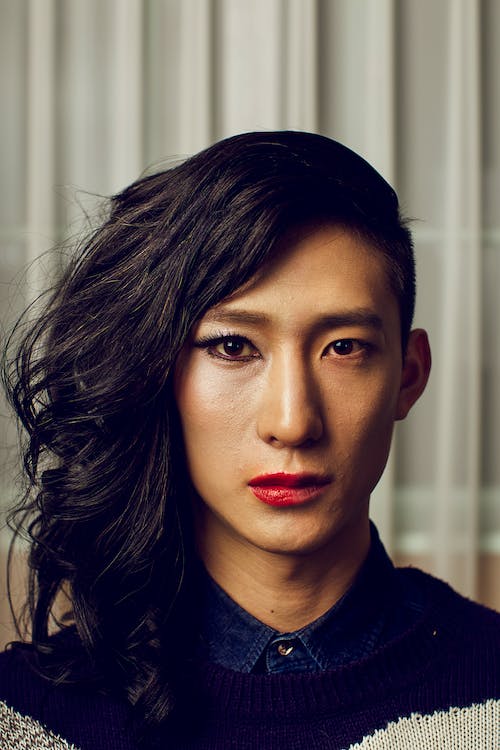
"Person With Man and Woman Face" by Dean Shim is in the Public Domain, CC0
Being transgender means that a person's gender identity, or the sense of themselves as male, female, or something else, does not align with the sex they were assigned at birth. For example, a person who was assigned male at birth but identifies as a woman is transgender.
Transgender individuals may express their gender identity in a variety of ways. Some may choose to physically transition by taking hormones or undergoing surgery to alter their bodies to be more congruent with their gender identity. Physical transition can include hormone therapy, which can involve taking estrogen or testosterone to feminize or masculinize the body, respectively. Gender confirmation surgery, also known as gender reassignment surgery, can include a range of procedures such as chest reconstruction, hysterectomy, phalloplasty or vaginoplasty.
Chest reconstruction, also known as top surgery, is a surgical procedure performed on individuals who are transgender or non-binary to alter the appearance of their chest to better align with their gender identity. The goal of chest reconstruction surgery is to create a chest that is flatter, less prominent, or more typically masculine or feminine in appearance. The type of surgical technique used will depend on various factors including the amount of breast tissue present, the patient's skin quality, and the desired outcome. Chest reconstruction surgery is typically performed on an outpatient basis and may require several weeks of recovery.
A hysterectomy is a surgical procedure to remove the uterus (womb). It may also involve removal of the cervix, ovaries, and/or fallopian tubes. In the context of gender transition, a hysterectomy may be performed as part of a gender affirming surgery for individuals who are transgender or non-binary and identify as male. For these individuals, the removal of the uterus and other reproductive organs can help to create a body that is more consistent with their gender identity.
Phalloplasty is a surgical procedure to construct a phallus (penis) for individuals who are transgender or non-binary and identify as male. The goal of phalloplasty is to create a phallus that is aesthetically pleasing and functional, allowing for standing urination and sexual activity. Conversely, vaginoplasty is a surgical procedure to construct a vagina for individuals who are transgender or non-binary and identify as female. The goal of vaginoplasty is to create a vagina that is aesthetically pleasing and functional, allowing for sexual activity and menstrual management.
Recovery from these types of surgical procedures can be lengthy, and individuals may need to stay in the hospital for several days to several weeks depending on the specific procedure and their overall health. As with any surgery, there are risks and potential complications associated with gender confirmation surgeries and individuals should carefully consider their options and consult with a qualified healthcare provider to determine the best approach for their needs and goals. Additionally, it is important to recognize that surgery is just one aspect of the gender transition process and individuals may choose to pursue other medical and social transition options as well.
Others may choose to express their gender identity through clothing, hairstyles, name changes, and other forms of self-expression. Many transgender individuals also choose to adopt a new name, pronouns and other identity markers that align with their gender identity.
It is difficult to estimate the exact number of people who identify as transgender, as data on transgender individuals are often limited and under-reported. Furthermore, the definition of transgender can vary and some people who identify as transgender may not be included in official statistics.
However, according to the Williams Institute at UCLA School of Law, an estimated 0.6% of the U.S adult population identifies as transgender. In the United Kingdom, estimates from the Office for National Statistics (ONS) suggested that in 2019, around 1% of the population identified as transgender. Other countries have different percentages, but the trend is that the number of people identifying as transgender is increasing worldwide, as more people feel comfortable and safe to come out and express their gender identity.
It is important to note that these numbers are estimates and that the actual number of transgender individuals is likely to be higher, due to underreporting and lack of data. Additionally, these numbers are based on self-reported data and may not include individuals who have not yet come out or are not aware of the term transgender.
The transgender movement (see Faye, 2022) is a social, political, and cultural movement that aims to advance the rights and acceptance of transgender people. The movement has a long history that dates back to the early 20th century, but it has gained increasing visibility and momentum in recent years.
The movement seeks to raise awareness about the experiences and challenges faced by transgender individuals, and to advocate for laws and policies that protect their rights and improve their well-being. This includes advocating for legal recognition of their gender identity, access to healthcare, and protection from discrimination in areas such as employment, housing, and education.
The movement also aims to challenge societal norms and stereotypes surrounding gender, and to promote a more inclusive and accepting culture for transgender individuals. This often involves educating the public about the diversity of gender identities and expressions and working to dismantle the prejudice and discrimination that transgender people face.
The movement is led by transgender individuals and allies, who use a variety of tactics such as protests, lobbying, legal action, and media campaigns to achieve their goals. The movement is also closely connected with the broader LGBTQ+ movement and intersects with other social justice movements, such as the feminist movement and the racial justice movement.
Sexual identity refers to a person's sense of self in terms of their sexual attraction, behavior, and orientation. It encompasses aspects such as sexual attraction to certain genders, sexual behavior, and sexual fantasy, and it can also include romantic attraction. A person's sexual identity may be consistent over time or it may change at different points in their life.
Social norms are the unwritten rules and expectations that society has for how people should behave and interact with one another. These norms can include beliefs about gender roles, relationships, and sexuality. Sexuality is a way that people express themselves and show affection to others. It includes things like how we feel about ourselves, how we feel about other people, and how we show affection to others. It is important for everyone to understand and respect their own sexuality as well as the sexuality of others.
When it comes to sexuality, social norms can have a big impact on how people view and express their own sexuality, as well as how they view and interact with others who have different sexual orientations and practices. For example, some social norms may disapprove of same-sex relationships or premarital sex while others may promote strict gender roles or discourage open discussions about sexual health.
It is important to be aware of the social norms around sexuality and to question them if they don't align with one's own values and beliefs. It's also important to be respectful of others and not to judge or discriminate based on their sexual orientations or practices.
Some common sexual identities include:
- Heterosexual (straight), attracted to people of the opposite gender
- Homosexual (gay or lesbian), attracted to people of the same gender
- Bisexual, attracted to people of the same and different gender
- Pansexual, attracted to all gender identities and sexes
- Asexual, having little or no sexual attraction to others
- Queer, a term used by some as a non-specific and inclusive term to describe non-heteronormative sexual identities
It is important to note that sexual identity is separate from gender identity and a person's gender expression, as a person can identify with any sexual identity regardless of their gender identity or expression. Furthermore, people may express their sexual identity in a variety of ways. For example, some people may choose to share their sexual identity with others, a process often referred to as "coming out."
These identities differ in their views of gender and gender identity. For example, being pansexual means that a person is attracted to people of all gender identities and expressions, regardless of whether they are male, female, transgender, gender non-conforming, or any other gender identity. Pansexual people do not see gender as a factor in their attraction to others, and are attracted to people based on their personalities, interests, and other qualities. This sexual orientation can also be described as "gender-blind" or "gender-neutral," as pansexual individuals view gender as irrelevant to their sexual attraction. For pansexual individuals, sexual orientation and gender identity are separate aspects of a person's identity, and being pansexual does not necessarily mean that a person identifies as any particular gender.
Others may choose to pursue romantic and/or sexual relationships with individuals whose gender aligns with their sexual identity. People may adopt certain mannerisms, behaviors, or social cues that align with their sexual identity. Some may choose to display symbols, such as rainbow flag, that represent their sexual identity and show their support for the LGBTQ+ community. Additionally, some people may become involved in activism or advocacy work related to their sexual identity or the LGBTQ+ community.
Not everyone feels safe to express their sexual identity and some people may not be able to express it publicly due to societal pressures, discrimination, or other reasons. There can be many social pressures that lead people to hide or not fully express their sexuality. For example, people who identify as LGBTQ+ may face discrimination, harassment, and violence because of their sexuality. This can lead them to hide their sexuality to avoid these negative consequences.
Others may be afraid of how their family, friends, or community will react to their sexuality. They may be concerned that they will be rejected or lose important relationships if they come out. Society often has certain expectations for how people should behave and express their sexuality. For example, there may be pressure to conform to traditional gender roles or to be in a heterosexual relationship. People who don't conform to these expectations may feel pressure to hide their sexuality. Internalized oppression is when an individual absorbs the negative messages that society sends about their marginalized group and begins to believe them. Unfortunately, many people may not have access to education about sexuality, which can make them feel ashamed or embarrassed about their own sexuality or lead them to not know how to express it.
There are variations in the ways in which different cultures understand, define, and express sexual orientation. In some cultures, sexual orientation is considered a binary concept, with only two distinct options (heterosexual or homosexual), while in others there may be a greater recognition and acceptance of a wider range of sexual orientations. Additionally, some cultures may have specific traditional roles, customs, or practices associated with different sexual orientations. Understanding and respecting these cultural variations is important for fostering cultural sensitivity and inclusivity. For example, some cultures may not have a specific word or concept for sexual identity or may have different ways of articulating it. Regardless, sexual identity is understood, defined, and studied by different groups of people. These perspectives can vary widely and can be influenced by factors such as cultural background, religion, politics, and personal beliefs.
One perspective on sexual identity is that it is a fixed and innate aspect of an individual's identity, similar to their biological sex. This perspective is often associated with the idea of "born this way" and is commonly held by many members of the LGBTQ+ community.
Another perspective on sexual identity is that it is a social construct, shaped by cultural and societal factors. This perspective is often associated with the idea that sexual orientation is a learned behavior and is commonly held by some sociologists, anthropologists and feminist theorists.
A third perspective is that sexual identity is fluid and can change over time. This perspective is often associated with the idea that sexual orientation is not fixed and can vary depending on the individual's experiences, environment, and personal development.
A fourth perspective is that sexual identity is a personal choice, something that individuals have the power to change if they want to. This perspective is often associated with conservative religious groups and individuals who advocate for conversion therapy.
It is worth noting that these perspectives are not mutually exclusive and individuals may hold multiple perspectives at the same time. It's also important to note that these perspectives can be influenced by other factors such as culture, society, and personal beliefs.
Throughout history, there have been many changes in how sexuality is expressed and viewed. In ancient civilizations, sexuality was often viewed as a natural and integral part of life. Many ancient societies, such as the Greeks and Romans, had more open attitudes towards same-sex relationships and gender fluidity.
During the Middle Ages, sexuality was often viewed as something to be repressed and controlled. This was partly due to the influence of Christianity and the Church. However, during the Renaissance, there was a resurgence of interest in sexuality and sensuality.
The Victorian era was characterized by a strict moral code and a focus on modesty and restraint. Sexuality was seen as something that should only happen within the confines of marriage and for the purpose of procreation.
During the 20th century, there were many changes in how sexuality was viewed and expressed. The rise of the feminist and LGBTQ+ rights movements led to a more open and inclusive society. There were also many scientific and medical advancements that improved understanding of sexuality. Today, there is a growing acceptance of diverse sexual orientations and identities, and people are more open to expressing their sexuality.
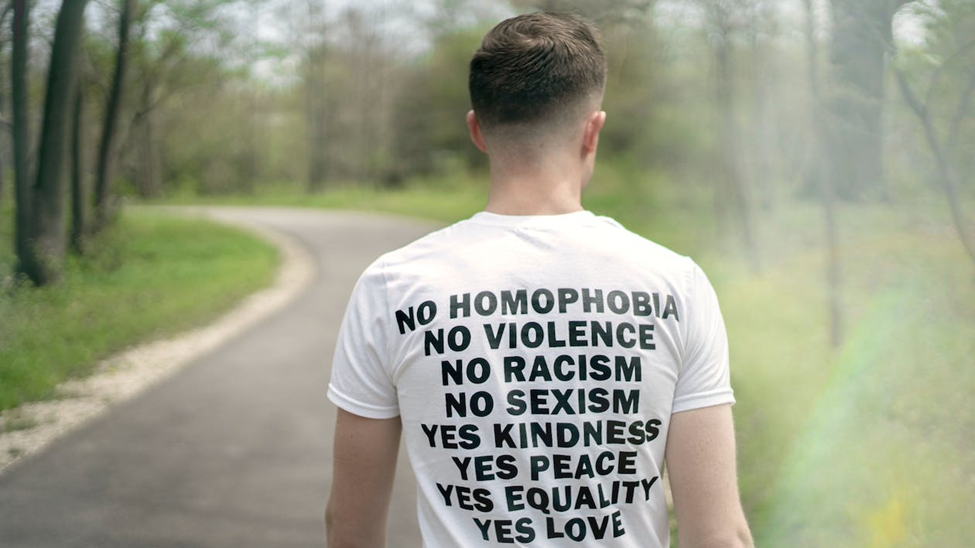
"Photo of a Person Wearing Printed Crew-neck T-shirt" by Nicholas Swatz is in the Public Domain, CC0
Overall, understanding the competing perspectives on sexual identity is important for fostering a deeper understanding and acceptance of diverse sexual identities. It's also important to recognize that individuals have the right to define their own sexual identity and to be respected for it.
Gender fluid is a term used to describe a person whose gender identity is not fixed and can change over time or depending on the situation. A person who identifies as gender fluid may experience a fluidity between multiple genders or may identify as having no gender at all. This can include feeling like a mix of different genders or feeling like one gender some days and a different gender on other days.
Someone who is gender fluid may express their gender identity through a combination of masculine, feminine, or androgynous characteristics, and may or may not choose to express their gender identity through clothing, hairstyles, voice, and other means. Gender fluidity is also separate from sexual orientation and a person can identify as gender fluid regardless of their sexual orientation.
Furthermore, some people may identify as one gender in some contexts and another in different contexts. For example, an individual may identify as a man in a professional setting and as a woman in a personal setting. Another example would be someone who identifies as both a man and a woman simultaneously. An individual who identifies as gender fluid may also present themselves differently depending on how they are feeling or what they are doing, such as by switching between traditionally masculine and feminine clothing or pronouns. It's important to remember that gender fluidity can manifest in many different ways and is unique to each individual.
Gender fluidity can be present in people of all ages, including children, adolescents and adults. However, the ways in which it is expressed and understood can vary depending on a person's age. Children may express gender fluidity by experimenting with different clothing, toys, or activities that are traditionally associated with a different gender. They may also use different pronouns or names to describe themselves or express a desire to be a different gender. Adolescents may be more aware of the concept of gender fluidity and may begin to explore and experiment with their own gender identity. They may also be more vocal about their gender identity and may come out as gender fluid to their friends, family, and community. Adults may have a more developed understanding of their gender identity and may express it in a variety of ways. They may change their name, pronouns, or appearance to align with their gender identity or they may identify as gender fluid and not make any changes to their appearance or name.
It is important for adults, especially parents and caregivers, to be aware of and understand the concept of gender fluidity. They should be supportive and respectful of a child or adolescent’s exploration of their gender identity and provide them with the necessary resources and guidance to understand and express themselves.
There are several theories that attempt to explain the phenomenon of gender fluidity. For example, social construction theory (Berger & Luckmann, 1966) argues that gender is not an inherent characteristic, but rather a product of social and cultural influences. According to this theory, gender fluidity is a result of the fluidity and changeability of societal constructions of gender. Furthermore, gender is constructed and maintained through social practices and cultural norms, such as language, media, education, and laws.
From this perspective, gender fluidity can be seen as a result of the fluidity and changeability of societal constructions of gender. When people identify as gender fluid, they are challenging the idea that there are only two fixed and distinct genders (e.g., male and female) and that one's gender identity must align with their sex assigned at birth. Instead, they are expressing that their gender identity may change over time or can exist in multiple states at once, and that it doesn't have to align with societal norms and expectations.
Social construction theory also highlights the role of power dynamics in shaping gender identities and expressions. It argues that dominant groups in society (such as cisgender, heterosexual men) have more power to define and enforce societal norms and expectations of gender, while marginalized groups (such as transgender and gender non-conforming individuals) have less power to do so. Therefore, the theory suggests that gender fluidity can be seen as a form of resistance against the societal norms that limit and restrict gender identities and expressions.
Butler (2011) argues in her gender performativity theory that gender is a performative act that is constantly being performed and re-performed. People who identify as gender fluid are seen as challenging the notion of a fixed gender identity. According to this theory, gender is not an inherent characteristic, but something that is learned and repeated through social interactions, such as language, dress, and behavior.
From this perspective, people who identify as gender fluid can be seen as challenging the notion of a fixed gender identity. They may express their gender in a variety of ways, depending on the context or situation, and may not conform to traditional societal expectations of gender. By not adhering to traditional gender norms and expectations, they are calling into question the idea that gender is something that is fixed and unchanging.
According to Butler, gender is not simply a reflection of biological sex, but rather a series of learned and repeated behaviors and social cues that are associated with being male or female. These behaviors and cues, known as "gender performatives," are performed by individuals in order to align with social expectations and conform to dominant norms and expectations of gender.
Gender performativity refers to the notion that gender is not an inherent or biological characteristic but rather a social and cultural construction that is performed and enacted through various actions, expressions, and cultural norms. Gender performatives are the various practices, behaviors, and expressions through which individuals perform and reinforce their gender identity in everyday life. These actions serve to reinforce cultural norms and expectations about what it means to be male or female, masculine or feminine.
Examples of gender performatives can include physical appearance and clothing choices that align with cultural expectations of masculinity or femininity, speech patterns and vocal inflection that are associated with a particular gender, body language and mannerisms that are seen as masculine or feminine, occupational and leisure activities that are gendered, and even personal grooming practices and beauty routines that conform to cultural norms of gender. These actions and expressions can vary across cultures and change over time, but they all serve to create and reinforce expectations about gender identity and expression.
Butler argues that gender performativity is both a constraint on individual freedom and a source of power, as individuals are both restricted by cultural norms and expectations and able to use gender performatives to resist and subvert those norms. The theory of gender performativity highlights the social and cultural construction of gender and has been influential in shaping understandings of gender identity, sexual orientation, and the ways in which gender affects social interaction and power dynamics.
Furthermore, gender performativity theory also emphasizes the role of power in shaping gender identities and expressions. It suggests that gender is not only performed by individuals but also imposed by social and cultural norms, through institutions such as the state, media, and education. Therefore, gender fluidity can be seen as a way of resisting these societal norms and expectations of gender and creating new possibilities for gender expression.
Along these same lines, queer theory is an approach to studying sexuality and gender that challenges the notion of fixed categories of identity and instead focuses on the fluidity and multiplicity of human experience (Stewart, 2017). Queer theorists argue that gender fluidity is a natural and valid aspect of human experience and that the societal norms that define gender as binary and fixed, are restrictive and oppressive.
Queer theory is a critical framework that challenges traditional ideas about gender and sexuality. It asserts that gender and sexual identity are not fixed or natural but are instead constructed through social and cultural norms. Queer theory suggests that individuals have the ability to perform or express their gender and sexuality in fluid, non-binary ways. In this sense, queer theory is closely linked to discussions of gender identity, as it argues that the ways in which individuals understand and experience their gender is shaped by cultural norms and is open to change and reinterpretation.
From this perspective, people who identify as gender fluid can be seen as challenging the societal norms that define and limit gender identities and expressions. By expressing their gender in a fluid and non-binary way, they are creating new possibilities for gender and rejecting the societal expectation that one's gender must align with their sex assigned at birth and adhere to traditional gender roles.
Queer theory also emphasizes the role of power and marginalization in shaping gender identities and expressions. It suggests that societal norms and expectations of gender are often used to maintain the power of dominant groups, while oppressing and marginalizing those who do not conform to these norms. Therefore, gender fluidity can be seen as a form of resistance against these societal norms and a way of creating a more inclusive and accepting society.
Queer theory, like any other academic field, has faced various criticisms over the years. For example, some critics argue that the concepts and language used in queer theory can be vague and difficult to understand, making it difficult for people outside of academia to engage with the ideas. Others argue that queer theory can sometimes be guilty of essentializing gender and sexuality, suggesting that there are fixed, innate qualities that make someone queer. Critics also point out that queer theory often focuses on the experiences of white, middle-class individuals and neglects the experiences of people of color and those from different socio-economic backgrounds.
Further critiques of queer theory include that it places too much emphasis on individual agency and not enough on the impact of larger social, political, and cultural systems on people's experiences of gender and sexuality. Others even argue that queer theory can be seen as politically ineffectual because it focuses too much on academic debates and not enough on real-world activism and change. Naturally, these criticisms should be taken into consideration when engaging with queer theory, but it is also important to remember that queer theory has made significant contributions to our understanding of gender and sexuality and continues to be an important field of study.
Other researchers have proposed that gender fluidity is a result of biological or psychological factors. For example, some scientists have suggested that gender fluidity may be related to differences in brain structure or hormonal levels (Kurth, Gaser, Sanchez, & Luders, 2022). Studies have shown that there are structural differences in the brains of transgender and cisgender individuals, which suggests that brain structure may play a role in shaping gender identity (Uribe, de Filippi, Sanz-Perl, Junque, Gomez-Gil, Kringelbach, Guillamon, & Deco, 2022). This suggests that brain structure may be a contributing factor in transgender individuals' experiences of gender incongruence.
While there is some evidence to suggest that brain structure may play a role in shaping gender identity, it's not the only factor. Gender identity is a complex phenomenon that is influenced by a variety of factors, including social, cultural, and environmental factors, as well as biological factors. Therefore, it is important to take a holistic approach when understanding gender identity. Furthermore, many theories of gender fluidity have been developed by and are mainly focused on Western societies and as such may not be as applicable to other cultures and societies.
Being non-binary, also known as genderqueer or gender diverse, is a term used to describe a person whose gender identity is not exclusively male or female. A non-binary person may identify as both a man and a woman, as neither, or as a different gender altogether. Non-binary people may also use gender-neutral pronouns such as "they/them" instead of "he/him" or "she/her." Being non-binary is distinct from sexual orientation and a person can identify as non-binary regardless of their sexual orientation.
Non-binary people may also experience a fluidity in their gender identity, meaning that their identity can change over time, or depending on the situation. Some people may identify as non-binary permanently, while others may use the term at different moments of their lives.
The concept of non-binary gender identities has a long history in many cultures around the world. In many Indigenous cultures around the world, for example, the concept of non-binary gender identities has been present for centuries. Many Indigenous cultures have long recognized the existence of multiple gender identities, including those that do not align with the binary of male and female.
In Western cultures, the concept of non-binary gender identities has been present for at least the last century. The earliest recorded use of the term "non-binary" was in the 1990s, in an article by a person who identified as androgynous, as a way to describe a gender identity that was not exclusively male or female.
In recent years, there has been an increase in visibility and acceptance of non-binary gender identities, especially in the forms of television shows, movies, and web series, which have helped to break down stereotypes and increase understanding and acceptance of non-binary gender identities.
Contemporarily, there has been a greater inclusion in the media of non-binary characters in film, television, and literature. In government, some countries and regions have begun to recognize non-binary identities on legal documents like passports and ID cards. In education, there has been a push for more inclusive curriculums and resources that acknowledge and respect non-binary identities. In healthcare, there has been a growing awareness of the need for healthcare professionals to be trained in providing affirming care for non-binary individuals.
Despite the progress, non-binary individuals still face discrimination and barriers to legal recognition, healthcare, and social acceptance. But, there is a growing movement to change this and create a more inclusive society that recognizes and respects the diversity of gender identities.
The history of non-binary gender identities is complex and varied and has been present in many cultures throughout history. Additionally, it is important to remember that everyone's gender identity is unique and personal and that there is no one way to be non-binary.
Currently, non-binary individuals are often underrepresented and marginalized in society and may face discrimination and lack of recognition. However, there has been increasing awareness and acceptance of non-binary identities in recent years, and some progress has been made in terms of non-binary representation in various areas. While there has been some progress in non-binary representation, more work needs to be done to ensure that non-binary individuals have the same rights, opportunities and respect as cis-gender individuals.
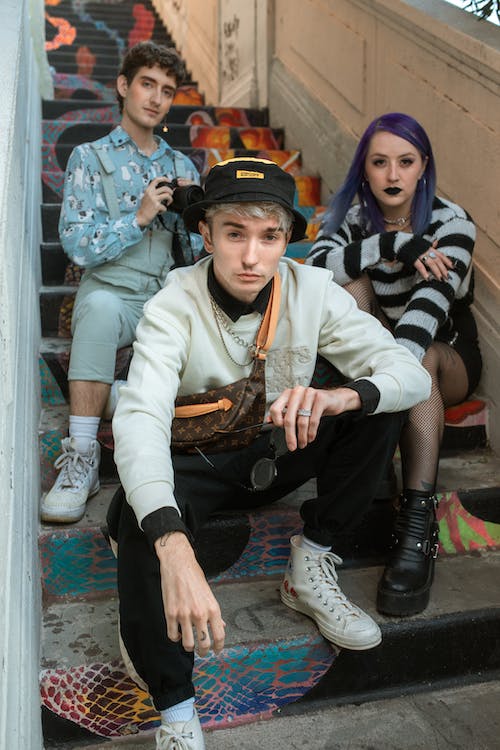
"Man in White Dress Shirt Sitting Beside Woman in Black and White Striped Jacket" by RODNAE Productions is in the Public Domain, CC0
Being gender queer means rejecting the traditional binary categories of male and female and embracing a more fluid and non-conforming gender identity. It refers to a person who identifies as neither male nor female, both male and female, or as a different gender entirely, and who may or may not choose to alter their physical appearance through clothing, hormone therapy, or surgery to express their gender identity.
Gender queer is a term that is often used by individuals who reject the idea of gender as a fixed and binary concept, and instead see gender as a spectrum of experiences and expressions. Gender queer people may experience their gender identity as being distinct from their biological sex and may feel that traditional gender categories do not accurately reflect their experiences and sense of self.
There are often stereotypes associated with gender queer individuals. Unfortunately, gender non-conforming individuals are often subjected to negative stereotypes and misconceptions, which can contribute to stigma, discrimination, and prejudice. Some common stereotypes of gender queer individuals include the belief that they are confused or indecisive about their gender identity, that they are attracted to the same sex, or that they are mentally ill. These stereotypes are based on misconceptions and lack of understanding of gender identity, and they do not accurately reflect the experiences of most gender queer individuals.
The concept of being gender queer is becoming increasingly recognized and accepted, and there is growing support for gender non-conforming individuals in many communities. However, gender queer individuals can still face significant challenges and discrimination, particularly in societies that are less accepting of gender diversity. Nevertheless, the visibility and advocacy of gender queer individuals and communities continues to grow and has helped to broaden our understanding of gender identity and expression.
Although these terms may seem to describe very similar individuals, there are several important distinctions among them. For example, gender queer and non-binary are related but distinct terms. Gender queer is a more political and activist-oriented identity that is often associated with a rejection of the gender binary and a desire to challenge and deconstruct traditional gender norms and expectations. It is a term that is often used by individuals who see gender as a fluid and non-conforming concept, and who may or may not choose to alter their physical appearance to express their gender identity.
Non-binary, on the other hand, is a term used to describe a gender identity that falls outside of the binary categories of male and female. Non-binary individuals may identify as both male and female, as neither male nor female, or as a different gender entirely. Non-binary is a term that is used to describe a specific type of gender identity, rather than a political stance or perspective.
Both gender queer and non-binary individuals share the experience of rejecting traditional gender categories and norms, and both terms are used to describe a more fluid and non-conforming understanding of gender. However, the terms are not interchangeable and may have different meanings for different individuals. It is important to respect each person's understanding of their own gender identity, and to recognize the diversity of experiences and expressions within the gender non-conforming community.
In a similar manner, gender fluid and non-binary are related but distinct terms. Gender fluid refers to a gender identity that is not fixed or constant, but instead changes and flows over time. A person who is gender fluid may feel that their gender identity changes in response to different social, psychological, or physical factors, and may express their gender in a variety of ways.
Non-binary, on the other hand, is a term used to describe a gender identity that falls outside of the binary categories of male and female. Non-binary individuals may identify as both male and female, as neither male nor female, or as a different gender entirely. Non-binary is a term that is used to describe a specific type of gender identity, rather than a changeable or fluid concept.
Both gender fluid and non-binary individuals reject the traditional binary understanding of gender and embrace a more fluid and non-conforming understanding of gender identity. However, the terms are not interchangeable and may have different meanings for different individuals. It is important to respect each person's understanding of their own gender identity, and to recognize the diversity of experiences and expressions within the gender non-conforming community.
Furthermore, being agender means having no gender identity or having a gender identity that is neutral. An agender person may identify as having no gender, or as being without a gender, and may feel that traditional gender categories do not accurately reflect their experiences and sense of self.
For some agender individuals, this means rejecting the idea of gender as a binary concept and embracing a more fluid and non-conforming understanding of gender. They may feel that they are not a man or a woman and may reject societal expectations and norms that are associated with gender.
It is important to note that being agender is a valid and legitimate gender identity, and that individuals who identify as agender should be respected and supported in their self-expression. However, individuals who identify as agender can still face challenges and discrimination, particularly in societies that are less accepting of gender diversity. Nevertheless, the visibility and advocacy of agender individuals and communities continues to grow and is helping to broaden our understanding of gender identity and expression.
Sexual orientation and gender identity are two separate but related aspects of a person's identity. Sexual orientation refers to a person's emotional, romantic, and/or sexual attraction to other people. It encompasses the way a person experiences and expresses themselves in terms of their sexual and romantic desires. Some common sexual orientations include heterosexual, homosexual, bisexual, pansexual, asexual, and queer.
Gender identity, on the other hand, refers to a person's internal sense of their own gender, which may be different from the sex they were assigned at birth. It is a personal understanding of oneself as male, female, a blend of both, or neither.
Sexual orientation also refers to a person's emotional, romantic, and/or sexual attraction to other people. It is a deep-seated aspect of a person's identity and encompasses the way a person experiences and expresses themselves in terms of their sexual and romantic desires. Sexual orientation is distinct from gender identity and expression, and a person can identify as any sexual orientation regardless of their gender identity or expression.
Research related to gender identity includes studies in various fields such as psychology, sociology, and neuroscience. Research in these fields has focused on various aspects of gender identity, including:
- Development of gender identity: Studies have investigated the development of gender identity in children and adolescents, looking at factors such as biology, socialization, and culture (e.g., Yarhouse & Sadusky, 2022).
- Gender dysphoria: Research has examined the experience of gender dysphoria, which is the distress a person feels as a result of the sex and/or gender they were assigned at birth (e.g., Ashley, Vincent, Erikainen, & Pearce, 2020).
- Gender expression: Studies have looked at the ways in which people express their gender identity through clothing, hairstyles, voice, and other means (e.g., Gordon, Austin, Schultz, Guss, Carly, Calzo, & Wang, 2021).
- Discrimination and marginalization: Research has investigated the ways in which people who do not conform to traditional gender roles and expectations can face discrimination and marginalization, and the impact it has on their mental and physical health (e.g., Losty & O’Connor, 2018).
- Trans healthcare: Studies have been done on the healthcare needs of transgender individuals, including barriers to accessing healthcare, hormones and surgeries, and the mental health needs of trans people (e.g., Deutsch & Buchholz, 2015).
- Nonbinary identities: Research has been conducted to understand the identity, experiences and needs of people who identify as nonbinary or genderqueer (e.g., Frank, 2020).
Overall, research on gender identity aims to better understand and support individuals who may not conform to traditional gender roles and expectations.
There are several theories that attempt to explain the phenomenon of sexual orientation. For example, some scientists have proposed that sexual orientation is determined by biological factors such as genetics, hormones, or brain structure (Hamer, Hu, Magnuson, Hu, & Pattatucci, 1993). Research in this area has suggested that there may be a genetic component to sexual orientation, but the findings are not conclusive (Rice, Anderson, Risch, & Ebers, 1999).
From a psychological perspective, some researchers have proposed that sexual orientation is determined by psychological factors such as childhood experiences or personality traits. For example, some have suggested that childhood experiences of attachment or trauma may influence the development of a person's sexual orientation (Schneeberger, Dietl, Muenzenmaier, Huber, & Lang, 2014).
Social construction theory (Berger & Luckmann, 1966) argues that sexual orientation is not an inherent characteristic, but rather a product of social and cultural influences. According to this theory, sexual orientation is constructed and maintained through social practices and cultural norms, such as language, media, education, and laws.
Some evolutionary theorists argue that sexual orientation is an adaptive trait that has evolved over time to increase the chances of reproduction and survival (Gobrogge, Perkins, Baker, Balcer, Breedlove, & Klump, 2007). For example, some argue that same-sex attraction evolved as a way to form alliances and create stronger social bonds (Eisenbruch & Roney, 2020).
The representation of sexual orientation in the media can have a significant impact on how society views and understands different sexual orientations. Historically, the representation of LGBTQ+ people in the media has often been stereotypical, negative, or non-existent. However, in recent years, there has been an increase in the representation of LGBTQ+ people in the media, especially in the forms of television shows, movies, and web series.
Positive representation of sexual orientation in the media can help to break down stereotypes and increase understanding and acceptance of different sexual orientations. It can also provide role models and a sense of community for LGBTQ+ individuals. However, it's important to note that media representation is not always accurate or positive, and that negative or stereotypical portrayals can reinforce harmful stereotypes and discrimination.
It is also important to note that representation of sexual orientations in the media is not equal, certain sexual orientations and identities are more represented than others, and that representation can also vary depending on the country and culture. Additionally, it is important to remember that representation in media does not always reflect the reality of the marginalized communities it portrays, and that it is important to consult members of those communities when creating content that represents them.
Today, there are several advocacy groups that exist for non-binary, gender fluid, gender queer, and agender individuals, and their allies. Some of these groups include:
- Gender Fluid World: An online community for gender fluid individuals and their allies, offering support, education, and advocacy.
- GenderQueer ID: An advocacy organization working to raise awareness and promote acceptance of gender non-conforming individuals and identities.
- Trans Student Educational Resources: An organization dedicated to advocating for trans and gender non-conforming students in K-12 schools and on college campuses.
- The National Center for Transgender Equality: A national advocacy organization working to advance the rights and dignity of transgender people.
- Gender Spectrum: An organization working to create gender inclusive environments for all children and youth, regardless of gender identity or expression.
- PFLAG (Parents, Families, & Friends of Lesbians and Gays): A national organization providing support, education, and advocacy for LGBTQ+ individuals and their families.
These groups offer a variety of resources and support to individuals who identify as non-binary, gender fluid, gender queer, and agender, as well as to their friends, family, allies, as well as the broader LGBTQ+ community. Through education, awareness-raising, and advocacy efforts, these groups are working to create a more inclusive and supportive world for gender non-conforming individuals.
There are many reasons why people pursue romantic relationships. For example, people may seek a romantic relationship to experience love, affection, and emotional intimacy with another person. Romantic relationships can provide individuals with a sense of companionship, comfort, and support, especially during difficult times, and can also provide individuals with the opportunity for physical intimacy and sexual expression.
Regardless of one’s gender identity, romantic relationships can help individuals grow and develop as individuals by challenging them to expand their perspectives and learn from one another. In addition, for some people, pursuing a romantic relationship may be seen as a way to create a lasting legacy or to start a family.
How we pursue romantic relationships may be influenced by our gender identity. For example, genderfluid individuals, whose gender identity can vary and shift over time, may approach romantic relationships differently than, say, cisgender individuals, whose gender identity aligns with the sex they were assigned at birth. The ways in which a genderfluid individual might pursue romantic relationships may depend on their personal experiences, preferences, and feelings about their gender identity at a given time.
For example, a genderfluid individual might feel more comfortable seeking partners who are open to and accepting of gender fluidity, rather than those who have more rigid ideas about gender roles and expectations. They may also feel more comfortable exploring and expressing their gender identity with a partner who is supportive and understanding of their experiences.
On the other hand, a genderfluid individual may also face challenges when it comes to pursuing romantic relationships, such as societal stigma and discrimination, a lack of understanding about their gender identity, and difficulties finding partners who are accepting and supportive.
Ashley, F., Vincent, B., Erikainen, S., & Pearce, R. (2020). A critical commentary on ‘rapid-onset gender dysphoria’. Sociological Review, 68(4), 779-799.
Berger, P.L., & Luckmann, T. (1966). The social construction of reality: A treatise in the sociology of knowledge. Open Road Media.
Bussey, K. (2011). Gender identity development. In S. J. Schwartz, K. Luyckx, & V. L. Vignoles (Eds.), Handbook of identity theory and research (pp. 603-628). New York: Springer.
Butler, J. (2011). Gender trouble. Taylor and Francis.
Deutsch, M. G., & Buchholz, D. (2015). Electronic health records and transgender patients: Practical recommendations for the collection of gender identity data. Journal of General Internal Medicine, 30(6), 843-847.
Eisenbruch, A., & Roney, J. (2020). Social taste buds: Evidence of evolved same-sex friend preferences from a policy-capturing study. Evolutionary Psychological Science, 6, 195–206.
Faye, S. (2022). The transgender issue: Trans justice is justice for all. Penguin Random House.
Frank, S. E. (2020). Queering menstruation: Trans and non-binary identity and body politics. Sociological Inquiry, 90(2), 371-404.
Gobrogge, K. L., Perkins, P. S., Baker, J. H., Balcer, K. D., Breedlove, S. M., & Klump, K. L. (2007). Homosexual mating preferences from an evolutionary perspective: Sexual selection theory revisited. Archives of Sexual Behavior, 36 (5), 717-723.
Gordon, A. R., Austin, S. B., Schultz, J., Guss, C. E., Calzo, J. P, & Wang, M. L. (2021). Gender expression, peer victimization, and disordered weight-control behaviors among U.S. high school students. Journal of Adolescent Health, 68(6), 1148-1154.
Hamer, D. H., Hu, S., Magnuson, V. L, Hu, N., & Pattatucci, A. M. (1993). A linkage between DNA markers on the X chromosome and male sexual orientation. Science, 261, 321-327.
Kurth, F., Gaser, C., Sanchez, F. J., & Luders, E. (2022). Brain sex in transgender women is shifted towards gender identity. Journal of Clinical Medicine, 11(6), 1582.
Losty, M., & O’Connor, J. (2018). Falling outside of the ‘nice little binary box’: A psychoanalytic exploration of the non-binary gender identity. Psychoanalytic Psychotherapy, 32(1), 40-60.
Rice, G., Anderson, C., Risch, N., & Ebers, G. (1999). Male homosexuality: Absence of linkage to microsatellite markers at Xq28. Science, 284, 665-667.
Schneeberger, A. R., Dietl, M. F., Muenzenmaier, K. H., Huber, C. G., & Lang, U. E. (2014). Stressful childhood experiences and health outcomes in sexual minority populations: A systematic review. Social Psychiatry and Psychiatric Epidemiology, 49(9), 1427-1445.
Stewart, J. (2017). Academic theory. In Richards, C., Bouman, W. P., & Barker, M-J. (Eds.), Genderqueer and non-binary genders. Palgrave Macmillan.
Uribe, C., Escrichs, A., de Filippi, E., Sanz-Perl, Y., Junque, C., Gomez-Gil, E., Kringelbach, M. L., Guillamon, A., & Deco, G. (2022). Whole-brain dynamics differentiate among cisgender and transgender individuals. Human Brain Mapping, 43(13), 4103–4115.
Yarhouse, & Sadusky, J. A. (2022). Gender identity and faith: Clinical postures, tools, and case studies for client-centered care. InterVarsity Press.