General Chemistry 2, CHE 210
General Chemistry 2, CHE 210
Purpose: to help other instructors teaching the same course
Common Course ID: General Chemistry 2, CHE 210
CSU Instructor Open Textbook Adoption Portrait
Abstract: This open textbook is being utilized in a general chemistry course for undergraduate students by Steven Runyon at the California State University - Maritime Academy. The open textbook provides access to high-quality learning materials, maintaining high standard of academic rigor at little or no cost to students. The main motivation to adopt an open textbook was to increase student access and to decrease the cost of education. Most student access the open textbook in pdf format accessed via the Learning Management System.
Course Title and Number
Brief Description of course highlights: CHE 210 – GENERAL CHEMISTRY 2. This course is a second semester general chemistry course required by the oceanography degree and satisfies area B1 Physical Science GE requirement. Prerequisites for this course are passing CHE 110 (General Chemistry 1) with a grade of ‘C’ or higher. This course builds upon the introduction to fundamental chemical principles and scientific thought developed in CHE 110. Topics covered include: advanced theories of covalent bonding, introduction to organic chemistry, kinetics, equilibrium, thermodynamics, and electrochemistry.
Student population: The majority of students are freshman and sophomore students, and this course is a perquisite for a number of upper division Oceanography courses.
Learning or student outcomes: The specific educational objectives expected of students upon successful completion of General Chemistry 2 are as follows:
Advanced Theories in Covalent Bonding
• Describe the 3-dimensional shape of simple molecules using VSEPR Theory.
• Determine whether a molecule is polar or non-polar based on its molecular structure.
• Explain the role of orbital overlap in the formation of covalent bonds.
• Identify the hybridization state of atoms in molecules based on observed molecular structure.
• Define and distinguish between sigma () and pi () bonds.
• Explain the role of delocalized bonding in molecules such as benzene.
• Explain the concept of bonding and antibonding orbitals.
• Draw molecular orbital energy diagrams and predict bond order for diatomic molecules.
• Explain the relationship between bond order, bond strength, and bond length.
Introduction to Organic Chemistry
• Identify and distinguish among alkanes, alkenes, alkynes, and aromatic hydrocarbons.
• Relate the names and structures of hydrocarbons.
• Relate the names and structures of key functional groups including alkene, alcohol, carbonyl, ether, ester, aldehyde, ketone, carboxylic acid, amine, and amide.
• Understand what makes a compound chiral.
• Understand addition and substitution reactions.
• Understand nucleophilicity and electrophilicity.
• Relate the absorption of light to different functional groups and chemical structures.
Kinetics
• Understand the factors that affect the rates of chemical reactions.
• Determine the rate of a chemical reaction given the change in concentration and time.
• Relate the rate of formation of product and the rate of disappearance or reactants.
• Understand the form and meaning of rate laws and rate constants.
• Understand how activation energy affects a rate and be able to use the Arrhenius equation.
• Explain how a catalyst works.
Equilibrium
• Understand what is meant by chemical equilibrium and how it relates to reaction rates.
• Write the equilibrium-constant expression for any equilibrium reaction.
• Relate the magnitude of an equilibrium constant to the relative amounts of reactants and products at equilibrium.
• Calculate the equilibrium constant from concentration measurements.
• Predict the direction of a reaction given the equilibrium constant and the initial concentrations of reactants and products.
• Calculate the value of the equilibrium constant given initial concentrations of reactants or products.
• Describe and explain Le Châtelier’s Principle and how to predict equilibrium shifts.
Acid-Base Equilibria
• Define and identify Arrhenius acid and bases.
• Define and identify Brønstead-Lowry acid and bases, and identify conjugate acid-base conjugate pairs.
• Define and identify Lewis acid and bases.
• Relate the strength of an acid to the strength of its conjugate base.
• Describe how the equilibrium position of a proton-transfer reaction relates the strength of acids and bases.
• Calculate the pH of solutions given the concentration of a strong acid or base.
• Calculate Ka or Kb for a weak acid or base.
• Calculate pH of a weak acid or base from the Ka or Kb.
• Predict whether an aqueous solution of a salt will be acidic, basic, or neutral.
• Predict relative strength of acids from their molecular structure.
• Explain how a buffer works to moderate pH.
• Calculate the pH of a buffered solution.
• Calculate the pH at any point in a weak acid – strong base or weak base – strong acid titration
Solubility Equilibria
• Explain the common-ion effect.
• Relate Ksp, molar solubility, and mass solubility.
• Calculate molar solubility in the presence of a common ion.
• Predict the effect of pH on solubility.
• Predict the effect of temperature on solubility and Ksp.
• Predict whether a precipitate will form when solutions are mixed.
• Explain the effect of complex ion formation on solubility.
Thermodynamics
• Understand the meaning of a spontaneous process, reversible process, irreversible process, and isothermal process.
• Explain and describe the Second Law of Thermodynamics.
• Explain how the entropy of a system is related to the number of microstates.
• Predict the sign of the change in entropy for physical and chemical processes.
• Explain and describe the Third Law of Thermodynamics.
• Calculate entropy changes from standard molar entropies.
• Calculate free energy changes in chemical reactions using standard thermodynamic quantities.
• Predict the effect of temperature on spontaneity for processes given ΔH and ΔS.
• Define exergonic and endergonic, and relate these types of reactions to the relative thermodynamic stability of reactants and products.
• Relate free energy change and equilibrium constants.
Electrochemistry
• Identify oxidation, reduction, oxidizing agent, and reducing agent in a chemical reaction involving electron transfer.
• Complete and balance redox equations using the half-reaction method.
• Identify the cathode, anode, and direction of electron flow in a voltaic cell.
• Calculate cell potential using standard reduction potentials.
• Use reduction potentials to predict whether a redox reaction is spontaneous.
• Describe components of common batteries.
• Explain how corrosion occurs, and explain common methods to prevent corrosion.
Chemistry of the Environment
• Describe the composition of the atmosphere in terms of major chemical components at sea level and at different altitudes.
• Calculate concentrations of gases in ppm.
• Describe the process of photodissociation and photoionization.
• Explain the role of ozone in the upper atmosphere.
• Explain the effect of chlorofluorocarbons on ozone in the upper atmosphere.
• Describe how water, carbon dioxide and other greenhouse gases affect atmospheric temperature.
• Describe the global water and carbons cycles.
• Identify the major cations, anions, and gases present in natural waters.
• Describe the main steps in water treatment.
Key challenges faced and how resolved: I have been really satisfied with this text. It took a bit of effort for me to extract it into individual chapters and appendices to make it easier for students to access via the LMS. Few students choose to purchase a physical copy, but our library has purchased a copy to hold on reserve.
OER/Low Cost Adoption Process
Provide an explanation or what motivated you to use this textbook or OER/Low Cost option. The cost of education and has increased dramatically over the years, and I want to reduce the cost for my students in any way that I can. I have also been dissatisfied for laboratory manuals provided by publishers.
How did you find and select the open textbook for this course? The cost of education and has increased dramatically over the years, and I want to reduce the cost for my students in any way that I can. A high quality free open source chemistry textbook is available from OpenStax.org.
Sharing Best Practices: I do recommend extracting the full text into individual chapters to make it easier for students to access. This is easily accomplished using Adobe Acrobat. There is also an “Atoms First” version of this textbook that some instructors may prefer. I recommend this textbook to other chemistry colleagues every chance I get. I am not surprised that faculty at other universities have also adopted this text.
Textbook or OER/Low cost Title:
Brief Description: Chemistry: 2nd Edition; Flowers et al (OpenStax College, ISBN-13 978-1-947172-62-3; https://openstax.org/details/books/chemistry-2e
Chemistry 2E is designed to meet the scope and sequence requirements of the two-semester general chemistry course. The textbook provides an important opportunity for students to learn the core concepts of chemistry and understand how those concepts apply to their lives and the world around them. The book also includes a number of innovative features, including interactive exercises and real-world applications, designed to enhance student learning. The second edition has been revised to incorporate clearer, more current, and more dynamic explanations, while maintaining the same organization as the first edition. Substantial improvements have been made in the figures, illustrations, and example exercises that support the text narrative.
Authors: Stevem T. Runyun
Student access: Students access individual chapters via the LMS (currently D2L/Brightspace). Chapters including Appendices are located in a dedicated textbook folder and links to each chapter are posted in the calendar for easy access to current reading assignments.
Cost Savings: Chemistry: 2nd Edition; Flowers et al; OpenStax College, ISBN-13 978-1-947172-62-3 (FREE) REQUIRED online HW: Chem101 ($25)
Compare to Zumdahl et al - $250 hard copy or $40 e-book. Cost savings spring 2022: 12 students x $40 = $480 for (enrollment is expected to be higher in spring 2023)
License: ©2019 Rice Univ. Textbook content produced by OpenStax is licensed under a Creative Commons. Attribution 4.0 International License (CC BY 4.0).
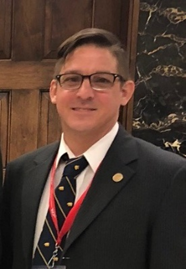
Steven T. Runyun
California State University, Maritime
Associate Professor - Science and Mathematics
https://www.csum.edu/sciences-and-mathematics/faculty/steven-runyon.html
Dr. Runyon has a background in biophysical chemistry & structural biology and has been teaching at Cal Maritime since 2010. Cal Maritime is the smallest of the 23 CSU campuses and offers only 7 maritime-related majors. Chemistry courses offered at Cal Maritime include: introductory chemistry + lab, general chemistry 1 & 2 + lab, chemistry of industrial plant processes, and introductory organic chemistry & biochemistry.