
Calculus 2/MTH 211
Calculus 2/MTH 211
Purpose: to help other instructors teaching the same course
Common Course ID: Calculus 2/MTH 211
CSU Instructor Open Textbook Adoption Portrait
Abstract: This open textbook is being utilized in a second-semester single variable calculus course for undergraduate students taught by Taiyo Inoue at CSU Maritime Academy. The open textbook provides a traditional calculus textbook experience, much like Stewart’s or Thomas’s calculus tomes, but for no cost. The main motivation to adopt an open textbook was to subvert the exploitative textbook publishing industry and to support our financially vulnerable students. Most students access the open textbook online or in an inexpensive print version.
Course Title and Number: Calculus 2/MTH 211
Brief Description of course highlights: Calculus 2, known as MTH 211 on our campus, is the second semester course in the traditional Calculus sequence. It covers techniques and applications of integral calculus, sequences and series, and culminates in the theory of Taylor series.
Student population: For this course, nearly all students were Mechanical Engineering or Engineering Technology majors, with a few other majors sprinkled in.
Learning or student outcomes: Upon successful completion of this course, students will be able to:
- Apply definite integrals in the solution of practical problems in geometry, science and engineering.
- Evaluate integrals by using different integration methods.
- Understand differential equations and use them in mathematical modeling.
- Comprehend and evaluate infinite sequences and series and be able to determine whether they converge or diverge.
- Use analytic geometry in practical problems in science and mathematics.
Key challenges faced and how resolved: Simply getting students to read the textbook was a particular challenge. One hypothesis that I have is that when the textbook is on a computer screen, various entertainments that the computer provides become distractions and reading gets tossed to the side. My advice for students who report on such distractions to me is to purchase the low cost print version so that the possibility of distraction is reduced.
Textbook or OER/Low cost Title: Single and Multivariable Calculus, Early Transcendentals
Brief Description: This book emphasizes problem solving both in the context of calculation and story problems. One remarkable feature is that an answer for every exercise is provided and conveniently hyperlinked.
Authors: David Guichard
Student access: The pdf version is free to browse at the book’s website. Print versions are available for a low price through lulu.com
Supplemental resources: WeBWorK problem sets are available which track the content of the book. Further, I have created a sequence of worksheets to support the book.
Cost Savings: The new materials are zero-cost so the new cost is $0. A traditional textbook used for the calculus sequence such as James Stewart’s Calculus costs $208.99
License: The text is published under a Creative Commons Attribution-NonCommercial-ShareAlike License.
OER/Low Cost Adoption Process
Provide an explanation or what motivated you to use this textbook or OER/Low Cost option. The no-cost/low-cost option was an ethical imperative for me, particularly given the minimal frictional costs associated with making the switch.
How did you find and select the open textbook for this course? I found the book by Googling ‘’free calculus textbooks.” It turns out there were quite a few, but this one resembled most closely the kind of textbook I wanted to use.
Sharing Best Practices: Surely link the book early and often so that students familiarize themselves with it early. Emphasize the print option as well.
Share any curricular or pedagogical changes that you made as part of the Textbook/OER/Low Cost Adoption. Every textbook has its own idiosyncrasies and this one was no different. I noticed that the order of topics was slightly different that what I was accustomed to. This didn’t require any particular action on my part – I just went with the order I preferred. The textbook didn’t give me any issues.
Describe any challenges you experienced, and lessons learned. Though free, and though it does satisfy nearly all criteria for a high quality calculus textbook, there are moments when I find the textbook slightly lacking when compared to the commercially available counterparts.
Taiyo Inoue, Professor of Mathematics of California State University, Maritime Academy
https://www.csum.edu/sciences-and-mathematics/faculty/taiyo-inoue.html
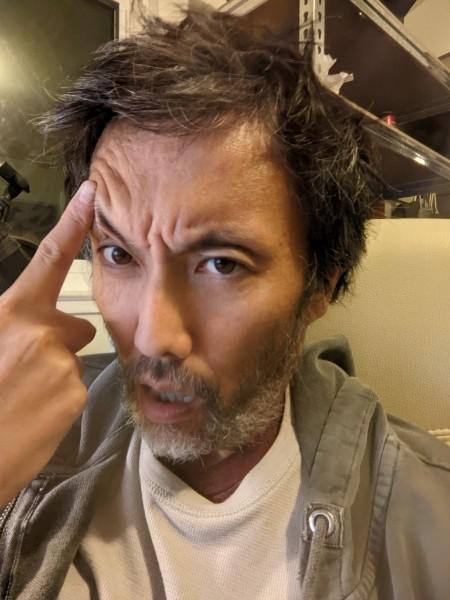
Taiyo Inoue's Teaching statement.
I have taught
- College Algebra and Trigonometry
- Statistics
- Calculus 1
- Calculus 2
- Calculus 3
- Differential Equations
- Linear Algebra
- Probability and Statistics
- Introduction to Higher Mathematics
- Complex Analysis