
Probability and Statistics/MTH 395
Probability and Statistics/MTH 395
Purpose: to help other instructors teaching the same course
Common Course ID: Probability and Statistics/MTH 395
CSU Instructor Open Textbook Adoption Portrait
Abstract: This open textbook is being utilized in a second-semester single variable calculus course for undergraduate students taught by Taiyo Inoue at CSU Maritime Academy. The open textbook provides a traditional calculus textbook experience, much like Stewart’s or Thomas’s calculus tomes, but for no cost. The main motivation to adopt an open textbook was to subvert the exploitative textbook publishing industry and to support our financially vulnerable students. Most students access the open textbook online or in an inexpensive print version.
Probability and Statistics/MTH 395
Brief Description of course highlights: Probability and Statistics, MTH 395, emphasizes the connection between probability and statistics through a rigorous, mathematical examination of these topics.
Student population: For this course, nearly all students were Mechanical Engineering or Engineering Technology majors, with a few other majors sprinkled in.
Learning or student outcomes: Upon completion of this course, students should be able to:
- Understand and use the terminology of probability.
- Recognize the difference between discrete and continuous random variables.
- Identify various important probability distributions and their use, particularly the normal distribution.
- Use the central limit theorem to construct various statistical gadgets such as the p-value for hypothesis testing and construction of confidence intervals.
- Calculate and interpret linear regression.
Key challenges faced and how resolved: Simply getting students to read the textbook was a particular challenge. One hypothesis that I have is that when the textbook is on a computer screen, various entertainments that the computer provides become distractions and reading gets tossed to the side. My advice for students who report on such distractions to me is to purchase the low cost print version so that the possibility of distraction is reduced.
Textbook or OER/Low cost Title:
Introduction to Probability, Statistics, and Random Processes
Brief Description: This no-cost, open-access book begins with basics of probability theory, discrete and random variables, then moves into limit theorems to build the bridge to statistics. Both classical and bayesian inference is covered. I would say the treatment here is a bit more rigorous and mathematical than the typical presentation of these topics, but it does stop short of providing complete and rigorous proofs of results like the Central Limit Theorem.
Authors: Hossein Pishro-Nik
Student access: The text is free to browse at the book’s website. Print versions are available for a low price through amazon.com.
Supplemental resources: Online probability calculators, some video lectures, and lecture slides are included on the site.
Cost Savings: The new materials are zero-cost so the new cost is $0. A comparable textbook would be Probability and Statistics by DeGroot and Schervish. This book is available for $66.98 from amazon.com.
License: The text is published under a Creative Commons Attribution-NonCommercial-NoDerivs 3.0 Unported License.
OER/Low Cost Adoption Process
Provide an explanation or what motivated you to use this textbook or OER/Low Cost option. The no-cost/low-cost option was an ethical imperative for me.
How did you find and select the open textbook for this course? I found the book by Googling ‘’probability and statistics textbooks.” It turns out there were quite a few, but this one resembled most closely the kind of textbook I wanted to use.
Sharing Best Practices: Surely link the book early and often so that students familiarize themselves with it early. Emphasize the print option as well.
Describe any challenges you experienced, and lessons learned. Though free, and though it does satisfy nearly all criteria for a high quality textbook, there are moments when I find the textbook slightly lacking when compared to the commercially available counterparts. One place where I was hoping for more exposition was in proving the Central Limit Theorem – I came to rely on another source for this.
Taiy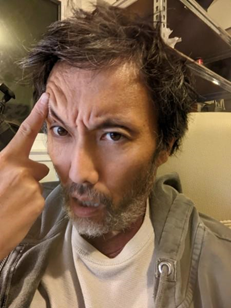 o Inoue, Professor of Mathematics at California State University, Maritime Academy
https://www.csum.edu/sciences-and-mathematics/faculty/taiyo-inoue.html
Describe your teaching philosophy and any research interests related to your discipline or teaching. Teaching statement. I have taught
- College Algebra and Trigonometry
- Statistics
- Calculus 1
- Calculus 2
- Calculus 3
- Differential Equations
- Linear Algebra
- Probability and Statistics
- Introduction to Higher Mathematics
- Complex Analysis