Gender stereotypes
Stereotypes refer to any set of commonly shared beliefs about a group of people. Thus, gender stereotypes refer to what is commonly believed to be true for men versus women. This can refer to personality traits, intellectual and physical abilities, activity preferences, and the like. Just as beliefs are not necessarily based on research evidence, gender stereotypes are not always grounded in fact. In this chapter, we will explore why stereotypes exist, where gender stereotypes got started, and the effect of gender stereotyping today.
In the chapter on gender development, we focused on how gender-related behaviors, also known as gender roles, are often influenced by those around us. In a similar manner, society’s beliefs regarding masculinity and femininity are heavily influenced by society’s beliefs in gender stereotypes.
Although expectations for both men and women have been around for millennia, the gender stereotypes that we see reflected in today's society have a relatively short history. In fact, modern gender stereotypes can trace their roots back to the 19th century Victorian era. This era was named for the reign of Queen Victoria of the United Kingdom who ruled from 1819-1901. At the time, her reign of 63+ years was the longest of any reigning English monarch. After the death of her husband Prince Charles in 1861, Victoria fell into deep mourning and spent her remaining forty years in solitude, developing a strict moral code which influenced the expectations for both men and women. Many modern gender stereotypes are thus directly related to this time period.
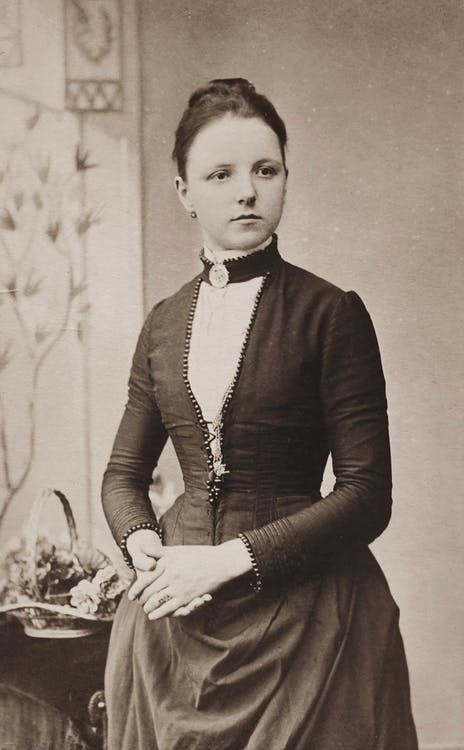
Image source: Suzy Hazelwood from pexels.com
In the United States, the Victorian Period is defined roughly as the time period between 1820 and the Civil War (1860s). It was during this same time period that the Industrial Revolution occurred, which saw the rapid development of manufacturing as the primary driving economic force of nations. Prior to this time, the United States economy was largely agrarian (farm) based, with men and women sharing tasks at home. However, once factories started to prosper, the economic foundation of most families shifted from rural farm labor to urban manufacturing. Given that most manufacturing was powered by steam engines, which at the time were poorly constructed and prone to exploding, it was considered dangerous to work in factories. As such, men were considered more expendable than women, who were now largely responsible for taking care of the children at home. Out of economic necessity, then, the roles of men and women started to differ significantly, with men working outside the home and women staying home to tend to domestic duties.

Image source: Kelly from pexels.com
The emergence of a new “middle class” in the United States during this era further divided the spheres that men and women inhabited. Typically, the public sphere was where men worked outside the home to secure resources for their families, whereas the private sphere involved women staying home. Men were motivated to socialize to earn promotions and seek greater status and power. Women, conversely, were tasked with ensuring a welcoming home environment. Curiously, women were extremely influential in assisting their husband’s ability to seek such greater status and power. For example, in order to seek out a promotion, the husband would invite his superior for dinner at this house. There, the husband would be judged on how well the wife had cleaned the house, took care of the children, and prepared a good meal. The proliferation of ladies’ magazines at the time set the standards by which such women would be judged.

Image source: Pixabay from pexels.com
This shift in social and cultural norms resulted in the development of a new belief system known as the Doctrine of Two Spheres, which is the belief that men and women have different interests. From an observational perspective, a young child growing up in this environment would see men mostly working outside the home and women staying home performing domestic duties. Thus, the child’s cognitive framework would suggest that the reason for this division of responsibility is that men and women must prefer to engage in these different types of activities. Instead of being based on actual differences in preferences, however, this division of labor is an illusory correlation, meaning that, although there are differences in the types of tasks that men and women were now performing, it was not based on what each preferred to be doing.
These trends continue to be seen today. According to the U.S. Department of Labor, in 2021, on an average day, 86% of women engaged in household activities (e.g., food preparation, housework) compared to only 71% of men.
This Doctrine of Two Spheres perspective also explains how the notions of masculinity and femininity evolved to be consistent with this division of labor due to the advent of the Industrial Revolution. To be successful in the workforce, men had to be strong, daring, brave, willing to take risks and defend themselves as necessary. These traits, which were demonstrated more by men as a function of their workplace, were thus considered to be masculine traits. Conversely, to be domestically appropriate, women had to be submissive, obedient, good at cooking and cleaning, and being nurturing. These traits, which were demonstrated more by women, were thus considered to be feminine traits.
Eagly's (1987) social role theory further argues that this division of labor was responsible for establishing the perceived differences in the interests and abilities of men and women in today’s modern world. Men were significantly more likely to seek employment outside the home, interact with more individuals, and needed to be more daring and willing to accept risks in order to provide for their families. Women, on the other hand, were more likely to stay home, tend to household chores, and care for their children. These differences necessarily led to the notion that men possess more agency and that women are more nurturing.
As further discussed by Wood and Eagly (2002),
“The cross-cultural literature provides strong evidence of the universality of a sex-typed division of labor. This division of tasks can be merely a casual arrangement whereby hunters (primarily men) kill animals for the food and other products that they yield and nonhunters (primarily women) gather food and undertake hearth tasks and infant care. In other societies, the division of labor involves explicit designation of each sex’s tasks and the appropriate socialization experiences to equip children to assume sex-typed roles.” (p. 705)
Men were expected to be the dominant partner in marriage, with such dominance extending to their masculine roles in the workplace. As such, women were expected be submissive, allowing their husbands to control them and not creating any disturbances in the home. As described in The Young Lady’s Book, "It is, however, certain, that in whatever situation of life a woman is placed from her cradle to her grave, a spirit of obedience and submission, pliability of temper, and humility of mind, are required from her."
Finally, a woman’s true virtue was defined by her domesticity, or how well she ran her household. Although men made the decisions and were the breadwinners for the family, women were responsible for maintaining the household while the man was at work. The home was to be kept tidy and clean, warm and inviting, with a relaxing atmosphere to return home to. As described by Welter (1966), “Home was supposed to be a cheerful place, so that brothers, husbands and sons would not go elsewhere in search of a good time. Woman was expected to dispense comfort and cheer” (p. 163).

Image source: Andrea Piacquadio from pexels.com
The social environment involving such strict rules and standards for behavior was not equally applied to all women. As noted by Wigington (2021), “Although all women were expected to abide by the standards of true womanhood, in reality, it was predominantly White, Protestant, upper-class women who did so. Due to social prejudices of the period, Black women, working women, immigrants, and those who were lower on the socioeconomic ladder were excluded from the chance to ever be true paragons of domestic virtue.”
Along with these growing differences in the roles that men and women were taking on, a new ideology arose regarding womanhood and manhood. For 19th century women, this ideology was referred to as the Cult of True Womanhood, or the Cult of Domesticity (although these terms were not in use at the time, with them not being coined until the 1960s). For women, popular culture dictated the expectations and responsibilities of women and could be found in magazines, newspapers, advice books, and the like. For example, according to Godey’s Lady’s Book (similar to today’s Modern Housekeeping magazine), for the “true woman”, a woman’s rights were as follows:
The right to love whom others scorn,
The right to comfort and to mourn,
The right to shed new joy on earth,
The right to feel the soul's high worth,
Such woman's rights a God will bless
And crown their champions with success.
As described by Welter (1966), women were expected to cultivate four specific characteristics in order to satisfy this ideal of womanhood: piety, purity, submissiveness, and domesticity. There were the traits by which women would be judged by other women, their husbands, and by society at large. Women who did not live up to these expectations were considered unwomanly, ungodly, and a poor approximation of a good and decent person:
“The attributes of True Womanhood, by which a woman judged her- self and was judged by her husband, her neighbors and society could be divided into four cardinal virtues-piety, purity, submissiveness and domesticity. Put them all together and they spelled mother, daughter, sister, wife-woman. Without them, no matter whether there was fame, achievement or wealth, all was ashes. With them she was promised happiness and power” (Welter, 1966, p. 152).
In terms of piety, a woman was expected to be religious. Conveniently, the private sphere of the home affirmed this notion and allowed women to be free from devilish temptation outside the home. By engaging in domestic work, a woman could better commune with the divine and strengthen her spirituality. A woman was also expected to protect their husbands from falling astray from religion, and to raise equally pious children. Women’s seminaries specifically advertised that religious instruction was necessary in order to have a virtuous character. Women who were not pious were to be avoided.
Sexual purity was also a necessary component of being a ‘good’ woman. A woman was expected to be a virgin until her wedding night, with her virginity considered to be the greatest gift that she could offer to her husband. After losing her virginity she was considered to be an “empty vessel”, completely dependent on her husband without any agency of her own. Popular novels would often depict women who lost their virginity outside of marriage as being driven mad or destitute. Goodly men would never consider asking for the hand of marriage from someone who was not sexually pure, someone who, in other words, was a “fallen woman.” Whereas men were not constrained by similar expectations, women were supposed to fight off any seductive attempts by men who sought to tarnish their reputations.
In the same manner that women were judged by society by how well they attempted to adhere to the principles of the Cult of Womanhood, men also were judged by society by how well they attempted to adhere to a traditional masculine ideology. “A traditional masculine ideology proposes that men portray and maintain a specific social persona which reflects toughness, emotional invulnerability, heterosexual dominance and success, as well as an avoidance of anything deemed 'feminine' “(Adams & Govender, 2008, p. 552).
Thomas and Peck (1986) identified three characteristics that were desirable for a “real” man to possess during this same time period: “status (drive to achieve and gain others’ respect), toughness (emotional, mental, and physical fortitude and self-reliance), and antifemininity (avoidance of stereotypically feminine activities and roles)” (as cited by Neilson, Singh, Harper, and Teng, 2020, p. 2). These traits certainly highlight the importance of the dichotomous division of expected male and female behaviors. Given that the domestic virtues of the Cult of True Womanhood outlined the feminine values that women are to possess, anything that was considered to be feminine was something that men were expected to avoid at all costs.
Indeed, this ‘anti-feminine’ attitude was further explored by Brannon (1976; Brannon & Juni, 1984) in which he identifies this proscriptive norm against anything feminine as being the most salient for men in terms of their development, a norm he called “no sissy stuff”. In addition to finding the same characteristics as Thomas and Peck (1986) of achieving status (“the big wheel”), and toughness in the form of independence and self-confidence (“the sturdy oak”), Brannon also identified a fourth norm that defined the male role: developing the penchant for aggressiveness (“give ‘em hell").
Just as all women were not equally expected to adhere to the characteristics of the Cult of True Womanhood, not all men were expected to adhere to the norms associated with traditional masculine ideology. As discussed by Fernandez-Alvarez (2014), “Thus, there is no such thing as just one single kind of masculinity. This implies that no model of masculinity exists that is universal and valid for every place, period, social class, age, race or sexual orientation, but rather a diverse mix of male identities and ways of being men in our societies” (p. 49).
As such, for both women and men, the degree to which each matched up to these societal expectations regarding their gender roles determined how well-regarded they were in the eyes of the social environments in which they dwelt. Non-conformity to these ideals was viewed as aberrant and counter to a well-functioning society. For the middle-class person, conformity to these expectations was thus considered a necessary component for upward social and economic advancement.
Of course, how well do either men or women (either then or today) compare to each of these idyllic standards? Not very well, naturally. Such stereotypes are based on exaggerations of perceived differences that may or may not reflect true distinguishing characteristics. According to the American Psychological Association (2018), it can actually be psychologically damaging for individuals to attempt to meet these idealized standards. So, why do we continue to have and rely on gender stereotypes?
From a child’s developmental perspective, it is actually necessary to greatly simplify the world around him or her, making it easier to categorize people and ideas into meaningful and manageable constructs. By starting with major distinctions between and among individuals, children can then further delineate the nuances associated with gender and gender identity. The problem, however, occurs when adults continue to maintain these simplified stereotypes without critical reflection. There are unfortunate negative consequences of relying on such oversimplified view of individuals based on unattainable gender stereotypes.
In most societies, privilege naturally follows from one's rank among others. In some circumstances, privileged people (in this case men) may rationalize the current status of one gender over another as a reflection of the 'way things have always been and should always be'. This is consistent with Lerner’s (1980; Lerner & Miller, 1978) just world hypothesis which states that people generally get what they deserve if the social environment is fair. Although arguably insufficient to justify the perpetuation of gender stereotypes, maintaining the status quo is often easier to accomplish than radically altering an entire society’s viewpoints towards gender. Examples of representations of modern gender stereotypes are pervasive in today's multi-media climate. The overwhelming social acceptance of these views can shape our understanding of what it means to be a man or woman. By normalizing these distinctions we become desensitized to change and can actually start to internalize the belief that men and women are different and have different beliefs, abilities, etc.
Stereotypes are so insidious in today's society that even being aware of a specific stereotype (even if you don't believe or condone it) can influence how we think about ourselves and others. As explained by Hopper (2019), "Stereotype threat occurs when a person is worried about behaving in a way that confirms negative stereotypes about members of their group. This added stress can end up impacting how they actually perform in a particular situation. For example, a woman might feel nervous when taking a math test because of stereotypes about women in math courses, or worry that receiving a poor grade will cause others to think that women don’t have high levels of math ability."
So, how do we go about revising these modern gender stereotypes? There have been several theories put forth over the last several decades to address this question, all with varying levels of results. We'll focus on just one theory to give us an idea of the complexity of solving this cultural riddle: the gender role strain paradigm. First discussed by Pleck (1981), gender role strain occurs when individuals experience difficulty matching up to idealized gender stereotypes which may not reflect their true gender identity. Non-masculine males or women who are not interested in having children, for example, do not confirm to said gender stereotypes and may experience conflict between their identity and societal expectations. This recognition leads to re-evaluating the appropriateness of standardizations of masculinity, femininity, and androgyny. “Currently, the sexes are asking questions about their gender-role definitions and how they have been emotionally affected or restricted by their socialization and sexism in their lives. From these gender reevaluations, many individuals are discovering gender-role conflicts and strains that emanate from early gender-role socialization and societal expectations related to the appropriateness of masculine and feminine roles” (O’Neil, 1982, p. 5).

Image source: cottonbro from pexels.com
Efforts to minimize the effects of these somewhat outdated gender stereotypes have led to re-evaluating how equity between men and women is viewed. For example, Pulerwitz and Barker (2008) used the term gender-equitable male to describe a man who
- Seeks relationships with women based on equality, respect, and intimacy rather than sexual conquest. This includes believing that men and women have equal rights and that women have as much “right” to sexual agency as do men.
- Seeks to be involved in household chores and child care, meaning that they support taking both financial and care-giving responsibility for their children and household.
- Assumes some responsibility for sexually transmitted infection prevention and reproductive health in their relationships. This includes taking the initiative to discuss reproductive health concerns with their partner, using condoms, or assisting their partner in acquiring or using a contraceptive method.
- Is opposed to violence against women under all circumstances, even those that are commonly used to justify violence (e.g., sexual infidelity).
- Is opposed to homophobia and violence against homosexuals. (Although not directly related to male-female interactions, in the formative research, men often included “nonhomosexual” in their definition of what it was to be a “real” man, and homophobic comments were reportedly frequently used as a way to pressure or ridicule any man seen as being too “soft” on women (e.g., nonviolent).
In order to retain the status as a proper woman, an unmarried woman was expected to remain sexually pure, i.e., a virgin. How then did society expect that a married woman could also retain the status as a proper woman by remaining sexually pure? Not only was she expected to give up her purity on her wedding night, but she was also expected to bear children for her husband. How could these two conflicting viewpoints be reconciled?
In Pagan era in northern Europe roughly 600 years ago, married couples would conceive a child during the annual summer solstice. The solstice also coincided with the start of the Europe-Africa migration pattern of storks, who would return the following Spring—nine months later. Thus began the mythological belief that storks would deliver a child to a newlywed couple.
Later, in the 19th century, Danish writer Hans Christian Andersen popularized this myth by publishing “The Storks” in which these birds would pluck babies from surrounding bodies of water and deliver them to expectant parents.

Image source: ArtHouse Studio from pexels.com
Similar tales of babies being born in cabbage patches were also popular during this era. In the late 1980s and early 1990s, “Cabbage Patch Dolls” were an extremely popular toy for young children. Regardless which version was adopted, both approaches provided a convenient excuse by avoiding embarrassment in explaining how Victorian women could bear children while still maintaining their sexual purity.
Adams, L. A., & Govender, K. (2008). “Making a perfect man”: Traditional masculine ideology and perfectionism among adolescent boys. South African Journal of Psychology, 38, 551-562.
American Psychological Association, Boys and Men Guidelines Group. (2018). APA guidelines for psychological practice with boys and men. Retrieved from http://www.apa.org/about/policy/psychological-practice-boys-men-guidelines.pdf.
Brannon, R. (1976). The male sex role: Our culture’s blueprint for manhood, what it’s done for us lately. In D. David & R. Brannon (Eds.), The forty-nine percent majority: The male sex role. Reading, MA: Addison Wesley.
Brannon, R., & Juni, S. (1984). A scale for measuring attitudes about masculinity. Psychological Documents, 14, 6-7.
Fernandez-Alvarez, O. (2014). Non-hegemonic masculinity against gender violence. Procedia, 161, 48-55.
Hopper, E. (2019). What is stereotype threat? The negative effects of worrying about confirming a stereotype. Retrieved 8/10/2022 from http://www.thoughtco.com/what-is-stereotype-threat-4586395.
Lerner, M. J. (1980). The belief in a just world: A fundamental delusion. New York: Plenum.
Lerner, M. J., & Miller, D. T. (1978). Just-world research and the attribution process: Looking back and ahead. Psychological Bulletin, 85, 1030-1051.
Neilson, E.C., Singh, R. S., Harper, K.L, & Teng, E. J. (2020). Traditional masculine ideology, posttraumatic stress disorder (PTSD) symptom severity, and treatment in service members and veterans: A systematic review. Psychology of Men & Masculinities, 21, 578-592.
O’Neil, J. M. (1982). Gender-role conflict and strain in men’s lives. In Solomon, K., & Levy, N. B. (Eds)., Men in transition. Boston: MA.
Pulerwitz, J., & Barker, G. (2008). Measuring attitudes toward gender norms among young men in Brazil: Development and psychometric evaluation of the GEM Scale. Men and Masculinities, 10, 322-338.
The young lady’s book: A manual of elegant recreations, exercises, and pursuits. (New York, 1830).
Welter, B. (1966). The cult of true womanhood: 1820-1860. American Quarterly, 18, 151-174.
Wigington, P. (2021). The cult of domesticity: Definition and History. Retrieved 8/9/2022 from https://www.thoughtco.com/cult-of-domesticity/4694493.
Wood, W., & Eagly, A.H. (2002). A cross-cultural analysis of the behavior of women and men: Implications for the origins of sex differences. Psychological Bulletin, 128, 699-727.