
Maritime Arts HUM 115
Maritime Arts HUM 115
Purpose: to help other instructors teaching the same course
Common Course ID: Maritime Arts HUM-115
CSU Instructor Open Textbook Adoption Portrait
Abstract: This open textbook is being utilized in a visual arts course for undergraduate or graduate students by Lauren Hartman at CSU Maritime Academy. The open textbook provides demonstration, artwork by international artists, maritime, and costal focused art. The main motivation to adopt an open textbook was to provide students with an accessible way to engage with international art without purchasing an expensive textbook. Most students access the open textbook through PDFs or online links.
Maritime Arts HUM 115
Brief Description of course highlights: This course studies a variety of marine art forms crafted by sailors, artists, fishermen, scientists, and traditional art from coastal regions. This course explores the question, what is the role of art in recording and forming history. Studying a spectrum of literature, maps, symbolism, and artwork builds a strong foundation in cultural, historical, and contemporary analysis. In class we will draw, paint, make flags, and gyotaku prints to gain a firmer understanding of processes as well as the framework of storytelling. This should be a place of support and creative awakening.
There are no prerequisites for this lower-level humanities course. This is a section C1 general education course.
Student Population: Students from all majors and years take this class. There is no prerequisite.
Learning or student outcomes: Student Learning Outcomes (SLO)
- Upon successful completion of this course, students will be able to: Apply cultural, historical, and political awareness to the creative practice.
- Use artwork and analysis as a gateway to understanding cultural traditions, artistic movements, and mediums.
- Articulate one’s views clearly and persuasively through visual analysis and critique
- Integrate conceptual understanding of artworks and mediums into projects
- Connect creative endeavor with academic rigor
- Improve overall sense of drawing and self-expression skills while producing new artwork.
Key challenges faced and how resolved: How can you demonstrate and teach an art process to 40 students in a large classroom? Provide students with a range of resources from step by step slide show, readings from art museum articles about the art process, slideshows of example artwork, and live demonstrations.
Share any curricular or pedagogical changes that you made as part of the Textbook/OER/Low Cost Adoption I started using more artist interviews and documentary videos in my curriculum. Art history books tend to be produced and written by American and British scholars about artwork in Museum collections. When teaching about Māori artwork I want students to hear about the work from a Māori scholar/curator. Museum collections freeze an artwork in time. I want the artwork and artists to come alive for students. Textbooks don’t offer this perspective, but there are many online resources that do.
Textbook or OER/Low cost Title:
Brief Description: I provide students with links to online articles, videos, and PDFs of articles they can access for free. The links and files are made available through the course management system.
The texts and videos include history on the artforms, artist interviews, and curatorial analysis of artworks. Some of the articles are sourced from Smithsonian.com, art exhibition catalogues, and Khan Academy. the
Authors: Many
Student access: I post all the material and links on the course management system.
Supplemental resources: For each project/topic we study I create slideshows of example artwork including strong examples of past students’ work. When we watch films in class, I provide students with a printed worksheet of questions about the key themes, special effects, cinematography, and cinema techniques. Students can fill it in as they watch the film. This helps students stay focused while also taking note of key elements. Students can access the slideshows and worksheets through the course management system.
Cost Savings: Art History textbooks can cost up to $248 and art demonstration booklets would add up to $35. The material I provide for students is free
License: Public domain, no copyright restrictions
OER/Low Cost Adoption Process
Provide an explanation or what motivated you to use this textbook or OER/Low Cost option. Save students money and improve the learning materials and diversity of perspective.
How did you find and select the open textbook for this course? Evaluated resources.
Sharing Best Practices: Many art museums and cultural institutions have great education sites with project ideas and article links. In addition to a live demonstration of a hands-on technique (in a large classroom or to many students) YouTube is a great resource. People have spent a lot of time filming and editing close ups of their hands. A link to the video can be posted to the learning management system so students can review the process at home or in slow motion.
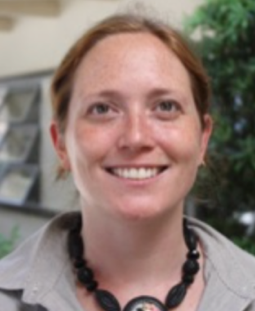
Lauren Hartman
Lecturer in the Dept. of Culture and Communication
California State University, Maritime Academy
https://www.csum.edu/culture-and-communication/faculty/lauren-hartman.html
Provide a statement of your teaching philosophy and courses you teach
My curriculum pairs hands-on projects with literature and lectures that help to reinforce critical thinking and expand classroom conversations. Making is not just about the physical object or artwork it is a way to develop a process that extends beyond the materials and speaks about concepts. Using hands-on project-based assignments students are learning from their experiences and collaborations with other students.