KINE 3510: Exercise Science Research Seminar
KINE 3510: Exercise Science Research Seminar
Purpose: to help other instructors teaching the same course
Common Course ID: KINE 3510: Exercise Science Research Seminar
CSU Instructor Open Textbook Adoption Portrait
Abstract: Abstract: These OER materials are being utilized in a kinesiology course for undergraduate students by April Karlinsky, PhD, at California State University, San Bernardino (CSUSB). The students in this course were all Kinesiology majors enrolled in the Exercise Science concentration. Although there are no prerequisites for the course, it is an upper-division course, and all students were juniors or seniors. All students accessed the course materials for free online. The course materials included peer-reviewed journal articles made available through CSUSB’s John M. Pfau Library subscriptions, and research ethics and critical information literacy-related tutorials made available through CSUSB’s Pfau Library and Institutional Review Board.
KINE 3510 - Exercise Science Research Seminar
Description: Discussion and critical analysis of peer-reviewed articles in the area of Exercise Science.
Prerequisites: None
Learning Outcomes:
Upon successful completion of this course, students will be able to:
- Locate and evaluate peer-reviewed research in kinesiology
- Demonstrate an understanding of the key concepts related to critical information literacy, including the ways in which information is created, disseminated, accessed, and used
- Recognize ethical issues pertaining to human subjects research
- Describe the various steps involved in the peer-review process
- Critically examine and communicate scientific information
Brief Description of course highlights: Give description of course utilizing the course catalog at the educational institution if available.
Syllabus and/or Sample assignment from the course or the adoption: Worksheet_AnalyzingAJournalArticle.docx
Student access: Students accessed all the above materials through the course’s Canvas Learning Management System, wherein I embedded the Video Tutorials, links to all external sites, and uploaded all required readings.
Cost Savings: Had OER material not been available, I was planning to rely on the following textbook, titled “Research Methods for Sports Studies (4th Edition)” by Ian Jones. This text currently retails from Routledge for $50 (eBook)-$160 (Hardback). As 27 students were enrolled in the course, this represents a total cost savings of at least $1350.
License: Specify if material is copyrighted or openly licensed and what that is..
April Karlinsky, Assistant Professor
Department of Kinesiology
California State University, San Bernardino
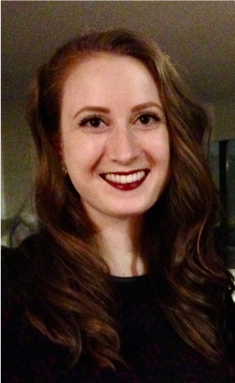
Since joining CSUSB in the Fall of 2020, I have taught a variety of kinesiology courses, including Motor Development Across the Lifespan, Motor Learning and Control, Biomechanics, and Exercise Science Research Seminar.
To facilitate the delivery of the above courses, I have created a range of course materials, including lectures, seminars, lab activities, and online resources.
The courses I teach complement my research interests, which revolve around motor performance and learning in social contexts. In addition to productive collaborations with colleagues at CSUSB, a number of international collaborations have also facilitated my scholarly activities.
OER/Low Cost Adoption Process
Provide an explanation or what motivated you to use this textbook or OER/Low Cost option. Recognizing that many students have limited financial resources, a major motivation for using OER for this course was to minimize the need for students to purchase learning materials. The requisite course articles were based on consultations with CSUSB’s Kinesiology Academic Reference Librarian as well as with other faculty members in the Department of Kinesiology. In particular, the latter were asked to recommend articles that they had co-authored and would be willing to discuss with the students in class. To my pleasant surprise, my biggest challenge was that I had more faculty volunteers than I could accommodate in the available class schedule!
How did you find and select the open textbook for this course? As this was the first time I taught this course, the curricular changes were based on adaptations I made to the previous instructor’s materials. The most significant changes were as follows. Key concepts were introduced by way of the CSUSB Pfau Library’s Critical Information Literacy Lab Video Tutorials, as well as guest lectures led by the Kinesiology Academic Reference Librarian to expand upon critical information literacy concepts and database-search skills. Students also gained a basic understanding of research ethics by completing the Human Subjects Ethics Training available through CSUSB’s Institutional Review Board.
Instead of using the previous course textbook, more nuanced discussions were then facilitated by inviting individual department faculty to discuss a research article (available freely through open-access or the library) that they co-authored. The peer-reviewed research articles were as follows (bold denotes a CSUSB Department of Kinesiology Faculty member):
- Harty, P. S., Stratton, M. T., Escalante, G., Rodriguez, C., Dellinger, J. R., Williams, A. D., White, S. J., Smith, R. W., Johnson, B. A., Sanders, M. B., & Tinsley, G. M. (2020). Effects of Bang® Keto Coffee Energy Drink on Metabolism and Exercise Performance in Resistance-Trained Adults: A Randomized, Double-blind, Placebo-controlled, Crossover Study. Journal of the International Society of Sports Nutrition, 17(1), 45.
- Baker, B. S., Chen, Z., Larson, R. D., Bemben, M. G., & Bemben, D. A. (2020). Sex differences in bone density, geometry, and bone strength of competitive soccer players. Journal of Musculoskeletal and Neuronal Interactions, 20(1), 62-76.
- Feltz, D. L., Hill, C. R., Samendinger, S., Myers, N. D., Pivarnik, J. M., Winn, B., Ede, A., & Ploutz-Snyder, L. (2020). Can simulated partners boost workout effort in long-term exercise? Journal of Strength and Conditioning Research, 34(9), 2434-2442.
- Dabbs, N. C., & Chander, H. (2018). The effects of exercise induced muscle damage on knee joint torque and balance performance. Sports, 6(3), 101.
- Dunn, S. L., Siu, W., Freund, J., & Boutcher, S. H. (2014). The effect of a lifestyle intervention on metabolic health in young women. Diabetes, Metabolic Syndrome and Obesity: Targets and Therapy, 7, 437-444.
- Farah, B. Q., Prado, W., Malik, N., Lofrano-Prado, M. C., de Melo, P. H., Botero, J. P., Cucato, G. G., de Almeida Correia, M., & Ritti-Dias, R. M. (2021). Barriers to physical activity during the COVID-19 pandemic in adults: A cross-sectional study. Sport Sciences for Health, 17, 441-447.
Sharing Best Practices: The participation of 6 other Department of Kinesiology faculty members in the course provided an immediate opportunity to share this OER experience. The anecdotal feedback from these faculty participants was extremely positive. Further, the formal feedback received through the Classroom Visitation for this course highlighted the novel and successful instructional strategies. To date, I have shared my experience and course materials with the faculty member who will be instructing the next iteration of this course.
Beyond the Department, I have also shared this OER experience with other faculty at CSUSB by participating in the AL$ showcase, as well as with faculty across the CSU system by participating in the CSU Forum on Effective STEM Teaching.
Overall, I have had an extremely positive experience incorporating OER into my course and encourage faculty getting started with OER to consider educational resources and materials available through their instruction – reaching out to your Academic Reference Librarian is a great place to start!