CJUS 5585 Life Course Criminality
CJUS 5585 Life Course Criminality
Purpose: to help other instructors teaching the same course
Common Course ID: CJUS 5585
CSU Instructor Open Textbook Adoption Portrait
Abstract: This open textbook is being utilized in a Criminal Justice course for upper-level undergraduates and graduate students by Douglas Weiss at California State University, San Bernardino. The open textbook provides students with an overview of developmental and life course criminology including an introduction to the life-course paradigm, methodologies of life-course and longitudinal research, theoretical perspectives on offending over the life course, and risk factors for criminal offending. The main motivation to adopt an open textbook was to reduce costs for students. Students are able to access an E-book version of the textbook through the Pfau Library website.
Course Title and Number: CJUS 5585 Life Course Criminality
Brief Description of course highlights: This is an elective course for upper-level undergraduates and graduate students in Criminal Justice. It is an advanced criminological theory course that builds upon the introductory Criminology course..
Student population: Upper-level undergraduates and graduate students in Criminal Justice
Learning or student outcomes: Upon successful completion of this course, students will be able to:
- Explain the principles and key concepts of life course criminology
- Explain the history of life course criminology and the criminal career paradigm
- Apply life course criminological theories to explain change and continuity in offending
- Describe the methodological approaches and types of data that are used in life course criminology
- Identify factors associated with offending onset, persistence in offending, & desistance from offending
- Discuss policy approaches towards reducing offending throughout the life course
Key challenges faced and how resolved: This is a relatively new subfield in the discipline, so there are few dedicated texts that are available to select from for this course. I resolved this issue by using additional resources (e.g., academic journal articles) to supplement the text and provide broad coverage of the topic.
An Introduction to Life-Course Criminology by Carlsson and Samecki (2016)
Brief Description: An Introduction for students to the field of developmental and life-course criminology. This text uses the most prominent theoretical perspectives in the field to help students better understand continuity and change in criminal offending throughout the life course. It also considers the methodologies used in longitudinal research on criminal behavior, risk factors for offending, and our ability to predict future criminal behavior. This text is freely available to students through Pfau Library. https://csu-sb.primo.exlibrisgroup.com/permalink/01CALS_USB/122a7o7/alma991011093049402916
Authors: Carlsson, C., & Sarnecki, J. (2015). An introduction to life-course criminology. Sage Publications. ($0); Packback Online Community ($29)
Student access: Students may access the text through Pfau library and Packback is located here. Journal articles are available via Pfau Library and the Canvas LMS.
Supplemental resources: I replaced the main course text with a text available through the University library and added the Packback Community for on-line discussions. I also supplemented the text with journal articles available via the University library.
Cost Savings: Old Materials ($63.99). Wright, J. P., Tibbetts, S. G., & Daigle, L. E. (2014). Criminals in the making: Criminality across the life course. Sage Publications.
New Materials ($29). Carlsson, C., & Sarnecki, J. (2015). An introduction to life-course criminology. Sage Publications. ($0); Packback Online Community ($29)
Estimated Cost Savings = $34.99 per student X 70 students = $2449.30 total
Student reaction: “What I like the most is doing the Packback questions because it helps students engage with one another and learn a little more from the questions as well as sometimes students teach the students.”
“What I like most about this course is the Packback assignments. This method of discussion, where we are answering each other's questions, is much better than the traditional discussion format where we respond to other students' responses.”
License:
OER/Low Cost Adoption Process
Provide an explanation or what motivated you to use this textbook or OER/Low Cost option. Save students money on course materials while adapting the course to a hybrid modality following the COVID pandemic
How did you find and select the open textbook for this course? Consulted existing textbooks on course material. I have previously used the Packback community for online discussions in other courses and incorporated this tool into this course based on this experience.
Sharing Best Practices: This is a relatively new topic in the discipline, so there are few dedicated texts that are available to select from. I resolved this issue by using additional resources (e.g., academic journal articles) to supplement the text and provide broad coverage of the topic.
"When I made the decision to adopt the new text, I was unaware that it was available for free through the University library. So, when searching for course materials for a course being taught the first time, it helps to also search for texts that are available through the University library."
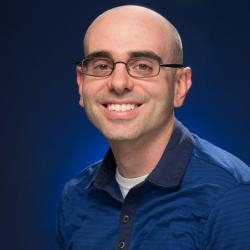
Douglas Weiss
California State University, San Bernardino
https://www.csusb.edu/profile/dweiss
- I am an Associate Professor in the School of Criminology & Criminal Justice. I teach courses in corrections (Correctional Theory & Institutions, Community Corrections, Correctional Counseling) and special topics in criminology & criminal justice (Gangs, Drugs & the Criminal Justice System, Planning & Evaluation in Criminal Justice).
- My research is largely focused on comparative criminology & criminal justice as well as developmental & life course criminology.