
Exercise and well-being of the human body/ KINE 3000-60
Exercise and well-being of the human body/ KINE 3000-60
Purpose: to help other instructors teaching the same course
Common Course ID: KINE 3000-60
CSU Instructor Open Textbook Adoption Portrait
Abstract: This open textbook is being utilized in a KINE 3000 course for undergraduate or graduate students by Mara Lofrano at CSUSB. The open textbook provides diverse perspectives from many authors and give students a great overview of exercise and the human body. Also, in this course it has been used open sources like scientific paper giving the students opportunity to stay update with the newest scientific literature in this topic. The main motivation to adopt an open textbook was save students money and provide no barriers for a great learning experience. Most student access the open textbook in course management system and external server.
Course Title and Number - KINE 3000 - Exercise and Well-being of the human body
Brief Description of course highlights: This course will cover foundational links between scientific disciplines relating exercise, mental health, and overall well-being of the human body. Students will take a problem-oriented approach to explore, analyze, and explain the role of exercise and its impact on the overall well-being of the human body. An emphasis will be placed on the biopsychological, biological, biochemical, and physiological mechanisms underlying how exercise shapes an individual's well-being. Students will be able to explore, engage in, and analyze various exercises that have known relationships with reducing stress, reducing anxiety, and promoting a healthy well-being. The use of technology will be incorporated to collect, analyze, and interpret physiological and psychological data. Satisfies GE category B5.
Student population: The majority in this course are international students. And have included range of majors, such as administration and computer sciences. Include range of majors, typical incoming knowledge and/or skills (including not meeting prerequisites). Share demographics for students who take the class e.g. common majors, previous preparation, etc
Learning or student outcomes: Upon successful completion of this course, students will be able to:
- Learning Outcome (LO) 1: Understand the links between physical activity, exercise, and mental health. (Associated with GLOs of Integrative Learning and Critical Literacy: Critical Thinking)
- LO2. Explore contemporary theories and models that shape the links between exercise and mental health (GLOs Integrative Learning, Critical Literacy: Quantitative Reasoning)
- LO3. Gain comprehension of how exercise can be used as a tool to modify self-esteem, well-being, cognitive functioning, and mood. (GLOs Critical Literacy: Technological Literacy, Critical Literacy: Critical Thinking
- LO4. Gain comprehension of the role of exercise in the suppression of depression, anxiety, and addictive behaviors (GLO Critical Literacy: Critical Thinking)
- LO5. Apply the use of exercise to boost mood, affect, and well-being. (GLOs Integrative Learning and Critical Literacy: Critical Thinking)
- LO6. Evaluate and create exercise programs with the focus of promoting the psychological benefits of regular physical activity. (GLOs Critical Literacy: Critical Thinking, Critical Literacy: Technological Literacy)
Key challenges faced and how resolved: Just start with this approach. So far, I have no problems.
Textbook or OER/Low cost Title: Essentials of Exercise and Sport Psychology: An Open Access Textbook. https://kinesiologybooks.org/index.php/stork/catalog/book/10
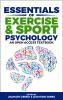 Brief Description: This is a required question Essentials of Exercise and Sport Psychology: An Open Access Textbook brings this diverse set of experts together to provide a free, open, accessible textbook for students studying exercise and human body in a psychological perspective. To fully understand the complex world of exercise and sport psychology, students are encouraged to engage with diverse perspectives from many authors.
Authors: Zachary Zenko (ed), Leighton Jones (ed)
Student access: Canvas (course management system) and external server.
Cost Savings: The approximate cost savings per student is $125.65 (Weinberg, Robert S. Foundations of Sport and Exercise Psychology. 7th Edition. Human Kinetics Publishers, 2018
License: Creative Commons Attribution 4.0 International License.
OER/Low Cost Adoption Process
Provide an explanation or what motivated you to use this textbook or OER/Low Cost option. I have realized most of students at CSUSB are first generation at college level and some of them cannot afford adopted book. So, I realized that the textbook cost should be a barrier to their success. After the email I have received from Affordable Solutions Program, I became to know the ALS and it motivated me to embrace the free sources for the KINE 3000 students.
How did you find and select the open textbook for this course? Other faculty and read peer reviews.
Sharing Best Practices: Just start with this approach. So far, I have no problems.
Mara Lofrano, PhD
Nutrition and Neurosciences and Behavior
California State University, San Bernardino
https://www.csusb.edu/profile/mara.lofrano
 Please describe the courses you teach and/or your teaching philosophy
I see my job as helping my students learn how to learn; to develop the skills to allow them to take responsibility for what they learn and how they will apply that knowledge. I want my student to become life-long learners and empowered by their own learning and develop as individuals as well as professionals. My teaching philosophy is student-centered.
I believe the learning process is most effective when the class environment is supportive, and the teacher is well prepared and enthusiastic about the subject. These conditions create a collaborative relationship, which in turn facilitates learning. I have embraced active learning strategies to inspire creativity and innovation.
I have been fortunate to have a wide variety of teaching experiences with students from different sociocultural-backgrounds and I treat all students with absolute equality (but considering the individuality), regardless of age, gender, nationality, or intellectual ability, and others. I try to engage students in dialogue with each other, so they can experience contrasting opinions, which I believe is the foundation of our modern society. I strive to structure my teaching around my students needs rather than the demands of a particular concept or text. My teaching philosophy is based on the belief that clinics, academics and research may collide to educate and prepare future professionals to become leaders capable of living and working effectively in a changing world.
The courses I previously taught:
Exercise and well-being of the human body
Sport and Exercise Nutrition
Health Psychology
Growth and Development
Sport Psychology
Learning Psychology
Scientific methodology
Process Didactics Teaching and Learning
Social Interactions and School Leadership
Methods and techniques of research
Pedagogical Professional Perspectives
Public Policies for Children and Adolescents