Spring 2018 Courses
English 101.006: Rhetoric and Composition I —
Literacy & the Self
MWF 11-11:50 in OC 2011
Instructor: Ms. Jenn Horn
Required Texts:
Writing Situations — Dobrin
o ISBN: 978-0-205-73543-3
• The Little Norton Reader — Goldthwaite
o ISBN: 978-0-393-62410-6
Course Description
A Core 39 Foundation Skills Course, English 101 is the first of two courses in the critical arts of reading, writing, reflection, and discussion, emphasizing the responsibilities of written inquiry and structured reasoning. Basic keyboarding skills are required.
This course supports the mission and goals of the English program (listed at the end of this syllabus) through a variety of reading and writing assignments.
This course supports the mission and goals of the English program through a variety of reading and writing assignments.
Course Objectives
Academic Literacy prepares students to:
• Employ critical thinking, reading, and writing skills.
• Experiment with various invention and research strategies.
• Demonstrate electronic and library literacy.
• Practice process-based writing through peer response and global revision.
Academic Discourse Conventions prepares students to:
• Respond to the demands of specific audiences, purposes, and genres. • Develop focused thesis statements.
• Organize ideas.
• Support claims using reasoned and organized arguments.
• Analyze and synthesize information from credible primary and secondary sources.
• Integrate and cite evidence properly.
• Use conventions of appropriate grammar, tone, format, and punctuation.
Enhancement of Individual Development prepares students to:
• Discover, develop, and express their ideas.
• Project a personal ethos as members of discourse communities.
• Evaluate positions from critical perspectives.
• Adopt successful revision techniques.
• Engage in writing as a social process.
Description of required coursework: All English 101 students will be required to write at least 20 pages of revised, finished prose, developed through a process of invention, development, and revision. Assignments, either individually or in combination, will ask students to practice the following: exposition, analysis, critique, argumentation, and reflection.
Final Grade: A
Listed below are links to assignments.
Essay 1 Writing to Describe "First Day of School"
Essay 2 Narrative Writing "A Public Nuisance"
Essay 3 Writing to Inform "A Historical Look at our Affair with Food: Past and Present It's Evolution Has Changed Everything
I'm very passionate about the contents of this essay.
Essay 4 Writing to Respond "Tracking Our Online Trackers"
This is one of my favorites
Final Essay "Who Knew?"
My Favorite: If you only have time to read one essay...it should be this one.

Health Care Delivery System HP211
Instructor: Melissa Bullock, MHA-HI, RT (R) (M), RDMS, CHTS-IM, CHTS-PW
Required Textbook: Essentials of the U.S. Health Care System(ISBN 978-1-284-10055-6)
Online Course
Course Description
This 3-credit hour online course provides an overview of the health care delivery system from a historical, economic, legal/ethical and political framework in a virtual learning environment
Learning Objectives
By the end of this course, students should be able to:
1. Appreciate the relationship-centered foundation of health care
2. Identify the major historical factors affecting the nation’s provision of health care and describe the resulting changes
3. Describe the major ethical debates within the U.S. health care system
4. Identify the major career specialties in the health professions, and any associated training/education and/or credentialing required; describe primary duties
5. Depict the roles of local, state, and federal governments and the private sector in the provision and financing of health services
6. Describe the classification and organization of hospitals and ambulatory care providers and their importance for the delivery of health care
7. Describe the major methods of providing health care services to the nation’s elderly, disabled and mentally ill
8. Illustrate the impact of current consumerism and politics on the rapid changes occurring in health care delivery
Final Grade: A
COMING SOON: Links for assignments

Concepts of Wellness and Fitness
1 Credit Hour Online Course
Instructor: Dustin Murray
KIN192
MAJOR COURSE LEARNING OBJECTIVES: Upon successful completion of this course, the student will be expected to:
1. Define fitness/wellness and the major areas they encompass. Lab 1
2. Assess Individuals’ level of fitness (including blood pressure, resting heart rate, flexibility, muscle strength and endurance, body composition and aerobic capacity). Learn safe and effective exercise routines with proper technique. Labs 3,4,5,6
3. Identify and design a sample healthy eating plan and incorporate it into their healthy lifestyle. Lab 8
4. Discuss the wellness wheel (as implemented by the Recreation, Fitness Wellness Center) and the interrelatedness of stress, nutrition, exercise, and weight management for a healthy quality of life.
5. Discuss lifestyle choices and their effect on fitness and wellness with regard to disease, disease prevention and substance abuse (holistic, prescription and illegal drugs).
6. Provide guidelines for prescribing lifestyle changes to improve levels of wellness/fitness.
7. Participate in wellness and fitness activities in conjunction with the Recreation, Wellness, and Fitness Center (RFWC).
UNIVERSITY CORE CURRICULUM CONNECTION AND LEARNING OUTCOMES: This course prepares students to live wisely by making them more aware of personal and societal factors influencing wellness/fitness and giving students the resources to modify and /or change behaviors.
1. Students should identify the relationship between the dimensions of wellness, integrating their effects on overall well-being.
2. Students will participate actively in intervention programs related to wellness and fitness based on assessments and evaluations in cooperation with university wellness entities.
3. Students will identify risk factors, motivation, counseling, and behavior modification techniques to emphasize current and valid health information and promote lifestyle changes.
4. Students should understand the value of health related physical fitness for the maintenance of good health and participate regularly in physical activity.
5. Apply wellness-related concepts and activities for the purpose of gaining knowledge and skills necessary to evaluate personal fitness level and to develop a personal lifelong fitness program.
Final Grade: A
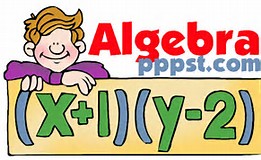
Algebra Review GENS097
Instructor: Cyd Fithian
M,W,F 10 - 10:50
Course Description
Emphasis is on concepts from elementary algebra, functions, properties of exponents, operations with polynomials, rational and algebraic expressions, solutions to equations and inequalitie.
Course Objectives
The student will develop a conceptual understanding of introductory algebra
o Demonstrate an understanding of order of operations and solving equations.
o Demonstrate an understanding of slopes and graphing equations and iequalities
o Demonstrate an understanding of polynomials and operations involving polynomials.
The student will develop proficiency in algorithmic methods
o Utilizing the Point-Slope formula to find equations of lines.
o Demonstrate the ability solve equations with fractions.
The student will write mathematics using correct terminology and notation
o Demonstrate the ability to translate from written words to math language.
The students will use mathematics in the context of other disciplines
o Solve system of equation problems using scenarios from the science and business fields.
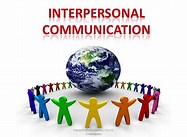
Introduction to Interpersonal Communication
Instructor: Dr. Stephanie Young
CMST 107
Required Textbook: Wood, J. (2015). Interpersonal communication: Everyday encounters (8th ed.). Boston: Wadsworth. ISBN: 9781305698932 Course Description:Increases understanding of oneself, the many roles one plays in the communication process, and the interpersonal relationships of individuals in society. Course includes nonverbal communication, the role of language in structuring interpersonal situations, and the importance of dialogue in resolving interpersonal conflicts. Course Learning Outcomes:Each of us spends much of our daily lives interacting with others at home, at work, and in various social settings. Our personal relationships shape who we are and how we communicate with one another. The purpose of this course is to teach you theories and skills related to successful communication in interpersonal relationships. Taking up a relational view of communication, we will examine a number of concepts including: verbal and nonverbal communication, identity construction, listening, perception, conflict management, and how relationships are created, negotiated, maintained, and terminated. While engaging with this course, please reflect upon your own experiences and relationships. Such reflection will allow you to better understand your past interpersonal communication experiences and engage your current and future relationships and interactions more knowledgeably.
Final Grade: A