
NSCI 1200: Science, Environmental Sustainability and Community Responsibility
NSCI 1200: Science, Environmental Sustainability and Community Responsibility
Purpose: to help other instructors teaching the same course
Common Course ID: NSCI 1200
CSU Instructor Open Textbook Adoption Portrait
Abstract: s open textbook is being utilized in a natural science course for undergraduate students by Becky Talyn at California State University, San Bernardino. These open textbooks provide information for students new to college about navigating their time here while building important 21st century skills, and provide an introduction to Environmental Science. The main motivation to adopt an open textbook was to have all assignments integrated into Canvas without stressing the budgets of our students who are already stretched too thin in a variety of different ways. Most student access the open textbook in Perusall via a link in Canvas..
NSCI 1200 Science, Environment Sustainability and Community Responsibility
Brief Description of course highlights: Exploration of scientific ways of thinking in the context of environmental sustainability. How scientific knowledge is created and how it is communicated to those who use it to solve environmental problems and to guide responsible action. Emphasis on acquisition of academic skills that will be transferrable to other courses. Learning to see the world and environmental issues through the lens of scientific and mathematical analysis and reflection on how this lens differs from other lenses. Learning how scientific knowledge is created through collaborative processes among those with diverse perspectives. Appreciation of the scientific literature as a professional conversation that expands our understanding of the environment in which we live. Group projects will apply scientific thinking and other approaches to solving environmental problems affecting our local and global communities. Satisfies GE category E.
Student population: This class is intended for students majoring in science disciplines, but in practice there are students with a very wide variety of majors, which vary from semester to semester. It is intended for first-year students, so they usually have a high school knowledge and skill level, though of course they forget a lot over the summer.
Learning or student outcomes:
Course-Specific Learning Outcomes
Science as a way of knowing - Discuss the shared values implicit in science, how science differs from other disciplines, and how these are (or are not) applied in practice. Apply what science is and how it works to address specific questions and problems. When learning about a scientific topic, question, issue or problem: interpret a question to understand its goal, determine what you need to know, find applicable information, apply logic, apply basic quantitative (numerical) interpretation, and synthesize information from a variety of sources and types of sources.
Environmental science & sustainability for Community Resilience – Some BIG ISSUES of our time - Contrast humanity’s interactions with nature vs. as part of nature. Grapple with relationships between individual & institutional values & choices, concepts of ownership & exploitation, and environmental & human health. Discuss the current centrality of environmental issues & sustainability, and their intimate relationship with other social justice issues. Integrate environmental information based on science & other ways of knowing to understand & address environmental issues in terms of their scientific basis and social context. Act on a more comprehensive understanding of environmental issues. Empower your community to do the same.
Academic Success Skills
Develop an academic mindset. Understand your roles in the academic community. Shift your understanding of your own belonging and abilities to more positive. Recognize that your abilities & competence grow with effort, and doing that work has value. Acknowledge & apply making mistakes as a way to learn about what you still need to learn. Connect what you’re learning with what you already know (prior knowledge). Take responsibility for your learning and your success. Communicate effectively to get the support to maximize your learning.
1. Apply economic terminology to describe and explain the fundamental assumptions of economic analysis.
2. Interpret and create economic graphs.
3. Use economic graphs to explain demand, supply and market equilibrium and government price controls.
4. Calculate price levels and real and nominal gross domestic product (GDP) in a variety of given economic scenarios.
5. Compare and contrast economic systems... etc.!
Key challenges faced and how resolved: The biggest issue was that the books in Fall 2021 did not integrate into Canvas, which I used for the first time that semester. There was also some confusion because the price listed in the text they sent me to include in the syllabus was apparently incorrect. By the time I received corrected information, it was well into the semester and I was unable to change it for the students. It worked out, because they agreed to honor the original text/price that they had provided. For Spring 2022, the greatest challenge was finding enough time to find really good materials for them to use that covered exactly the information that I wanted them to have. I was able to do a pretty good job, but it was very, very time consuming. And there are a few topics for which I’m not happy with what I found, and will still have to look for something better before I teach this course again.
 Becky Talyn,
California State University, San Bernardino
Please provide a link to your university page https://www.csusb.edu/profile/btalyn
Please describe the courses you teach. I also teach an upper division GE Environmental Science course and several others. My research explores the toxicity of agricultural practices such as herbicide use.
OER/Low Cost Adoption Process
Provide an explanation or what motivated you to use this textbook or OER/Low Cost option. So many of our students struggle financially and already work to make it work for them to be a student. If I can help save them money without sacrificing the information they will need, I absolutely will do that.
How did you find and select the open textbook for this course? I knew that the publisher content I used last year was too expensive, and it didn’t cover all of the content I wanted them to have. So I talked to them about getting better pricing for Fall 2021, and they ended up giving us two text books for $25 per student. That brought me more awareness of the AL$ program, and I decided for Spring 2022 to use all open source materials, including text book chapters, news articles, youtube videos, web sites, and other free/openly available sources of information.
Sharing Best Practices: For me a big “aha” moment was that if I can’t find an open access text book that covers everything I want it to, I can use the best one and fill in the gaps with other kinds of materials. I had planned to share it at the showcase last week, but because it went quite a bit over schedule and I was scheduled near the end, I was not able to do so. I have and will continue to speak informally to faculty in the many different ways I interact with them, and may suggest that this becomes part of the more formal discussions we have about culturally responsive teaching in professional development learning communities that I facilitate with teams of other faculty.
Textbook or OER/Low cost Title:
Brief Description: In Fall 2021, I used the same textbook as last year, but electronic access without all the other online features like quizzes. Also added electronic access to another textbook. Continued to use supplementary materials, provided as links or pdf files, for content not covered in either book.
In Spring 2022, I stopped using a for-profit text book all together. I found several different text books that each covered some of the content of one of the books I had previously used, and I found 2 different open source Environmental Science textbooks for students to use as well. In addition, I expanded the other sources of information, like news articles, web sites, youtube videos, etc. that we used in addition to the books.
Books used (with their license)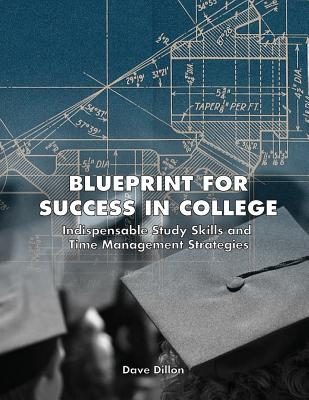 Blueprint for Success in College and Career by Dave Dillon is licensed under a Creative Commons Attribution 4.0 International License, except where otherwise noted. This work is licensed under the Creative Commons Attribution 4.0 International License, except where otherwise noted. To view a copy of this license, visit http://creativecommons.org/licenses/by/4.0/.
Foundations of Academic Success: Words of Wisdom by Thomas Priester is licensed under a Creative Commons Attribution 4.0 International License, except where otherwise noted.
How to Learn Like a Pro! by Phyllis Nissila is licensed under a Creative Commons Attribution 4.0 International License, except where otherwise noted.
No Limits by University of Texas at Arlington is licensed under a Creative Commons Attribution 4.0 International License, except where otherwise noted.
Environmental Biology by Matthew R. Fisher is licensed under a Creative Commons Attribution 4.0 International License, except where otherwise noted.
Student access: Fall 2021: Brytewave. Spring 2022: I made all reading materials available to students through Canvas. I used the Perusall app, linked through Canvas, to allow them to annotate their readings and have conversations with each other about it, and to monitor who completed the readings. Perusall integrates fully with Canvas in that students access Perusall through Canvas, and Perusall sends grades back to the Canvas gradebook.
Cost Savings: Previous material cost $80 per student.. Fall 2021: Material cost $25 per student, for a difference of $55 savings per student. There are 12 students enrolled in the course this semester, so a total savings of $660. However, last semester the class had 32 students. If this had been true this semester, it would have resulted in a savings of $1760. Spring 2022: Material cost $0 per student. This semester I have 14 students enrolled, though not all of them have ever participated in any class activity/homework/attended class. Even so, if they had bought the $80 book, this would have saved them $1120. Even if they had only paid the $25 or $50 it should have been last semester, that is a savings of $350-$700 compared to the materials we used in the Fall semester.