
Group Counseling 6231
Group Counseling 6231
Purpose: to help other instructors teaching the same course
Common Course ID: COUN 6231 Group Counseling
CSU Instructor Open Textbook Adoption Portrait
Abstract: This open textbook is being utilized in a counseling course for graduate students by Dr. Diana Camilo at CSU San Bernardino]. The open textbook provides students the ability to access the course eTextbook, videos, and case studies. Students also have access to study tools such as virtual notes and flashcards. Students have the option to rent or buy the eTextbook or access both the eBook and a hardcopy. MindTap also offers the option to access the course via a computer, tablet, phone, or mobile app. The main motivation to adopt an open textbook was for the instructor to gauge how students are learning and applying the content through the various activities and assignments available. This includes case studies where students view a video and reply to prompts or chapter quizzes. I can also access videos that can be used during the lectures to showcase and model various concepts. Through the gradebook feature I can see how the class is performing as a group. Most student access the open textbook in through the MindTap platform.
Counseling 6231 - Group Counseling
Brief Description of course highlights: COUN 6231 Group Counseling (3 units): Principles and dynamics of group interaction and process are examined from didactic and experiential perspectives. This course introduces you to small group dynamics within the counseling field. Students study the techniques of groups and practice the leadership role. This course includes a practicum component of group leadership in an educational or clinical setting. Theory and techniques of group counseling, group participation, group leadership, and group facilitation are necessary to practice as a professional counselor. The course includes significant experience of and discussions about group formation, group dynamics, group leadership styles and group function across diverse group types.
Student population: This course is available to students enrolled in the Masters of Science Degree in Counseling Program, with a specification in professional counseling and/or school counseling. Most students enrolled in the program elect to combine these two concentrations to meet qualifications to earn both their Pupil Personnel Services (PPS) credential and Licensed Clinical Professional Counselor (LPCC) license. Many of our graduates work in K–12 schools or community colleges as professional counselors. Many students work in a variety of settings providing counseling and leadership in public and private sectors in hospitals, counseling clinics, criminal justice & probation, higher education, and private counseling. Through this course, students are equipped to facilitate group counseling in an array of settings such as private practice, K-12 schools, or community agencies. Students enrolled in the course are also placed in their fieldwork settings during their last semester in the program.
Learning or student outcomes: The following objectives specify the knowledge, dispositions, and performances that should be attained by the end of this course. Students who successfully complete COUN 6231 will:
Knowledge
● understand the theoretical bases for group counseling
● comprehend principles and styles of group leadership
● understand group dynamics and possess skills in group counseling
● appreciate the different functions of leaders in counseling groups, psycho-educational groups, task groups and self-help groups.
Dispositions
● value ethical guidelines for group therapeutic and developmental work
● demonstrate willingness to create an atmosphere of inclusion for all group members
Performances
● use group process to enhance the academic development and achievement of students in an educational setting
● to plan and implement group sessions that help group members to:
- develop interpersonal knowledge, attitudes and skills;
- demonstrate respect for self and others
- make decisions;
- set and achieve goals.
Key challenges faced and how resolved: As with anything, initial set up takes time. Plan ahead and avoid getting started close to the start of the course. This is a required question
Textbook or OER/Low cost Title: MindTap https://www.cengage.com/mindtap/
Brief Description: Include concepts, pedagogical approach, problem sets, and overall structure including publisher platform features. The selected text, accessed via MindTap, introduces students to principles and dynamics of group interaction and process are examined from didactic and experiential perspectives. Students study the techniques of groups and practice the leadership role. Theory and techniques of group counseling, group participation, group leadership, and group facilitation are included throughout the text. The text includes significant experience of and discussions about group formation, group dynamics, group leadership styles and group function across diverse group types.
Authors: Text: Groups: Process and Practice.
Authors: Marianne Schneider Corey, Dr. Gerald Corey, Cindy Corey
Student access: MindTap platform
Supplemental resources: Supplemental materials are included in the platform. These include videos, study guides, and quizzes.
Cost Savings: While students can access the hard book for a similar price via other online retailers, the price varies from $26-$109 for either a rental or purchase. Inventory can also be limited. On Amazon, the book retails for $26 to rent and $78-150 to buy. Since the class is offered to about 65 students, this is a saving of $5,070 if students are able to purchase for $78. Via MindTap students access the book in addition to other learning/study options
OER/Low Cost Adoption Process
Provide an explanation or what motivated you to use this textbook or OER/Low Cost option. The text was authored by three leaders in the field of counseling, specifically, group counseling. The authors have led the identification of best practices, application, and how to work with diverse populations.
How did you find and select the open textbook for this course? Suggestion from former colleagues.
Sharing Best Practices: Explore content or platforms that enhance student learning. There are many providers or publishers, but it is important to consider how online platforms improve students’ ability to learn the material and apply its use, specifically in a way that is familiar to their world. Work closely with your sales rep/tech support so they can help you [the instructor] organize the course/platform in a way that makes sense to you and students.
Diana Camilo, Ed.D., NCC, LCP
https://www.csusb.edu/profile/diana.camilo
California State University, San Bernardino
Assistant Professor, Masters in Counseling
Depart of Special Ed, Rehabilitation and Counseling
College of Education 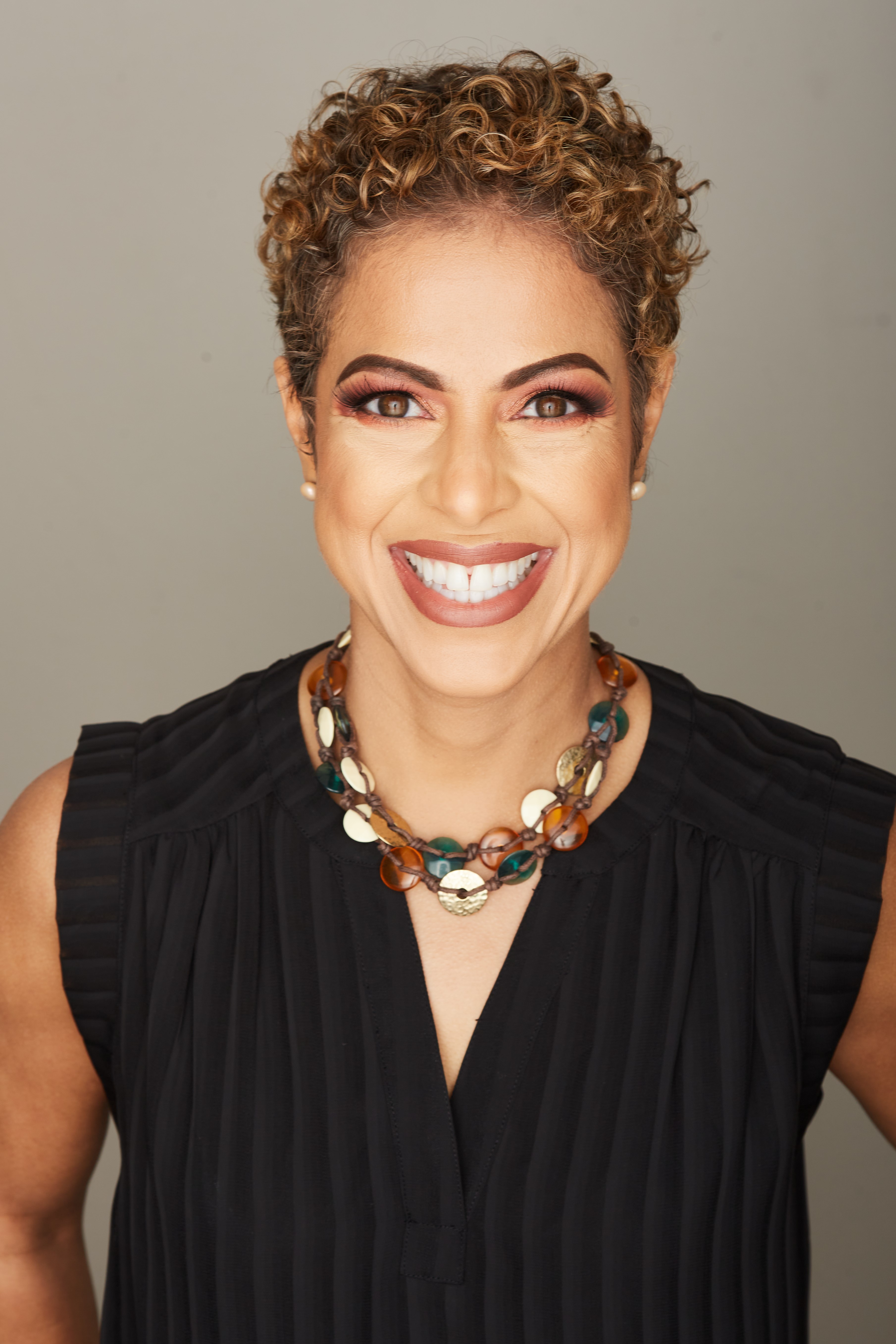
As a scholar-practitioner, my goals in teaching are 1) to support students connect theory and content to practice; 2) support students’ professional identity development, and 3) establish a learning community where students’ individuality and lived experiences are viewed as valuable contributions to the learning process. In being mindful of students’ various learning styles, I aim to use various learning modalities when teaching. Visually, I use power-points, handouts, videos, whiteboards, and technology-related features such as Zoom chat, IdeazBoard, and Mentimeter. I also incorporate hands-on learning through projects and activities that require students to apply what they have learned to activities at their fieldwork placements. To increase student engagement, I provide opportunities for them to collaborate with peers or colleagues through projects and/or class discussions, as well as encourage them to share resources with each other. I also seek to foster an environment where students balance being learners and contributors to the learning experience of their peers; each adding a unique and valuable aspect to a cohort model as it allows them to explore the parallels between the classroom experience and those at fieldwork and future school sites.
COUN 6231 Group Counseling
COUN 6237 Appraisal
COUN 6240 Professional School Counseling