
Inorganic Chemistry / CHEM-4300
Inorganic Chemistry / CHEM-4300
Purpose: to help other instructors teaching the same course
Common Course ID: CHEM 4300 - Inorganic Chemistry
CSU Instructor Open Textbook Adoption Portrait
Abstract: An OER textbook is being used in a chemistry course for undergraduate students by Larry Mink at San Bernardino. The open textbook provides the course content through a compilation of content of 3 available OER text books found in the LibreTexts bookshelve, https://chem.libretexts.org/Bookshelves. The compiled course textbook is specifically tailored to the content being covered during the semester. The main motivation to adopt an open textbook was to provide the students with a cost free resource. Student access the OER textbook as an electronic version provided through the LibreTexts platform https://libretexts.org/. LibreTexts OER platform is “The Worlds Most Popular Online Textbook Platform”.
CHEMISTRY 4300
Brief Description of course highlights: CHEM 4300. Inorganic Chemistry, 4 units. For upper division chemistry majors. Topics in inorganic chemistry, including molecular structure and bonding, symmetry, ionic structure and bonding, inorganic reactions, including acid base and oxidation-reduction reactions, coordination chemistry and bioinorganic chemistry. Three hours’ lecture and three hours’ laboratory. Laboratory component reinforces lecture material. Materials fee required.
https://bulletin.csusb.edu/archive/2020-21/coursesaz/chem/
Student population: All 20 students were undergraduates. Of the 20, 19 were seniors, 1 was a junior. 15 students were chemistry majors, 4 biochemistry majors, and 1 biology major. Semester Prerequisite: Organic chemistry CHEM 2500 or 3500, and Quantitative Analysis CHEM 3200 with grades of C or better.
Learning or student outcomes:
General Principles: Students will understand the structure and bonding of inorganic compounds, and how this affects their physical and chemical properties. A discussion of the chemistry of d-block elements, their redox properties, and acid/base chemistry. Coordination chemistry is introduced, and the special bonding theories required understanding the properties of transition metal compounds.
Key challenges faced and how resolved: The challenges that remain in providing a completely free no cost upper division Inorganic course is the development of a real time, auto graded quality homework system. What I have not done which I believe is important to some students is to provide a printed copy of our new “textbook”. However, this option is now available through LibreTexts: https://blog.libretexts.org/2019/03/22/print-books-now-available/. At this time, I do not know how our campus bookstore will respond to implementing this. However, we will see come Fall 2022. .
Syllabus and/or Sample assignment from the course: CHEM4300 Syllabus. Fall 2021.001.doc
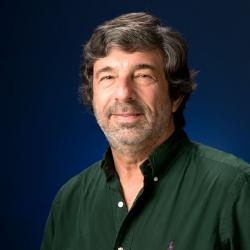 Larry Mink, Professor
California State University, San Bernardino. Chemistry Professor
Please provide a link to your university page. https://www.csusb.edu/
Describe your teaching philosophy and any research interests related to your discipline or teaching. I teach the general chemistry sequence for chemistry majors, CHEM 2100 and CHEM 2200, as well as upper division inorganic chemistry CHEM 4300. My teaching philosophy is to try and present the material in the simplest and most coherent way to the best of my ability. Given the last couple of years having to suddenly teach virtually, then in-person, then back and forth within a given semester it has been a real challenge for everyone. It feel it is important to clearly lay out ones expectations to the students, and keep them as simple as possible. I feel the most important thing for the student is they know in advance what is to be expected of them, and a clear grading structure. When we are able to provide quality content through available OER materials we should strongly consider doing so. Big picture, it is a privilege to be in a position to educate students and help them achieve their academic and career goals.
OER/Low Cost Adoption Process
Provide an explanation or what motivated you to use this textbook or OER/Low Cost option. Save the student money. I also wanted to direct them to the LibreTexts platform. With LibreTexts, students, faculty, and outside experts work together to build freely available open education resources (OER) that supplant conventional paperbased textbooks. LibreTexts currently encompass twelve widely used college-level disciplines from chemistry to humanities with over 68,500 pages. Used across the nation as primary course textbooks and as supplemental learning resources.
How did you find and select the open textbook for this course? I have increasing become involved with the California OER, CAL OER, effort. Through the workshops I attended I was informed of the LibreTexts platform. https://www.caloer.org/
Sharing Best Practices: There are numerous workshops throughout the year pertaining to CAL OER effort. There are many YouTube videos about CAL OER https://www.youtube.com/results?search_query=CAL+OER
and many YouTube videos on using LibreTexts: https://www.youtube.com/results?search_query=libretext
Textbook or OER/Low cost Title:
Chem 4300 (Mink) Personalized text book provided in my area of Libretexts “Campus Bookshelves” CSU San Bernardino. .
https://chem.libretexts.org/Courses/CSU_San_Bernardino  Brief Description: The “textbook” I compiled presents the specific content I present during the semester. It includes content from 3 OER text books that are presented in the LibreTexts bookshelve, https://chem.libretexts.org/Bookshelves.
Authors: The content was taken from the following 3 sources:
a. Inorganic Coordination Chemistry (Landskron).
b. Introduction to Inorganic Chemistry (Penn State University CHEM 310)
c. Bioinorganic Chemistry (Bertini et al.)
Student access: Students access the electronic textbook on line through LibreTexts the section titled “Campus Bookshelves” CSU San Bernardino https://chem.libretexts.org/Courses/CSU_San_Bernardino
Supplemental resources: The on-line homework system associated to this class CHEM-4300 the students were required to purchase a commercial product. I am involved with the development of the homework platform system called ADAPT which is associated to Libretexts. https://adapt.libretexts.org. Its development in the area of chemistry is currently limited to that of the general chemistry curriculum. Therefore with regard to the Inorganic Chemistry, CHEM-4300, students were required to purchase for $42 a semester the homework system Achieve provided by Macmillan learning, https://achieve.macmillanlearning.com/start
Cost Savings: The cost of the traditional textbook we used to use is currently $184.99. The students currently pay $42 for homework system. The current saving to the student is $184.99 - $42 = $142.99
License: All content offered through LibreTexts is openly licensed.