MATH 465: Complex Variables
MATH 465: Complex Variables
Purpose: to help other instructors teaching the same course
Common Course ID: Math 465
CSU Instructor Open Textbook Adoption Portrait
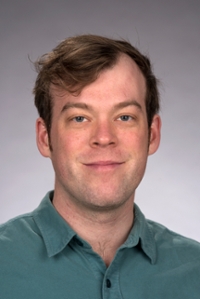
Abstract: This open textbook is being utilized in a Mathematics course for graduate students by John Lind at California State University, Chico. The main motivation to adopt an open textbook was to save students money. Most student access the open textbook in freely available PDF of the making studying more accessible and easier to manage. This upper-level mathematics course is mostly taken by mathematics majors, along with some physics and engineering students. They have completed the calculus sequence, and tend to be proficient in making difficult calculations. This course synthesizes a theoretical proof-based approach with powerful new calculational techniques.
Math 465 Complex Variables
Algebra of Complex Numbers, Cauchy-Riemann Equations, the exponential, trigonometric, and logarithmic functions, complex integration and Cauchy integral formula, Taylor and Laurent series, the residue theorem, conformal mapping, and applications. Prerequisites: MATH 220 (Calculus III)
Learning or student outcomes: A good conceptual and computational grasp of complex numbers, and derivatives and integrals of complex functions; a basic facility with making rigorous analytical arguments, such as for the existence of limits, derivatives, and the topology of sets in the complex plane; a solid understanding of Cauchy’s integral theorem and the residue theorem; the ability to manipulate power series and reason with them in analyzing holomorphic functions.
Key challenges faced and how resolved: The breadth and depth of complex analysis is daunting, particularly when trying to write an account of the subject from scratch. In preparing a draft of my own course notes for the upcoming term, I was challenged by the amount of time and labor necessary to finish the task. While the course notes are not complete, I am confident that my work so far will give me and my students a good starting point for the term, and that I will be able to finish the notes over the course of the semester.
Textbook or OER/Low cost Title:
Brief Description: Instead of using a traditional textbook, which would cost $100 or more, I provided free course notes to the students that match my lectures, supplemented by optional published texts.
Student access: Students have commented that having a freely available PDF of the textbook makes studying more accessible and easier to manage. Of course, they also appreciate the cost savings of OER! The course notes are hosted on Google Drive, with links available from Blackboard Learn. Additionally, I will provide printed copies of the notes to students for each unit of the course.
Cost Savings:
For the Fall 2021 semester, in comparison to a commonly used non-OER textbook (Brown and Churchill, Complex Variables):
[20 students enrolled in MATH 465] x [$92 (softcover) to $315 (hardcover) per copy] = $1,840 to $6,300 in savings
OER/Low Cost Adoption Process
Provide an explanation or what motivated you to use this textbook or OER/Low Cost option. I always try to teach using an OER textbook to save students money.
How did you find and select the open textbook for this course? Since I could find only one acceptable OER textbook in this subject, I decided to write my own OER text for the course.
Sharing Best Practices: Participate in a CAL$ Workshop if possible! I learned a lot about copyright law, the subtle gradations of creative commons licensing, and databases for finding OER. I learned of new resources and pedagogical techniques, both through formal events such as the CAL$ Summer Workshop, and through informal discussion among faculty in my department.
John Lind
California State University, Chico
Mathematics Department