
Political Science Adoption
Political Science Adoption
Purpose: to help other instructors teaching the same course
Common Course ID: POLS 111: California Politics, POLS 180: Political Inquiry
CSU Instructor Open Textbook Adoption Portrait
Abstract: This open textbook is being utilized in a Political Science course for undergraduate students by Anika Leithner at California State University, San Luis Obispo.
Course Title and Number
Brief Description of course highlights: POLS 111: Basic aspects of California state government. Satisfies GE D1 for students who have passed both AP US Government and US History exams, or transfer students who have received advice in writing from the Office of the Registrar to take POLS 111. Course may be offered in classroom-based or hybrid format. 1 lecture.
POLS 180. Political Inquiry. - Introduction to the scope, language, concepts and approaches employed in political science and the social sciences. Includes emphasis on basic methodological and research strategies for assessing political issues, and an overview of the subfields of political science. 4 lectures.
Student population: POLS 111: 50-55 students per section, POLS 180: 45 students per section
Learning or student outcomes: I hear from students all the time about the lack of traditional textbooks. The vast majority of feedback has been extremely positive. For example, I am getting ready to teach a total of 90 incoming first-years in POLS 180. I recently e-mailed them to let them know that there would NOT be a required textbook for the class and within two days, I had nearly a dozen responses from students thanking me for not adding to their financial burden during an already expensive first year in college (considering the high cost of tuition, moving out on their own, and so on). At our new student welcome today, I had nearly twenty students come up afterwards and shake my hand, many of whom repeated their gratitude for not forcing them to buy an expensive textbook.
A few responses over the last couple of years have been a little less enthusiastic. A handful of students it seems had a genuinely difficult time switching to different writing styles and formats and felt that it impacted their ability to prepare for class. I think this is likely very student-specific and it has made me think more about why some students find the new resources I’m using inaccessible and what I can do about that.
Overall, students have occasionally told me they didn’t particularly care for a source I picked, but that they still preferred it to paying for a textbook. I suppose much of this is a process of trial-and-error, but I’m convinced that eventually I will find the right resources for all my modules.
Key challenges faced and how resolved: A few! Looking for appropriate open resources can be very time-consuming, but over time, I have created a fairly comprehensive list of “go-to” resources that I know will work for my learning objectives. Probably the biggest challenge was to find articles and resources that covered exactly what I wanted to teach AND were written in a style accessible to undergraduates (who knew that political scientists love complicated equations as much as mathematicians do?).
Once I let go of the idea that I have to have an “article” for students to read, it became a lot easier to find resources. For instance, instead of continuing to search for the “perfect” article on how to write a literature review, I have actually branched out and found an excellent 15-minute video that explains the writing process exactly how I typically would in class. Initially, I likely wouldn’t have considered a video as a good alternative to assigned readings, but I was desperate enough to try it and the reaction from students was overwhelmingly positive. I think unlike my generation, our students are actually far more used to extract information from videos and such. Another example is that I have begun assigning my students “activities” rather than readings before class. For instance, in preparation for the class on how to conduct research and how to properly cite sources I have begun to send my students on a “quest” through the library and the library website! I sat down and made a list of all the skills/knowledge I wanted students to gain from the readings I used to assign and then tried to come up with questions and activities that required students to discover the same skills/knowledge by using existing library resources.
Textbook or OER/Low cost Title: 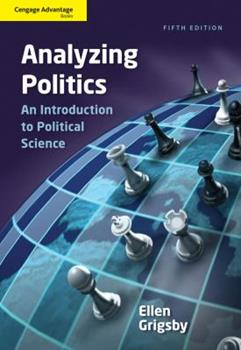 POLS 111: Ellen Grigsby, Analyzing Politics (Wadsworth Publishers, sixth edition), Craigs Brians et. al., Empirical Political Analysis (Pearson, eighth edition), POLS 111: Larry Gerston and Terry Christensen, California Politics and Government (Wadsworth Publishers, 12th edition)
Student access: Classes have been significantly revised and transitioned to open resources. Some of those changes have been the result of having to utilize new sources that may not always be as easily accessible to students as a traditional textbook. While I really believe that having students read scholarly articles is beneficial, it often requires a little extra “legwork” on my part to help students access the academic (and often very technical) writing style and vocabulary used in these publications. I have now made it a point to write “reading questions” or guidelines for most of my assigned readings or simply spend more time in class answering questions students might have. (As a side note, this has made me take a very long look at my own writing style and has, I think, improved my ability to clearly communicate to a non-academic audience.)
There were a few topics for which I simply could not find open resources that worked for my course (though far fewer than I had anticipated). For those topics I began writing my own materials to make available to students or I simply skipped assigned readings and created in-class discussions or exercises that forced students to “discover” the content I used to have them read about ahead of time. This has actually made many of my classes more student-centered and engaged.
Cost Savings: My students on average save $200-$250 per person for POLS 180 and anywhere from $80-$120 for POLS 111.
OER/Low Cost Adoption Process
Provide an explanation or what motivated you to use this textbook or OER/Low Cost option. My primary motivation was my increasing frustration with the cost and quality of traditional textbooks. Since I have been teaching both POLS 180 and POLS 111 for nearly a decade now, I have been able to observe how dramatically publishers have increased textbook prices, even if the content of the book hasn't changed very much. For instance, when I first started teaching POLS 111 in 2006, the textbook I used cost around $40. Over the years, the price for the only minimally updated newer editions spiked to as much as $120! That was the moment I realized I needed to change my approach (since then, the book has come down in price to around $80 again). I observed a similar pattern in my books for POLS 180. I had made it a point from the beginning of my career as a professor to never order a book that cost more than $70-80 and it became increasingly hard to find a quality book in that price range. The book I fairly regularly used in the beginning now costs almost $150.
In addition to my concerns about textbook prices, I also began to dislike the lack of flexibility when using a textbook. I know a lot of professors likely structure their syllabi around a favorite textbook by largely mirroring its table of contents. I don’t think this is a bad approach, but I missed the ability to freely choose the topics I wanted to cover in my courses based on the learning objectives I felt were important to my students. This essentially left me with two options, if I wanted to still use a traditional textbook: I could either change my course content to better match the textbook or I could leave out significant sections of the book (and likely assign multiple books). The former option felt like I was compromising my pedagogical mandate, yet the second option placed a heavy financial burden on my students, either because they had been required to purchase a book we weren’t going to use in its entirety or by being required to purchase multiple books. Neither felt like an acceptable option in the long term.
How did you find and select the open textbook for this course?
Sharing Best Practices: There have been multiple benefits, both to myself and to my students.
1) The switch has forced me to take a really good look at the content and delivery of my courses! Having to look for and find open resources has occasionally been challenging, but it has also prompted significant revisions to my courses, all of which I believe have been for the better!
2) I have collaborated with my colleague on writing our own, active-learning materials for POLS 111, which has been so much fun and so rewarding from a professional perspective.
Anika Leithner
California State University, San Luis Obispo
Political Science Department
 Courses taught - POLS 111: California Politics, POLS 180: Political Inquiry